Thirsty Places: Singapore
A small island with no rivers, no aquifers and a water supply that arrived across a border decided to make its own. The equipment it chose was ordinary. Persuading a whole country to drink the result was the real engineering.
Singapore is about 730 square kilometres of land at the tip of the Malay peninsula, and it receives more than two metres of rain a year. By the standards of most places that would be abundance. Singapore's difficulty has never been rain. It has been everything else. The island has no rivers of any size, no aquifers worth pumping, and no hinterland to draw on. Rain that falls on it runs into the sea within hours unless something is built to catch it, and for the first decades of the country's existence most of its drinking water arrived not from the sky but through pipes across the causeway from Malaysia.
That arrangement was written into two agreements, one from 1961 and one from 1962, and it has never been a comfortable one. The 1961 agreement expired in 2011. The 1962 agreement runs until 2061. For a country that had been expelled from a federation with its neighbour in 1965, dependence on that neighbour for the most basic resource of all was understood from the beginning as a matter of national security rather than plumbing. This article is about what Singapore did about it, and about which part of the solution turned out to be hard.
| Year | What happened |
|---|---|
| 1965 | Independence, importing most of its water |
| 1998 | The reuse programme begins, with a demonstration plant from 2000 |
| 2003 | NEWater enters the public supply and the visitor centre opens |
| 2008 | The first deep tunnel reaches the Changi reclamation plant |
| Today | Reuse is a pillar of the national supply |
Four taps
Singapore's national water agency, PUB, describes the country's supply as four national taps, and the phrase has passed into the way Singaporeans talk about themselves. Each tap has a different character and a different future.
| Tap | What it is | What it can supply |
|---|---|---|
| Local catchment | Rain collected across about two thirds of the island into 17 reservoirs | Varies with the weather |
| Imported water | Drawn from the Johor River in Malaysia under the 1962 agreement | Until 2061 |
| NEWater | Treated used water, in the public supply since 2003 | Up to 40% of demand today |
| Desalinated water | Seawater, from five plants | Up to 25% of demand today |
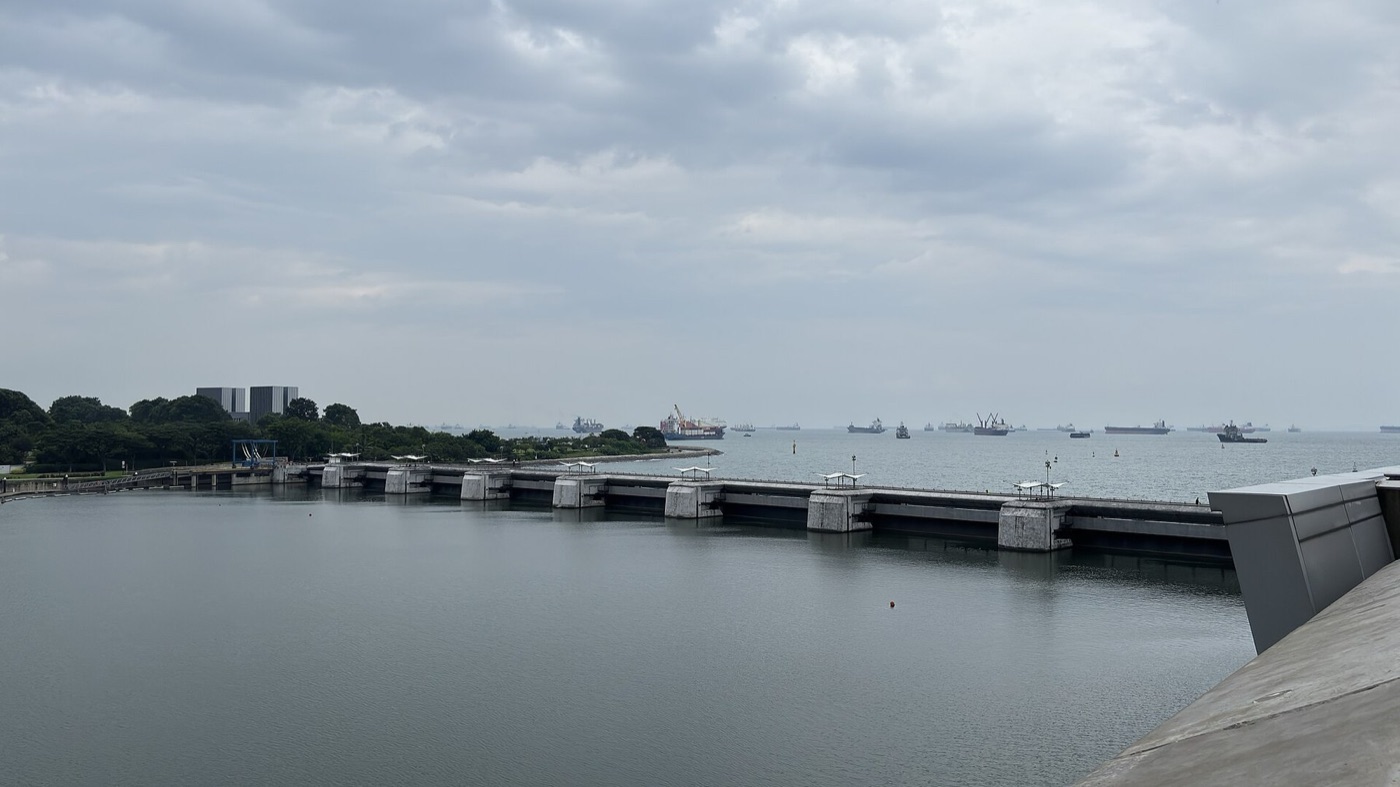
The first tap is the oldest and the one that involved the most civil engineering: dams across the mouths of every river the island has, storm drains that feed reservoirs rather than the sea, and a reservoir in the middle of the central business district, Marina Bay, created by damming the harbour.
The second tap is the historical dependency, and the one the whole strategy is designed to outgrow.
The third and fourth are the modern answer. PUB's published plan is for NEWater to supply 55 percent of the country's water and desalination 30 percent by 2060, the year in which Singapore expects its demand to have almost doubled and the year before the import agreement lapses. Read together, those figures describe a country that intends, within a generation, to be able to supply itself.
What NEWater actually is
Used water, which is Singapore's official term for what the rest of the world calls sewage, first goes through a conventional treatment plant of the kind every large city has. Solids settle, bacteria consume the organic matter, and what leaves would be clean enough to discharge to the sea, which is where most of the world's treated sewage goes.
In Singapore a large share of it goes instead through three further steps, and it is worth being precise about them because their ordinariness is the point of the story.
| Stage | What it does |
|---|---|
| 1. Microfiltration | Holds back suspended solids, bacteria and protozoa |
| 2. Reverse osmosis | Pushes water through a tight membrane, leaving salts, viruses and most organic molecules behind |
| 3. Ultraviolet light | A final disinfection step, added for margin |
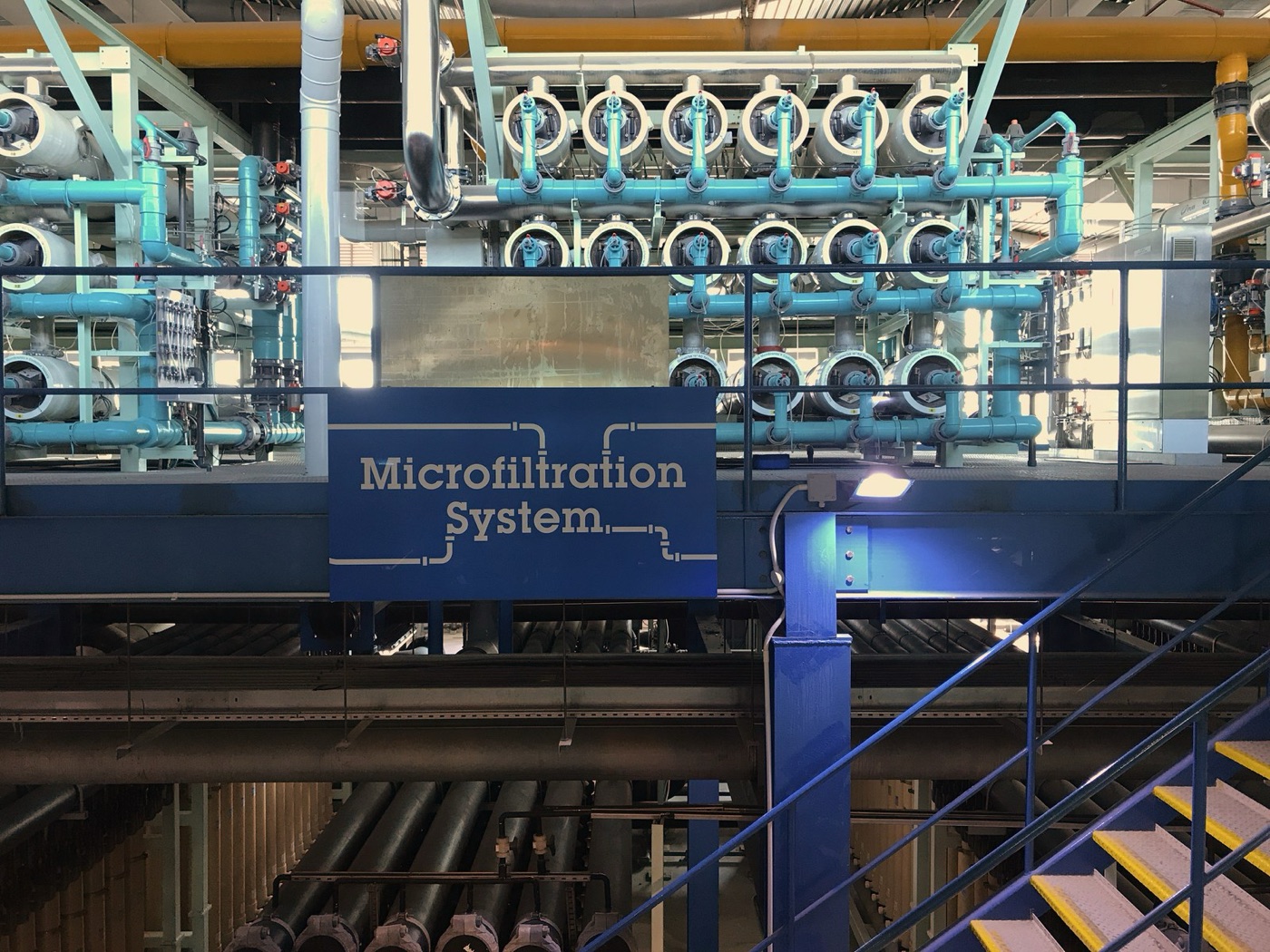
The first is microfiltration, a membrane with pores fine enough to hold back suspended particles, bacteria and protozoa. The second is reverse osmosis, a far tighter membrane that holds back dissolved salts, viruses and nearly all organic molecules. It is the same technology used to desalinate seawater, and readers of the article on dissolved solids will know both how it works and why it consumes energy. The third is ultraviolet light, a final disinfection step included not because anything is expected to survive the first two but because a supply of this kind is designed with a margin.
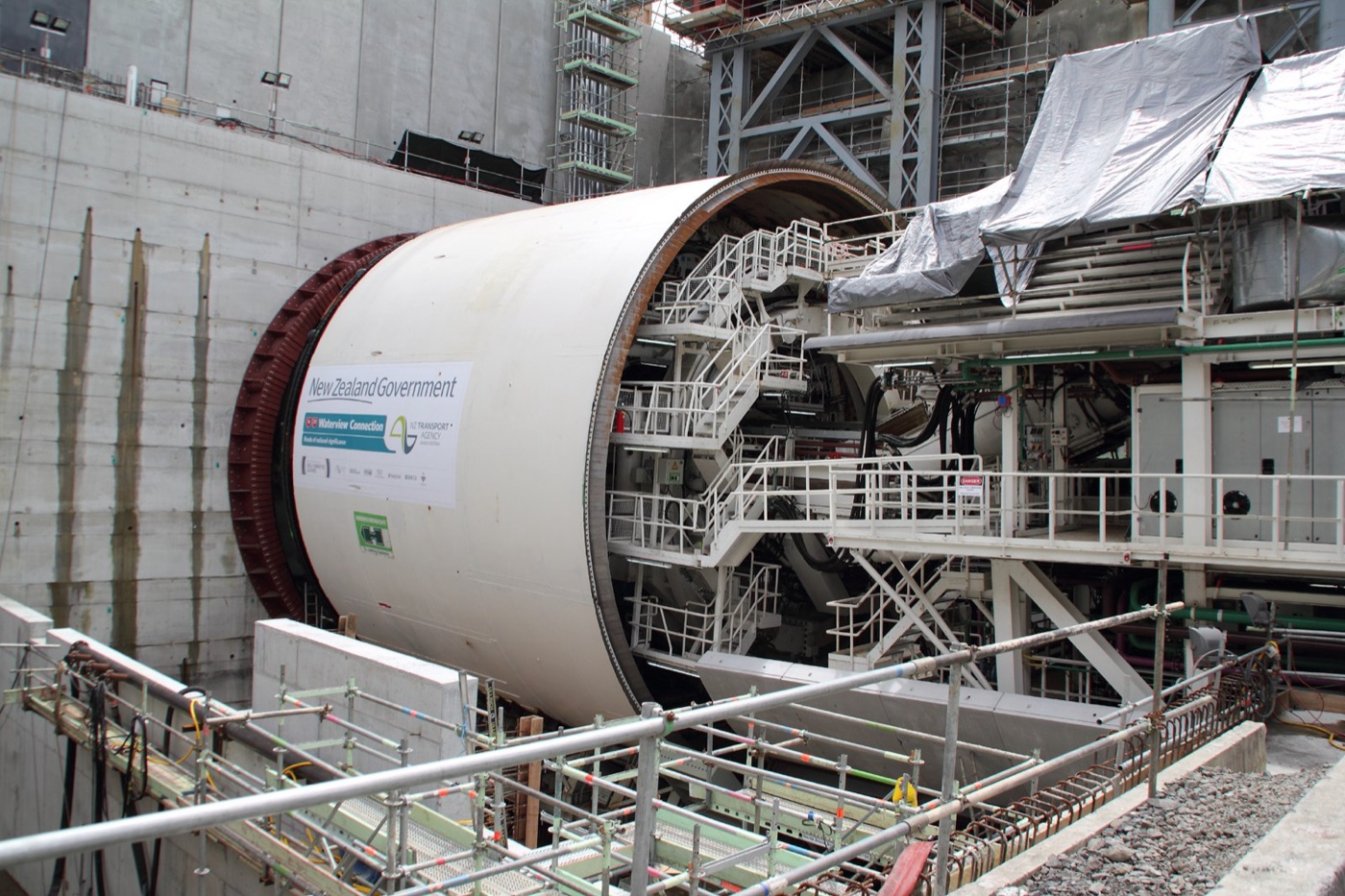
There is a part of the system that visitors never see, and it is the part that makes the rest possible. A reuse plant is only as good as the water it receives, and a city that intends to recycle most of its used water needs to collect nearly all of it, reliably, in one place. Singapore's answer was to build a sewer underneath its sewers. The Deep Tunnel Sewerage System is a set of tunnels bored twenty to fifty metres below the island, large enough to walk through, that carry used water by gravity from across the country to two large reclamation plants on the coast, the first at Changi in the east, completed in 2008, the second at Tuas in the west. The old network of pumping stations and small treatment works it replaced is being closed and the land given back to the city. Nobody drinks from the tunnel, and nobody talks about it, and without it there would be no NEWater to talk about.
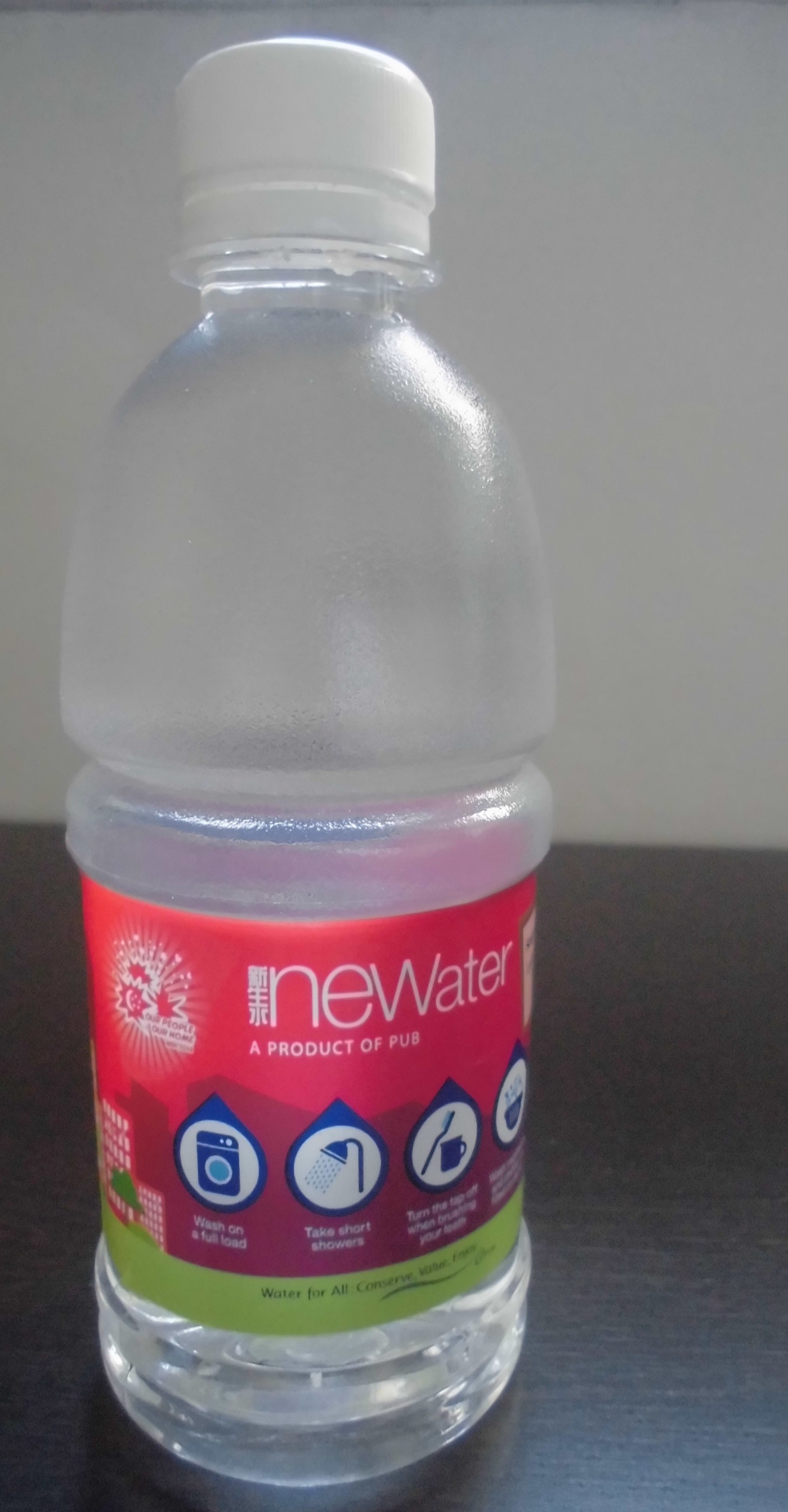
What emerges at the end of the three membrane steps is cleaner than Singapore's tap water. It is so low in minerals, in fact, that most of it is not sent to people at all. The largest customers for NEWater are the island's semiconductor fabs, which need ultrapure water to rinse silicon wafers, along with cooling systems and other industry. A smaller share, larger in dry months, is pumped into the reservoirs, where it mixes with rainwater and passes through an ordinary drinking water plant with everything else before reaching a tap. Singaporeans do drink their recycled water. They drink it blended, treated twice, and by way of a reservoir.
The equipment was never the hard part
Nothing in that sequence is exotic. Microfiltration, reverse osmosis and ultraviolet disinfection are catalogue items, made by a handful of manufacturers and installed in thousands of plants around the world. The same three steps recycle water inside a textile mill or a brewery. A competent engineering firm could specify a NEWater plant in an afternoon.
What Singapore did differently was to operate it as if lives depended on it, which they do. Every stage is monitored continuously by online instruments. The results are published. The equipment is duplicated so that a failure in one train does not interrupt supply. And before a single litre entered a reservoir, a demonstration plant ran for two years from 2000, producing tens of thousands of samples for an expert panel to test against every drinking water standard the agency could find. The technology was never the obstacle for Singapore, and it is not the obstacle for anyone else.
Asking people to drink it
The obstacle was the public, and the public's reaction to water reuse has a long and instructive history.
In the late 1990s the city of San Diego designed a reuse scheme technically very similar to what Singapore would build a few years later. It never opened. A campaign against it coined the phrase toilet to tap, three words that did more damage than any engineering objection could have, and the city council withdrew the project. The engineers had an answer for every question about safety and no answer at all for the feeling the phrase produced. Orange County, next door, learned the lesson. It spent years on public engagement before opening its own reuse plant in 2008, which became one of the largest in the world, and which Singapore's engineers were able to point to as a working example.
Singapore's approach was to make the process visible rather than to reassure people about it. The product was given a name, NEWater, that described what it was rather than where it had been. A visitor centre opened alongside the first plants in 2003, with the membranes behind glass, the test results on the walls and a bottle to take home at the end of the tour. School groups went through it as a matter of course. And in August 2002, at the National Day Parade, the prime minister, Goh Chok Tong, drank a bottle of NEWater in front of the cameras, and so did the crowd. None of that was engineering work, and without it the plants would have stood idle.
The costs of independence
It would be a mistake to read this as a story with no catch. Reuse and desalination both run on energy, and Singapore imports nearly all of its energy. Reverse osmosis is far cheaper for used water than for seawater, because used water carries a small fraction of the sea's salt, which is one reason NEWater takes a larger share of the plan than desalination does. But a water supply built on membranes is a water supply that depends on electricity and on a global supply chain for the membranes themselves. Singapore has decided that this is a better dependency than a river across a border. It is still a dependency, and the country's water price reflects it.
The other caveat is that Singapore is unusual. It is small, dense, wealthy and governed in a way that allows a fifty year plan to run for fifty years. Not every city can copy the model. Every city can copy the conversation.
What it teaches
The lesson that travels is not about membranes. Cities that have rejected water reuse, and there are many, had the same equipment available at the same price. What they lacked was a public that had been shown the process and given reasons to trust it, and an agency willing to publish its numbers, open its plants and drink the product on camera.
Water reuse is now being adopted, slowly and with the same arguments each time, in California, in Namibia, in parts of Australia and Europe. In every case the plants are unremarkable and the public conversation is where the work is done. Singapore did not invent the technology. It demonstrated, on a national scale and in full view, that people will accept a great deal of engineering once they have been shown it working.
Sources
- PUB, Singapore's National Water Agency. Singapore Water Story and Four National Taps: local catchment, imported water, NEWater (up to 40% of demand), desalinated water (up to 25%); long term targets of 55% NEWater and 30% desalination by 2060, and demand expected to almost double by then.
- PUB, NEWater: treatment train (microfiltration, reverse osmosis, ultraviolet disinfection), demonstration plant and expert panel from 2000, launch in 2003, uses in industry and for indirect potable blending into reservoirs.
- 1962 Water Agreement between Singapore and the State of Johor, Malaysia, valid until 2061.
- PUB, Deep Tunnel Sewerage System: phase 1 to Changi Water Reclamation Plant (2008), phase 2 to Tuas.
- Orange County Water District, Groundwater Replenishment System (2008), and the earlier San Diego proposal of the late 1990s that was stopped by public opposition.
- Photographs: NEWater bottle by Hz.tiang (CC BY-SA 4.0), Marina Barrage by RFNirmala (CC BY 4.0), all via Wikimedia Commons; inline: Microfiltration system at Bedok NEWater Factory by Z22 (CC BY-SA) via Wikimedia Commons; inline: Alice the Tunnel Boring Machine 1950 (10281168256) by Noel Jones (CC BY-SA) via Wikimedia Commons.