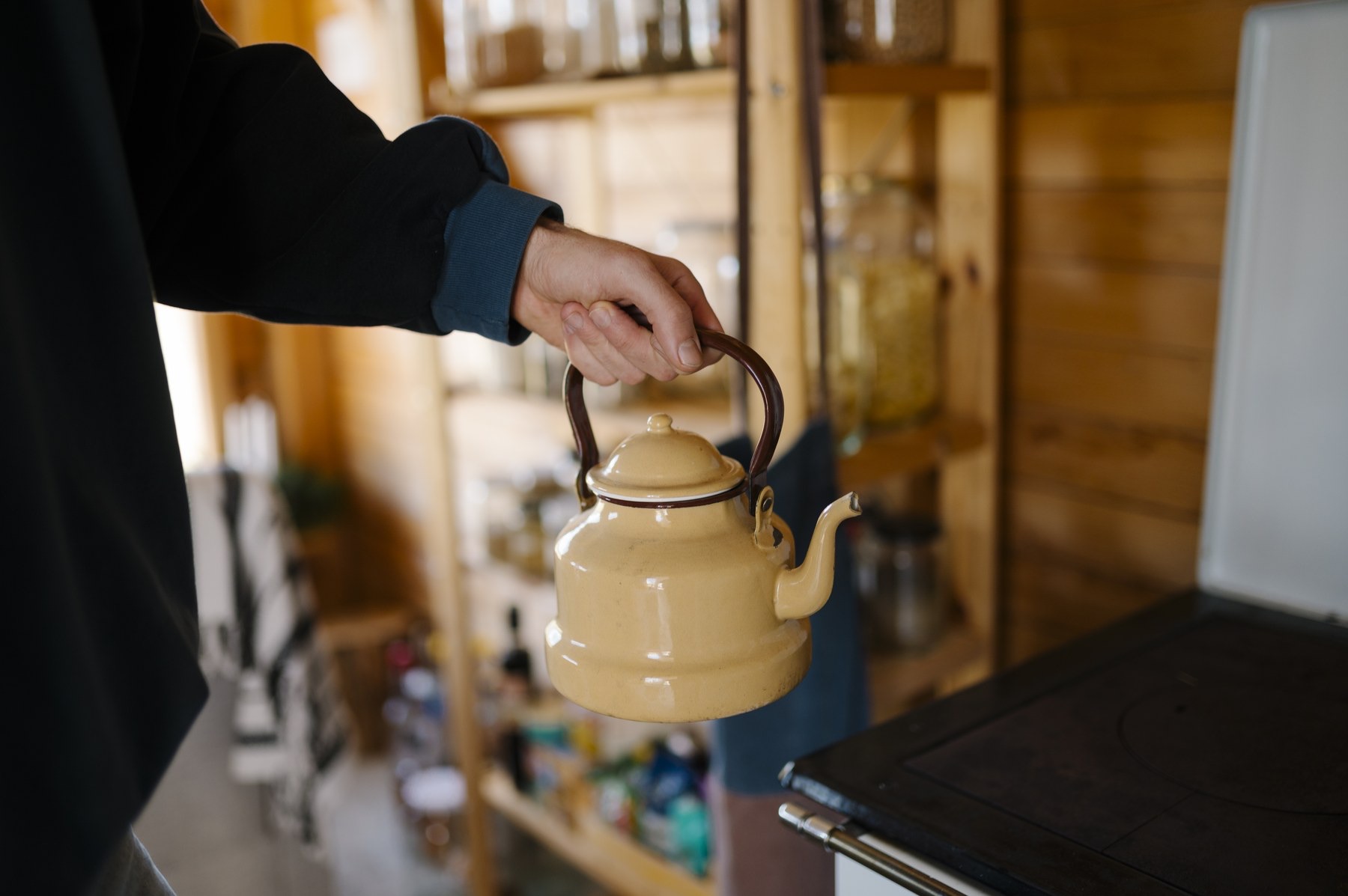
Myth: Boiling water removes everything
A rolling boil is the oldest water treatment there is, and it does one job perfectly: it kills. What boiling does to the microbes, what it leaves untouched, what it makes slightly worse, and why a boil water notice and a lead pipe warning are asking for two different things.
When a water main bursts and the utility issues a boil water notice, it is relying on the oldest treatment there is. Boiling has been used to make water safe since before anyone knew what was in it, and it has probably saved more lives than every chlorination plant put together. It is also the source of a belief that goes well beyond what the kettle can do: that boiled water is clean water, full stop. This article separates the two claims, because one of them is true and the other, in the situations where it matters most, is the opposite of true.
The claim
Boiling water removes everything. Stated as a household rule, and applied, in practice, to any water that seems doubtful: cloudy water, water after a flood, water in a country with an unfamiliar tap, water from an old pipe.
What boiling does perfectly
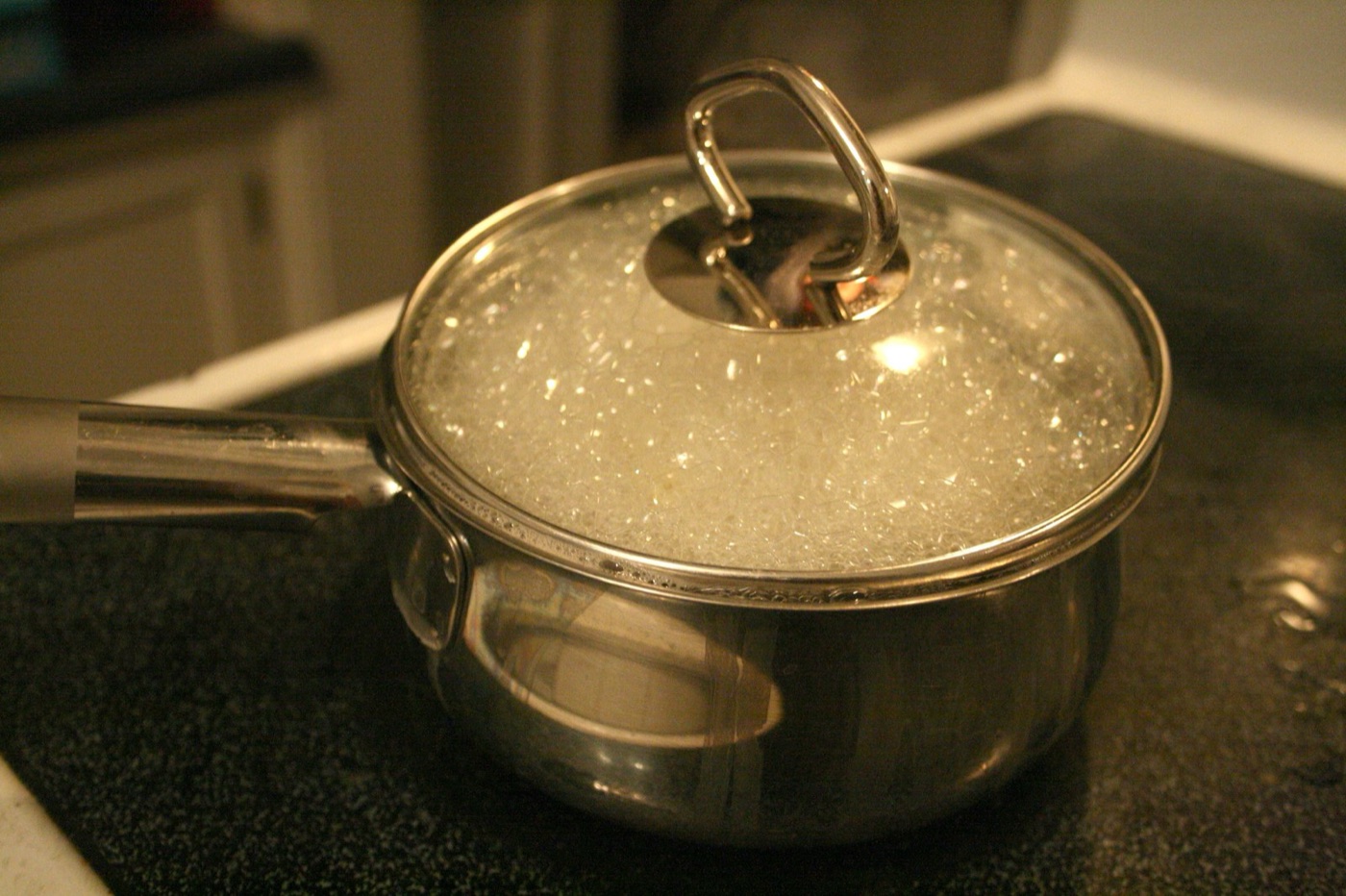
Boiling kills. Bacteria, viruses and the protozoa that cause waterborne disease are living things with proteins that unfold at temperatures well below the boiling point, and a rolling boil finishes the job on all of them. Cholera, typhoid, the E. coli of a contaminated well, hepatitis A, norovirus, Giardia and, importantly, Cryptosporidium, the parasite whose tough cyst shrugs off chlorine and made 400,000 people ill in Milwaukee in 1993, as the disinfection article recounts: all of them die in a pan.
| Boiling water for safety | |
|---|---|
| At sea level | Bring to a rolling boil and hold for one minute |
| Above about 2,000 metres, where water boils cooler | Hold for three minutes |
| Cloudy water | Let it settle or strain it through cloth first, then boil |
| Afterwards | Cool covered, store in a clean container, use within a day |
This is why a boil water notice is the right response to a burst main, a failed filter or a flood, all of which can let microbes into a supply that is otherwise safe. It is why travellers are told to boil, and why the advice has held for a century in every language. Against the biology of water, the kettle is as good as a treatment plant.
What boiling leaves untouched
Boiling removes nothing. That is the half of the rule that fails, and it fails in the situations where people most often reach for the kettle.
Everything that is dissolved in water stays dissolved when the water boils, because boiling only changes the water. Salt stays. Nitrate from fertiliser stays. Fluoride stays. The metals that come from pipes and from the ground, lead, copper, arsenic, stay. Pesticides and industrial chemicals stay, apart from the few that are volatile enough to leave with the steam. The dissolved solids described in the article on TDS stay, all of them, which is the point of that article: nothing catches a dissolved substance except a membrane, a resin or distillation, and a saucepan is none of those.
| What boiling does and does not do | |
|---|---|
| Bacteria, viruses, parasites | Killed |
| Salt and dissolved minerals | Untouched, and concentrated |
| Nitrate | Untouched, and concentrated |
| Lead, copper, arsenic and other metals | Untouched, and concentrated |
| Pesticides and most industrial chemicals | Mostly untouched |
| Chlorine | Driven off, which removes the taste and the protection |
| Cloudiness from particles | Not removed, unless the water settles |
What boiling makes slightly worse
Worse than untouched, in fact, because some of the water leaves. A pan at a rolling boil loses water as steam, and what stays behind holds all of the dissolved substances in less water. Boil a litre down to nine tenths and every dissolved concentration has risen by a tenth. It is a small effect, and it is in the wrong direction, and for water that is doubtful because of its chemistry rather than its biology, boiling makes it marginally worse while creating a feeling of safety that is entirely false.
The kettle proves it. The scale that builds on the element is calcium and magnesium that were dissolved in the water and came out of solution when it was heated, as the hard water article explains. They were in the water before, invisible. Boiling did not remove them; it made them visible, in the kettle, and left the rest in the cup. A person who boils hard water to purify it is looking at the evidence that it does not work every time they descale.
Two notices, two problems
The clearest way to see the difference is in the two warnings a water utility issues, which sound alike and ask for opposite things.
A boil water notice follows a microbial risk: a burst main that let groundwater in, a positive test for E. coli, a failure at the disinfection stage, a flood. It says: the biology of your water may be unsafe, boil it, and the advice is complete. Boiling fixes the problem entirely.
A do not drink notice, or a lead warning of the kind that Flint's residents should have received in 2014, as the pH article recounts, follows a chemical risk: lead from pipes, a chemical spill upstream, nitrate above the limit, arsenic in a well. It says: the chemistry of your water is unsafe, and boiling will not help. The water needs a filter certified for the substance, a different source, or bottled water until the cause is fixed. Boiling lead contaminated water, as the American environmental agency's guidance says plainly, does not remove the lead and can increase its concentration.
| Notice | The problem | The fix |
|---|---|---|
| Boil water | Microbes: burst main, failed disinfection, flood | Boil for one minute |
| Do not drink | Chemistry: lead, nitrate, arsenic, a spill | A certified filter, another source, or bottled water |
Distillation, which is not boiling
There is a way to make boiling remove things, and it is the one people are half remembering when they trust the kettle. If the steam is caught and condensed, the water that results is distilled, and it has left everything dissolved behind in the pot. Distillation is how the first desalination plants made fresh water from the sea, as the desalination article recounts, and it is what a solar still does: a dark tray of dirty water under a sloping sheet of glass, with the sun evaporating the water and the glass condensing it into a channel. A survival still of that kind makes a litre or two a day, and the water is pure enough to be flat and tasteless, because the minerals that give water its taste were left behind with the salt. The kettle boils but does not condense, and that is the whole difference. The steam that carries pure water away is the steam that fogs the kitchen window.
Filters, and what each one removes
For the chemistry that boiling cannot touch, the household tools are filters, and they are not all the same.
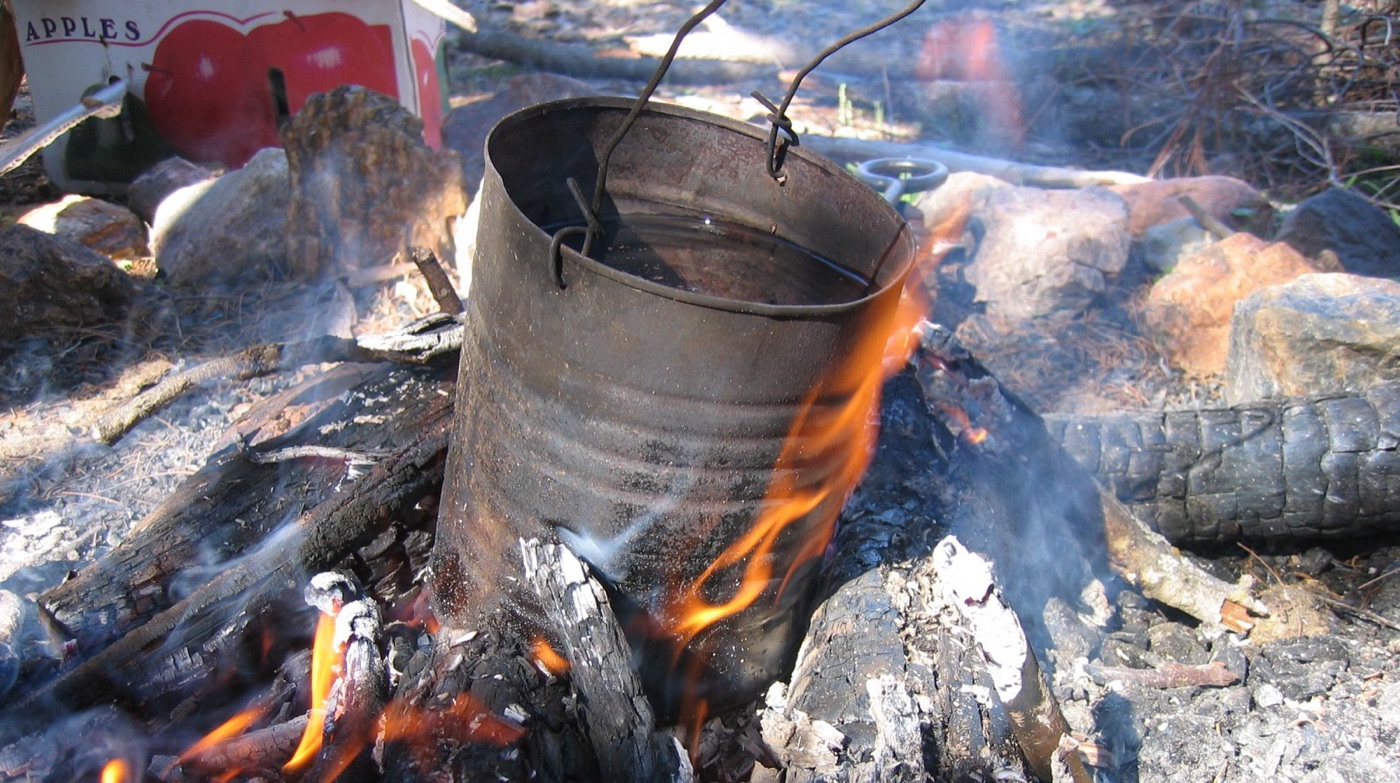
A jug filter with activated carbon removes chlorine, which improves the taste, and some organic compounds, and it reduces lead and copper if the cartridge is designed to and is changed on time. It removes no nitrate, no salt and no fluoride. An under sink reverse osmosis unit, a small version of the membrane described in its own article, removes nearly everything dissolved, including nitrate, salt, fluoride and metals, and produces a stream of concentrate to the drain as its larger cousins do. A ceramic or hollow fibre filter removes microbes without chemicals, and is the traveller's alternative to boiling. None of them is a kettle, and the kettle is none of them. The cheapest way to know which is needed is the utility's published results for the tap, which say what is in the water before anyone decides how to treat it.
Why the belief is so strong
The rule survives because it was once the whole truth. For most of human history the dangers in water were living, and the kettle answered them. Cholera, typhoid and dysentery killed more people than any chemical in a pipe, and the advice to boil was the difference between an outbreak and a quiet summer, in every army camp, every city slum and every colonial household with a servant and a stove. The chemical problems of water, lead, nitrate, arsenic, industrial solvents, arrived later, with the industries that made them, and they arrived in cities whose biology had already been fixed by the treatment plant. The belief is a survivor from the age before the plant, and it is right about that age. It is only in the age after, when the tap is safe from microbes and the remaining risks are dissolved, that the kettle's reputation exceeds its powers.
The nuance
The rule holds, entirely, for the problem it was made for. Where water is doubtful because of what might be living in it, which is the case in most of the world and in most emergencies, boiling is the best available treatment, and the advice to boil is the advice that saves lives. Nothing in this article should make anyone hesitate to boil water they suspect.
It fails for the problem that a modern city's water is more likely to have. In a city with a working treatment plant and a chlorine residual, the microbes are handled, and the risks that remain are old pipes, industrial chemistry and the ground the water came through, none of which the kettle touches. In that setting, boiling tap water for safety achieves nothing except driving off the chlorine that was protecting it, and a person worried about lead from their own plumbing is better served by running the tap for a minute in the morning and fitting a filter than by boiling anything.
Two problems, two tools
Water can be unsafe in two ways, and the ways need different tools. Living things are killed by heat, and the kettle kills them all. Dissolved things are removed only by a membrane, a resin, or distillation, and the kettle removes none of them. The oldest water treatment in the world does its one job perfectly and has been asked, for centuries, to do a second one that it cannot. The scale on the element has been trying to say so all along.
Sources
- World Health Organization, Guidelines for Drinking water Quality, and WHO technical brief on boiling water: a rolling boil is sufficient to inactivate pathogenic bacteria, viruses and protozoa.
- US Centers for Disease Control, guidance on boil water advisories: one minute at a rolling boil, three minutes above 2,000 metres.
- US EPA, guidance on lead in drinking water: boiling does not remove lead and may increase its concentration.
- Photographs: opener: Person pours water from yellow kettle in wooden kitchen by Shixart1985 (CC BY) via Wikimedia Commons; inline: 2008-07-05 Water boiling in cooking pot by Ildar Sagdejev (Specious) (CC BY-SA) via Wikimedia Commons; inline: Billycan-campfire (cropped) by Flickr user "Johan Larsson" (CC BY) via Wikimedia Commons.