
Myth: Desalination Is the Answer
The sea holds ninety seven percent of the water on Earth, the technology to make it fresh has existed for sixty years and its cost has fallen by two thirds, so the world's water problem is surely a matter of building enough plants. It is a comforting thought and a wrong one, for reasons of energy, brine, distance and, above all, arithmetic: desalination makes about one percent of the water people use, and the other ninety nine is mostly on farms it cannot reach.
When Cape Town approached its Day Zero, the letters to the newspapers said it. When Chennai's reservoirs emptied, the television said it. When California's reservoirs fell, the state's governor said it, and built a plant. The sea is right there, it holds ninety seven percent of the water on Earth, the technology to make it fresh has been running for sixty years and its cost has fallen by two thirds, and so, the argument goes, the world's water problem is a problem of not having built enough desalination plants. It is the most comforting sentence in the subject after the water cycle, and, like that one, it is true in the parts that do not matter.
I have spent my working life in and around the plants this article is about, and I would not be without them. This article is about why they are one tool, for one kind of place, and why the rest of the toolbox is the rest of this site.
What desalination is good at
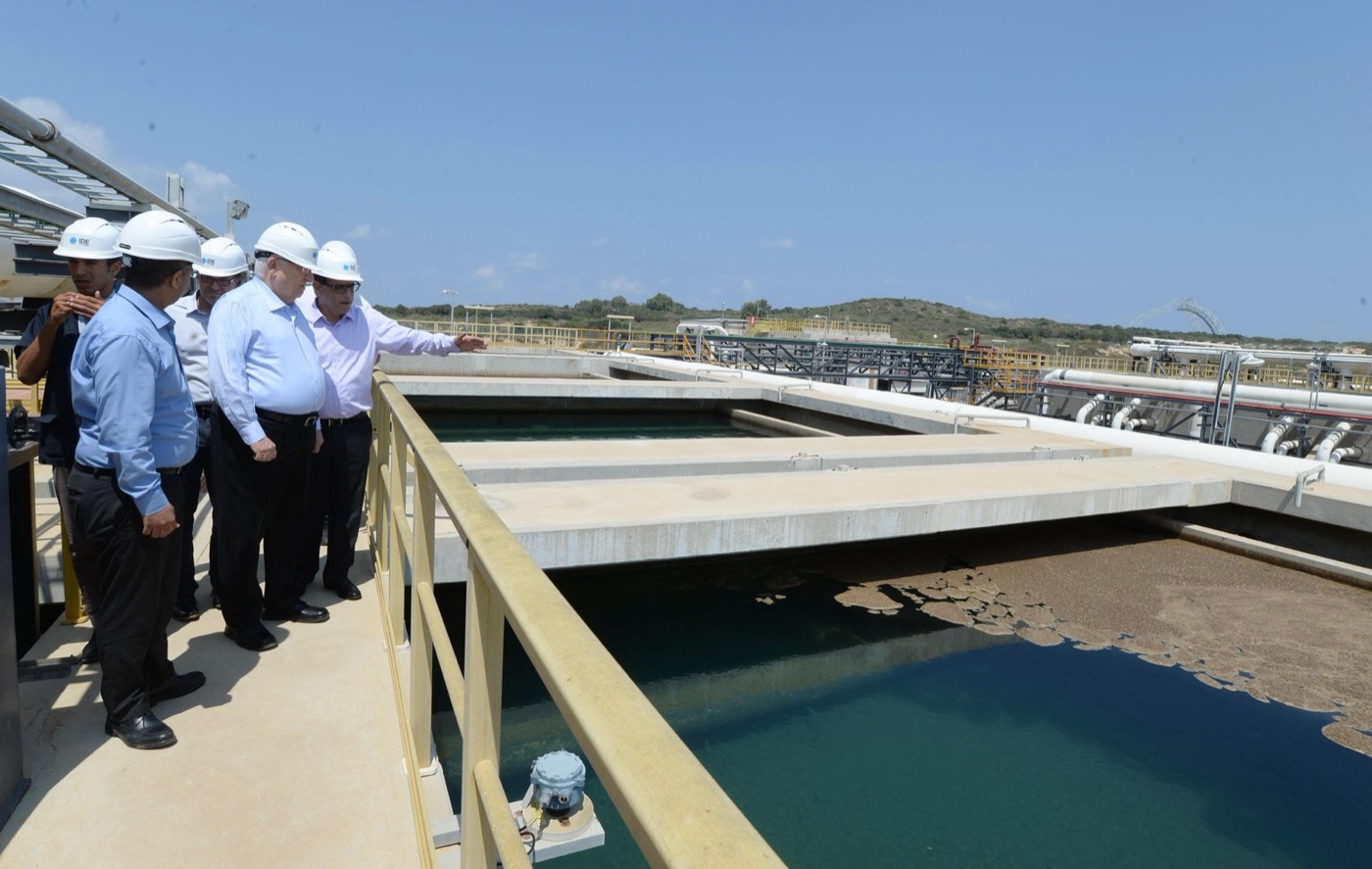
The technology works, and the honest version of this article says so first. A modern seawater reverse osmosis plant, of the kind the desalination article describes, pushes seawater through membranes at sixty bar, takes out the salt, and delivers drinking water at about half a dollar to a dollar and a half per cubic metre, using three to four kilowatt hours of electricity to do it. Israel drinks mostly from the sea, and its five plants freed the country's natural water for its farms, as the Israel article explains. Singapore, the Gulf states, Perth, Chennai, Barcelona and San Diego all use it, and each of them is a coastal city that needed a supply that did not depend on rain, and paid for one. For that purpose, a city on a coast that can afford a dollar a cubic metre and has electricity to spare, desalination is the right answer and it is now the standard one.
The trouble begins when the sentence is extended from those cities to the world.
The arithmetic
All the desalination plants on Earth, about twenty thousand of them, have a combined capacity of around a hundred million cubic metres a day. That sounds like a great deal, and it is about 35 cubic kilometres a year. The world withdraws about four thousand cubic kilometres of fresh water a year. Desalination, at its full capacity, is under one percent of it.
| The world's water, and the sea's share of it | |
|---|---|
| Global freshwater withdrawals | About 4,000 cubic kilometres a year |
| Of which agriculture | About 70 percent |
| Of which industry and power | About 20 percent |
| Of which cities and households | About 10 percent |
| Global desalination capacity | About 35 cubic kilometres a year, under 1 percent |
| Cost of desalinated seawater | About 0.5 to 1.5 dollars per cubic metre |
| What a farmer can pay for irrigation water | A few cents per cubic metre, often less |
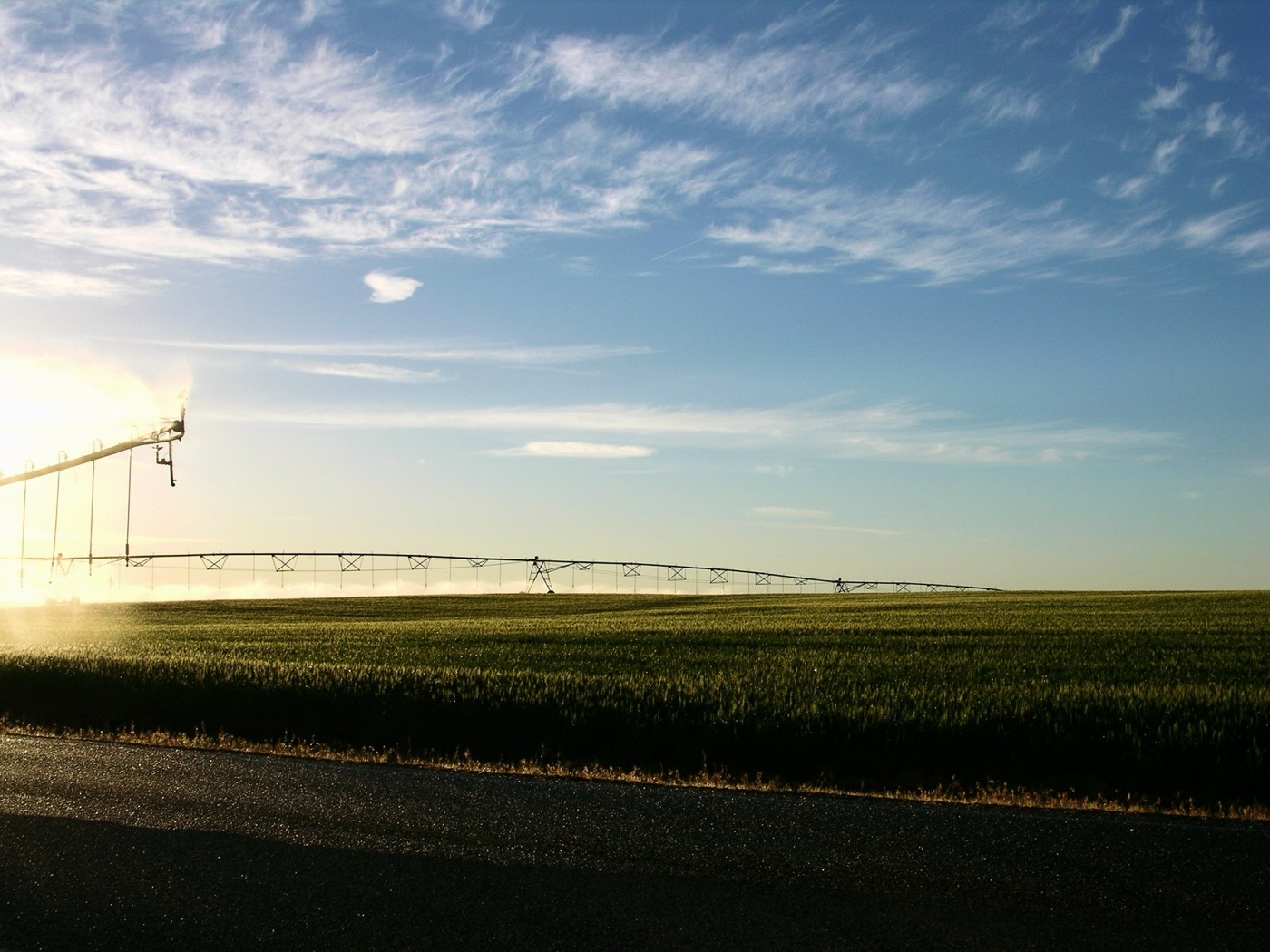
The second row is the one that ends the argument. Seventy percent of the world's water goes to farms, and no farm can pay for desalinated water. A tonne of wheat sells for a few hundred dollars and takes, as the bread article explains, more than a thousand cubic metres of water to grow. At a dollar a cubic metre the water would cost several times the crop. Even rice, cotton, maize and fodder, the crops that use most of the world's irrigation, are worth a fraction of what desalinated water costs to make, and the places where irrigation is emptying the aquifers, the Punjab, the North China Plain, the High Plains, the Central Valley, are hundreds of kilometres from the sea and hundreds of metres above it. Desalination can supply a city. It cannot supply the thing that uses most of the water.
Energy
A cubic metre of seawater, made fresh by reverse osmosis, takes about three to four kilowatt hours, and the older thermal plants of the Gulf take several times that. Multiply by the hundred million cubic metres a day and the world's desalination uses on the order of the electricity of a mid sized country, and in the Gulf, where most of the thermal capacity is, it is made by burning gas. Doubling the world's capacity, which the industry expects by the 2030s, doubles that. A country like Israel, with a small population and a coast, can run its supply on a few percent of its electricity. A country like India, trying to desalinate for its farms, would need more power than it has. The energy is falling, as membranes and pumps improve and as the plants are coupled to solar, and the floor is set by physics: it takes about a kilowatt hour per cubic metre simply to separate salt from seawater against the osmotic pressure, and no engineering will go below it.
Brine
For every litre of fresh water a seawater plant makes, it returns about one and a half litres of brine to the sea, at roughly twice the sea's salinity, often warmer, and carrying the chemicals used to keep the membranes clean. The brine article describes what that does and how a well designed outfall disperses it. The world's plants together produce about 140 million cubic metres of brine a day, most of it in the Gulf, a shallow, warm, nearly enclosed sea whose salinity has risen measurably since the plants were built along its shore. In an open coast with strong currents the brine is a manageable problem. In a gulf, a bay or a lagoon it is the plant's largest environmental cost, and the more plants a coast carries, the larger it grows.
Distance
The sea is at sea level. The people short of water are, more often than not, far from it and above it. Mexico City is at 2,200 metres and 300 kilometres from the coast. Tehran is at 1,200 metres and the nearest sea is the Caspian, over a mountain range. The North China Plain, the Punjab, the High Plains, the Sahel, the Central Valley: none is a coast. Lifting a cubic metre of water a thousand metres takes about three kilowatt hours, roughly what it took to desalinate it, and pumping it hundreds of kilometres takes more, so that the delivered cost doubles or triples before the water reaches the tap. The copper mines of the Atacama, described in their own article, do exactly this, lifting seawater three thousand metres to the mines, and they can because a tonne of copper is worth eight thousand dollars. A tonne of wheat is not.
Where it is going
The honest forecast for the industry, since I am in it, is growth. Capacity has doubled roughly every decade and will probably do so again, as membranes improve, as solar power makes the electricity cheap in the sunny places where the plants are, and as the coastal cities of India, China, Africa and the Americas reach the point that Chennai and Cape Town reached and decide they need a supply the rain does not control. The Gulf will keep building, the Mediterranean will build more, and the newest plants will be larger than any that exist. That growth will take the sea's share of the world's water from under one percent to perhaps two, over twenty years, in the cities that can pay. It will not reach the farms, and it will not reach inland, and every plant built will need an outfall, a power line and a tariff. The forecast is for a larger tool, used in the same kind of place, and the sentence at the top of this article will be as wrong in 2045 as it is now.
What the sentence leaves out
The sentence is comforting because it makes the problem technical, and technical problems have vendors. The places on this site that solved their water did not, for the most part, solve it with the sea. Singapore desalinates, and it also catches its rain, recycles its sewage and fixes its leaks. Israel desalinates, and it also drips its crops, reuses its wastewater and prices its water. Las Vegas has no desalination plant and has cut its river use by a quarter while growing by half. Orange County drinks its own sewage. Tokyo found a city's worth of water in its pipes. Every one of those is cheaper per cubic metre than the sea, and every one is available inland. The myth's harm lies in what it excuses: it lets a city, or a country, put off the cheaper and harder things, on the promise of a plant.
| What the sea can and cannot do | |
|---|---|
| Supply a coastal city that can pay a dollar a cubic metre | Yes, and it does |
| Replace a river or an aquifer for a city inland and uphill | At several times the cost, rarely |
| Supply irrigation for staple crops | No, at any foreseeable price |
| Reduce the water a city needs | No; that is pricing, leaks and reuse |
| Make water without energy or brine | No; the floor is physics |
The version that is true
There is a sentence about desalination that is right, and it is worth setting down beside the wrong one. For a coastal city that has done the cheaper things first, that has fixed its leaks, priced its water, reused its sewage and caught its rain, and that still needs a supply that does not depend on the sky, the sea is the next source, and it is now affordable, reliable and clean. Every city in this series that built a plant on those terms, Perth, Singapore, Israel's coast, has been glad of it. The cities that built one instead of the cheaper things, or that promised one and put off the rest, are the ones that will build a second plant and a third and still be short, because the demand a plant is built to meet is the demand the city never reduced. The sea is a good last answer. It is a poor first one.
What it teaches
Desalination is real, it works, and it is the right answer for a growing number of coastal cities, which is why my industry keeps building it. It is also under one percent of the world's water and cannot become much more, because most of the world's water is on farms that cannot pay for it and are nowhere near the sea. The world's water problem is, as every article on this site has said in its own way, a problem of how much is spent and where, and a plant on the coast changes neither. The sea is the answer to a particular question, asked by a particular kind of city. It is not the answer to the question.
One percent, at full capacity, from a sea that holds ninety seven.
Sources
- International Desalination Association and Global Water Intelligence, DesalData: global installed capacity of about 100 million cubic metres a day across some 20,000 plants.
- Jones, E. et al. (2019). The state of desalination and brine production: a global outlook. Science of the Total Environment 657. Brine volumes of about 1.5 litres per litre of product.
- FAO AQUASTAT: global freshwater withdrawals of about 4,000 cubic kilometres a year, about 70 percent for agriculture.
- Voutchkov, N. (2018). Energy use for membrane seawater desalination: current status and trends. Desalination 431. About 3 to 4 kilowatt hours per cubic metre.
- Israel Water Authority, share of domestic supply from desalination, and Sorek and Hadera plant costs of around 0.5 dollars per cubic metre.
- Photographs: opener: 160810-N-FP878-007 (28801419432) by Commander, U.S. Naval Forces Europe-Afri (public domain) via Wikimedia Commons; inline: Wheat farm located along Clark Rd in Pasco by Araceli Fuentes (CC BY-SA) via Wikimedia Commons; inline: Reuven Rivlin in a visit at IDE - Sorek Desalination Plant (0097) by Mark Neyman (CC BY-SA) via Wikimedia Commons.