Myth: Bottled water is cleaner than tap
In most of Europe the claim does not hold, and the reason has nothing to do with plastic or purity. Tap water and bottled water are governed by different laws, tested in different ways and protected on the journey to the glass by different things. Reading the rules changes the argument.
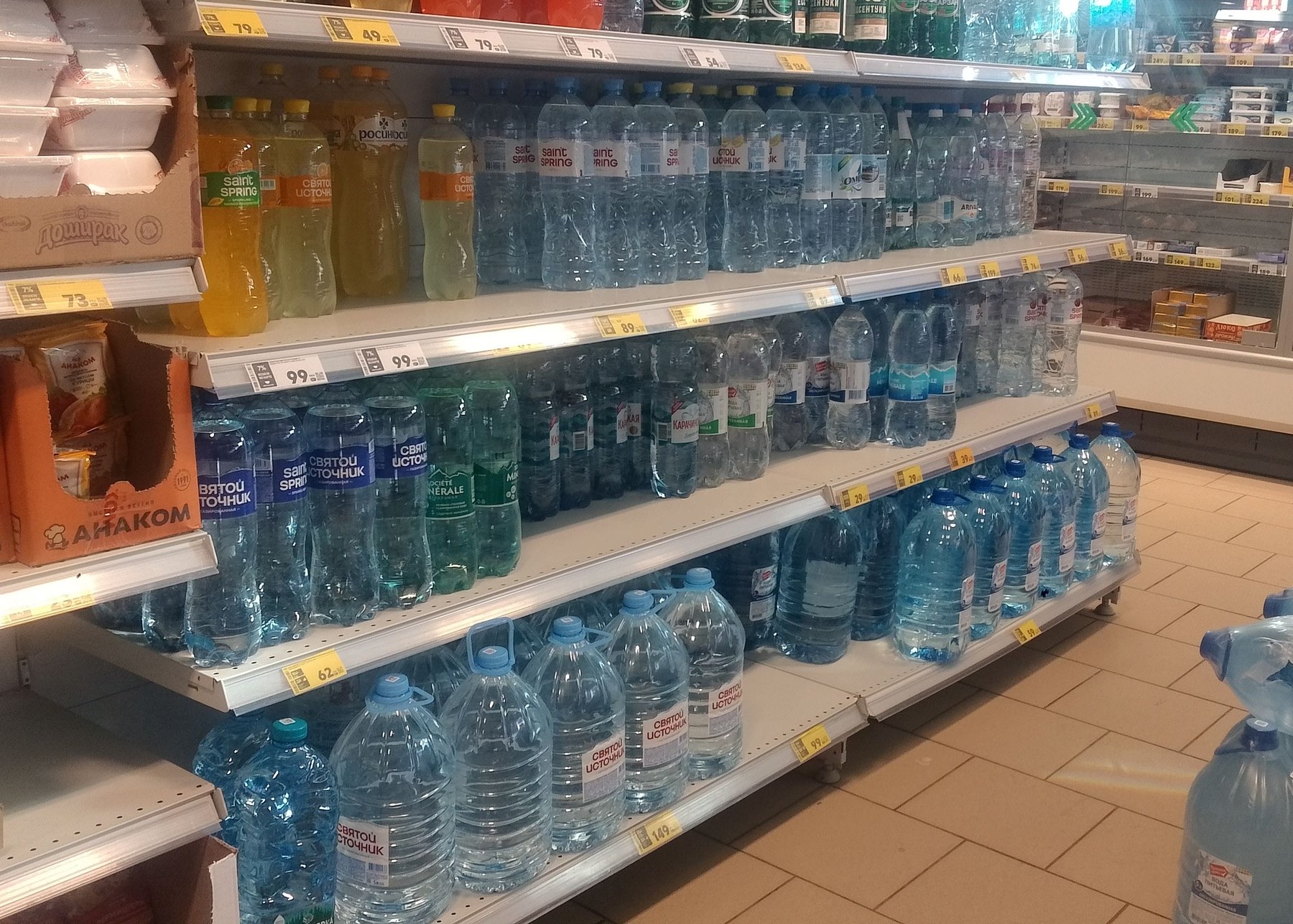
Somewhere in most European supermarkets there is an aisle given over entirely to water. Still and sparkling, glass and plastic, from mountains and springs and volcanic islands, each bottle carrying a label that lists its minerals with the care of a wine. A few metres away, behind a wall, is a tap connected to a public network that delivers the same substance for a price so low that most people could not say what it is.
The aisle exists because of a belief, rarely examined and widely held, that what is in the bottle is cleaner, safer or purer than what comes out of the wall. It is a belief worth testing, and since taste settles nothing, the way to test it is to read the rules that each kind of water is required to meet. The rules turn out to say something quite different from what the aisle suggests.
Two rulebooks
In the European Union, tap water is governed by the Drinking Water Directive, most recently recast in 2020. It is a public health law, and it reads like one. It sets binding limits for dozens of parameters: bacteria, lead, nitrate, pesticides, disinfection byproducts, and more, each with a maximum concentration. It requires the water supplier to sample at the treatment works, in the distribution network and at consumers' taps, on a schedule that scales with the size of the supply and never stops. Large supplies are watched by online instruments that report continuously. The results must be made available to the public, and when something goes wrong, the supplier is obliged to say so.
Bottled water answers to a different law. Most of what is sold in Europe is natural mineral water, and it has its own directive, dating in its current form from 2009. What is striking about that directive is its subject. It defines natural mineral water by where it comes from and how stable it is, not by how pure it is. The water must originate in a named underground source protected from pollution. It must be bottled at that source. Its mineral composition must remain constant within natural limits. And its label must declare what those minerals are.
The bottled water rules, in other words, are a product standard. They guarantee that every bottle of a given brand contains the same water as the last one. They ask for consistency, batch after batch, rather than for a level of purity beyond what the tap provides, and in several important respects they do not permit it.
| Supply | Held to |
|---|---|
| Tap water | A public health standard, monitored continuously across the network |
| Bottled water | A product standard, tested batch by batch at the plant |
What natural actually means
The word natural on a bottle carries a great deal of marketing weight, and it has a precise legal meaning that is almost the opposite of what people assume.
Under the directive, natural mineral water may not be disinfected. No chlorine, no ozone used for disinfection, no ultraviolet light, nothing that would kill microbes. The entire premise of the category is water that is clean enough at the source not to need it, and the only treatments allowed are a short list intended to remove naturally unstable elements: iron, manganese, sulphur compounds, arsenic. Everything else the water carries out of the ground must be left in.
That includes the minerals. A drinking water plant will often reduce the hardness of a water, or its sodium, or its sulphate, because a public supply is designed for everyone including infants and people on restricted diets. A mineral water is required to keep those minerals, because they are what distinguishes the brand, and it may carry concentrations of some of them that would be reduced if the same water came through a municipal pipe. This is legal because it is a different product under a different law, and it is precisely what the label is advertising.
| What the directive requires of natural mineral water | |
|---|---|
| Origin | A named underground source, protected from pollution |
| Bottling | At the source itself |
| Composition | Constant mineral content, within natural limits |
| Label | The minerals declared, and the dry residue at 180 °C |
| Treatment | Removal of iron, manganese, sulphur compounds and arsenic only; no disinfection of any kind |
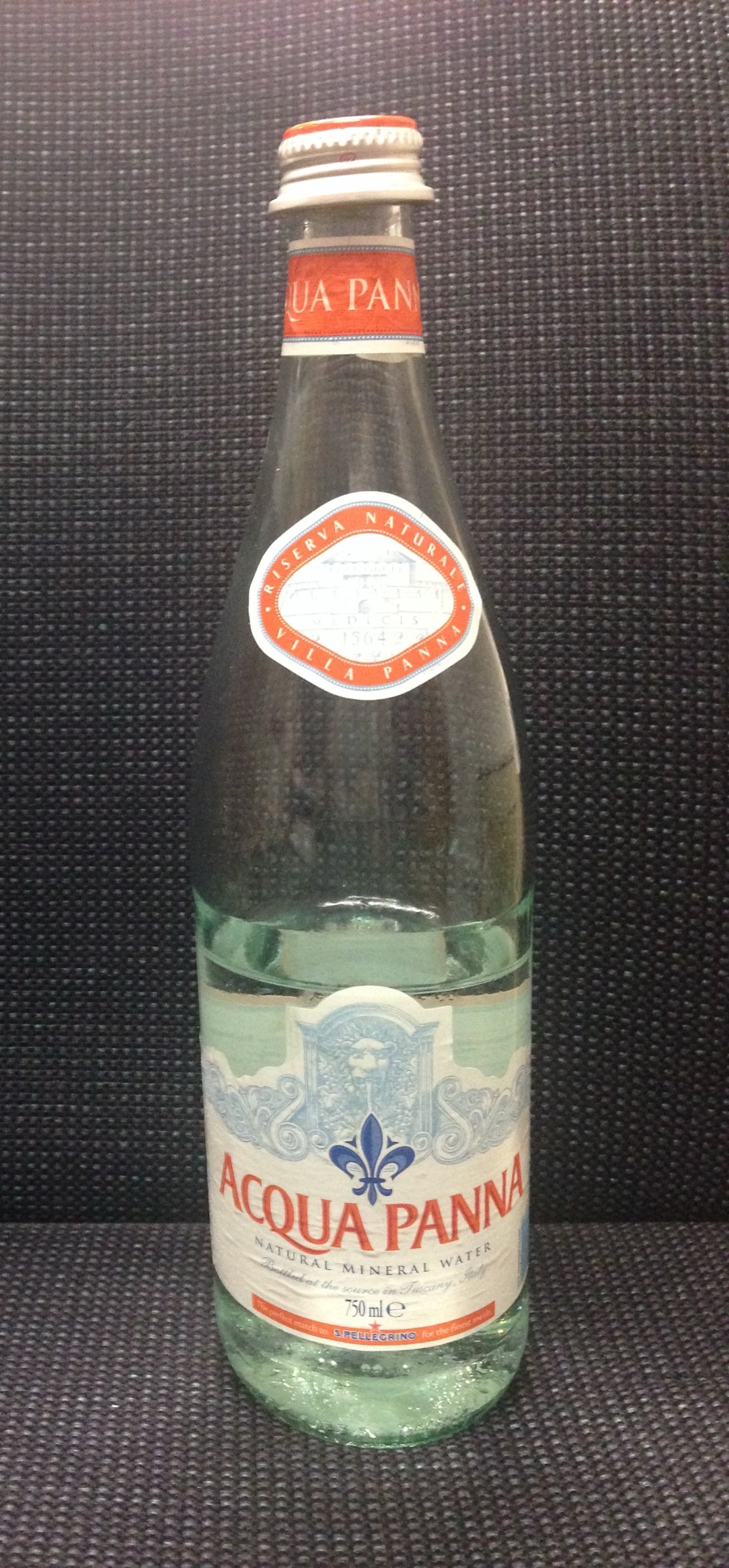
So natural mineral water is a statement about origin and stability. Nothing in the phrase is a claim to be cleaner than the water in a kitchen, and the law that defines it makes no such claim on its behalf.
The smell of chlorine
Ask people why they buy bottled water and the most common answer, after habit, is taste, and the taste they mean is chlorine. It is worth knowing exactly what that smell is, because it is the strongest argument against the myth rather than for it.
Water leaving a treatment plant has been disinfected. It then travels through kilometres of pipe, some of it decades old, at warm temperatures, for hours or days before it reaches a tap. Along that journey it passes repairs, junctions, dead ends and the occasional small leak, and anything that enters could, in principle, begin to grow. To prevent that, the supplier deliberately leaves a small trace of disinfectant in the water as it leaves the works. The World Health Organization recommends a free chlorine residual of around 0.2 to 0.5 milligrams per litre at the point of delivery. That residual is the smell. Its presence at the tap is evidence that the water has been protected all the way there and that the protection is still working.
Bottled water carries no residual, and under the mineral water rules it cannot. It relies entirely on having been sealed at a clean source and on staying sealed. Once the bottle is opened, and especially once it is warm, nothing in the water prevents microbes from multiplying. A half finished bottle that has spent an afternoon on the seat of a hot car is in a worse state, microbiologically, than the tap it was bought to replace.
Chlorine is not without cost. It reacts with organic matter in the water to form byproducts, which are limited under the same directive and measured by the same monitoring, and which in a well run network sit far below the thresholds. For anyone who dislikes the taste, an open jug left in the refrigerator for an hour allows most of the chlorine to escape. By then it has done its work.
How each is watched
The difference in law produces a difference in testing, and the difference in testing is the practical heart of the matter.

A utility tests its water continuously and throughout the network, because the network is where problems arise. A bottler tests batches at the plant, because for a sealed product the batch is the meaningful unit. Both approaches are correct for what they are checking. But if the question is which water is being examined more often, in more places, on its way to the person who drinks it, the answer in most European cities is the tap, and it is not close.
There is a further asymmetry. Utilities are required to publish their results, and most do so online, by postcode. Bottlers are not, and as a rule do not. The water that people trust less is the one whose test results they could read this evening.
The price of the belief
The economics deserve a paragraph, if only because they are so lopsided. Municipal water in Europe typically costs a few euros per cubic metre, which is a few tenths of a cent per litre. Bottled water retails at tens of cents per litre and often more. Litre for litre, the tap is cheaper by a factor in the hundreds, before the plastic, the transport and the refrigeration are counted.
| Typical price per litre | |
|---|---|
| Tap water | A few tenths of a cent |
| Bottled water | Tens of cents, often more |
None of this is an argument that price measures quality. It is an observation that the belief the aisle rests on is an expensive one, and that the premium buys consistency and taste rather than safety.
Where the bottle wins
A myth tested honestly has to concede the cases where it holds, and there are several.
Where the mains supply is intermittent, so that pipes run empty and refill, contamination can enter and the residual cannot be relied upon. Where a boil water notice has been issued, the utility itself is saying that the tap cannot be trusted until further notice. Where a building's plumbing is old enough to contain lead, the water can be perfect at the street and unsafe at the kitchen, and no amount of monitoring at the works will catch it. And when travelling somewhere the network is unknown, a sealed bottle from a reputable source is a reasonable precaution. In all of these situations bottled water is the safer choice, and no European regulation changes that.
The tap is not always better. The packaging, though, tells the drinker nothing about which case they are in. The state of the supply tells them everything. Where the network is well run, the tap is the more watched and more transparent water. Where it is not, the bottle earns its place.
The verdict
The claim that bottled water is cleaner than tap does not hold in most of Europe, and it fails for a reason that surprises people: the two are held to different kinds of standard, and the tap's is the stricter and the more closely policed. Bottled water is a consistent, unchlorinated product from a protected source, and that is a fine thing to be. It is not a purer version of what comes out of the wall, and the law that governs it never said it was.
The myth persists because taste is persuasive, because marketing is good at its job, and because a product bought in a shop feels vetted in a way that a public utility does not. Of the three, only the last is worth arguing with, and the argument is easily won. The utility publishes its results. The next time the subject comes up, the useful question is which rule the bottle is supposed to be meeting.
Got a water myth worth testing? Send it in.
Sources
- Directive (EU) 2020/2184 of the European Parliament and of the Council on the quality of water intended for human consumption (the Drinking Water Directive), recast of Directive 98/83/EC. Parameters, monitoring frequency by supply size, and the obligation to inform consumers.
- Directive 2009/54/EC on the exploitation and marketing of natural mineral waters: definition, bottling at source, permitted treatments, prohibition of disinfection, labelling.
- World Health Organization, Guidelines for Drinking water Quality, chlorine: recommended free chlorine residual of 0.2 to 0.5 mg/L at the point of delivery; disinfection byproducts.
- Photographs: opener: Полка с питьевой водой в магазине by JustKronos (CC0) via Wikimedia Commons; laboratory samples by CDC, Unsplash.
- The price comparison (tap water hundreds of times cheaper per litre than bottled) is arithmetic on typical European water tariffs of a few euros per cubic metre against retail bottled prices of tens of cents per litre.