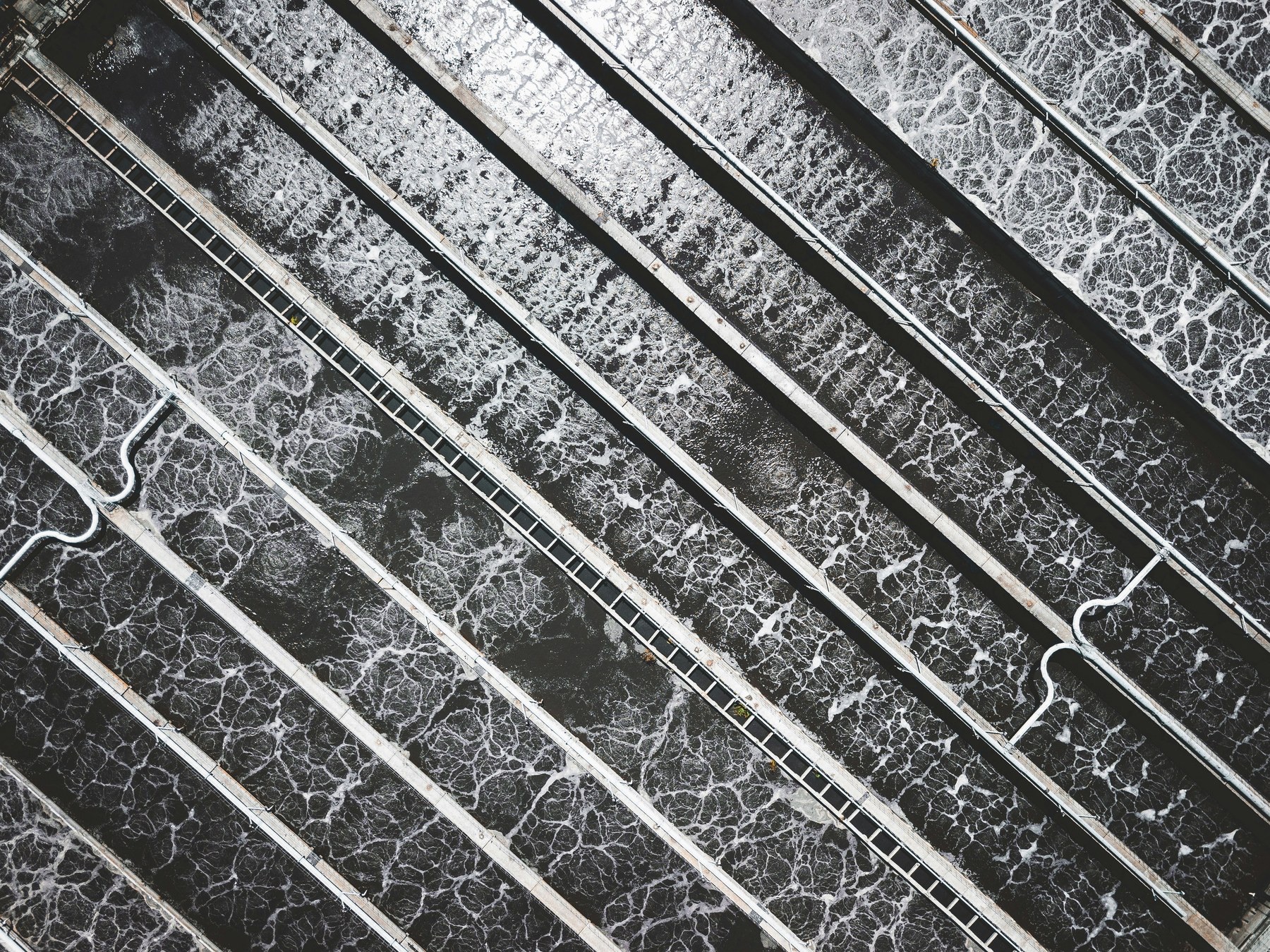
Plain Water: Wastewater
The word covers a shower drain, a dye house outfall and the rain off a car park, which is why it tells you almost nothing on its own. What wastewater actually is, what it carries, and why an industry exists for the last one percent of it.
Every industry has a word that outsiders get wrong in the first sentence, and in the water business that word is wastewater. It is used in the news as a polite synonym for sewage. It is used in company reports to mean whatever a factory would rather not describe. It is used, occasionally, as an insult. In the industry itself it has a precise meaning that is broader than any of those, and the precision matters, because the word decides what problem an engineer is actually being asked to solve.
This is the first of a series of articles that take the terms the water industry uses every day and explain them in plain language. Wastewater is where the series has to start, because every other word depends on it.
What the word means
Wastewater is any water that has already been used, and now carries something it did not carry before.
That is the whole definition, and each half of it does work. Already been used rules out rivers, rain and the sea, however dirty they may be. Carries something it did not carry before rules in every kind of use, from a shower to a steel mill. The water that leaves a washing machine is wastewater. So is the water that leaves a brewery, a tannery, a hospital, a power station's cooling tower, and the water that runs off a car park in a storm, having washed the car park on its way.
The industry divides that range into three broad kinds, and the distinction between them is the first thing to learn.
| Kind | What it is |
|---|---|
| Sewage | Used water from homes: toilets, showers, sinks, washing machines |
| Effluent | Used water leaving a factory or an industrial process |
| Runoff | Rain that has washed streets, roofs and fields on its way to a drain |
Sewage is a kind of wastewater. It is the kind most people picture, and in a city it is the largest kind by volume. It is not the whole category, and treating the two words as interchangeable is the most common mistake people make about the sector. A dye house and a bathroom both produce wastewater. They produce wildly different problems, and the word alone does not tell you which one you are dealing with.
What used actually adds
If wastewater is water that carries something new, the obvious question is what. The list is shorter than people expect, and one item on it surprises almost everyone.
| Cargo | Examples |
|---|---|
| Organic matter | Food, human waste, anything that rots |
| Solids | Grit, fibre, lint, whatever was carried along |
| Chemicals | Detergents, dyes, process reagents, salt |
| Heat | Hot water, which is a pollutant even when it is clean |
The last row is the surprising one. A power station that draws river water for cooling and returns it, clean, ten degrees warmer, has produced wastewater, and a regulator will treat it as such. Warm water holds less dissolved oxygen than cold water, and it speeds up everything that lives in the river, so a plume of clean warm water can do real damage to a stretch of river without adding a single molecule of dirt to it. Heat is on the discharge permit alongside everything else.
The first row is the one the industry spends most of its effort on. Organic matter is the part of wastewater that rots, and rotting is a chemical process that consumes oxygen. That fact, more than any other, explains why treatment plants exist, and it deserves a section of its own.
The one percent
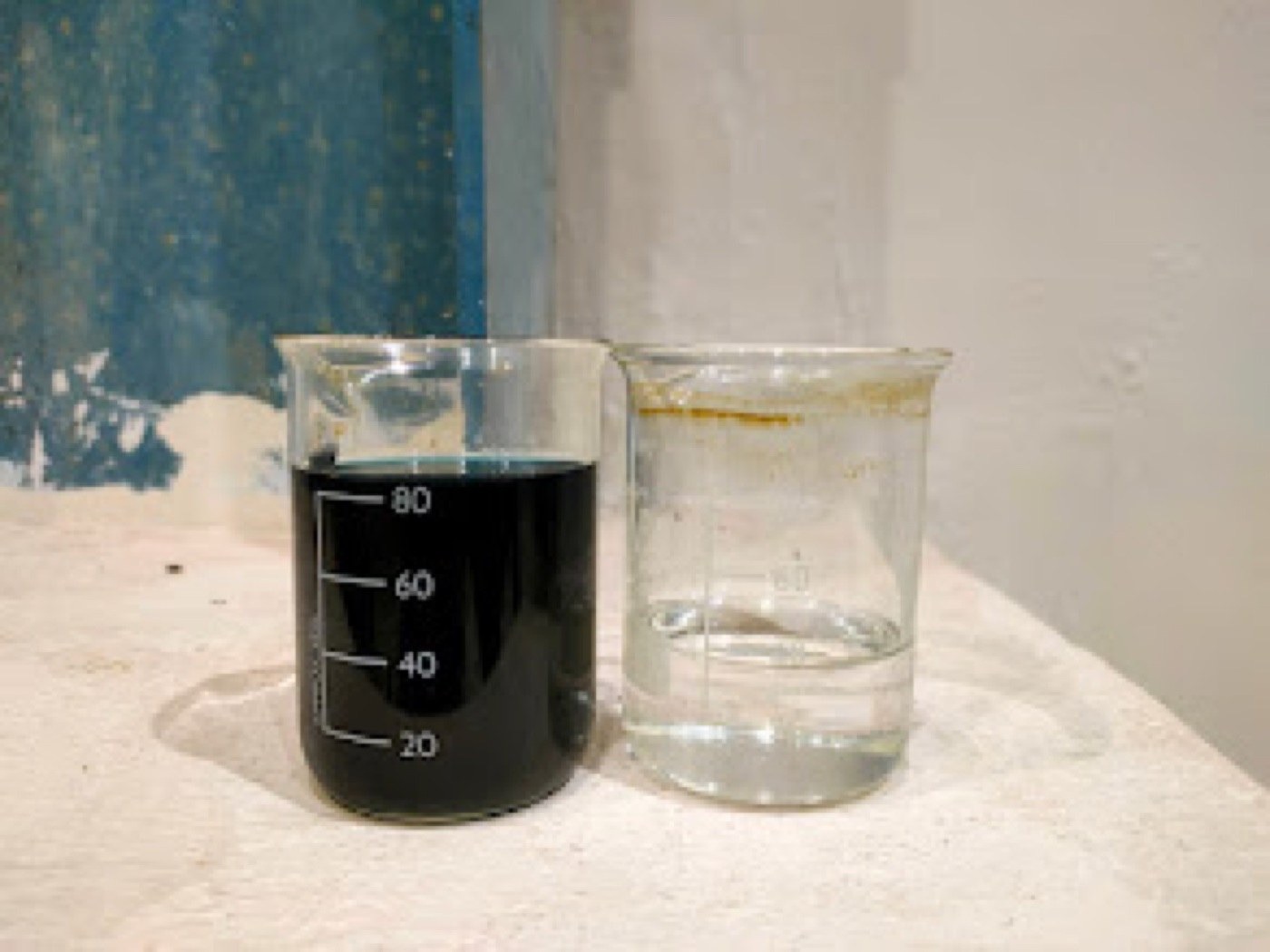
Here is the figure that reorganises how most people think about the subject. Typical municipal wastewater, the sewage of an ordinary city, is more than 99 percent water. Its solid and dissolved cargo, everything that makes it wastewater rather than water, is on the order of a gram in every litre. The entire apparatus of a treatment works, the screens, the settling tanks, the vast aerated basins, the digesters, the laboratories and the people, exists to deal with that last one percent.
It is tempting to conclude that the problem is therefore small. It is not, and the reason is oxygen.
A river carries dissolved oxygen, a few milligrams in every litre, and everything that lives in it breathes that oxygen. When organic matter enters the river, bacteria begin to eat it, and as they eat they breathe, drawing oxygen out of the water. A large enough load of organic matter, and the bacteria take the oxygen faster than the river can replace it from the air. Fish and insects suffocate. The river can be perfectly clear while this happens. The damage is done by the invisible fraction, working through the biology of the water, and it is done long before anything looks dirty.
That is the reason the industry measures wastewater rather than looking at it. Almost nothing that matters in it is visible. What matters is dissolved, and dissolved things are measured, in milligrams per litre, with names like COD and BOD and TDS that the rest of this series will explain one at a time.
Three problems that share a word
Because the word covers so much, it helps to walk through three wastewaters that have nothing in common but the name.
A bathroom. Sewage is warm, dilute, and organic. It is mostly water, a little of everything a household produces, and a great deal of bacteria, some of them harmful. It is also remarkably consistent from one city to the next, which is why the plants that treat it are built to a standard pattern that has barely changed in a century: let the solids settle, feed the rest to bacteria in a tank with air pumped through it, let the bacteria settle out, disinfect, discharge. A city's sewage plant is, at heart, a very large and carefully fed farm of microbes, and it works because sewage is food.
A dye house. Textile effluent is hot, alkaline, salty, coloured and loaded with organic matter, all at once. The organic part can be fed to bacteria, as sewage can. The salt cannot, the colour mostly cannot, and the heat and alkalinity have to be dealt with before the bacteria will tolerate the water at all. A plant treating this water is a sequence of different answers to different problems, and it costs a great deal more per litre than a sewage works.
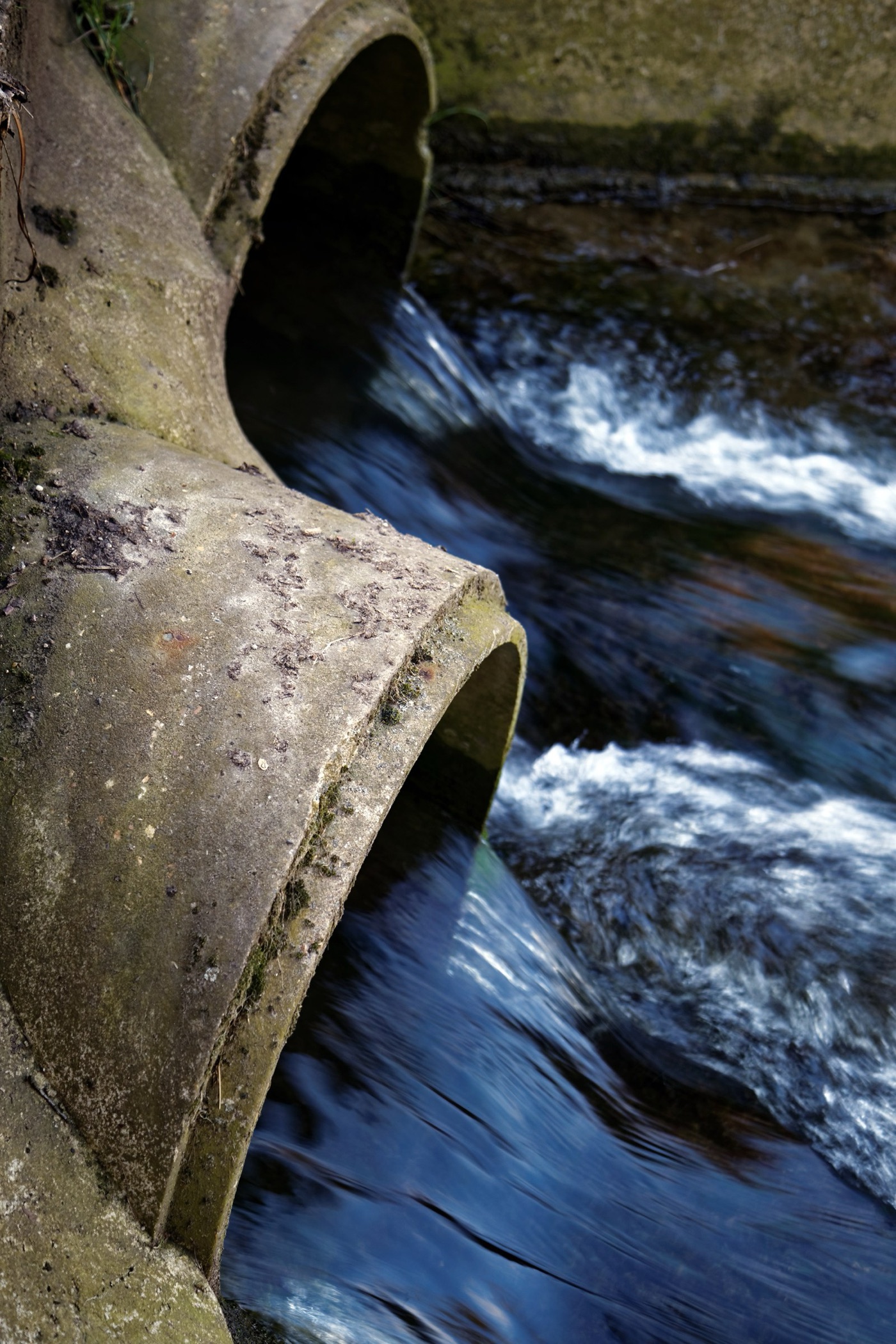
A car park in the rain. Runoff is cold, intermittent, and carries whatever was lying on the surface: oil, rubber, metals from brake dust, litter, grit. It is not particularly organic and it is not particularly warm. In older cities it runs into the same pipes as sewage, and on a wet day it can overwhelm them, which is why the combined sewers of London or Paris still discharge to the river when it rains hard enough.
Three wastewaters, three problems, one word. An engineer asked to treat wastewater has learned nothing until told which kind, and that is the point of the distinction.
Where the word came from
For most of history there was no such word, because there was no concept of treatment to attach it to. Used water went into the nearest ditch or river, and the river was expected to deal with it, which, at a small enough scale, it did. The word came into use in the late nineteenth and early twentieth centuries, when cities had grown large enough that rivers could no longer keep up, and when the first engineers began to think of used water as a substance with properties, to be measured and managed, rather than as a thing to be got rid of.
That shift, from waste to material, is the one the industry is still completing. A modern plant does not think of the water it receives as waste at all. It is water with a cargo, and the cargo is increasingly seen as a resource: organic matter that can be digested into gas, nutrients that can be returned to farmland, and water that, once the cargo is removed, can be used again. The newer term for it, used water, which Singapore adopted officially, says this more honestly than wastewater ever did.
Why the word matters outside the industry
Most people will never operate a treatment plant, and the definition might seem an insider's concern. It is not, for one reason. Public arguments about water, about what a factory discharges, whether a river is safe, whether a city's plant is adequate, are routinely conducted with the word wastewater doing service for whichever meaning the speaker prefers. A politician can say a plant treats all of the city's wastewater, and be right about sewage and wrong about runoff. A company can say its wastewater meets the standard, and be right about the organic load and silent about the salt.
Knowing that the word has three kinds inside it, and that the kinds are different problems, is enough to ask the next question. Which wastewater, carrying what. The answers are measurements, and the measurements are where this series goes next.
Sources
- Metcalf and Eddy, Wastewater Engineering, Treatment and Resource Recovery (5th edition). Typical composition of untreated domestic wastewater; the solids fraction is on the order of one gram per litre.
- Council Directive 91/271/EEC concerning urban waste water treatment. Definitions of domestic, industrial and urban waste water; discharge standards.
- Standard Methods for the Examination of Water and Wastewater (APHA, AWWA, WEF), the reference for the measurements the series goes on to explain.
- Photographs: Cesar Chu Ortega, from treatment plants in Bangladesh and India; inline: Water outfall pipes of Bumpstead Brook at Steeple Bumpstead, Essex, England 02 by Acabashi (CC BY-SA) via Wikimedia Commons.