Myth: Rain Is Pure Water
Rain is distilled by the sun, and it arrives carrying almost nothing dissolved, which is the closest thing to pure water most people will ever touch. It is also the dirtiest water in the sky by the time it reaches the ground, and what happens to it on the roof and in the barrel is the whole question. Why rain is soft, what it picks up, why it is now over the PFAS limit everywhere on Earth, and how to drink it safely anyway.
Hold a glass under a downpour and what fills it is, by the measure that matters most in the water industry, the cleanest water on Earth. It has about ten milligrams of dissolved solids in a litre, which is a fiftieth of what comes from most taps and a thousandth of the sea. It was made by the sun, which evaporated it from an ocean and left every grain of salt behind, and it has never touched the ground. Rain is distilled water, falling from the sky for free, and the belief that it is pure has a long history, from the rainwater cisterns of Rome to the barrel under the gutter.
It is also, by the time it reaches the glass, carrying a sample of everything in the air it fell through and everything on the surface it landed on, and in 2022 a group of chemists concluded that rain everywhere on the planet now exceeds the strictest drinking water limit for one family of chemicals. This article is about both halves of that, because both are true, and because rain is, done properly, one of the best sources of water a house or a city can have.
The true half
The water cycle is a still. Sunlight evaporates water from the sea, from lakes, from soil and from leaves, and evaporation takes only the water. Salt, calcium, magnesium, everything the article on TDS describes, stays behind. The vapour rises, cools and condenses into cloud droplets, and the droplets grow until they fall. What arrives is, chemically, the water that a laboratory makes by boiling and condensing, and its dissolved solids, measured across the world's rain gauges, run from a few milligrams a litre inland to a few tens near the coast, where sea spray adds a little salt.
That makes rain soft, in the sense the hard water article uses. It lathers instantly, leaves no scale in a kettle, and tastes, to most people, of nothing, which is what very pure water tastes of. Places that live on rainwater, from Bermuda to the Australian outback, have soft water and no limescale, and the people who move there notice their soap goes twice as far.
| Dissolved solids, milligrams per litre | |
|---|---|
| Rain, inland | About 5 to 15 |
| Rain, near the coast | A few tens |
| Distilled water | Under 1 |
| Typical tap water | 100 to 500 |
| Seawater | About 35,000 |
What it picks up on the way down
A raindrop cannot form on nothing. Every one condenses on a particle, a speck of dust, sea salt, soot or pollen, and as it falls it sweeps up more, which is why the air smells clean after a storm: the rain has washed it. What the rain washes out is what it carries down.
For most of the twentieth century the largest thing it carried was acid. Sulphur and nitrogen from coal smoke and exhaust dissolve in cloud water to make sulphuric and nitric acid, and the rain over industrial regions fell at a pH of 4, ten times more acid than clean rain's natural 5.6, killing the fish in Scandinavian and Canadian lakes and stripping the forests of central Europe. Acid rain was the first great air pollution treaty's subject, and the scrubbers on power stations that the power article mentions have raised the pH of rain over Europe and North America back towards normal since the 1990s. It is one of the environmental successes of the century, and it is a reminder that rain is exactly as clean as the air.
The air still carries soot, metals from traffic and industry, pesticides drifting from fields, and, everywhere, PFAS. The study published in 2022 by chemists in Stockholm and Zurich gathered measurements of the forever chemicals described in their own article from rain across the world, including Antarctica and the Tibetan plateau, and found PFOA and PFOS at concentrations that exceed the United States' new limit for drinking water nearly everywhere and the stricter Danish limit almost without exception. The chemicals evaporate from the sea, ride the air and come down with the rain, and they have been doing so for decades. Rain is, by the standards that now apply to a tap, contaminated before it lands, at levels of a few parts per trillion, in every country on Earth. It is a small number, and it is a fact about a substance most people still call pure.
What it picks up when it lands
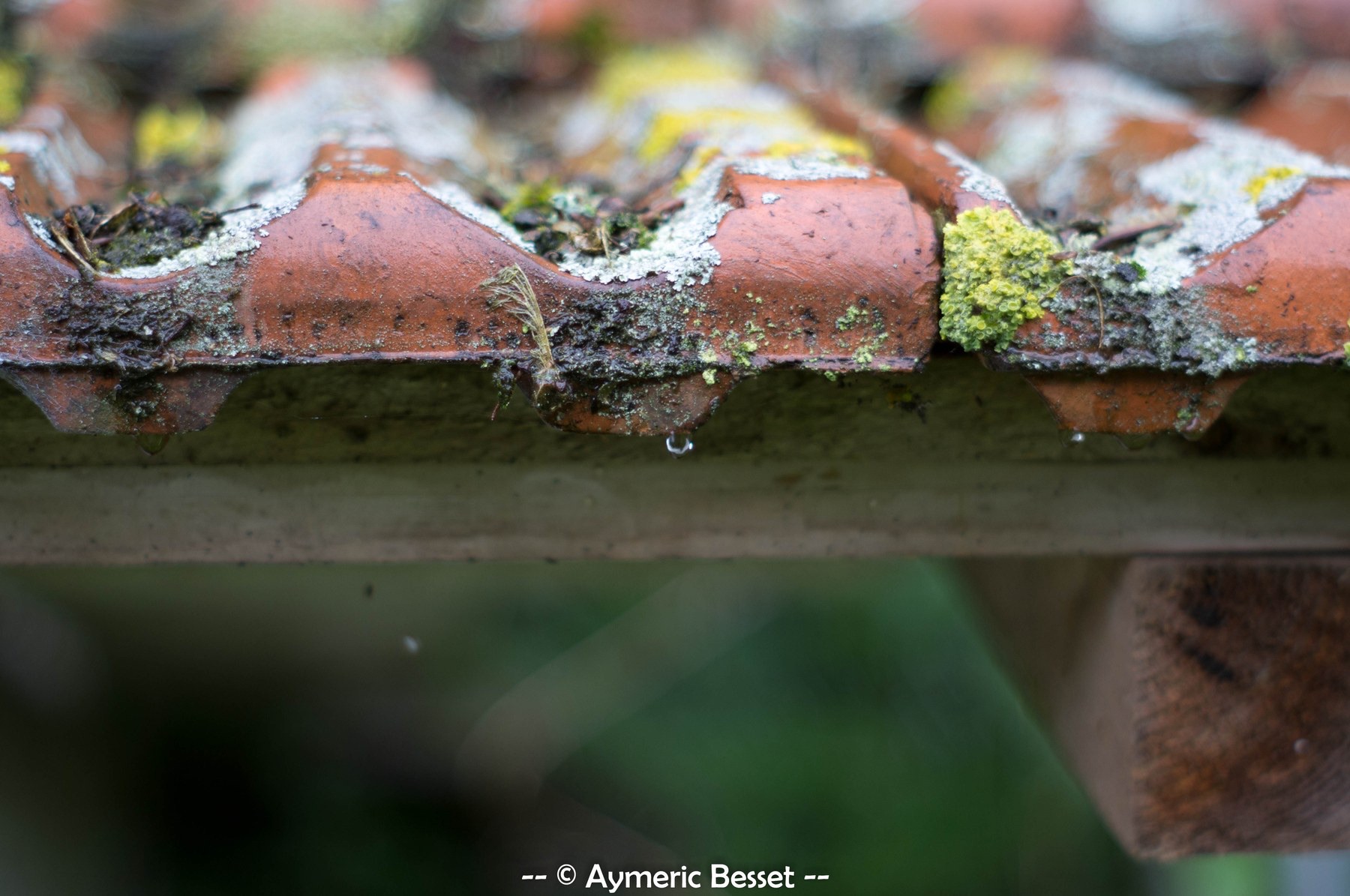
The larger risk is the roof. Rain that has fallen through clean air onto a clean surface is safe to drink. Rain that has run over a roof and along a gutter into a tank is a different thing, and the difference is biology.
A roof collects, between rains, the droppings of every bird that lands on it, leaves, moss, dead insects and dust, and the first rain carries all of it into the gutter. The gutter holds standing water and rotting leaves. The tank, if it is open or badly screened, breeds mosquitoes and algae and, in warm climates, the bacteria and protozoa that make people ill. Surveys of household rainwater tanks in Australia and elsewhere find coliform bacteria in most of them and the occasional Salmonella, Giardia or Cryptosporidium, and rainwater has been traced as the source of outbreaks in every country that harvests it.
The roof also adds chemistry. Lead flashing and old lead paint leach lead. Galvanised iron leaches zinc, which is harmless at the levels found and gives the water a metallic taste. Copper roofs leach copper. Asbestos cement sheets, common on older roofs across the world, shed fibres. Bitumen and some coatings release hydrocarbons in the first years. And a roof under a flight path or beside a busy road collects whatever falls from the traffic.
| What a roof adds to rain | |
|---|---|
| Bird droppings, leaves, insects, dust | Bacteria, protozoa, organic matter, colour |
| Lead flashing, old paint | Lead |
| Galvanised iron | Zinc |
| Asbestos cement sheets | Fibres |
| An open or unscreened tank | Mosquitoes, algae, more bacteria |
| A dark, cool, sealed tank | Very little; the water keeps well |
Drinking it anyway
None of this argues against rainwater. It argues for treating it like water, which is what the places that rely on it do.
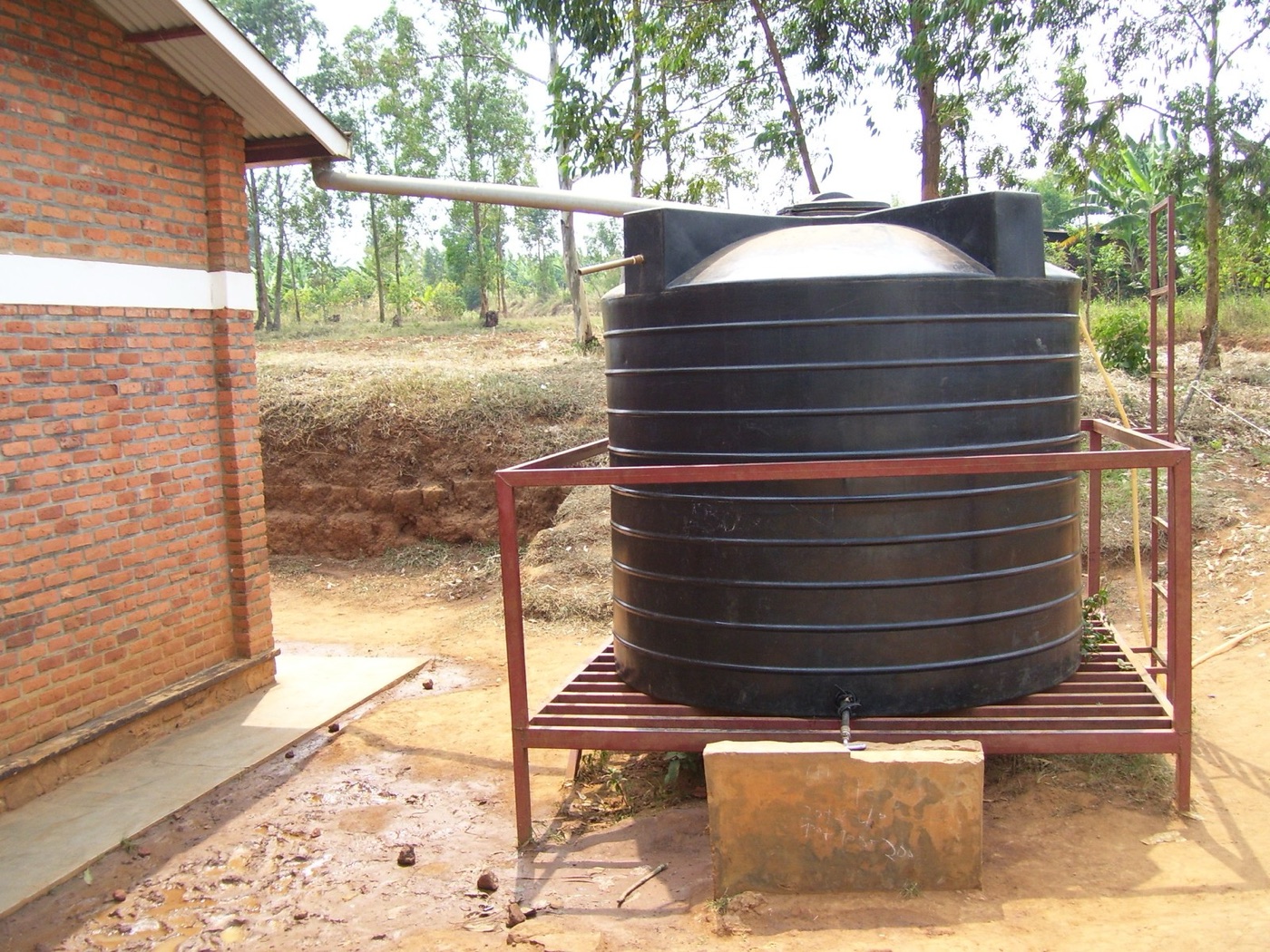
The first flush device is the oldest and best trick. The first few millimetres of a rain carry nearly all of the roof's dirt, and a simple diverter, a vertical pipe that fills with the first flow and then lets the rest pass to the tank, throws that water away. Chennai's rules, described in the article about that city, require one on every building. A screen on the inlet keeps out leaves and mosquitoes. A sealed tank, kept dark and cool, keeps the water from growing anything. And a filter and a disinfectant, chlorine, ultraviolet light, or boiling, do for rainwater what they do for every other supply on this site, which is to make it safe from what fell in it.
Done that way, rainwater is soft, cheap, and available on every roof, and cities from Chennai to Melbourne have made it a required part of their supply, for garden and toilet use everywhere and for drinking where the tank is managed. Bermuda has drunk it for four centuries, from white limestone roofs designed to catch it, with a first flush and a cistern under every house. The World Health Organization's guidance treats it as a legitimate source with known risks, which is what it is.
The city scale
What a household does with a barrel a city can do with a plan, and the cities that have are the ones the site keeps returning to. Chennai's roofs, described in their own article, send the monsoon into the ground under the city rather than into a tank, and the water comes back through the wells filtered by the soil, which is the oldest treatment there is. Melbourne, after its own decade of drought, fitted tanks to a large share of its houses and plumbed them to toilets and gardens, which takes a tenth off the city's mains demand without anyone drinking from a barrel. Singapore catches the rain from two thirds of its island in reservoirs and treats it in plants, which is rainwater harvesting at the scale of a country. In each case the rain is collected, stored in the dark, and treated before it is drunk, and in each case it is the cheapest new water the city found. Rain is a supply. The myth is only that it needs no help.
Why the myth persists
Rain looks and tastes clean, it comes from the sky rather than a pipe, and it has been the drinking water of most of humanity for most of history, before the roof was tin and the air was full of an industrial century. The instinct that it is pure is right about its chemistry and wrong about its biology, and the two are different things, as the arsenic article said of water that passes the tests someone chose. A litre of rain has ten milligrams of minerals and, after a roof and a week in a barrel, a few thousand bacteria. It is the most distilled water most people will ever handle, and it needs a filter like everything else.
What it teaches
The myth of pure rain is the myth of the water cycle told in miniature: a true fact about the planet, that the sun distils the sea, mistaken for a fact about a glass. Rain is what the air was, and what the roof is. In a clean sky onto a clean surface it is the best water there is. In this century, under this air, on that roof, it is water, and water is what this site is for.
Ten milligrams a litre when it leaves the cloud. Everything after that is the story.
Sources
- World Health Organization (2017). Guidelines for Drinking water Quality, chapter on rainwater harvesting and household treatment.
- Cousins, I.T. et al. (2022). Outside the safe operating space of a new planetary boundary for PFAS. Environmental Science and Technology 56. PFAS in rainwater above drinking water guideline values globally.
- US EPA, Acid Rain Program and the National Atmospheric Deposition Program: rain chemistry and pH records since 1978.
- enHealth (Australia, 2010). Guidance on the use of rainwater tanks.
- Tamil Nadu rainwater harvesting regulations (2003) and the Chennai Metro Water guidance on first flush and storage.
- Photographs: opener: Rain on the roof (7635137486) by Aymeric B. from Maisons-Alfort, France (CC BY-SA) via Wikimedia Commons; inline: Rainwater harvesting tank (5981896147) by SuSanA Secretariat (CC BY) via Wikimedia Commons; inline: 2024-04-26 14 46 12 A Texas Instruments tipping bucket rain gauge at the weather station at the Rutgers Gardens in North Brunswick Township, Middlesex County, New Jersey by Famartin (CC BY-SA) via Wikimedia Commons.