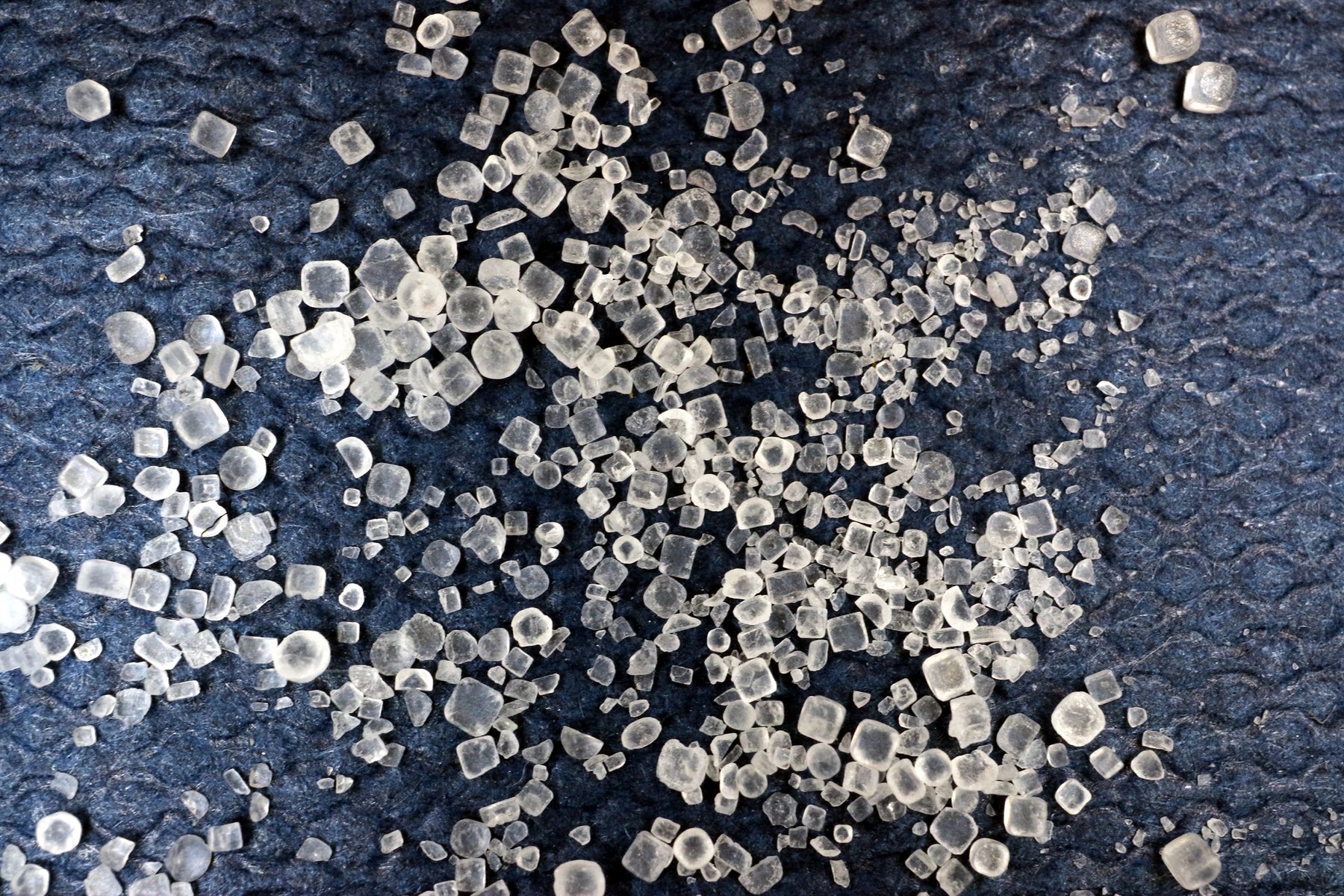
Plain Water: Antiscalants
A reverse osmosis plant concentrates everything it rejects, and the salts of hardness come out of solution on the membrane as scale, where they block it. A few milligrams per litre of a chemical that persuades crystals not to grow is what keeps the plant alive. What scale is, why the membrane is where it forms, and how the dose is decided.
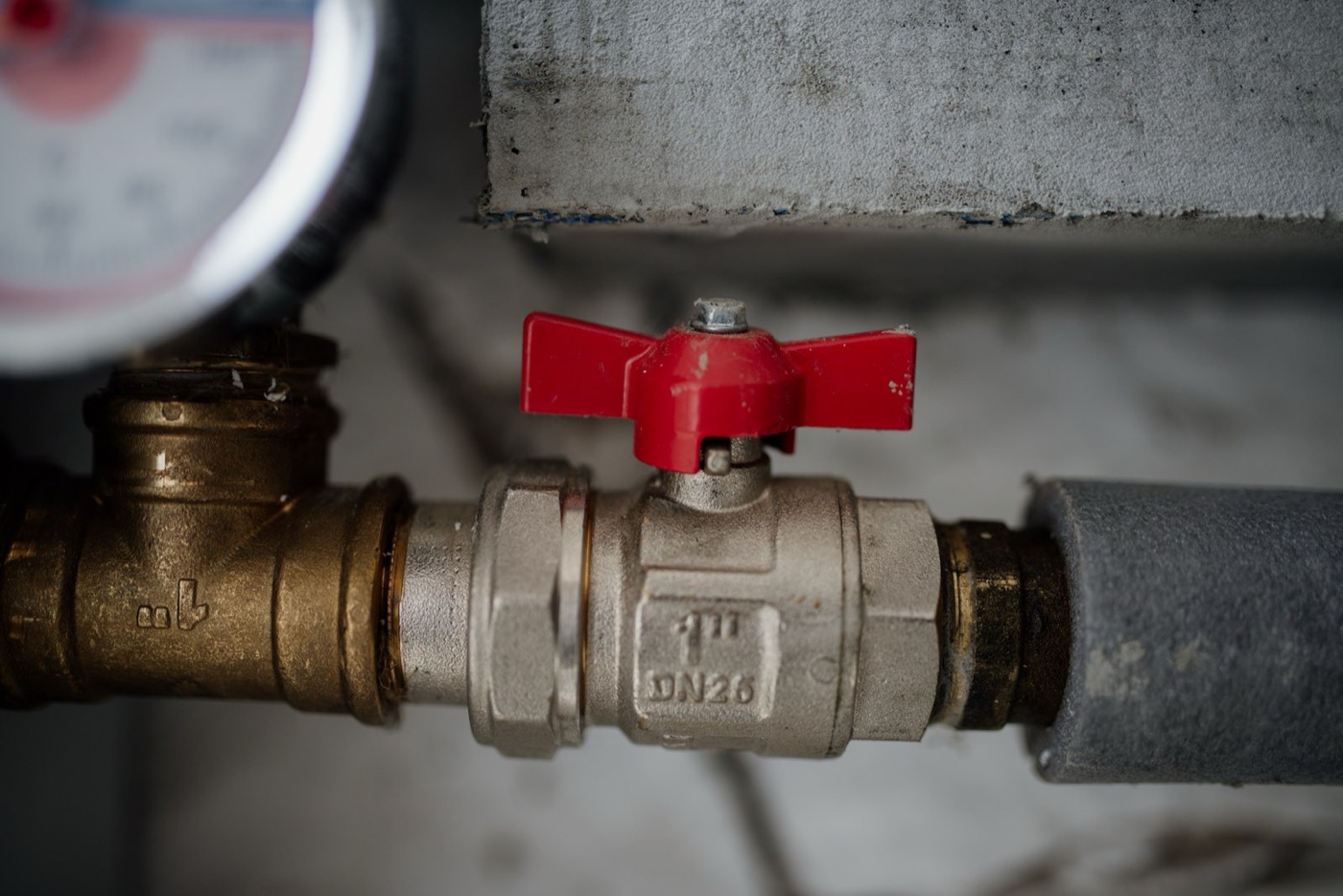
Walk round the back of any reverse osmosis plant, past the pressure vessels and the high pressure pumps, and there is a small plastic tank on a stand, with a dosing pump ticking beside it, feeding a thin line into the pipe that carries water to the membranes. The tank holds a chemical that most people have never heard of, dosed at a few grams per cubic metre, and without it the plant would stop within days. The chemical is an antiscalant, and this article is about the problem it solves, which is the kettle's problem at seventy times the pressure.
The kettle, again
The hard water article on this site described what happens when water carrying calcium and bicarbonate is heated: carbon dioxide is driven off, the calcium comes out of solution as calcium carbonate, and the kettle furs. The same minerals come out of solution when water is concentrated, because a litre of water can only hold so much of a salt, and if the water is taken away the salt has nowhere to stay.
A reverse osmosis membrane takes the water away. On the feed side of the membrane, water passes through and the salts do not, so the water that remains, flowing along the membrane towards the brine outlet, becomes steadily more concentrated. At a recovery of 75 percent, which is ordinary for brackish water, the brine at the far end of the membrane carries four times the concentration of the feed. Salts that were comfortably dissolved at the inlet are, by the outlet, far past the point at which they would normally crystallise. And they crystallise exactly where they should not: on the membrane surface, in the last elements of each vessel, where the concentration is highest.
| The salts that scale a membrane | Where they come from | How hard to manage |
|---|---|---|
| Calcium carbonate | Hardness and bicarbonate, in almost every water | The commonest, and the easiest |
| Calcium sulphate, gypsum | Hardness with sulphate | Common, and harder |
| Barium and strontium sulphate | Traces in groundwater | Rare, and very hard, because they are so insoluble |
| Silica | Dissolved from rock, in many groundwaters | The hardest; it forms a glassy layer that acid will not remove |
| Calcium phosphate and fluoride | Wastewater reuse | Increasingly common as reuse spreads |
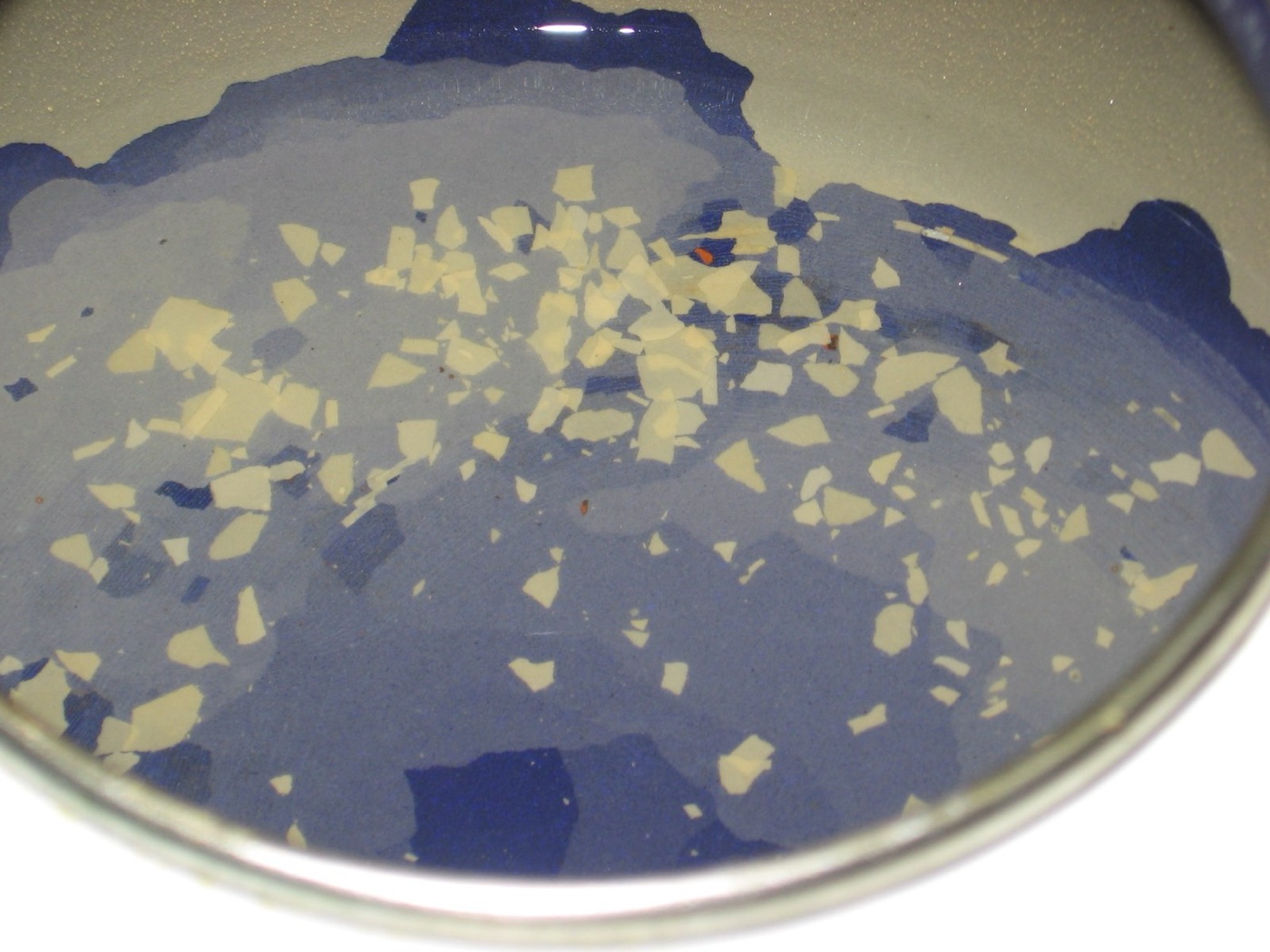
Scale is a crystalline layer, thin, hard and tightly bonded to the membrane. It blocks the pores, it raises the pressure the pumps need to push water through, and it cuts the flow. A plant that scales loses output within days and, if it is not caught, loses the membranes.
Persuading crystals not to grow
An antiscalant does not remove the hardness. It changes how the hardness behaves.
A crystal grows by adding ions, one at a time, to an ordered surface, and it starts from a seed, a few ions that happen to line up. Antiscalant molecules, which are usually phosphonates, organic compounds carrying phosphorus, or polyacrylate polymers, are drawn to those seeds and to the growing faces of crystals, and they sit on them, in the way, so that the next ion cannot find its place. The crystal stops growing, or grows distorted and weak. The water can then carry the salts past the point at which chemistry says they should have crystallised, in a state called supersaturation, for long enough to reach the brine outlet and leave the plant.
This is called threshold inhibition, and the remarkable thing about it is the dose. A few milligrams of antiscalant per litre, two to five is typical, holds back many hundreds of milligrams per litre of hardness. The chemical does not react with the salt in proportion; it interferes with the crystal at its most vulnerable moment, and a very small amount of interference is enough.
| Antiscalant | |
|---|---|
| What it is | A phosphonate or a polyacrylate polymer |
| Dose | Typically 2 to 5 milligrams per litre of feed |
| What it does | Sits on forming crystals and stops them growing |
| What it does not do | Remove any hardness from the water |
| Where it ends up | In the brine, with the salts it kept dissolved |
Deciding the dose
The dose is set by arithmetic and confirmed by watching the plant.
The engineer starts with a full analysis of the feed water, every ion, and calculates how concentrated each will be in the brine at the plant's recovery. For each scaling salt there is a saturation index, a number that says how far past its solubility the salt will be; the one for calcium carbonate was devised in 1936 by a chemist named Langelier and is still in use. The membrane manufacturer publishes the limits beyond which its membranes will scale, and the antiscalant supplier publishes how far its product can push each limit. The result is a dose, a maximum recovery, and sometimes a decision that the water needs softening or acid dosing before the membranes rather than antiscalant alone.
Then the plant is watched. The pressure needed to push the design flow, normalised for temperature and salinity, is logged daily, and a rising pressure is scale forming. The plant cleans its membranes with acid when the pressure has risen by a set amount, usually ten or fifteen percent, and a plant that cleans every few weeks has a dose or a recovery that is wrong. A plant that cleans twice a year has both right.
The alternatives, and why they are rarer
Antiscalant is the usual answer, and there are two others, each with its place.
Acid dosing lowers the pH of the feed, which converts bicarbonate to carbon dioxide and stops calcium carbonate from forming at all. It was the standard method before antiscalants, and it is still used in seawater plants, but it does nothing for sulphate or silica scale, it needs a large tank of sulphuric acid on site, and it leaves the product water acid and corrosive. Softening the feed, by ion exchange or by dosing lime to precipitate the hardness before the membranes, removes the problem at source and is used where the water is very hard or the recovery has to be very high, as in the zero liquid discharge plants described elsewhere; it costs far more than a few milligrams of antiscalant. For most plants, the small tank on the stand is the cheapest thing that works.
The other enemy: things that grow
Scale is the mineral enemy of a membrane and there is a living one, and the chemistry that fights the second is constrained by the membrane itself. Bacteria settle on a membrane surface and build a film, biofouling, that blocks it as surely as scale, and the obvious remedy, chlorine, cannot be used: the polyamide of a reverse osmosis membrane is destroyed by free chlorine within hours. So the feed is chlorinated upstream to kill what it carries and then dechlorinated, with sodium bisulphite, just before the membranes, and the plant relies on clean pretreatment, on non oxidising biocides dosed occasionally, and on cleaning. An operator reading a rising pressure has to decide whether the cause is scale, biofilm or particles, and the answer decides whether the clean is acid, alkaline or both. The antiscalant tank handles the minerals. The biology is handled by everything around it.
The silica problem
One scale defeats all three, and every engineer who has worked in a region of volcanic or sandstone geology has met it. Silica, dissolved from rock, is present in many groundwaters at tens of milligrams per litre, and in the brine of a high recovery plant it can pass the point at which it polymerises into a glassy layer on the membrane that no acid and no ordinary cleaning will remove. Antiscalants exist for it, and they push the limit a little; beyond that, the plant has to accept a lower recovery, or precipitate the silica out with chemistry before the membranes, or plan to replace elements. Silica sets the recovery of more inland plants than any other salt, and it is the reason the brine article's inland problem is often worse than the salt alone would make it.
A worked example
A brackish well in a limestone region feeds a plant at 75 percent recovery. The water carries 300 milligrams per litre of hardness and 250 of bicarbonate, comfortable in the feed. In the brine those become 1,200 and 1,000, and the saturation index says calcium carbonate will crystallise several times over. Acid alone would need a tank of sulphuric acid the size of a car and would leave the product corrosive. Softening the whole feed would cost more than the membranes. The engineer specifies a phosphonate antiscalant at 3 milligrams per litre, checks the supplier's data that it will hold the carbonate at that saturation, and sets the plant to clean with acid when the pressure has risen by ten percent. The plant runs. The tank on the stand is refilled every few weeks, and the membranes are changed in year seven.
Where the antiscalant goes
The chemical leaves with the brine, along with the salts it kept dissolved, and it is one of the reasons a reverse osmosis concentrate is more than a salty stream: it carries phosphonates, and phosphorus is a nutrient. Most antiscalant ends up in the sea or a sewer at concentrations too low to matter, and the industry has been moving towards products that break down in the environment. It is a small footnote to a small chemical, but the brine article's point stands: everything a membrane plant adds, as well as everything it rejects, comes out of the same pipe at the back.
Reading the tank
The tank on the stand is the least visible critical thing in a membrane plant, and it is a good place to end a series of articles about what water treatment actually consists of. The pressure vessels and the pumps are the visible engineering. The antiscalant is the chemistry that lets them run, dosed by the gram, on the strength of an analysis and a ninety year old index, and checked every morning against a pressure gauge. Get it right and the membranes last seven years. Get it wrong and the kettle's problem, at seventy bar, closes the plant.
Sources
- AWWA Manual M46, Reverse Osmosis and Nanofiltration. Scaling, saturation indices, antiscalant dosing and cleaning.
- Membrane manufacturers' technical manuals (DuPont FilmTec, Toray): scaling limits for calcium carbonate, calcium sulphate, barium sulphate and silica in the concentrate.
- Langelier, W.F. (1936). The analytical control of anti corrosion water treatment. Journal AWWA 28. The saturation index still used to predict calcium carbonate scale.
- Photographs: Cesar Chu Ortega, from a membrane plant in India; opener: Salt Crystals macro by Prosthetic Head (CC BY-SA) via Wikimedia Commons; inline: Close-up view of a red valve on a metallic pipe system with a pressure gauge in an industrial setting by Shixart1985 (CC BY) via Wikimedia Commons; inline: Limescale.in.cookware by Julo (public domain) via Wikimedia Commons.