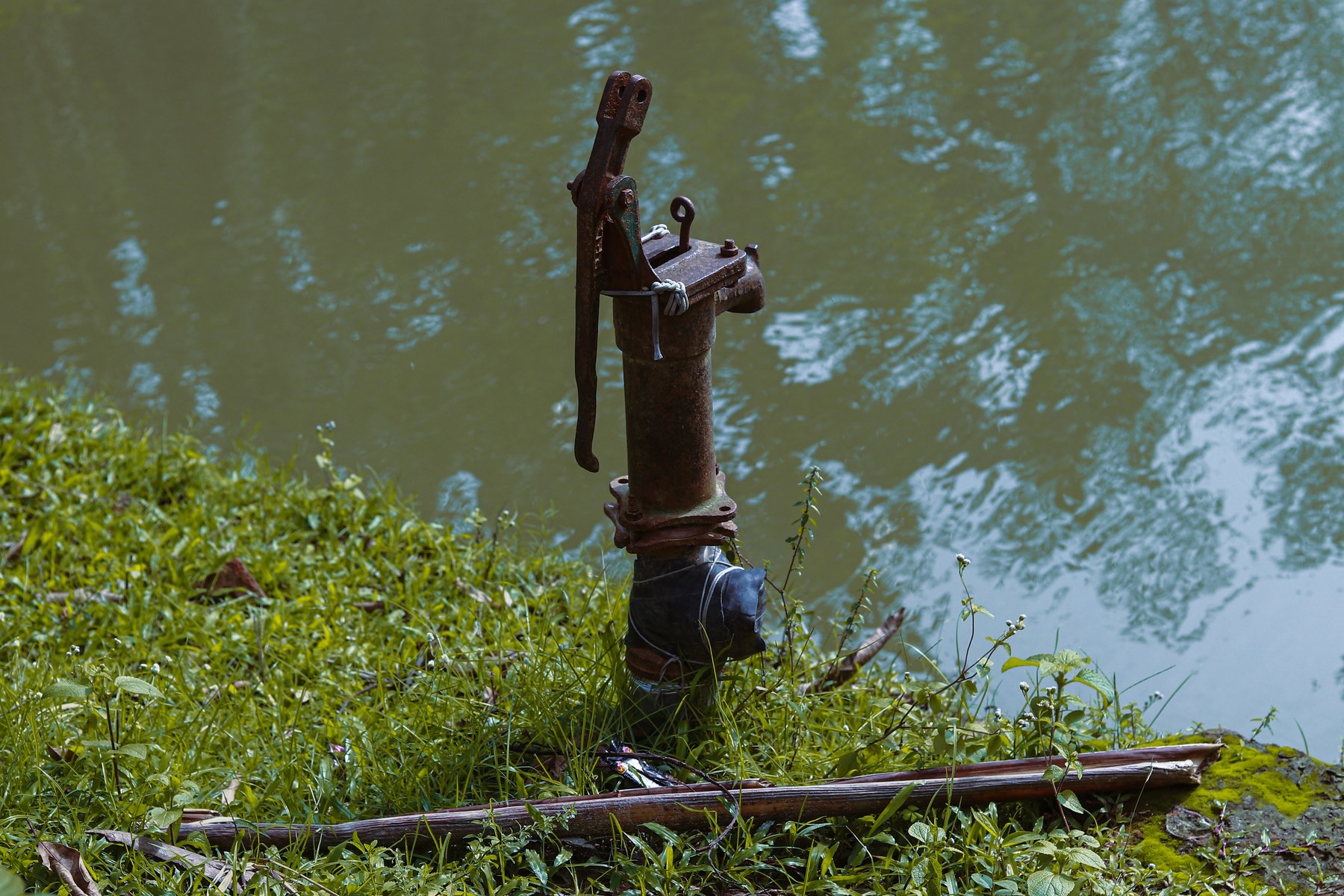
Plain Water: Arsenic
In the 1970s, millions of hand pumped wells were sunk across Bangladesh to give villages water free of the germs that killed their children. The water was free of germs. It carried arsenic, from the rock, at levels that poison slowly over decades. What happened, why nobody tested for it, what the numbers mean, and what a village can do about a poison it cannot see or taste.
In villages across the delta of Bangladesh the hand pumps are painted. A red spout means the well is unsafe. A green one means it is safe. The paint was applied in the early 2000s by teams who tested several million wells one by one, with a field kit that turns a strip of paper a shade of yellow, and it remains the most visible water infrastructure in the country. What it marks is a poison that cannot be seen, smelled or tasted, that entered the water from the ground itself, and that arrived by way of one of the great public health successes of the twentieth century.
This article is about arsenic in groundwater, which is a problem across the deltas of South and Southeast Asia and in parts of the Americas, and about Bangladesh in particular, because that is where it has been called the largest mass poisoning in history and where I have seen the painted wells myself.
The success
In 1970 most rural Bangladeshis drank from ponds, rivers and shallow dug wells, and the water carried cholera, typhoid and the diarrhoeal diseases that killed a quarter of a million children a year. The answer, promoted by UNICEF and the government from the early 1970s, was the tube well: a narrow pipe driven by hand twenty to sixty metres into the soft delta sediment, with a cast iron hand pump on top. It cost little, a village could sink one in a day, and the water it drew from the sand was free of the bacteria in the ponds. By the 1990s there were several million of them, most of them private, and the share of the rural population drinking groundwater had risen from a small minority to nearly everyone. Child deaths from diarrhoea fell by more than half.
Nobody tested for arsenic. The standard tests of the time looked for bacteria, and no delta aquifer anywhere had ever been found to carry arsenic at harmful levels, so the element never made the list.
The poison
The sediments of the Ganges and Brahmaputra deltas were washed down from the Himalayas over thousands of years, and they contain arsenic bound to iron minerals, as sediments in many places do. Under the delta, where the ground is waterlogged and rich in buried organic matter, bacteria consume the oxygen and then begin to dissolve the iron minerals, and the arsenic comes off with the iron and into the water. The shallow aquifer, exactly the depth the tube wells reach, is the worst affected. Deeper and older sediments, below about 150 metres, are mostly clean.
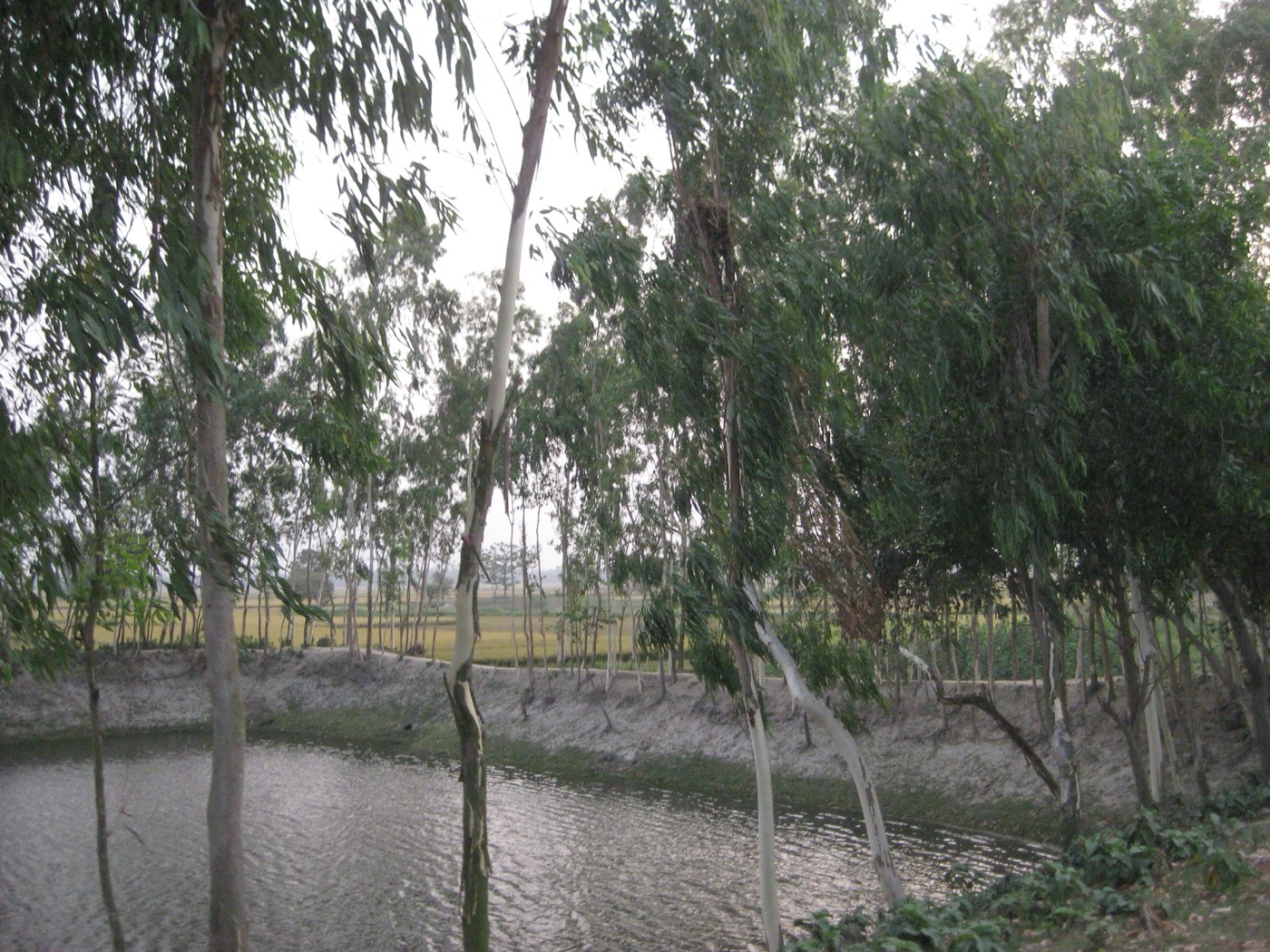
The first cases were recognised across the border in West Bengal in the 1980s, and confirmed in Bangladesh in 1993. A national survey by the British Geological Survey and the Bangladesh public health department, published in 2001, found that about a quarter of the wells tested exceeded the national limit and that in the worst districts, in the south and east, most did. The population drinking unsafe water was estimated at between thirty and seventy million people.
| Arsenic in Bangladesh | |
|---|---|
| WHO guideline | 10 micrograms per litre |
| Bangladesh national standard | 50 micrograms per litre |
| Wells above the national standard, 2001 survey | About one in four nationally, most in the worst districts |
| People still drinking above 50, 2016 estimate | About 20 million |
| People drinking above 10 | Roughly double that |
| Where it comes from | Himalayan sediments, released by bacteria in waterlogged ground |
What it does
Arsenic in water at these levels does not make anyone ill quickly, which is part of why it went unnoticed. Over five to fifteen years of drinking it, the skin darkens in patches and thickens on the palms and soles. Over decades, cancers of the skin, bladder and lung appear at several times the normal rate, along with heart disease and, in children exposed in the womb, effects on development. A large cohort study in Bangladesh published in the Lancet in 2010 found that people drinking water at the higher levels had about a fifth more deaths from all causes than those drinking clean water, and estimated that arsenic accounted for around one death in five in the most exposed group. The WHO's guideline of ten micrograms per litre was set with those cancers in mind, and even at that level it accepts a risk higher than the guidelines allow for most other substances, because achieving lower is so hard.
Ten micrograms is ten parts per billion. It is a small number, though a thousand times larger than the PFAS limits described in the neighbouring article, and it is exceeded by tens of millions of wells across the delta.
Why it was slow
The response, in the years after 1993, was slower than the problem deserved, and the reasons are the ones that recur across this site. The wells were private, so no utility was responsible for them. The poisoning was slow and its victims poor. The government's own standard of fifty micrograms per litre, five times the WHO's, meant that a large share of the exposed population was, on paper, safe. And the answer that had worked so well, the tube well, was the problem, which made it hard for the agencies that had promoted it to say so. Human Rights Watch reported in 2016 that around twenty million people were still drinking water above the national standard, that the government's well testing and replacement programme had reached only a fraction of the affected villages, and that new safe wells were being allocated by political favour rather than by need.
What works
The technical answers are several, and every one has been shown to work.
The simplest is to test and switch. Most villages with contaminated shallow wells have some wells that are clean, because the arsenic is patchy, and the painted spouts let a household walk to a green well instead of drinking from a red one. The programme that painted them reached about five million wells, and it moved a large share of the population to safer water at almost no cost. Its weakness is that people go back to the closer well, and that the wells are not retested.
Deeper wells reach the older, cleaner sediments, and a deep well drilled and shared by a village is the most reliable fix in most districts. It costs several times more than a shallow one, and it needs the water to be tested, because deep is not always clean.
Filters work. Arsenic binds to iron, and a household filter of iron filings or iron coated sand, or a community filter of the same principle, takes it out of the water. The filters need maintenance, and the spent iron, now carrying the arsenic, has to be disposed of, which is the same problem in miniature that the PFAS article describes.
And surface water, treated, works, as does rainwater collected in the monsoon and stored, which returns the villages to the sources they left in 1970, with the treatment that they did not have then.
| Fixing an arsenic well | |
|---|---|
| Test and paint the spout, switch to a green well | Cheapest; needs retesting and a well within reach |
| A deep tube well, shared | Most reliable in most districts; several times the cost |
| Iron based filters, household or community | Effective; need upkeep and disposal of the spent iron |
| Treated pond or river water, piped | Reliable; needs a utility and money |
| Rainwater harvesting | Works in the monsoon; storage for the dry season |
None of these is difficult engineering. What has been difficult is money, organisation and attention, which is why, thirty years after the discovery, the painted spouts are still doing most of the work.
The test
The kit that painted the spouts is worth describing, because it is the reason the programme was possible. Arsenic in water reacts with zinc and acid to form arsine gas, and the gas turns a strip of paper impregnated with mercury bromide from white through yellow to brown, in proportion to the concentration. A field worker with a bottle, a sachet of reagent and a colour chart can test a well in twenty minutes for a dollar or two, to an accuracy good enough to sort wells into safe and unsafe at the fifty microgram line. It is not accurate at ten, and a laboratory test is needed to be sure of the WHO level, which is one of the arguments for the national standard staying where it is. The kit found the poison, well by well, across a country in which most people had never seen a laboratory. A rule of this site is that water that looks clean is water that has passed the tests someone chose, and the mercury bromide strip is the test that, for twenty years, nobody chose.
The rice
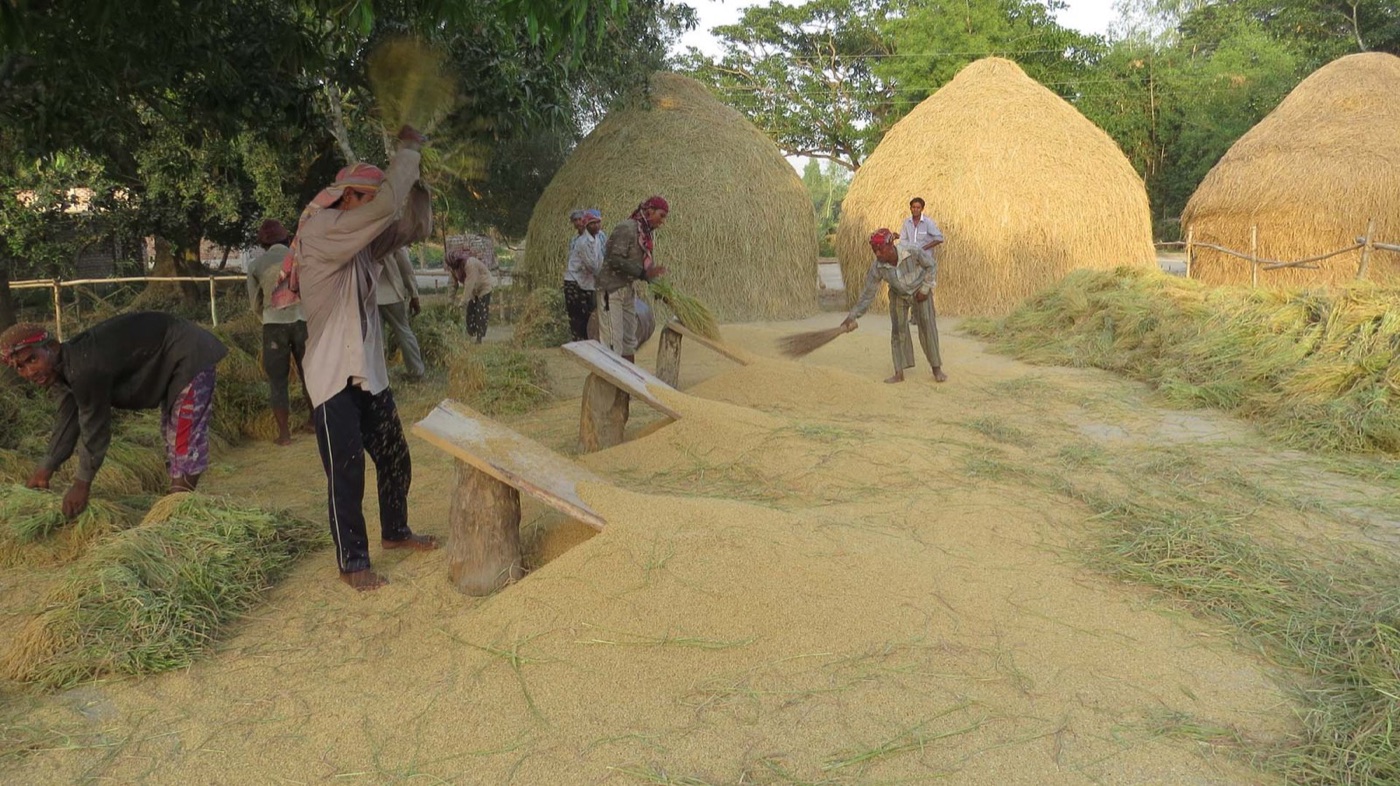
There is a second route that the wells opened, and it is only now being counted. The same shallow groundwater that villages drank is pumped, in the dry season, to irrigate rice, and rice grown in flooded paddies takes up arsenic from the water and the soil more readily than any other crop. Rice from the affected districts of Bangladesh and West Bengal carries the element at levels several times those of rice grown elsewhere, and for a population that eats rice at every meal the grain is now estimated to be a substantial share of the intake, on top of the water. The fix is the same as for the wells, deeper irrigation water or surface water, and the argument for it is the same, and it has been slower still.
Not only Bangladesh
The delta is the worst case and far from the only one. Arsenic in groundwater at unsafe levels is found across West Bengal, in Bihar and Uttar Pradesh along the Ganges, in the Mekong delta of Vietnam and Cambodia, in parts of Nepal, Myanmar, Pakistan and Inner Mongolia, and in the Americas from Chile's Atacama, where it comes from volcanic rock, to the aquifers of Argentina and the south western United States. The World Health Organization puts the population drinking water above its guideline in the low hundreds of millions worldwide. Anywhere that people drink from shallow wells in young sediments or volcanic ground should test for it, and the test costs a few dollars.
What it teaches
The arsenic story is the plainest lesson on this site about testing. The water that poisoned Bangladesh was clear, cool and free of germs, and it passed every test that was run on it, because the test for what was actually in it was never run. Water that looks clean is water that has passed the tests someone chose. The tube well programme saved hundreds of thousands of children and harmed tens of millions of adults, and both of those things are true, and the second could have been caught with a strip of yellow paper.
Ten micrograms per litre. A red spout, or a green one.
Sources
- Smith, A.H., Lingas, E.O. and Rahman, M. (2000). Contamination of drinking water by arsenic in Bangladesh: a public health emergency. Bulletin of the World Health Organization 78. The phrase largest mass poisoning of a population in history.
- World Health Organization, Guidelines for Drinking water Quality: arsenic provisional guideline value of 10 µg/L.
- Human Rights Watch (2016). Nepotism and Neglect: the failing response to arsenic in the drinking water of Bangladesh's rural poor. About 20 million people above the 50 µg/L national standard.
- British Geological Survey and Department of Public Health Engineering, Bangladesh (2001). Arsenic contamination of groundwater in Bangladesh. The national survey.
- Argos, M. et al. (2010). Arsenic exposure from drinking water and all cause and chronic disease mortality in Bangladesh (HEALS): a prospective cohort study. The Lancet 376.
- Photographs: opener: Rusty cast iron hand water pump by a pond bank, Bangladesh 2026 by A S M Jobaer (CC BY-SA) via Wikimedia Commons; inline: A village pond in Gaibandha by Ibrahim Husain Meraj (CC BY-SA) via Wikimedia Commons; inline: Rice threshing in Bangladesh by Atikur.khokon (CC BY-SA) via Wikimedia Commons.