Plain Water: Brine
Every membrane plant, every softener and every reuse project produces a second stream that carries everything the clean water left behind. The industry calls it brine or concentrate, it is the leftover nobody puts on the brochure, and what happens to it is the question every water recovery project ends up in a meeting about.
Walk to the back of any membrane plant, past the racks of white tubes and the hall of pumps, and there is a pipe that nobody points out on the tour. It is smaller than the product line, it runs to a tank or an outfall or a pond, and what flows through it is everything the clean water left behind. The industry has two names for it, brine and concentrate, and one nickname, which is the leftover. It is the stream every recovery project ends up in a meeting about, and the meeting is usually long.
The articles on TDS, membranes and reverse osmosis have each pointed at this pipe. This one follows it.
What brine is
A membrane separates water into two streams. The permeate is the water that crossed the membrane, clean. The concentrate is the water that did not, carrying everything the membrane rejected: the salt, the hardness, the metals, the organic molecules, the antiscalant that was dosed to protect the membrane, and the cleaning chemicals that were flushed through it. The concentrate is not dirtier than the feed in the sense of carrying new pollution. It carries the same pollution in less water, which is worse.
The arithmetic is fixed by the recovery. A seawater plant that turns half its intake into fresh water sends the other half back carrying all the salt, at twice the concentration. A reuse plant that recovers 80 percent of its feed sends a fifth of it away carrying everything, at five times the concentration. The higher the recovery, the smaller the brine and the saltier it is, and the two facts pull against each other for the rest of the article.
| Plant | Recovery | Brine, as a share of the feed | Brine concentration |
|---|---|---|---|
| Seawater desalination | 40 to 50% | About half | About twice the sea |
| Brackish groundwater | 75 to 85% | A fifth to a quarter | Four to six times the feed |
| Industrial reuse | 70 to 90% | A tenth to a third | Up to ten times the feed |
Where brine goes
There are five places a brine can go, and which one is available decides whether a recovery project is easy or nearly impossible.
Back to the sea. A coastal desalination plant returns its brine to the ocean through an outfall, and this is the cheapest and by far the commonest answer. It is not as simple as pouring it in. Brine is denser than seawater, so it sinks and can pool on the seabed as a layer of salt that suffocates whatever lives there. Modern outfalls end in diffusers, arrays of angled nozzles that jet the brine upward into the current so that it mixes within a few tens of metres, and the plant is required to show that the salinity a short distance away is back within a small margin of the sea's. Done properly the impact is local and modest. Done badly, in a shallow bay with little current, it is not.
To the sewer. A small plant in a city can often send its concentrate to the municipal sewer, where it is diluted by everything else and passes through the sewage works, which does nothing to the salt but does dilute it. Utilities limit this, because salt that arrives at the sewage works leaves it in the treated effluent, and a river that receives many small brines becomes, slowly, a salty river.
Underground. In parts of the American Southwest and elsewhere, concentrate is injected through deep wells into rock formations far below any aquifer used for drinking, in the way the oil industry disposes of its produced water. It works where the geology allows it and the regulator permits it, and it is expensive and permanent.
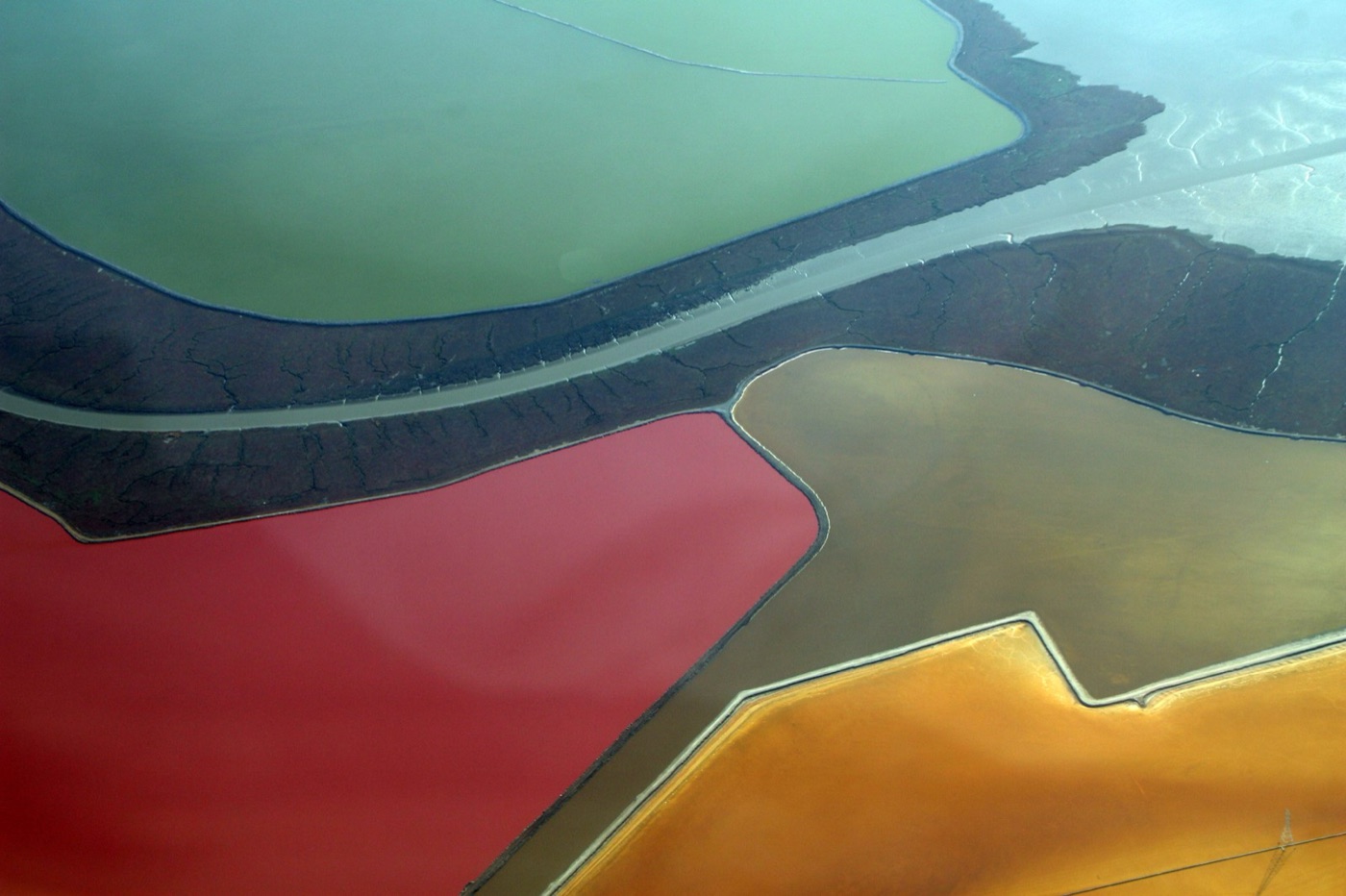
Into the air. An evaporation pond is a lined basin in a dry, hot climate where brine is spread and the sun does the work. The water leaves as vapour and the salt accumulates on the floor, to be scraped out eventually and landfilled. Ponds need land, sun and a liner that does not leak, and in a wet or a cold climate they do not work at all.
Nowhere. A plant can concentrate its brine further, by more membranes and then by evaporators, until nothing liquid is left and the salt comes out as a solid. That is zero liquid discharge, and it is the subject of the next article, because it is the answer that Tirupur's dye houses were ordered to adopt and the one the rest of the industry watches most closely.
| Where brine goes | Where it works | The catch |
|---|---|---|
| The sea, through a diffuser | Coastal plants | Local seabed effects if mixing is poor |
| The sewer | Small plants in cities | The river downstream gets the salt |
| Deep well injection | Suitable geology, mostly the American Southwest | Permanent, expensive, regulated |
| Evaporation ponds | Hot, dry, cheap land | Land, liners, and the salt at the end |
| Zero liquid discharge | Where nothing else is allowed | Energy, and a pile of salt |
The inland problem
Coastal plants have the sea. Everyone else has the problem.
A textile mill in the middle of India, a brackish well field in Arizona, a food plant in the Spanish interior, a reuse scheme in a city far from the coast: each of them can recover most of its water with membranes, and each of them is then holding a stream of concentrate with nowhere cheap to send it. The river will not take it, or the regulator will not allow it. The sewer has limits. The ground may not suit injection. A pond needs land that a factory does not have. What is left is evaporation by machine, which is zero liquid discharge, and it costs many times what the membranes did.
This is why the recovery of 70 to 90 percent that the earlier articles describe is a real number and a partial one. The water is recovered. The salt has been concentrated into a smaller stream, and moved from a problem the river had to a problem the factory has. Anyone who has stood beside the brine tank of an inland reuse plant knows that the tank is where the project's economics are decided.
The slow salting of rivers
Brine is dramatic at a desalination plant and quiet everywhere else, and the quiet version is doing more damage.

Every water softener regenerated with salt, every small membrane plant discharging to a sewer, every irrigation scheme that returns its drainage to the river, adds salt to the water downstream, and the salt is never removed. A sewage works passes it straight through. A river that receives many small brines along its length arrives at its estuary, or at the next city's intake, measurably saltier than it left the hills, and the process is slow enough that nobody sees it happen. The Rhine carried so much chloride from the potash mines of Alsace in the twentieth century that the Dutch, at the downstream end, went to court and to treaty over it. Barcelona, whose Llobregat river was salted by potash mining upstream, built a pipeline in the 1980s, the brine collector, to carry the mines' brine past the city's water intakes and into the sea, and it still runs.
The lesson for reuse is uncomfortable. A city that recycles its water, sending treated effluent through membranes and back to its taps, concentrates its salt with every loop, and the brine it must dispose of grows saltier each time round. The water can go round many times. The salt has to leave, somewhere, once.
The world's brine
Desalination has grown into a large industry, and its brine has grown with it. A 2019 study that added up the world's plants found that they produce about 142 million cubic metres of brine a day, roughly one and a half litres of brine for every litre of fresh water made, with more than half of it coming from the plants of the Gulf, where the thermal processes of older plants run at low recovery. Most of that brine goes to the sea. The share that has nowhere to go is small by volume and large by difficulty.
Salt as a product
The interesting work in the field is the attempt to make brine worth something, and it takes two forms.
The first is recovering the salt itself. The brine from a dye house is rich in sodium sulphate and sodium chloride, the salts that were added to the dye bath in the first place, and the zero liquid discharge plants of Tirupur crystallise them out and sell them back to the mills to be used again. Seawater brine contains, besides common salt, magnesium, potassium, lithium and a long list of elements in small amounts, and extracting them from a stream that is already concentrated is cheaper than mining them fresh. Several plants now recover magnesium hydroxide or high purity salt from their concentrate. Lithium from brine is a research field with a great deal of money behind it.
The second is using the brine's pressure and its salinity difference as an energy source, by running osmosis forwards, deliberately, between the brine and a fresher stream. The technology, pressure retarded osmosis, works in the laboratory and in a few pilots, and it has not yet worked at a price anyone will pay.
Neither route makes the brine disappear. Both make it, at the margin, a raw material rather than a waste, and that is the direction the industry is moving.
Reading the pipe
The clean water from a membrane plant is what the tour shows and what the brochure describes. The brine is where the project is actually decided: whether there is a sea to take it, a rule that forbids it, a pond to hold it, or a market to buy it. Every article on this site that promised 70 to 90 percent recovery was, implicitly, promising a solution to the other 10 to 30, and this is the pipe that carries it.
Sources
- Jones, E., Qadir, M., van Vliet, M.T.H., Smakhtin, V. and Kang, S. (2019). The state of desalination and brine production: a global outlook. Science of the Total Environment 657. About 142 million cubic metres of brine a day worldwide, roughly 1.5 litres per litre of desalinated water.
- Metcalf and Eddy, Wastewater Engineering. Concentrate management options: surface water discharge, sewer discharge, deep well injection, evaporation ponds, zero liquid discharge.
- Mickley, M. (2006). Membrane concentrate disposal: practices and regulation. US Bureau of Reclamation. Inland concentrate disposal in the American Southwest.
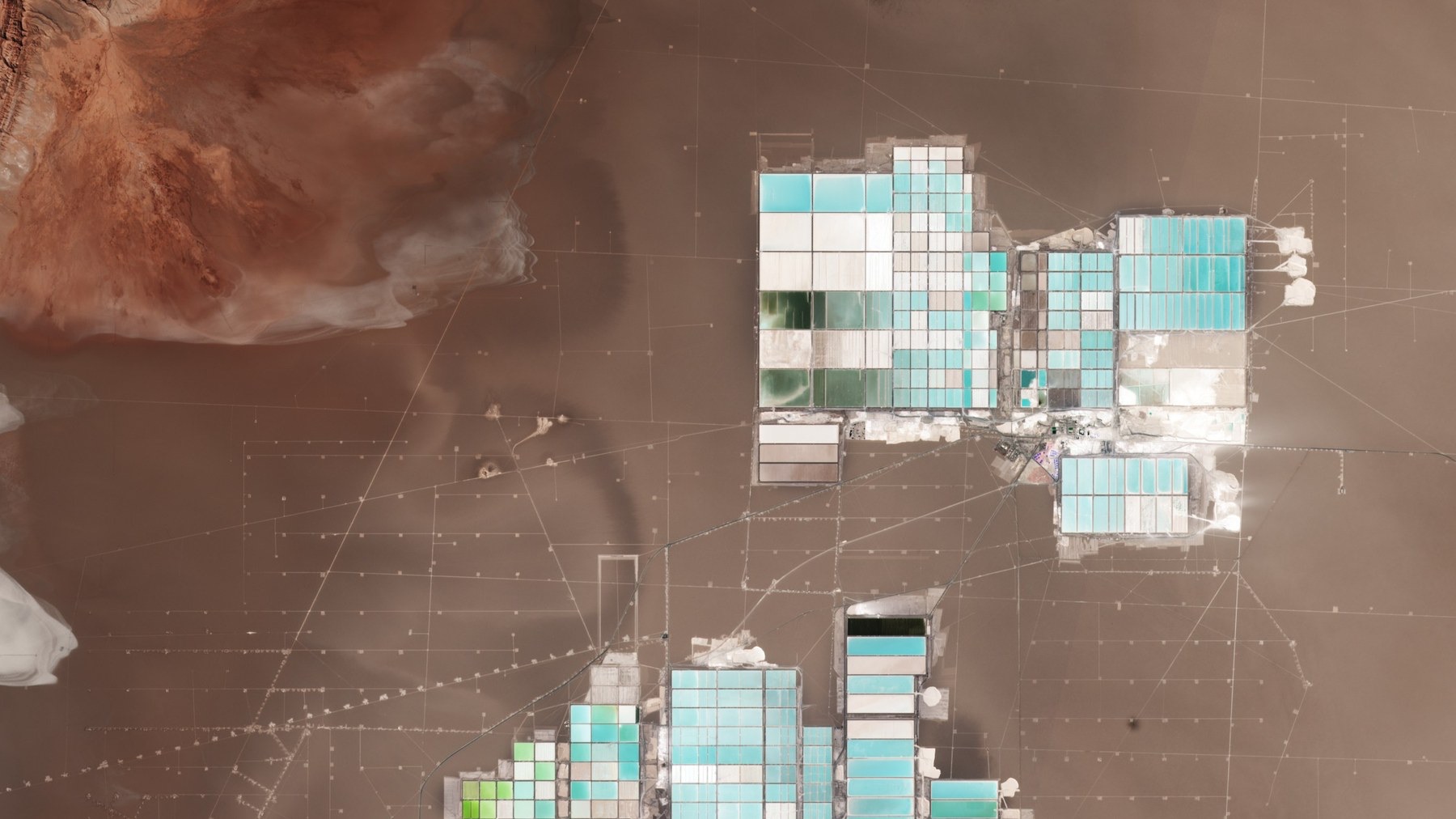
- Photographs: Cesar Chu Ortega, from industrial reuse plants in India; opener: Salar de Atacama, Chile ESA386674 by European Space Agency (CC BY-SA) via Wikimedia Commons, cropped to the pools; inline: Salt evaporation ponds on San Francisco Bay by Doc Searls from Santa Barbara, USA (CC BY) via Wikimedia Commons; inline: Salt Pans of Marakkanam by Dey.sandip (CC BY-SA) via Wikimedia Commons.