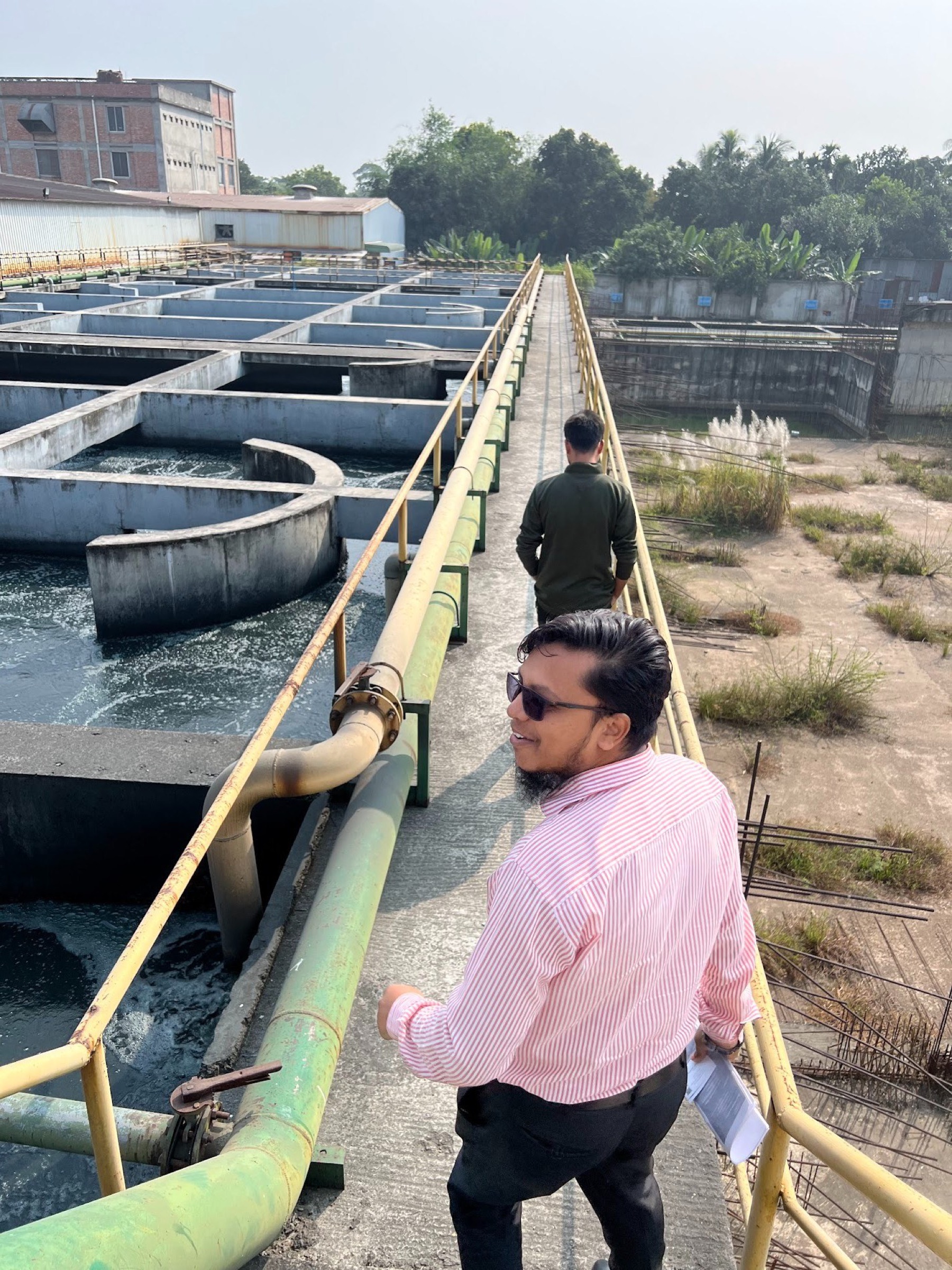
Plain Water: CETP
When a district holds two hundred small factories and none of them can afford a treatment plant, the answer is one plant for all of them. What a common effluent treatment plant is, why India built hundreds, why they are harder to run than any plant that serves one owner, and what decides whether the shared kidney works.
A dye house in a south Indian textile town is a shed with a few winches and a boiler, employing a dozen people, run by a family that has done the same work for two generations. Its effluent is the hot, salty, coloured water the textile article described, and it produces a few hundred cubic metres of it a day. It cannot afford a treatment plant. The plant would cost more than the dye house, it would need an engineer the family does not have, and the sheds on either side, and the two hundred beyond them, are in the same position.
Together, they can afford one. That is the whole idea of a common effluent treatment plant, the CETP, and it is the arrangement under which a large share of the world's small industry treats its water, or fails to. This article is about how the shared kidney works and why it is harder to run than any plant that serves a single owner.
One plant for the cluster
Small industry clusters. Dye houses gather in one town, tanneries in one district, electroplaters in one industrial estate, because they share suppliers, skills and customers, and because the regulator, where there is one, has told them to. A cluster of a few hundred small units produces, between them, the effluent of a large factory, and the effluent of a large factory is worth building a plant for.
A CETP is that plant. It stands at the low point of the cluster, fed by a network of drains or pipes from every member, and it treats the mixed effluent of all of them, through the stages every treatment plant on this site uses: neutralisation, coagulation for colour and metals, biology for the organic load, settling, and, increasingly, membranes for reuse. It is owned by a company or a cooperative formed by the members, paid for by a charge on each in proportion to the volume or the load it sends, and, in India, built with a large share of public money, because the regulator would rather subsidise one plant than inspect two hundred.
| A common effluent treatment plant | |
|---|---|
| Serves | A cluster of small factories, tens to hundreds |
| Fed by | A network of drains or pipes from every member |
| Treats | The mixed effluent of the whole cluster |
| Owned by | A company or cooperative of the members |
| Paid for | A charge per member, by volume or load, plus public subsidy |
| Discharges | To a river or sewer, or, under ZLD, nothing |
India has built several hundred, from the 1980s onwards, for textile towns, tanning districts, pharmaceutical estates and chemical parks, and the model has been copied in Bangladesh, Pakistan, Vietnam and elsewhere. Tirupur's zero liquid discharge, described in its own article, runs on CETPs. Dhaka's tanneries, moved to Savar in 2017, were moved to a central plant. Wherever a court or a regulator has ordered a cluster to clean up, a CETP is what has been built.
Why it is harder than one plant
A treatment plant that serves one factory has one owner, one effluent and one incentive. A CETP has none of those, and each missing thing is a way for the plant to fail.
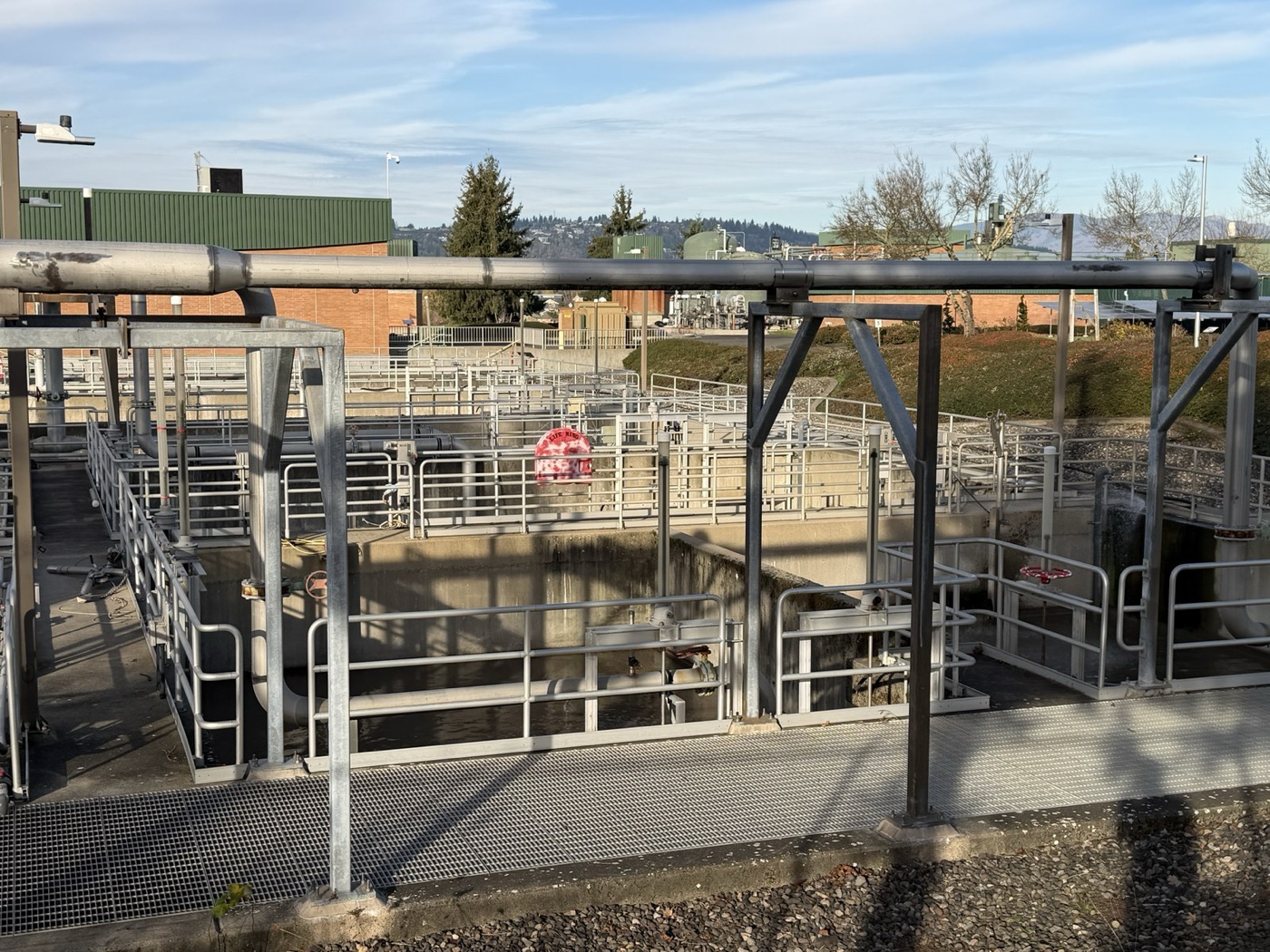
The effluent is whatever anyone sends. A plant designed for a dye house's water receives, on a bad day, a batch of caustic from a bleaching unit, a slug of chromium from a member that started tanning, or a tank of something nobody will admit to. The biology tank at the heart of the plant, as the ETP article explained, is a population of bacteria with a narrow tolerance, and one member's spill can kill it for everyone, for weeks. A CETP therefore has to equalise its inflow in a large tank that smooths out the shocks, monitor what arrives, and enforce rules about what members may send, which brings the next problem.
Every member would rather someone else paid. The plant costs money every hour, the charge is levied on each member, and a member that under reports its volume, bypasses the drain at night, or simply does not pay, enjoys the plant's protection at everyone else's expense. The economists call this the free rider problem, and a CETP is a textbook case of it. The plants that work have metered every connection, cut off members that do not pay, and, in the clusters where it was needed, put a lock and a camera on every outfall.
The plant belongs to nobody. A factory's own plant is run by the factory's engineer, who answers to the owner. A CETP is run by a company formed by two hundred owners, whose board meets quarterly and whose members disagree about the charge. In a good year the plant has a competent manager and a budget. In a bad year, when orders are down and the members are squeezed, the manager's budget is the first thing cut, the blowers are run on half the tanks, and the plant that everyone owns is run by no one. The ETP article said that a plant only works if it is running; a CETP adds that it only runs if someone is responsible for it.
| Why CETPs fail | The fix, where it has worked |
|---|---|
| A member's spill kills the biology | Equalisation tanks, inlet monitoring, rules on what may be sent |
| Members under report, bypass or do not pay | Meters on every connection, disconnection, cameras on outfalls |
| Nobody is responsible in a bad year | A professional operator under contract, with the regulator watching |
| The plant was undersized for the cluster's growth | Phased design, and a limit on new connections |
| The cluster's water is harder than the plant was built for | Pretreatment at the member, before the drain |
Paying by the load
The charge is where a CETP's governance is written down, and the plants that work have thought hard about it. A charge per cubic metre is simple to meter and rewards the wrong thing: a member that sends a small volume of very strong effluent pays little and costs the plant most. A charge by load, so much per kilogram of COD and per kilogram of salt, is fairer and needs sampling at every connection, which is the expense the members resist. The better Indian plants have settled on a two part tariff, a fixed share of the plant's cost by the member's capacity and a variable charge by measured load, with a penalty for effluent outside the agreed limits and disconnection for non payment. The tariff does something the regulator cannot: it makes each dye house's water a line on its own bill, and a line on a bill is the only thing that reliably makes a small factory send less.
What decides whether it works
The CETPs that succeed share a pattern, and the pattern has little to do with the tanks.
They are operated by a professional company under a contract, rather than by the members' committee, so that someone is responsible every day and is paid for the plant's results rather than for attending meetings. They meter every member and charge by load, so that the dye house that sends the dirtiest water pays the most and has a reason to send less. They pretreat at the member: a tannery's sulphide is oxidised in the tannery, a dye house's colour is partly removed at the shed, so that the common plant receives water it was designed for. And they have a regulator, or a court, or a customer, standing behind them: the plants that work are in clusters where an inspector visits, where a discharge that kills a river brings a closure order, or where the brands that buy the cluster's product audit its plant. The successful CETP is a governance arrangement with tanks attached.
Tirupur and Savar
Two clusters on this site show the range.
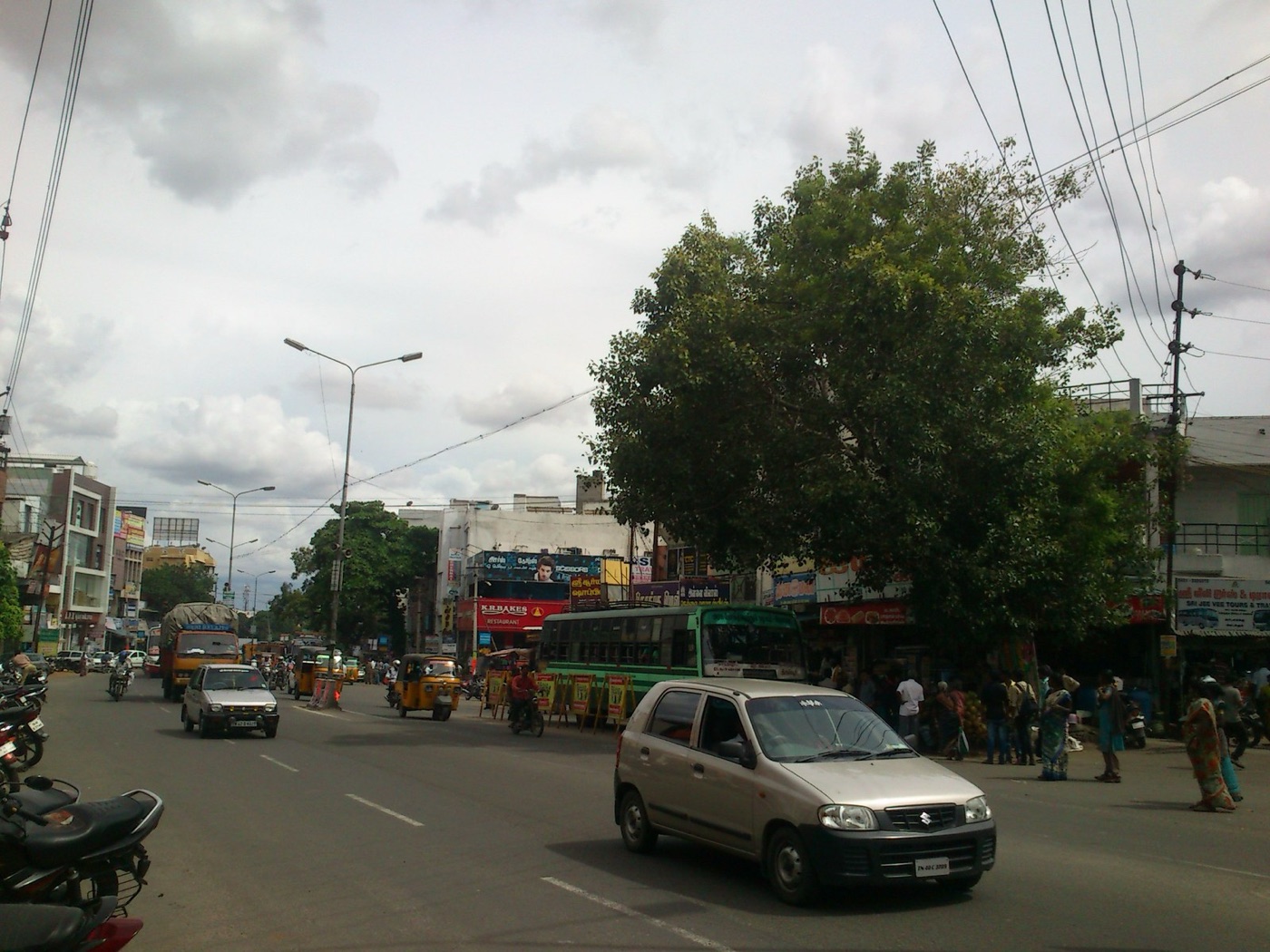
Tirupur's dye houses were ordered by the Madras High Court in 2011 to discharge nothing, and the town's response was to organise its several hundred units around a set of common plants, each a full zero liquid discharge chain, each owned by the units it served and run, after early failures, by contracted operators. The plants cost more than a conventional CETP, the units paid, and the ones that could not pay closed or merged. A decade later the town runs on recovered water and recovered salt. It is the best case: a court that would not bend, a cluster that could organise, and a product, knitwear for European brands, whose buyers cared.
Dhaka's tanneries were moved from Hazaribagh to the Savar estate in 2017, with a central effluent treatment plant built by the government for the whole district. The move happened. The plant, by the audits that followed, has struggled to treat the load it receives, with the sulphide, chromium and salt of the leather article arriving in quantities and concentrations beyond its design, and with a management structure that has changed several times. The river beside the estate has shown it. It is the harder case: the plant exists, the estate exists, the rules exist, and the running of the plant is the part still being built.
The shared kidney
The CETP is the water industry's answer to a real problem, which is that most of the world's polluting industry is small, and small industry cannot treat its own water. The answer works, in the towns where it works, better than any alternative: one plant, one outfall, one place for an inspector to stand. It fails, in the towns where it fails, for reasons that are about people rather than pipes. Anyone who has walked the tanks of both kinds, as I have, learns to look for the meter on the inlet and the name of the operator on the gate before looking at the water.
Sources
- Central Pollution Control Board (India). Performance evaluation of common effluent treatment plants; guidelines and standards for CETPs.
- World Bank (2014). Common effluent treatment plants: a review of experience in India and elsewhere.
- Tamil Nadu Pollution Control Board and the Madras High Court orders on Tirupur's CETPs and zero liquid discharge, 2011 onwards.
- Reporting on the Savar tannery estate's central effluent treatment plant, Dhaka, from 2017.
- Photographs: Cesar Chu Ortega, from common effluent treatment plants in India and Bangladesh; inline: Tirupur by vaikundaraja (CC BY-SA) via Wikimedia Commons; inline: Gresham Wastewater Treatment Plant secondary clarifiers 2025 by PortlandAppraisalBlog (CC BY-SA) via Wikimedia Commons.