Plain Water: Rainwater Harvesting
A house with a hundred square metres of roof in a place with six hundred millimetres of rain sheds about fifty thousand litres a year, which is most of what a careful household uses, and almost all of it runs down a pipe into a drain. What rainwater harvesting is and what it can supply, why a roof is the cleanest catchment there is and what still needs to come out, what a tank costs and how big it should be, why Bermuda and Chennai made it the law and Australia made it a habit, and why the water that falls on a city is the one source it has not been charged for.
A house with a hundred square metres of roof, in a place with six hundred millimetres of rain a year, which is London, Melbourne, Delhi or Chicago, has about sixty thousand litres of water land on it every year, and in almost every city in the world that water runs into a gutter, down a pipe, into a drain and away. Caught, after the losses, it is about forty eight thousand litres, which is close to the whole indoor use of a careful household of two or three, and it is the one source of water that a city has never been charged for and rarely thinks to keep. This article is about what rainwater harvesting is and what it can supply, why a roof is a clean catchment and what still has to come out, what a tank costs and how large it should be, why some places made it the law and others a habit, and where it fits in the plain water pillar of this site.
What a roof catches
The arithmetic is a multiplication. Roof area in square metres, times rainfall in metres, times a runoff coefficient of about eight tenths for a tiled or metal roof to allow for evaporation, splash and the water that stays on the surface, gives litres in thousands: a hundred square metres, six tenths of a metre, eight tenths, is forty eight cubic metres, or forty eight thousand litres. A larger roof or a wetter place gives more; a dry place gives less, though even Phoenix, with two hundred millimetres, gives sixteen thousand from the same roof, and a city where rain falls in a short season, like Chennai or Mumbai, gives its whole year's yield in a few months and needs a tank sized to hold it.
The catch is the timing. Rain falls when it falls, use is steady, and the tank is the buffer between the two; a tank that is too small overflows in the wet season and runs dry in the dry one, and the sizing calculation, which every rainwater manual gives, balances the tank's cost against the share of the year's use it can cover. For a household using its rain on the garden, the toilet and the laundry, which is about half of indoor and outdoor use together, a tank of a few thousand litres in a climate with year round rain covers most of it; in a monsoon climate the tank has to be much larger or the rain has to go into the ground instead.
| A 100 square metre roof | Litres a year, after losses |
|---|---|
| Phoenix, 200 millimetres | About 16,000 |
| Madrid, 400 millimetres | About 32,000 |
| London or Melbourne, 600 millimetres | About 48,000 |
| Chennai, 1,400 millimetres, mostly October to December | About 110,000 |
| Careful household of three, indoor use | About 100,000 to 130,000 |
| Garden, toilets and laundry share of use | About half |
What has to come out
A roof is among the cleanest catchments there is, and it is not clean. The water that runs off it carries what landed on it since the last rain: dust, pollen, leaves, the droppings of birds, and, from some roofs, what the roof is made of, which for old lead flashing and some treated timbers and paints is worth knowing. The first flush device, a chamber that fills with the first few litres of each storm and diverts them to the drain before the cleaner water goes to the tank, deals with most of it; a leaf screen on the gutter and a mesh on the tank inlet deal with the rest, and a tank kept dark and closed grows little. Water from a well kept tank is fit, without treatment, for the garden, the toilet and the washing machine, which is how most of the world's household rainwater is used, and it is fit for drinking with the household version of the plain water pillar: a fine filter and an ultraviolet lamp, or a boil. The surveys of tank water in Australia, where a share of rural households drink it, find bacteria in a large minority of tanks and illness attributable to them rarely, and the public health advice is to treat before drinking and to use it untreated for everything else.
The water is soft, which the hard water article on this site explains, and it carries no chlorine, no fluoride and, from a roof in a city, a little of what the city's air carries, which the rain is pure myth article describes.
| Rainwater from a roof | |
|---|---|
| Carries | Dust, leaves, bird droppings, air pollution, and traces of the roof itself |
| First flush | The first few litres of each storm diverted to the drain |
| Screens | Leaf guard on the gutter, mesh on the inlet, a closed dark tank |
| Untreated, fit for | Garden, toilets, washing machine, car |
| For drinking | A fine filter and an ultraviolet lamp, or a boil |
| Hardness | None; soft water |
The tank
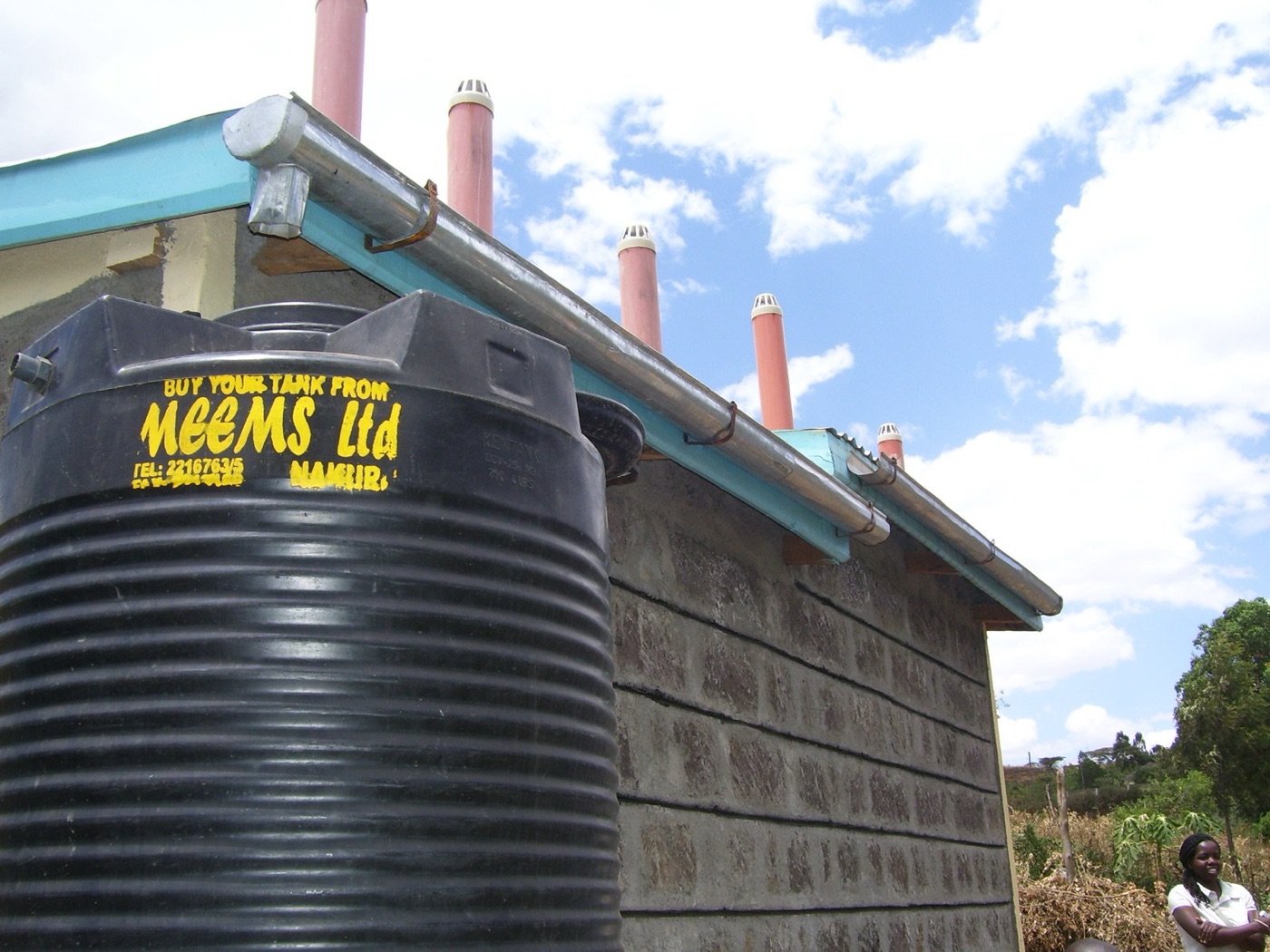
The tank is the cost and the space. A polyethylene tank of three to five thousand litres, above ground beside the house, costs a few hundred to a couple of thousand dollars installed with the gutters, the first flush and a pump to feed the toilets and the laundry; a larger underground tank costs several times that; and the payback, at the water tariffs of most rich cities, is long, because mains water is cheap and the tank saves a few tens of cubic metres a year. The economics work where water is expensive or scarce, where the mains are unreliable, where a city subsidises the tank because it is cheaper than a dam, and in the countryside where there is no main at all. Australia's Millennium Drought produced all four at once, and the tank became the ordinary fitting of a new house.
The other tank is the ground. Where the soil takes water, the rain from a roof can be sent into a soakaway, a recharge pit or a well and into the aquifer, which the groundwater article on this site describes as the storage that a city has under it and rarely refills on purpose. Chennai's rule, the Bangalore article's and the Delhi one's are about that: the roof feeds the well.
Bermuda, Chennai, Adelaide
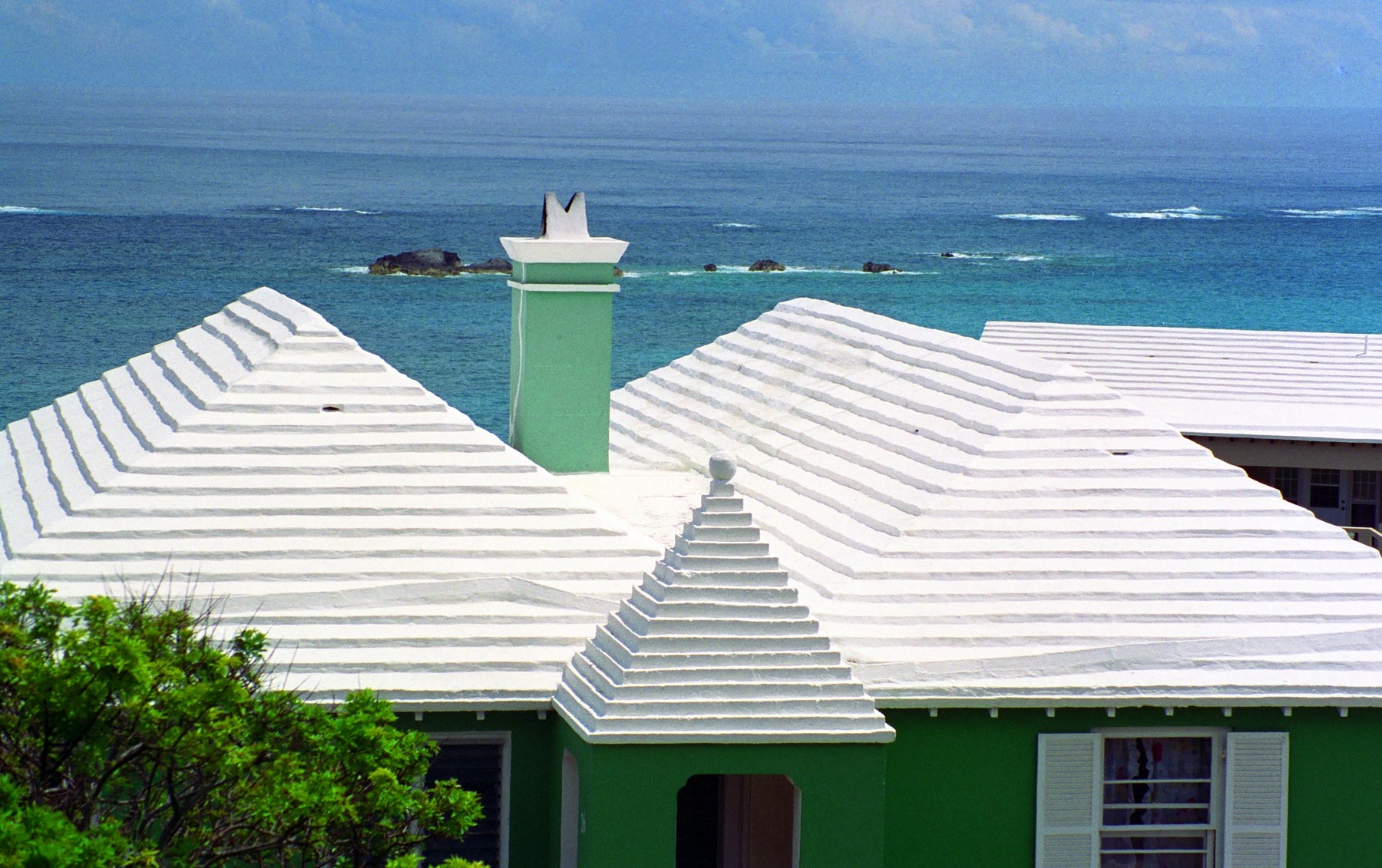
Bermuda has no rivers, no lakes and a small brackish aquifer, and since the seventeenth century its houses have caught their own water: the stepped white limestone roofs that are the island's architecture are catchments, whitewashed to keep the water clean, feeding tanks under the house, and the law requires eighty percent of every roof to be so connected and a tank sized to the roof. The island's water is its rain, house by house, and it has been for four hundred years.
Chennai made it the law in 2003. The city had run dry in the drought of the year before, the aquifer under it had fallen and salted, and the state government required a rainwater harvesting structure on every building, existing and new, with inspections and a deadline, and the aquifer rose by metres in the wet years that followed, by the utility's measurements, and the salt line moved back toward the sea. The Chennai article on this site describes the drought of 2019 that followed anyway, when the rains failed for three years and no roof could catch what did not fall; the rule was the reason the city's wells had anything in them when it came.
Adelaide is the driest capital in Australia, and about half of its households have a tank, most of them fitted in the Millennium Drought under a state rule that required one on every new house and a rebate that paid for the rest. Across Australia about a quarter of households have one, and in the country towns it is the water supply. The tanks cut the cities' mains demand by a few percent, which is a small dam's worth, and they gave a generation of households a gauge on the side of the house that shows how much rain fell, which the water meters article on this site suggests is worth a few percent on its own.
Where it fits
Rainwater harvesting is the plain water pillar with the works removed: catchment, storage, a screen and, for drinking, a filter and a lamp, at the scale of a house. It cannot supply a city; a city's roofs catch a fraction of what a city uses, and in the dry season the tanks are as empty as the reservoirs. It can supply the half of a household's use that does not need drinking water, take the garden and the toilet off the mains in the months that matter, and, sent into the ground, refill the aquifer that the wells are emptying. It is the cheapest new source most cities have, and it is on the roof of every building in them.

What it teaches
Rainwater harvesting is the plain water article about the water a city already has. Forty eight thousand litres a year off an ordinary roof in an ordinary climate, clean enough for half of what a household does with water and, with a lamp, for the rest, running down a drainpipe in every city on this site while the city builds a pipeline. Bermuda has caught it for four centuries, Chennai since 2003, Adelaide since the drought, and the rest have the roof and the drain and the tariff that makes the tank not worth it, until the reservoir is low.
Forty eight thousand litres a year, off a roof that is already there, into a drain that leads to the sea.
Sources
- Australian Bureau of Statistics, Environmental Issues: Water Use and Conservation (2013 and later): about 26 percent of households with a rainwater tank; 45 percent in Adelaide; the main sources of water for use.
- Government of Bermuda, Public Health (Water Storage) Regulations: roof catchment and tank storage required, 80 percent of roof area, tank capacity per square foot.
- Chennai Metropolitan Water Supply and Sewerage Board, Rainwater Harvesting: mandatory since 2003 under the Tamil Nadu Municipal Laws (Second Amendment) Act; groundwater level rise in the following years.
- Texas Water Development Board (2005). The Texas Manual on Rainwater Harvesting, 3rd edition. Yield calculation, first flush, tank sizing and treatment for potable use.
- WHO (2022). Guidelines for Drinking Water Quality, chapter on rainwater harvesting: quality of roof runoff and the treatment needed for drinking.
- Photographs: opener: Bermuda roof by Acroterion (CC BY-SA) via Wikimedia Commons; inline: Rainwater system at nursery house - Nakuru London (ROSA project) (3449001593) by SuSanA Secretariat (CC BY) via Wikimedia Commons; inline: Descente d'eaux gargouille by Jebulon (CC0) via Wikimedia Commons.