Thirsty Industries: Car Washes
A car washed with a hose on the drive uses three to five hundred litres, and a car washed in a modern tunnel uses a hundred and fifty, of which most has been used before. Where the water goes in a car wash, why the professional wash beats the driveway on water and on what goes down the drain, how a reclaim system works and how much it saves, what a drought does to the industry, and why the water in a car wash is small and the argument about it is the one every city has in August.
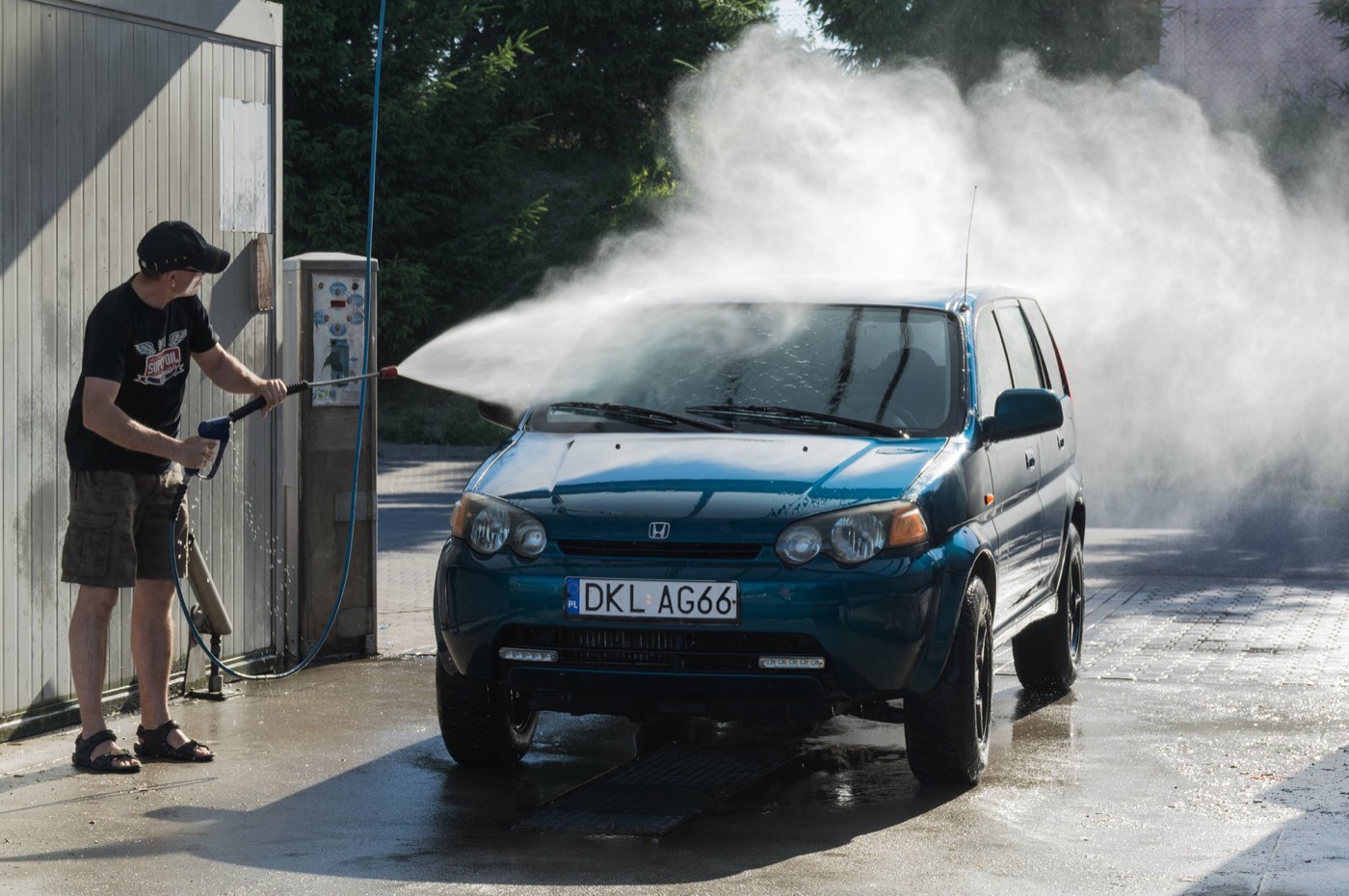
A car washed with a hose on the drive on a Saturday morning uses between three and five hundred litres of water, most of it running off the bonnet and down the gutter while the sponge is in the bucket, and every litre of it carries the road's grime, the brake dust, the oil film, the phosphate in the soap and the copper from the pads into a storm drain that, in most cities, leads directly to the nearest river with no treatment between. A car washed in a modern commercial tunnel uses about a hundred and fifty litres of fresh water, because most of what touches the car in the tunnel has touched another car first and been filtered in between, and what leaves the tunnel goes to the sewer. The car wash is on this site because it is one of the few industries where the professional version beats the domestic one on water and on effluent both, and because it is the first thing a city bans in a drought anyway.
Where the water goes
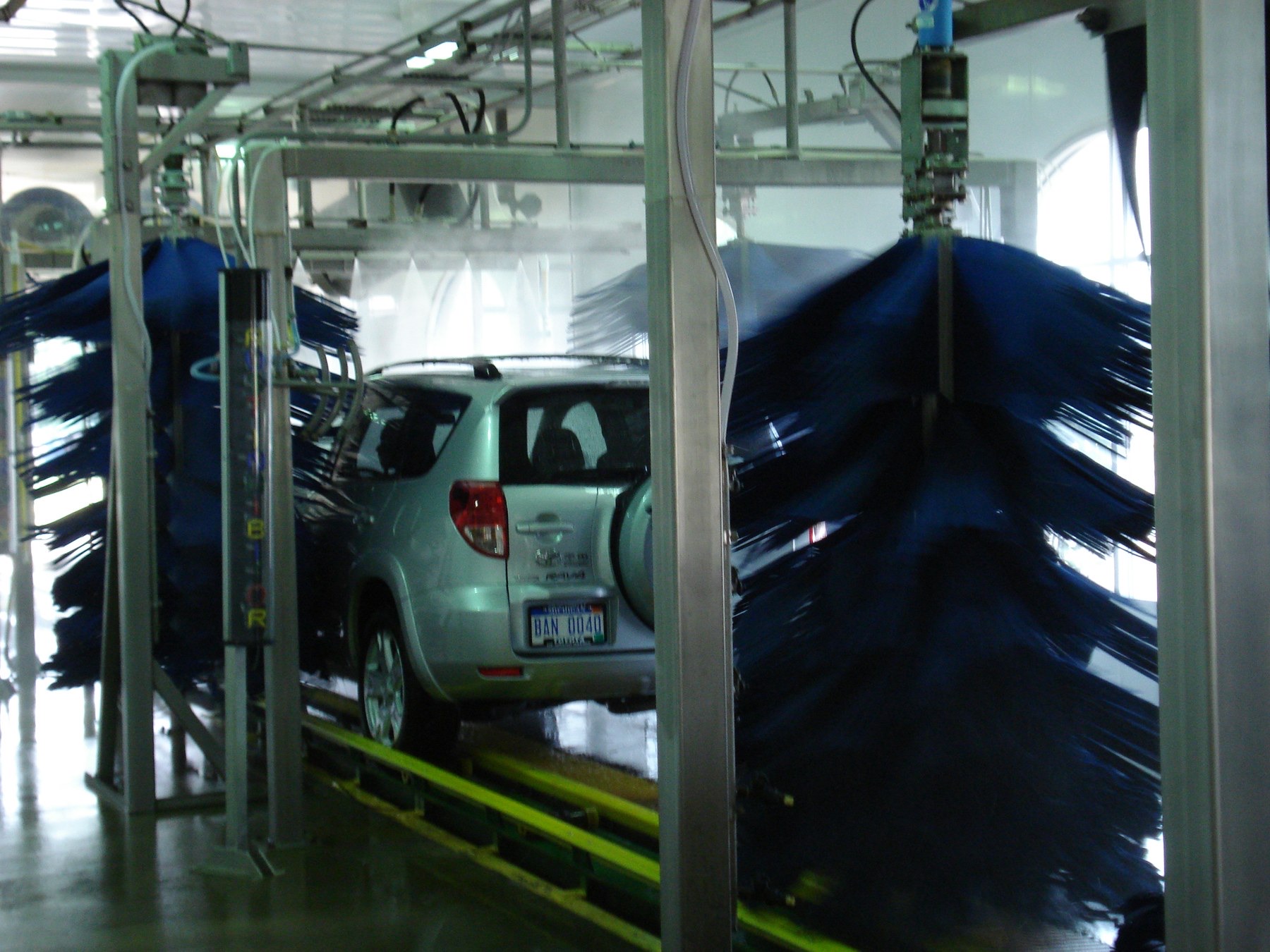
A car passing through a tunnel wash is wetted, soaped, brushed or blasted, rinsed, waxed if it is paying for that, rinsed again with softened or deionised water so that it dries without spots, and blown dry, and each stage sprays water at the car from arches and nozzles at a few litres a second for a few seconds. An old tunnel with no reclaim used four to six hundred litres of fresh water per car, all of it once. A modern one collects everything that falls into the pit under the conveyor, settles the grit, skims the oil, filters the rest, and sends it back to the early stages, the wetting, the soap and the first rinse, where a little cleanliness does not matter; fresh water is used only for the final rinse and the spot free rinse, and the fresh water per car falls to a hundred and fifty or below, with the best tunnels under a hundred. An in bay automatic, the roll over kind at a petrol station, is similar. A hand wash business with buckets and a pressure washer in a car park is a driveway wash with more cars.
| Water per car | Litres of fresh water |
|---|---|
| Hose on the drive, no shut off nozzle | 300 to 500 |
| Bucket and sponge, hose with a trigger | 50 to 100 |
| Old tunnel, no reclaim | 400 to 600 |
| Modern tunnel with reclaim | About 150; the best under 100 |
| In bay automatic | 130 to 170 |
| Where the runoff goes | Drive: the storm drain and the river; tunnel: the sewer and the works |
What goes down the drain
The water is the smaller half of the case. What washes off a car is the residue of the road: fine particles of tyre and brake, which carry copper, zinc and the microplastics the article of that name on this site describes; the film of oil and fuel that every car sheds; the soap, which in the cheaper brands carries phosphate; and the salt in winter. From a drive, all of it runs down the gutter into a storm drain, which in most cities is a separate system from the sewer that carries rain straight to a stream, and the storm overflows article describes what the combined kind does with it. A single car is a small dose. A city's worth of Saturday washes is a measurable one, and the studies of urban streams find the metals of brake dust at levels that the fish notice.
A commercial wash is connected to the sewer, its pit traps the grit and the oil, and what it discharges is treated at the works with everything else. The industry's argument that it is the cleaner option is the industry's argument, and it is also, on this point, the regulator's.
The reclaim system
The reclaim system is a small treatment works under the floor. Water from the wash runs into a series of settling tanks in which the sand and grit drop out and the oil floats and is skimmed; it passes through a cyclone or a filter to take out the finer solids; in the better systems it is treated with ozone or a biological stage to stop it going septic and smelling, which is the reason the older reclaim systems were hated by their operators and their customers; and it is pumped back to the arches. The systems recover sixty to eighty percent of the water, they cost tens of thousands of dollars, and the operators install them because water and sewer charges are a large share of a wash's costs and because, in California, Arizona, Australia and South Africa, a permit or a drought exemption depends on having one. The wash with a reclaim system is the version of every industry on this site that has learned to use its water twice, and it learned for the usual reason.
| A reclaim system | |
|---|---|
| Settling tanks | Grit drops, oil floats and is skimmed |
| Filtration | Cyclone or media filter for fine solids |
| Treatment | Ozone or biological, against odour and bacteria |
| Reuse | The wetting, soap and first rinse stages |
| Fresh water | Final and spot free rinse only |
| Recovery | 60 to 80 percent of the water |
The drought
The car wash is the first business a city closes in a drought, and it is closed for the reason every city on this site rations by what people can see. A city that has banned lawn sprinklers and asked its residents to take four minute showers cannot leave a tunnel wash running on the main road, whatever its reclaim rate, and the bans that followed the droughts in Sydney in 2007, Cape Town in 2018 and California in 2015 and 2022 closed or restricted the commercial washes along with the hoses. The better drafted rules exempted washes with reclaim and required the rest to close, which is the right distinction; the worse ones closed everything, and the cars were washed on drives with buckets, which used more water per car and sent it to the river. Cape Town in its Day Zero year allowed washes only with recycled or non drinking water, and the washes that survived were the ones that had trucked in borehole water or built a reclaim system in a hurry.
The industry's response has been to make its case in advance, with the numbers in the table above, and to build the reclaim systems that the case depends on, so that the wash on the main road in the next drought has the permit that says it uses a hundred litres and returns them to the sewer. It is a small industry making the argument that every large one on this site makes, and it is easier to see the water in a car wash than in a steelworks, which is the whole of the industry's problem.
The water in the car
The car wash's water is a footnote to the car's. The car article on this site puts the water in the manufacture of a car in the tens of thousands of litres, most of it in the steel, the paint shop and the battery, and the fuel article adds a few litres for every litre in the tank. A car washed once a fortnight for ten years in a modern tunnel has used about forty thousand litres, roughly the water of its own manufacture, and about a third of that if the wash reclaims well. The same car washed on the drive has used three times that and sent it to the river. It is a modest number either way, and the choice between the tunnel and the hose is the largest single water decision a car owner makes after the decision to own the car.
The hand wash in the car park
The fastest growing part of the trade in Europe is the hand wash: a dozen workers in a supermarket car park or a disused petrol station with pressure washers, buckets and sponges, washing a car for a few pounds in twenty minutes. It uses the water of the driveway, two to three hundred litres a car, and sends it where the driveway sends it, down the car park's drains to the storm sewer, with the soap, the wax and the grime. Most are unconnected to the sewer, few have a permit, and the regulators in Britain have found, when they have looked, that a share were discharging illegally and a share were employing people who were not free to leave. The tunnel wash on the main road, with its reclaim system and its sewer connection, is the industry's better half, and the price war with the hand wash in the car park is the reason it has been losing, which is the argument every regulated industry on this site has with the unregulated version next door.
What it teaches
The car wash is the smallest industry on this site and the one that shows most clearly that the visible use is the one that gets banned. Its water is a hundred and fifty litres a car and falling, most of it used twice, and the alternative on the drive uses more and pollutes a river with it. The drought bans that close it are about what a city can see rather than what a city loses, and the washes that survive them are the ones that built the treatment works under the floor before the ban came.
A hundred and fifty litres in the tunnel, five hundred on the drive, and the difference running down a storm drain to the river.
Sources
- International Carwash Association, Water Use in the Professional Car Wash Industry (2018 and 2023 updates): in bay automatic about 130 to 170 litres fresh water per car; tunnel about 110 to 190; driveway hose 300 to 500.
- US EPA, Vehicle Washing and Stormwater: pollutants in driveway wash runoff; storm drain versus sanitary sewer discharge.
- California State Water Resources Control Board, Emergency Regulation 2015 and 2022: restrictions on vehicle washing without a shut off nozzle; commercial washes with recirculation exempted.
- City of Cape Town, Level 6B water restrictions 2018: commercial car washes permitted only with recycled or non potable water.
- Brown, C. (2002). Water use in the professional car wash industry. International Carwash Association research report; reclaim system performance 60 to 80 percent.
- Photographs: opener: Auto wash interior by CurranH (Public domain) via Wikimedia Commons; inline: 2015 Kłodzko, ul. Dusznicka, myjnia samochodowa 02 by Jacek Halicki (CC BY-SA) via Wikimedia Commons; inline: Mister Car Wash, 9516 Snow Heights Circle NE, Albuquerque, New Mexico - May 2026 by Christian David (CC BY-SA) via Wikimedia Commons.