Thirsty Industries: Ski Resorts
Most of the snow on a modern piste was made from water pumped up a mountain and blown through a fan on a cold night, and the industry that sells winter now depends on it. What snowmaking is and what it uses, why a cubic metre of water makes two of snow and where the rest goes, what a resort's reservoir in the high pasture is for, why the Alps are the most snowmade mountains on Earth, what the Beijing Olympics showed, and what happens to the water when the snow melts.
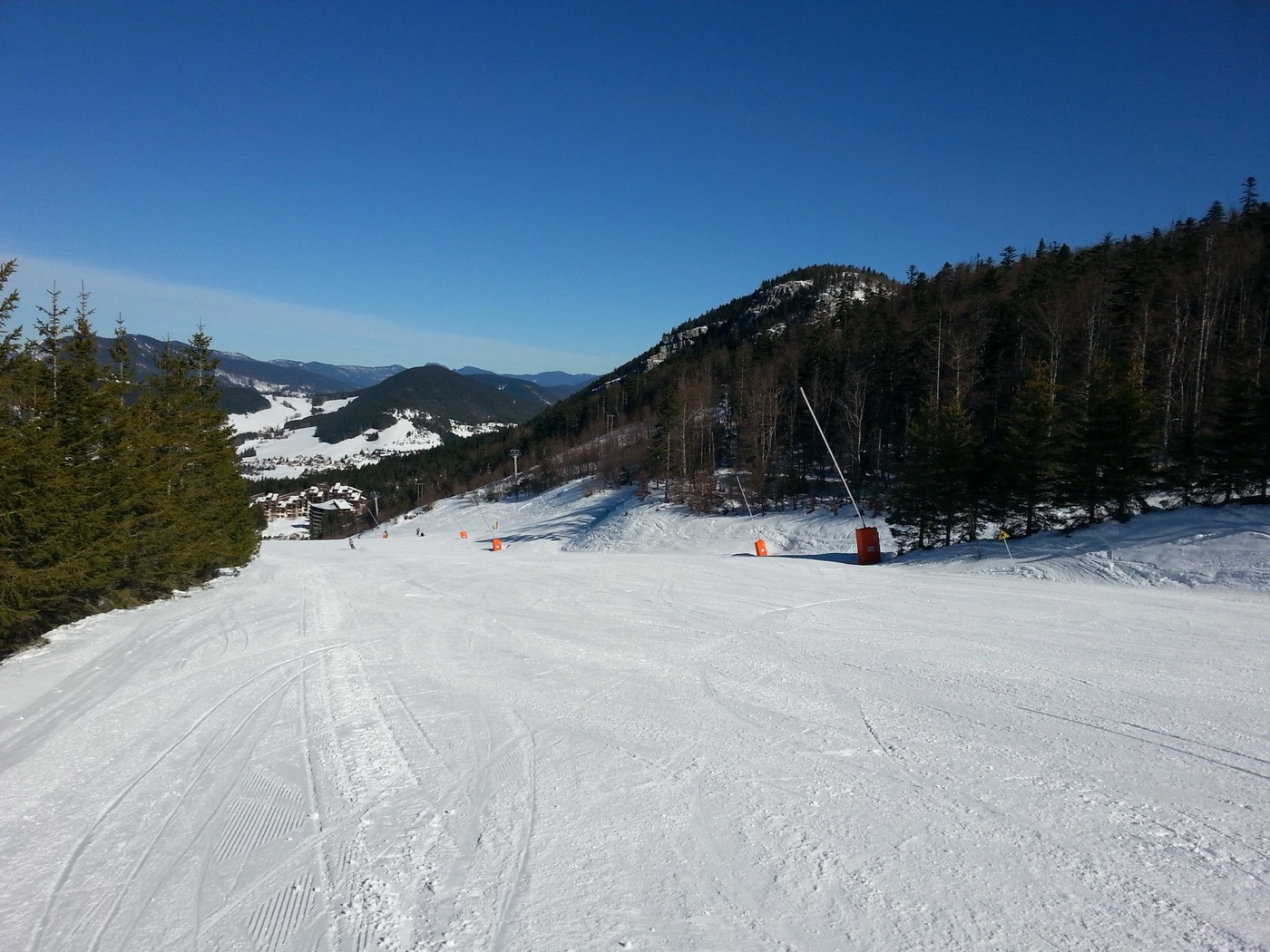
The snow on a piste in the Alps in January was, more likely than not, made the night before from water pumped up the mountain and blown through a fan into cold air. Snowmaking began as insurance for a poor week and became, over thirty years of warmer winters, the foundation of the industry: ninety percent of Italy's pistes, about seventy percent of Austria's and more than half of Switzerland's are covered by artificial snow for part of every season, and a resort that does not make snow at the altitudes where most resorts were built does not open reliably in December. The water is the part of this that the skier does not see, and it is the reason this industry is on this site.
This article is about what snowmaking is and what it uses, where the water comes from and goes, what the reservoirs above the treeline are for, what an Olympic Games in a dry mountain range showed, and what a warmer winter does to the arithmetic.
What a snow cannon does
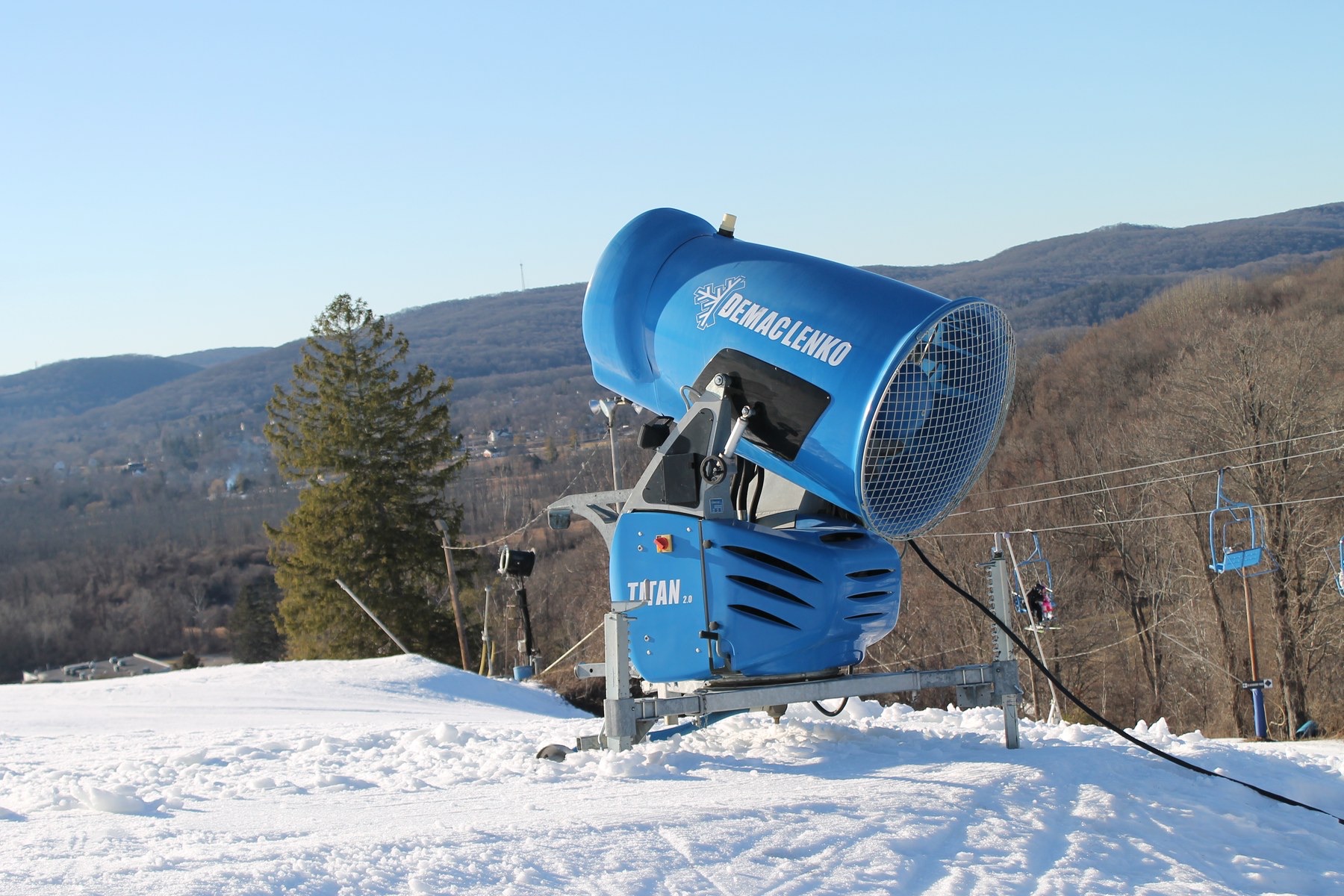
A snow cannon, or a lance, which is the same thing on a pole, takes water at a few degrees, pushes it through nozzles at pressure with compressed air, and throws the resulting fine droplets twenty or thirty metres into air that is below freezing, where they freeze on the way down into grains of ice that pack into a dense, durable snow that lasts longer on a piste than the natural kind. It works when the wet bulb temperature, which is the temperature with the cooling of evaporation counted in, is below about minus two, and it works best on a cold dry night, which is why the cannons run from dusk to dawn in November and December to build the base before the holidays. A cubic metre of water makes about two cubic metres of snow, roughly; the rest of the volume is air, and a fifth to a third of the water is lost on the way, to evaporation and to wind that carries the plume off the piste.
A kilometre of piste, thirty metres wide, needs a base of thirty to fifty centimetres before it can be skied, which is several thousand cubic metres of water, and it needs topping up through the season as the base wears and melts. A large resort with a hundred kilometres of piste uses between half a million and a million cubic metres of water a season, and the electricity of a small town to pump it up the mountain and drive the fans.
| Snowmaking | |
|---|---|
| Water to snow | About 1 cubic metre of water for 2 of snow |
| Lost in the making | 20 to 30 percent, to evaporation and wind |
| Base for a kilometre of piste | Several thousand cubic metres of water |
| Large resort, per season | 500,000 to 1,000,000 cubic metres |
| Conditions | Wet bulb temperature below about minus 2; cold dry nights |
| Pistes with snowmaking | Italy about 90 percent; Austria 70; Switzerland 54; France 39 |
Where the water comes from
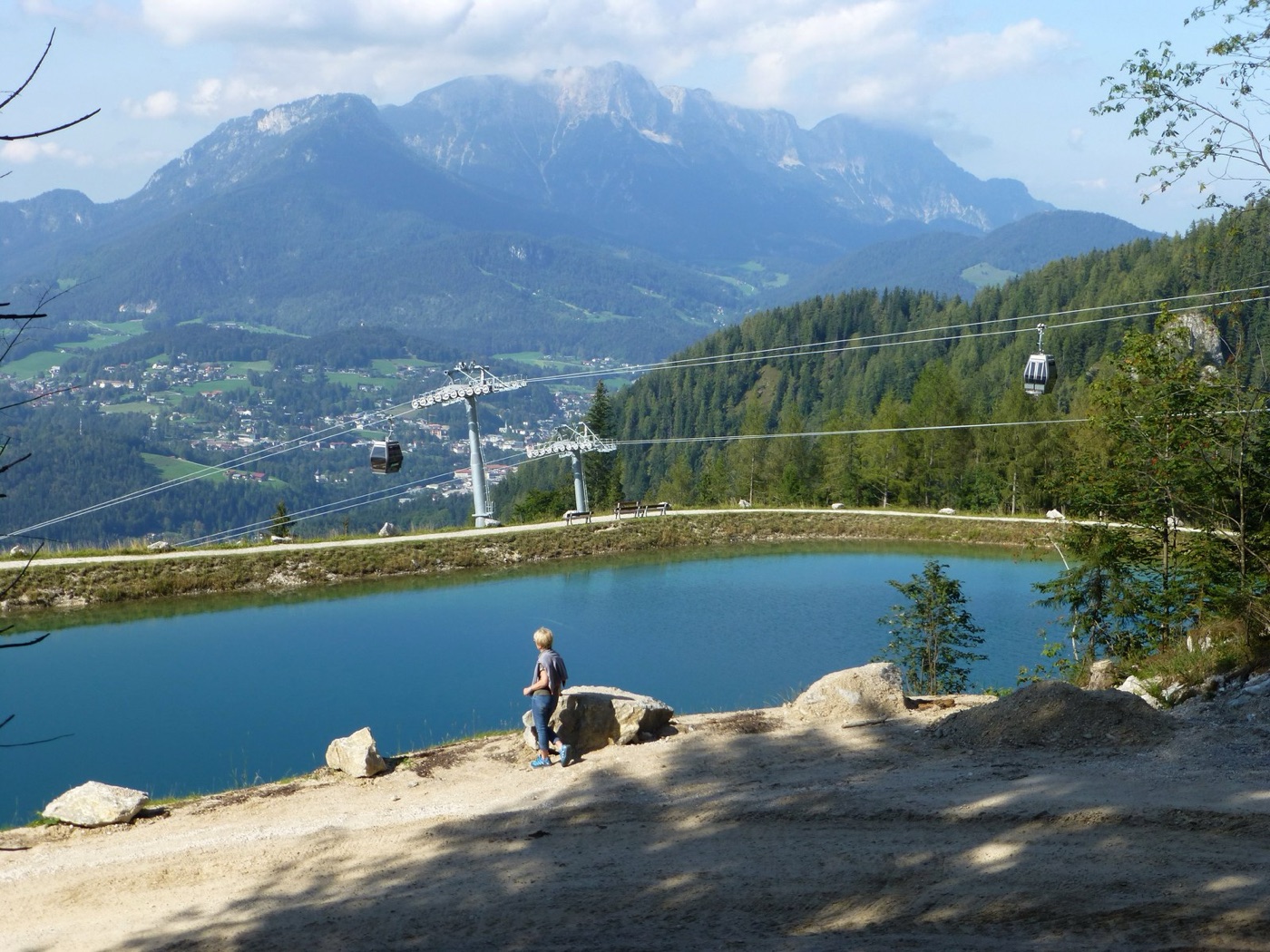
The water comes from the mountain, and the timing is the problem. Snowmaking happens in November and December, when the streams of the Alps are at their lowest, because the summer's melt has ended and the winter's has not begun, and a resort that pumped straight from the stream in those weeks would take most of what it carries. So the resorts store: reservoirs dug into the high pasture above the treeline, lined with plastic, filled from the streams through the summer and autumn and drawn down in the snowmaking weeks, holding fifty thousand to several hundred thousand cubic metres each. There are hundreds of them in the Alps now, most built since 2000, in landscapes that had no standing water before, and each is a small dam above a valley, of the kind the tailings article on this site describes in another industry, with a village below it.
Where the resort's own catchment is too small, the water comes from the valley: pumped up from a river a thousand metres below, at a cost in electricity that is the larger part of the snowmaking bill, or from the village's drinking supply, which in the resorts of the Tyrol and the Savoie has been the subject of the argument the hotel article on this site describes about tourism and the towns it sits in. A resort's snowmaking demand, in a dry December, can exceed the drinking water use of its own village, and the village's spring is the same water.
Where it goes
The water is not consumed, mostly. It sits on the mountain as snow until spring, melts, and runs down the same streams into the same rivers, minus the share lost in the making, and a resort's water footprint, in the terms the rest of this site uses, is that share: a fifth to a third of what it pumped, which is tens or hundreds of thousands of cubic metres a season. The rest is moved in time, from autumn to spring, and the moving is what the streams notice. A stream drawn down in November, when it is lowest, loses the flow its trout and its invertebrates depend on in the months they are most stressed; the reservoir that fills it in summer takes the summer's flow; and the melt in April, coming off dense artificial snow that melts later than the natural kind, comes in a pulse that the stream's ecology did not evolve for. The additives that some resorts use to help the water freeze, a protein from a bacterium, go down the stream with it.
The other change is the mountain. The pistes under artificial snow are graded flat, the soil compacted by the machines, the vegetation under a dense, late melting snowpack changed to the species that tolerate it, and the ground under a piste that has been snowmade for twenty years drains differently from the meadow it was.
| Snowmaking and the mountain | |
|---|---|
| Consumed | 20 to 30 percent, evaporated in the making |
| Moved in time | The rest, from autumn streams to the spring melt |
| Reservoirs | Hundreds in the Alps, most built since 2000, above the treeline |
| Streams in November | Drawn down at their lowest flow |
| The melt | Later and denser than natural snow; a pulse in April |
| The piste | Compacted, graded, and its plants changed |
Beijing
The Winter Olympics of 2022 were held in mountains north of Beijing that get little snow and have, in February, air dry enough to make it, and the organisers made all of it: the alpine venues at Yanqing and the Nordic ones at Zhangjiakou ran on artificial snow entirely, from water piped from reservoirs and a river in a region that the Beijing article on this site describes as among the most water short in China, at a volume the organisers put at a few hundred thousand cubic metres and the critics at more. It was the first Games with no natural snow, it will not be the last, because the candidate cities of the next decades are warmer than the ones of the last, and it showed the industry's future to the industry's customers: a sport that runs on pumped water, in mountains chosen for their politics, in a climate that no longer provides the material.
The warmer winter
The reason for all of it is the temperature. The Alps have warmed by about two degrees since the late nineteenth century, twice the global rate, the snow line has risen by a few hundred metres, and the resorts below 1,500 metres, which are most of the older ones, have lost the natural snow reliability they were built on. Snowmaking is the adaptation, and it has a floor: it needs cold nights, and a warm December that stops natural snow also stops the cannons, so that the resorts that depend on it most are the ones for which it works least. The studies of the Alps under the climate scenarios find snowmaking keeping most resorts above 1,800 metres viable through the century and the lower ones closing one by one, having spent their last decades pumping water up a mountain that was no longer cold enough to hold it.
The village below
The reservoir above the treeline is a dam, and the village at the bottom of the valley is what a dam is above. The Alpine reservoirs for snowmaking are earth embankments lined with plastic, holding tens or hundreds of thousands of cubic metres at two thousand metres in ground that freezes and thaws, and the safety rules that govern them were written, in most of the Alpine countries, only after the first ones had been built. The failures have been few and small so far. The argument about them is the one the tailings article on this site describes for a different industry: a structure that holds water above people, built by a company for its own use, inspected by whoever the canton assigns, in a landscape that the tourists came to see without a lake in it.
The lakes are also the resort's summer product now, marketed for walks and mountain biking around a body of water that did not exist a generation ago, which is the part of the arithmetic that keeps the local councils voting for them.
What it teaches
Ski resorts are the industry on this site whose water use is almost entirely borrowed and whose borrowing changes the lender. The water goes up the mountain in November and comes down in April, a fifth of it evaporated, the streams drawn down at their lowest and flushed at their highest, in reservoirs built on pastures that had none. It keeps the resorts open in winters that would otherwise close them, and it works only while the nights stay cold enough, which is the one thing the industry cannot pump.
Ninety percent of Italy's pistes, a cubic metre of water for two of snow, and a reservoir above the treeline that was a meadow in 1999.
Sources
- Vanat, L. (2024). International Report on Snow and Mountain Tourism. Share of pistes with snowmaking by country: Italy about 90 percent, Austria about 70, Switzerland about 54, France about 39.
- François, H. et al. (2023). Distribution of ski resort water and energy demand for snowmaking under climate change. Nature Climate Change 13. Water use per hectare and per resort in the Alps.
- Steiger, R. and Scott, D. (2020). Ski tourism in a warmer world: increased adaptation and regional economic impacts in Austria. Tourism Management 77.
- Beijing 2022 Organising Committee and IOC, snowmaking water use at Yanqing and Zhangjiakou: about 100 percent artificial snow; water from reservoirs and the Baihe river.
- Rixen, C. et al. (2011). Winter tourism and climate change in the Alps: an assessment of resource consumption, snow reliability, and future snowmaking potential. Mountain Research and Development 31.
- Photographs: opener: Thunder Ridge Ski Area – DemacLenko Snow Fan 01 by Coldstreamer20 (CC BY-SA) via Wikimedia Commons; inline: Speichersee Nähe Mittelstation zur Beschneiung by Franzi-45 (CC BY-SA) via Wikimedia Commons; inline: Espace Villard-Corrençon (38) - Piste Violette - 4 by Floppy36 (CC BY-SA) via Wikimedia Commons.