Thirsty Industries: Hotels and Tourism
A tourist on a Mediterranean island uses three to five times the water of the person who lives there, in the driest months, on the driest coasts, and the resort with the pool and the golf course uses ten. What a hotel does with water, why the number per guest night runs from a hundred litres to two thousand, what tourism did to the islands of Spain and Greece, what a golf course drinks, and why the industry that sells the sea is short of fresh water.
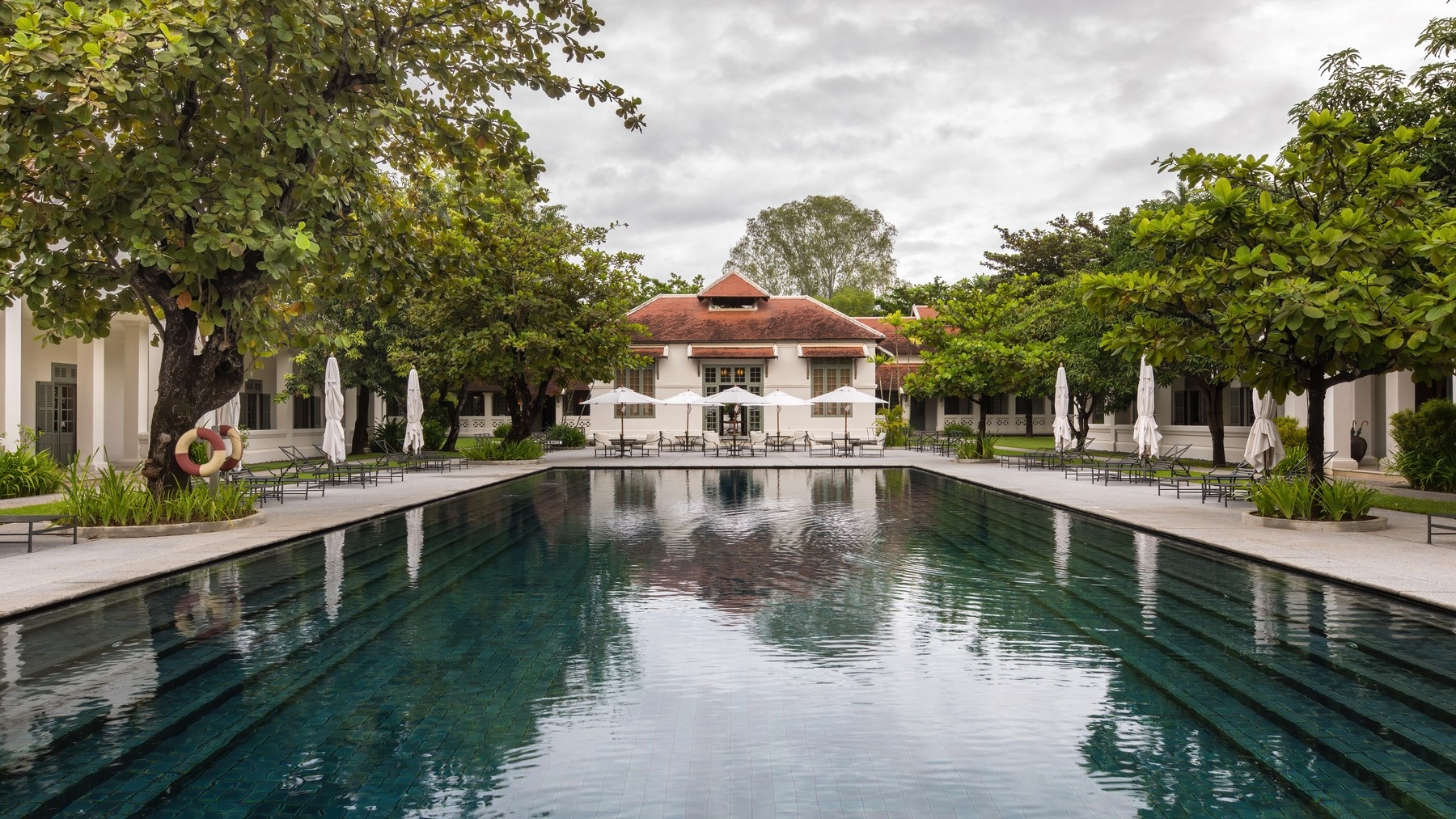
A hotel is a small town that has agreed to behave badly about water. Its guests take longer showers than they take at home, its sheets and towels are washed daily, its pool evaporates through the afternoon, its gardens are green in the driest month of the year, and its restaurants, spas and golf courses use water in the ways that the food, textile and lawn articles on this site describe, all at once and on holiday. A guest in an ordinary city hotel uses about three hundred litres a night, twice what a resident of the same city uses; a guest in a resort with pools, lawns and a spa uses a thousand or two. And the industry has built itself, by preference, on the coasts and islands with the least water on Earth, in the season when they have least.
This article is about what a hotel does with water, why the number varies by a factor of twenty, what tourism did to the islands of the Mediterranean, and what the industry has done since.
Where the water goes in a hotel
The largest use in most hotels is the guest room: the shower, which runs longer and hotter on holiday than at home, and the toilet, and in the older hotels the bath. The second is the laundry, which washes every sheet and towel in the building every day unless the guest hangs the card on the door, at fifteen to twenty litres per kilogram of linen. The third is the kitchen, and behind those the pool, the gardens, the cooling towers of the air conditioning in a hot climate, and the spa. A city business hotel with none of the outdoor uses sits at two to three hundred litres a night. A resort adds the pool, which loses a centimetre a day to evaporation in the sun, and the gardens, which in a dry climate are irrigated lawn and planting that would die in a week without it, and the number climbs past a thousand.
| Water per guest night | Litres |
|---|---|
| Budget hotel, city, no pool | 100 to 200 |
| Ordinary hotel | About 300 |
| Resort with pools and gardens, dry climate | 800 to 2,000 |
| Resort with a golf course, counted in | Higher still |
| Resident of a Mediterranean town | About 150 |
| Camping | Under 100 |
Where the hotels are
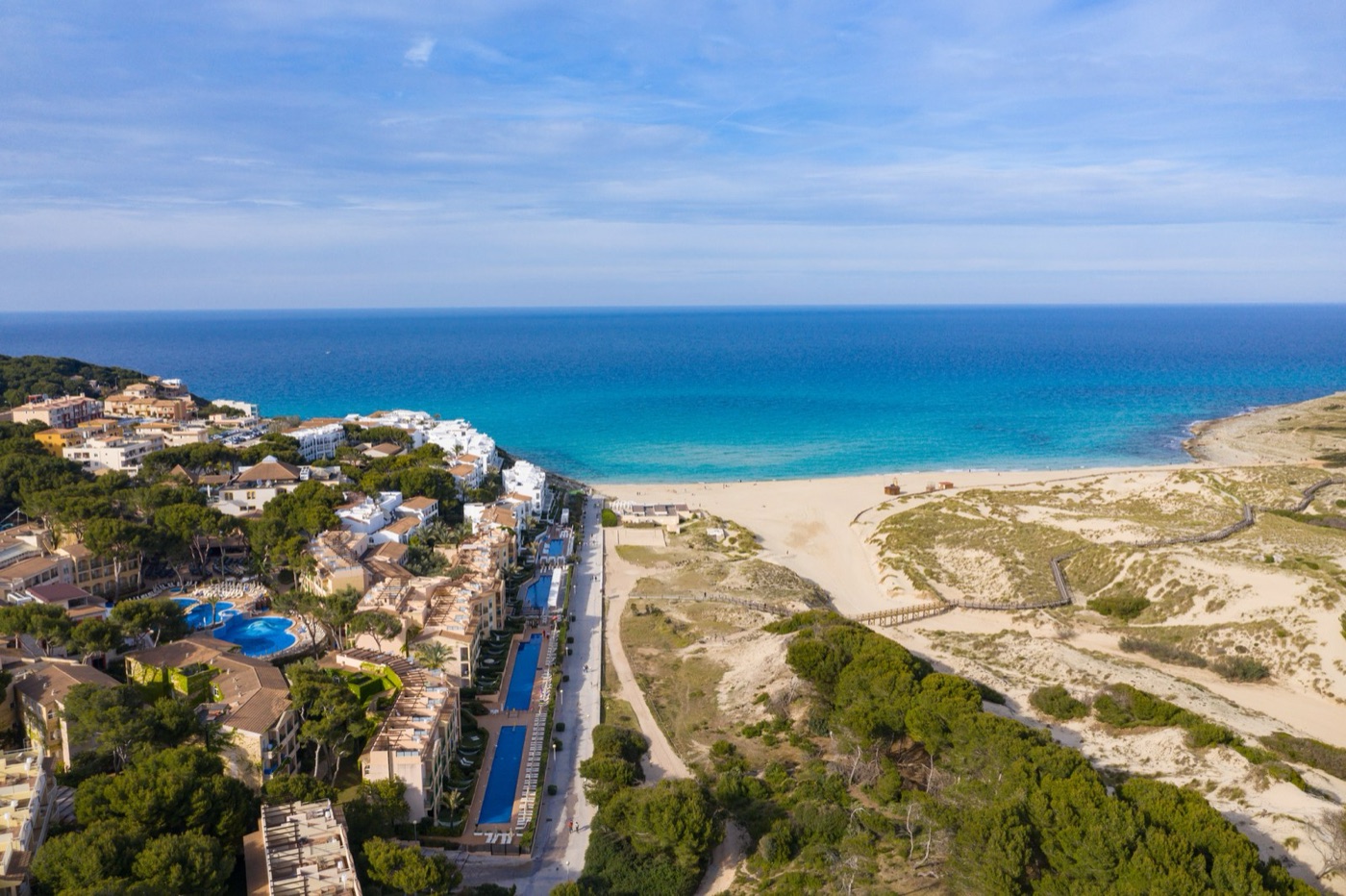
The industry is largest where the rain is least. The Mediterranean is the most visited region on Earth, and its islands and southern coasts, which have the driest summers in Europe, host a tourist population that doubles or triples the resident one from June to September, exactly when the aquifers that both depend on are lowest. Mallorca has a million residents and fourteen million visitors a year; Crete, Rhodes, Malta, Cyprus and the Canaries have similar ratios; and the same pattern holds in the Caribbean, in Bali, in Zanzibar and on every dry coast where the beach is the product.
The hotels' water in those places came, at first, from the same wells as the towns', and the wells were drawn down through every summer of the 1970s and 1980s until the sea came in behind the fresh water, which the desalination and brine articles on this site describe as the salting of a coastal aquifer, and which on Mallorca and the Costa Blanca made the town supply brackish by the 1990s. The islands answered with desalination plants, which the hotels' tariffs pay for and which run at full output only in the summer months, and with pipelines from the wetter interiors. Malta, which has no rivers, drinks desalinated water for most of its supply and its tourists with it.
| Tourism and the islands | |
|---|---|
| Mallorca | About 1 million residents; about 14 million visitors a year; summer demand double |
| Malta | Most of the supply desalinated; tourism about a fifth of demand |
| Cyprus and Crete | Aquifers salted in the 1980s and 1990s; desalination since |
| Canaries | Desalination on every island; hotels the largest customers |
| Bali | Hotels and villas drawing the aquifer down under the rice terraces |
The golf course
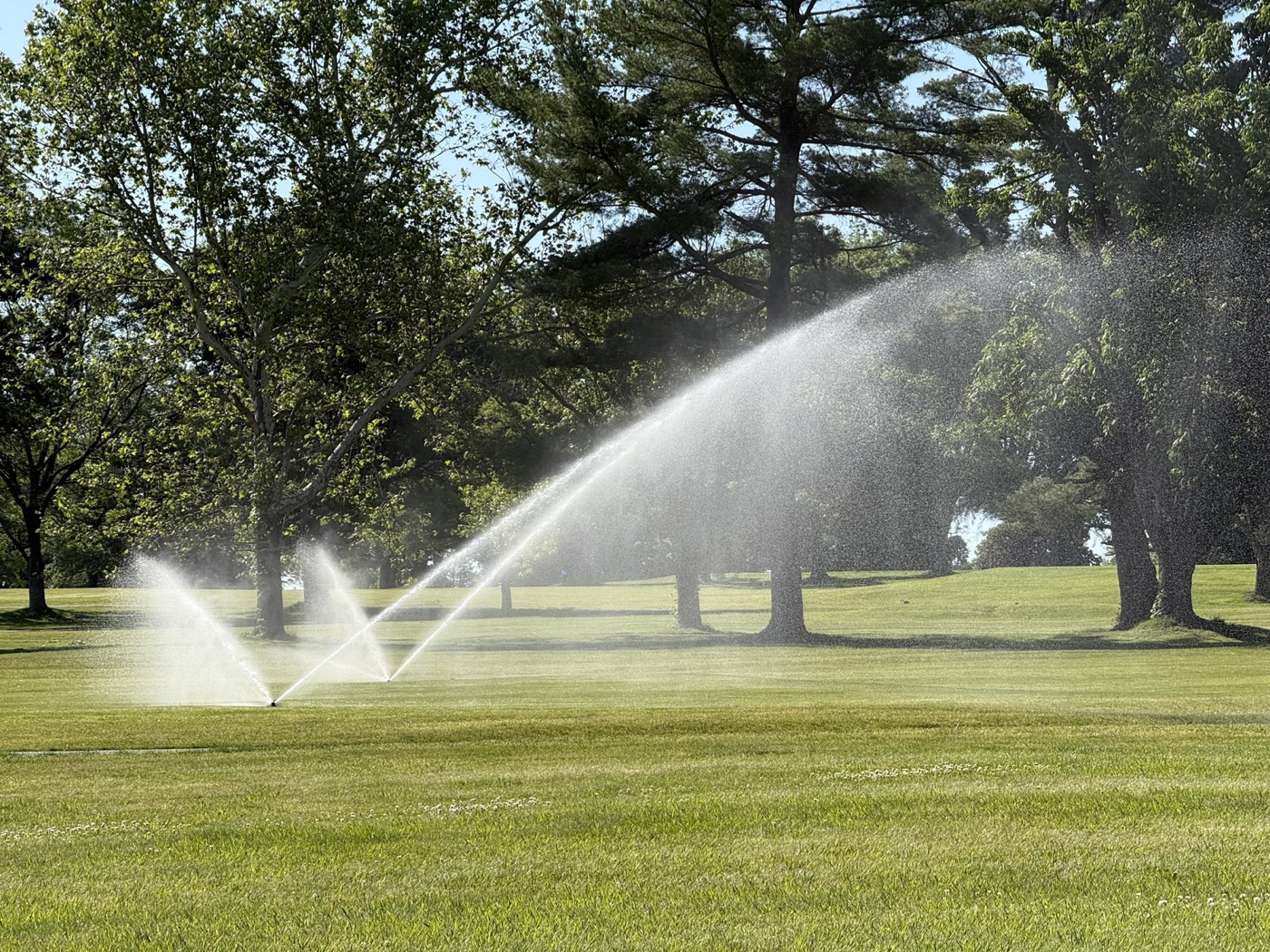
The extreme case is the golf course, which the lawn article on this site describes as a lawn the size of a farm. A course in a dry climate needs about a million cubic metres of water a year to stay green, which is the drinking water of a town of ten to fifteen thousand people, and it needs it in the summer, when the town needs its own. The coasts of southern Spain have several hundred courses, most built between 1990 and 2008 as the anchors of resort developments, and the region's water plans of that period counted them, with some embarrassment, as one of the larger agricultural users. The rule that has since been written into most of them, and enforced unevenly, is that a course must water itself with treated effluent rather than the town's supply, and the better resorts now run their own treatment plants and irrigate the fairways with what their guests flushed. The worse ones have wells.
What the industry has done
The hotel industry has been counting its water for two decades, because the water is a cost and because the brands are asked about it, and the fixes are known. Low flow showers and dual flush toilets cut the room's use by a third without the guest noticing. The card on the door that asks whether the towels need washing, which every hotel now has, cuts the laundry by a fifth where it is honoured. Pool covers at night halve the evaporation. Gardens planted with what grows on the coast without irrigation replace the lawns, slowly, because the lawn is what the brochure shows. And the resort's own effluent, treated on site, waters what remains, so that the resort becomes a small version of the water recycling that the greywater and Singapore articles describe. The best resorts in the dry regions are now at three to four hundred litres a night, down from over a thousand, and they advertise it.
The larger problem is the number of guests. A coast that has cut its water per guest by half while doubling its guests has gained nothing, and most of the Mediterranean's coasts have done exactly that. The islands' plans now talk of limits on beds, which the islands' economies, built on the beds, resist.
What the guest carries
The water a guest uses in the room is the smaller part. The food the hotel serves carries the water of the food articles on this site, and a resort's buffet, with its beef, its cheese and its fruit flown in, carries several thousand litres per guest per day before anyone has showered. The linen carries cotton's water, the pool its chemicals, and the flight nothing at all in water and a great deal in carbon. Counted that way, a week in a resort is a few tens of thousands of litres, most of them far from the resort, which is the point the water you cannot see article makes about every product and which is true of a holiday.
The cruise ship and the villa
Two forms of tourism sit outside the hotel's accounting and inside the coast's. A cruise ship is a resort that carries its own water, made by desalination on board at a rate of a few hundred litres per passenger per day, and discharges its treated sewage at sea beyond the limit, so that a ship in a port takes little from the town and leaves its several thousand passengers on the quay for the day, using the town's toilets, showers and restaurants without a bed to be counted against. The villa, which the rental platforms have multiplied across every Mediterranean coast in the last decade, is a house with a private pool and a garden, occupied for a few weeks a year by people who are not counted as hotel guests and whose pool evaporates through the eleven months the house is empty. On Mallorca and in the Algarve the villa pools now outnumber the hotel ones, each holding tens of thousands of litres and topped up from the mains, and the islands' water plans, written for hotels, have had to be rewritten for houses.
The plans have tools. A meter on every villa, a tariff that rises steeply above a household's use, a rule that a pool must be covered when not in use and filled outside the summer, and the same reuse of treated effluent on gardens that the resorts have adopted. The villa owner, who is usually not on the island, is the hardest customer the utility has.
What it teaches
Tourism is the industry on this site that puts the largest number of people, using the most water per head, in the places and the months with the least. The hotel's water is not large by the standards of a steelworks or a farm; it is large because of where the hotel is and who is outside the gate. The fixes are the household's fixes, applied to a building that has every reason to apply them and a brochure that resists, and the islands have paid for them with desalination plants and rules about golf. The guest, meanwhile, could take the four minute shower they take at home.
Three hundred litres a night, two thousand with the golf, and a coast that doubles its people in the month its wells are lowest.
Sources
- Gössling, S. et al. (2012). Tourism and water use: supply, demand, and security. Tourism Management 33. Direct use 84 to 2,000 litres per guest night; indirect use higher.
- UNWTO and UNEP (2019). Tourism and water: sustainability in a dry region. Mediterranean case studies.
- Hof, A. and Schmitt, T. (2011). Urban and tourist land use patterns and water consumption: evidence from Mallorca. Land Use Policy 28.
- Rico Amoros, A.M. et al. (2009). Tourist land use patterns and water demand: evidence from the Western Mediterranean. Land Use Policy 26. Golf course water use in Alicante and Murcia.
- Hotel industry benchmarks: Cornell Hotel Sustainability Benchmarking Index, water per occupied room by climate and hotel type.
- Photographs: opener: Swimming pool and main building of Amantaka luxury Resort & Hotel in Luang Prabang Laos by Basile Morin (CC BY-SA) via Wikimedia Commons; inline: 2026-06-01 09 01 59 A sprinkler on the first hole green of the Mountain View Golf Course in the Mountainview section of Ewing Township, Mercer County, New Jersey by Famartin (CC BY-SA) via Wikimedia Commons; inline: Hotels near the beach of Cala Mesquida in Mallorca, Spain (48001491916) by dronepicr (CC BY) via Wikimedia Commons.