Thirsty Industries: Slaughterhouses
Between the animal and the shrink wrapped packet is a plant that uses about ten cubic metres of water for every tonne of meat and sends out an effluent with the strength of raw sewage many times over. What a slaughterhouse does with water, why blood is the worst thing that can go down a drain, how a chicken plant uses twenty litres a bird, what the treatment plant has to take out, and why the water in a steak is mostly elsewhere and the water in a river below a meat plant is mostly here.
The water in a steak, which the beef article on this site puts at about fifteen thousand litres a kilogram, is almost all on the farm: the rain and irrigation that grew the grass and the grain the animal ate over its life. The plant that turns the animal into the steak uses about ten litres for every kilogram, a fraction of a percent of the total, and it is on this site anyway, because what a slaughterhouse sends out is among the strongest effluents in any industry and it goes into a river in a single stream from a single building. A meat plant is a small water user with a large water effect, and the two ends of that are the subject of this article.
What the plant does with water
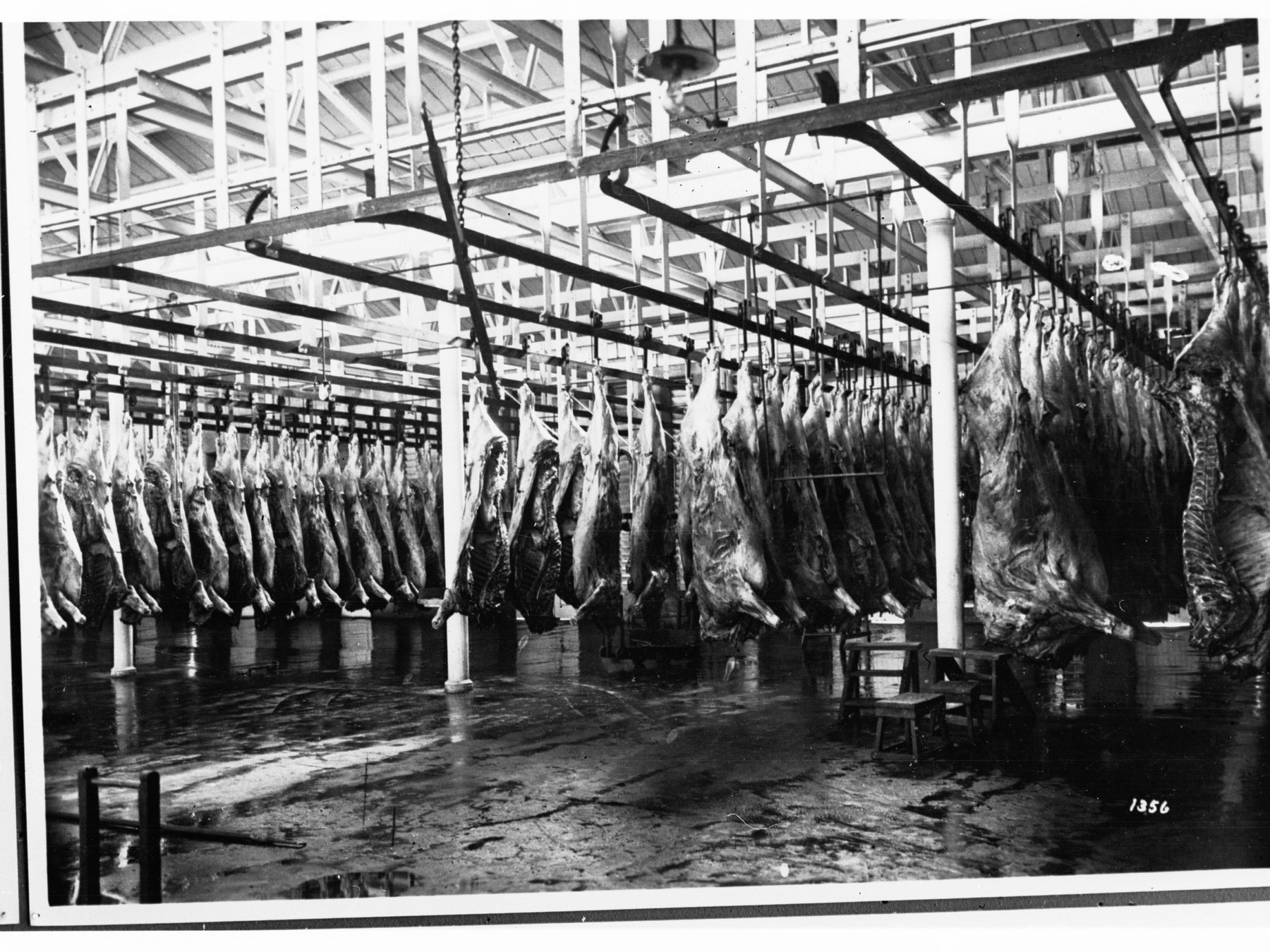
A slaughterhouse is a washing operation with a killing floor attached. Animals arrive, are held, are watered and often washed; they are stunned, killed and bled; the carcass is scalded or skinned, eviscerated, split, washed, chilled and cut, and at every step there is water: hot water to scald a pig or a chicken so the hair or feathers come off, water to wash the carcass after evisceration so that what was in the gut does not stay on the meat, water to rinse knives and saws between animals, water in the chill tanks where chickens are cooled, and water, above all, to wash the floors, walls, hooks, conveyors and tables continuously through the shift and thoroughly at the end of it. The rule of the plant, written into food safety law in every country, is that nothing touches meat without being clean, and clean means washed, and washed means water at sixty degrees or more with chlorine or a detergent in it.
The totals are two to fifteen cubic metres per tonne of carcass for cattle and pigs, with ten typical, and ten to twenty five litres for each chicken, which is a small bird, so that a chicken plant killing a million birds a week uses the water of a town of thirty thousand people.
| Water in a slaughterhouse | |
|---|---|
| Cattle and pigs | 2 to 15 cubic metres per tonne of carcass; about 10 typical |
| Chickens | 10 to 25 litres a bird |
| Largest uses | Carcass washing, scalding, chill tanks, cleaning of the plant |
| Temperature | Much of it at 60 degrees or above, for hygiene |
| World meat production | About 360 million tonnes a year; about 75 billion chickens |
| Share of the meat's footprint | Well under one percent |
What goes down the drain
The effluent of a meat plant carries what the animal was made of and what was in it. Blood is the worst: a litre of blood has a biochemical oxygen demand, the measure the BOD article on this site explains, of a hundred and fifty to two hundred grams, against half a gram for a litre of raw sewage, so that the blood of a single steer, about fifteen litres, has the oxygen demand of the sewage of several hundred people for a day. Then fat, which floats and clogs and takes oxygen slowly; paunch and gut contents, which are manure; manure from the holding pens; hair, feathers, and fragments of tissue; and the wash water itself, hot and carrying chlorine, detergent and salt. The raw effluent of a plant that does not separate its streams has an oxygen demand of several thousand milligrams a litre, five to ten times sewage, and a plant that has let its blood go to the drain can send out more oxygen demand in a day than the town it sits in.
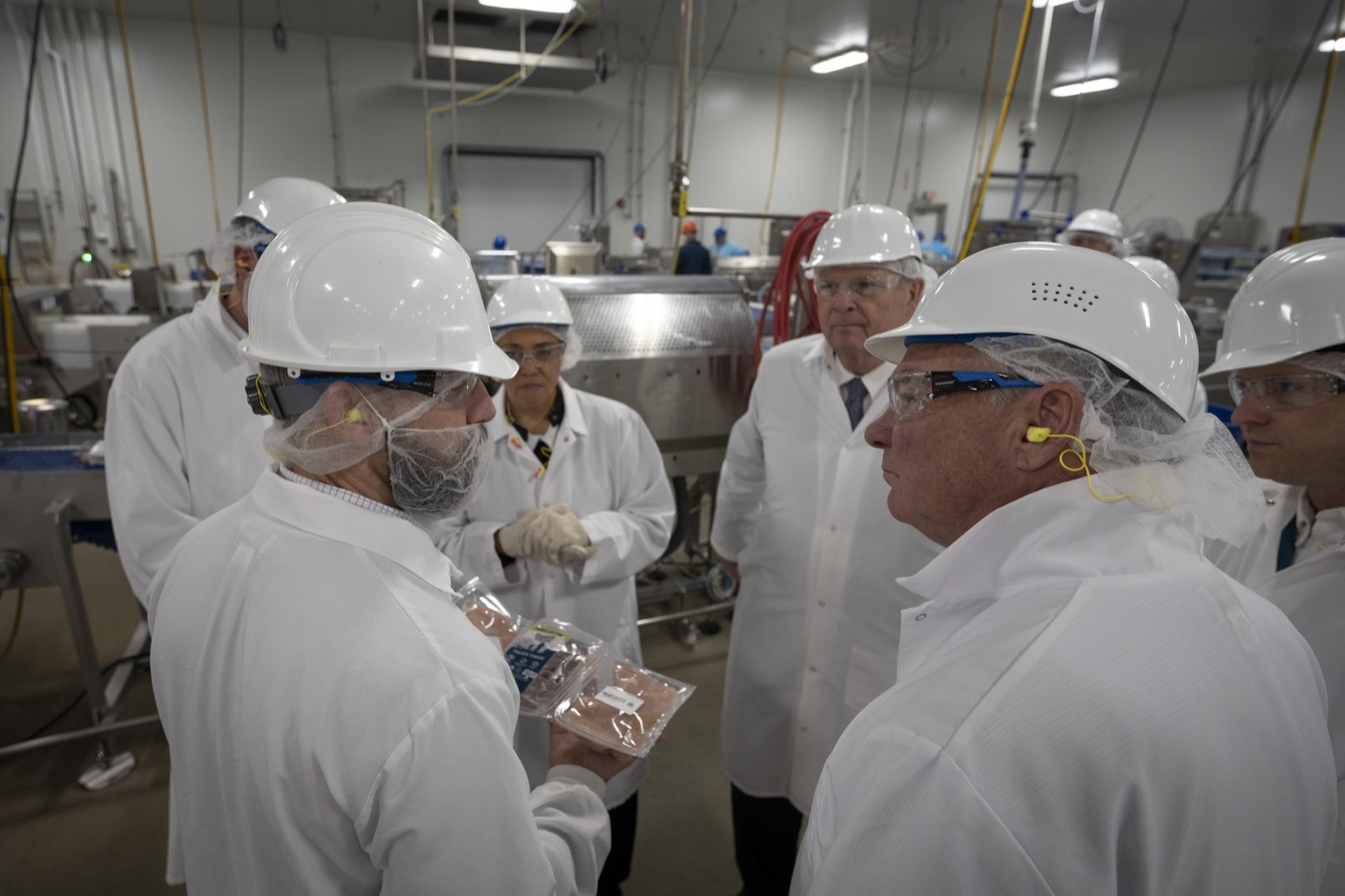
The first rule of the trade, therefore, is to keep the blood out of the water. It is collected at the kill, in a trough under the bleeding rail, and rendered into blood meal or plasma, which have a value; the fat and the trimmings go to the rendering plant with the bones and are made into tallow and meat meal; the paunch contents go to composting or the fields. What is left, at a well run plant, is the wash water, still strong, and it goes to a treatment plant that is, at most large sites, the plant's own.
| A meat plant's effluent | Oxygen demand, roughly |
|---|---|
| Raw sewage | About 300 to 500 mg/L |
| Slaughterhouse wash water, blood removed | 1,000 to 4,000 mg/L |
| Slaughterhouse effluent, blood in the drain | Up to 8,000 mg/L and more |
| Blood itself | 150,000 to 200,000 mg/L |
| The blood of one steer | The sewage of several hundred people for a day |
The treatment plant
A slaughterhouse effluent plant is the effluent article on this site with a grease trap at the front. Screens take out the solids; a flotation tank, in which fine bubbles lift the fat and blood protein to the surface where they are skimmed, takes out the grease and a large share of the oxygen demand; and the rest goes to biological treatment, often anaerobic first, because the load is high and the methane is worth burning, then aerobic, then a settling tank and a discharge to the sewer or the river. The ammonia, from the protein, needs the nitrogen removal the nitrogen article describes, and the salt and the chlorine pass through. A plant that runs all of that sends out water that a sewer can take. A plant that runs a grease trap and a pipe sends out what the table above shows.
The plants are large and in the countryside, near the animals, on rivers that are small, and the record of fish kills below meat plants in the American midwest, in Brazil and in eastern Europe is a long one. In the United States the rules for the industry were written in the 1970s and revised in 2004, and the regulators' own audits since have found a large share of the plants discharging above their limits into rivers that also carry the runoff of the feedlots upstream.
The chicken
The chicken plant is the modern version of the trade, and the fastest. A large plant kills a hundred and fifty birds a minute on a line, scalds them, plucks them, guts them, washes them inside and out, and then cools them in chill tanks, long troughs of near freezing water with chlorine or peracetic acid in it, through which the carcasses are dragged for an hour to bring their temperature down before packing. The chill tank is where much of the water goes and where much of the contamination is exchanged, because a bird carrying salmonella shares the tank with a thousand that were not, which is why the tank is chlorinated and why the European Union, which forbids the chlorine wash, uses air chilling instead, at a higher energy cost and a lower water one. The plucked feathers and the offal go to rendering and become the fishmeal substitute in the feed of the next flock, and, as the salmon article on this site describes, of the fish.
The rendering plant
Behind every slaughterhouse is a rendering plant, and it is the part of the industry that turns the water problem into a product. Everything the plant does not sell as meat, which is about half of a cow and a third of a chicken, goes to the renderer: bones, fat, offal that is not eaten, blood, feathers, hair, hooves and the carcasses condemned at inspection. The renderer cooks it, at high temperature under pressure, and separates it into fat, which becomes tallow for soap, biodiesel and feed, and a dry protein meal that goes into pet food, fish feed and the feed of the next flock. The water that leaves is the water that was in the tissue, condensed from the cookers, and the renderer's effluent is the slaughterhouse's without the blood: strong, fatty, and smelling of what it was, which is why rendering plants are the most complained about neighbours in the food industry. A meat plant that sends its blood and fat to the renderer has cut its effluent's strength by more than half and has been paid for it, and the plants that do not are the small, old and remote ones, which are also the ones on the smallest rivers.
The water in the packet
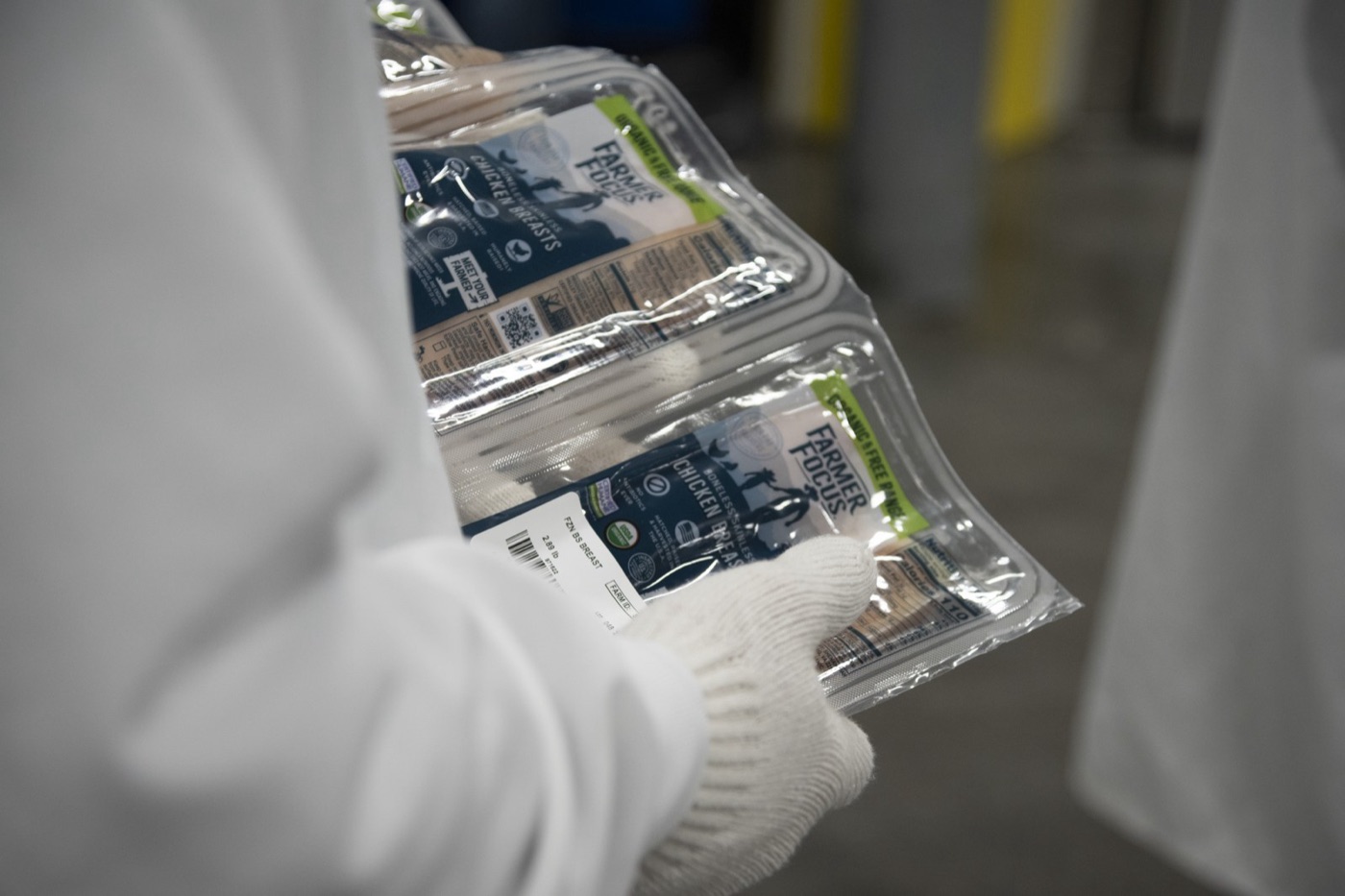
The packet on the shelf carries the farm's water and the plant's, and a third that neither counts: the water sprayed on the carcass as an antimicrobial. In the United States a carcass is washed with chlorine, peracetic acid or lactic acid at several points on the line, and the chicken is chilled in chlorinated water that it absorbs, so that a share of the packet's weight, up to several percent, is water added at the plant and sold at the price of meat. The European Union forbids the washes and the absorbed water, which is the substance of the long argument about chlorinated chicken in trade negotiations, and its plants rely on hygiene along the line instead, at a lower water use and a higher labour one. The packet, either way, carries the plant's ten litres a kilogram and the farm's thousands, and the difference between the two systems is a few percent of water in the meat and the treatment of the water that leaves the building.
What it teaches
The slaughterhouse is the industry on this site where the footprint number is misleading in the opposite direction from wool. A kilogram of meat carries thousands of litres, almost all of them on the farm, and the plant that made it into meat used ten; and the plant, not the farm, is where a river is killed in an afternoon, because a building that handles blood and fat by the tonne concentrates what a thousand fields spread out. The water use is small and hot and endless, for hygiene, and the water effect depends entirely on whether the blood went to the rendering plant or the drain.
Ten cubic metres a tonne, twenty litres a bird, and a litre of blood with the oxygen demand of three hundred litres of sewage.
Sources
- European Commission, Best Available Techniques reference document for the slaughterhouses and animal by products industries (2005, revised 2023): water use 2 to 15 cubic metres per tonne of carcass; poultry 10 to 25 litres per bird.
- US EPA (2004). Effluent limitations guidelines for the meat and poultry products point source category: effluent BOD, oil and grease, ammonia.
- Bustillo Lecompte, C.F. and Mehrvar, M. (2015). Slaughterhouse wastewater characteristics, treatment and management. Journal of Environmental Management 161. BOD 1,000 to 8,000 mg/L; blood about 150,000 to 200,000 mg/L.
- USDA Food Safety and Inspection Service, pathogen reduction and HACCP rules: carcass washing and antimicrobial interventions.
- FAO, meat production statistics: about 360 million tonnes a year; about 75 billion chickens.
- Photographs: opener: Slaughter House Showing Carcasses Hanging(GN04710) by State Government Photographer, State Library of South Australia (CC0) via Wikimedia Commons; inline: Meat and Poultry Processing Expansion Program Announcement (20230221-OSEC-TEW-6102) by US Department of Agriculture (Public domain) via Wikimedia Commons; inline: Meat and Poultry Processing Expansion Program Announcement (20230221-OSEC-TEW-3434) by US Department of Agriculture (Public domain) via Wikimedia Commons.