Plain Water: ETP
Beside almost every serious factory in the world stands a building that most people never notice. It decides whether the river next door stays alive, it runs on bacteria, and its biggest bill is air. What an effluent treatment plant is and how it works.
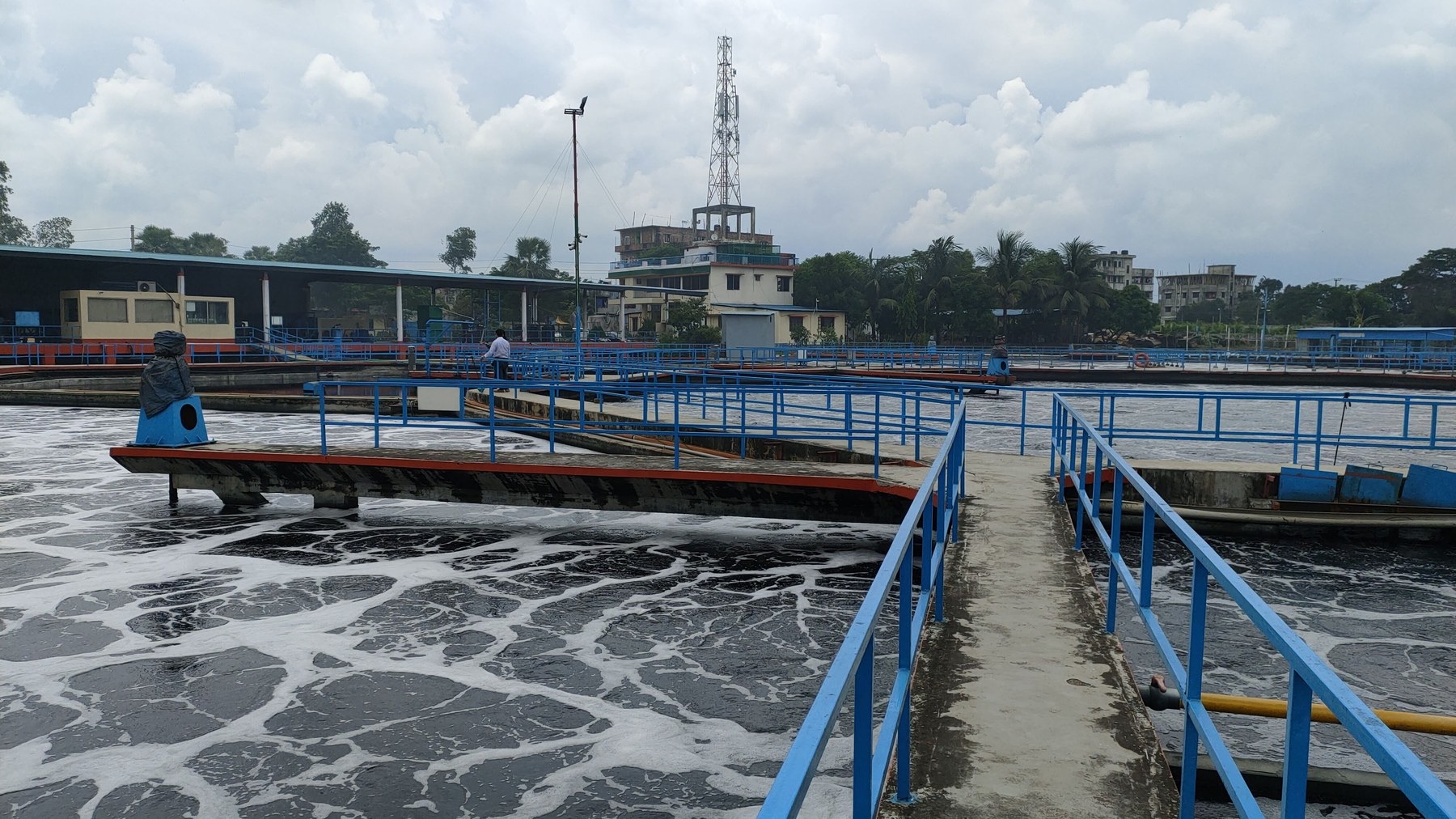
Ask for directions to the treatment plant at a textile mill and someone will point past the dye house, past the boiler, to the far corner of the site where the land was cheapest. There will be a cluster of concrete tanks, some round, some rectangular, a few of them frothing. There will be a smell of wet earth, and a low continuous hum from a shed to one side. In a well run mill there will be a lab with a bench of glassware and a wall of daily results. In a badly run one there will be a padlock.
This is the ETP, the effluent treatment plant, and inside the industry it has a nickname: the factory's kidney. The comparison is exact. A kidney takes blood that has passed through the body, removes what the body added to it, and sends it back clean. An ETP takes water that has passed through a factory, removes what the factory added, and sends it back to the river, or, increasingly, back to the factory to be used again.
The word first
Effluent is the water leaving a factory after it has been used. The previous article in this series explained wastewater as any used water carrying something new; effluent is the industrial kind. What it carries depends entirely on what the factory does. A dye house sends colour, salt and alkali. A dairy sends milk. A tannery sends hides' worth of organic matter and the chemicals used to preserve them. A brewery sends sugar, yeast and spent grain. An electronics plant sends metals and acids.
The plant that cleans it is distinct from a city's sewage works in one important way. A sewage works receives the same water every day, in roughly the same amounts, and can be built to a standard pattern. An ETP is designed for one factory's particular water, and no two are quite alike. That said, almost all of them are built from the same three stages, in the same order, and the stages are worth knowing because they turn up in every treatment plant on Earth.
| Stage | What it does | What it removes |
|---|---|---|
| Primary | Screens, grit channels and settling tanks | Solids, grease, whatever sinks or floats |
| Secondary | A tank of bacteria fed with air | Dissolved organic matter, the rotting fraction |
| Tertiary | Filters, chemicals, membranes | What biology cannot eat: fine solids, colour, salt, metals |
Primary treatment is physics. Water slows down in a large tank, heavy things sink, light things float, and both are scraped off. Secondary treatment is biology, and it is the heart of the plant. Tertiary treatment is chemistry and engineering, and it is where the money goes.
The heart of the plant is alive
The secondary stage is a tank, often several, containing a brown suspension that looks like nothing much. It is, by count, one of the densest populations of living things in the industrial world: billions of bacteria in every litre, along with the protozoa that graze on them. The suspension has a name, activated sludge, and it has been the core of nearly every biological treatment plant since two chemists at the Manchester sewage works discovered in 1914 that if you bubbled air through sewage for long enough, and kept the brown floc that formed, the floc would clean the next batch faster than the last.
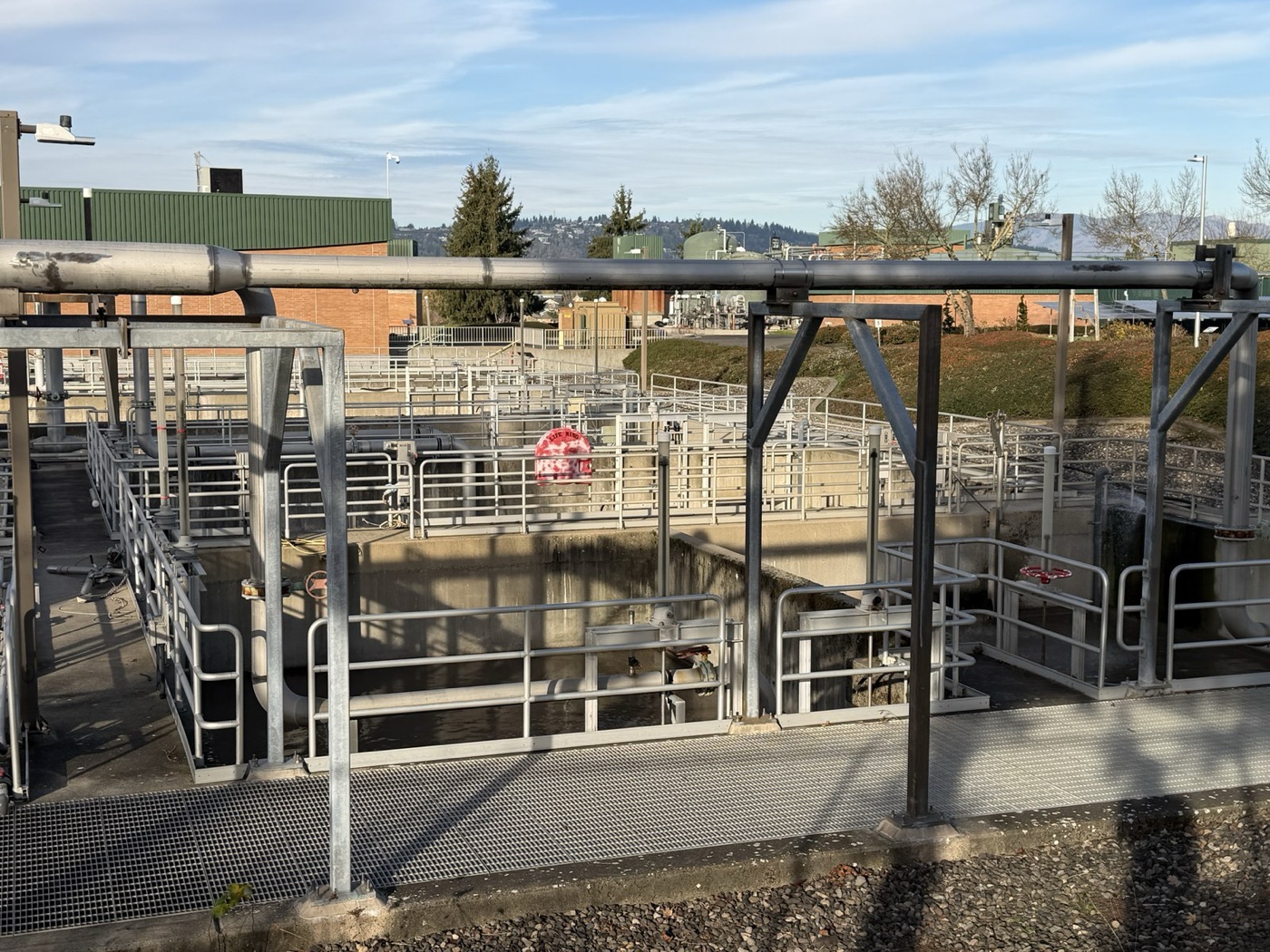
What the bacteria are doing is eating. Dissolved organic matter in the water is food to them, and they consume it, grow, multiply and, as they do, breathe. Their breathing is the reason for the froth. Oxygen dissolves poorly in water, and a tank this crowded would suffocate within minutes without help, so blowers in the shed beside the tanks push air through diffusers on the floor of each basin, day and night, without pause. The operator's job is closer to farming than to engineering: keep the population fed, keep it warm enough, keep it breathing, and remove the surplus before the tank is overrun.
Give the bacteria a few hours in the tank and most of the organic matter is gone, converted into more bacteria and into carbon dioxide. The suspension then flows into a settling tank where the floc sinks, clear water leaves over the top, and most of the settled floc is pumped back to the front of the aeration tank to eat again. The rest, the surplus, is drawn off. It is the plant's product, apart from clean water, and it has a name of its own, sludge, which gets its own article.
What the microbes cannot eat
Biology has a limit, and the limit is what separates an easy effluent from a hard one.
Bacteria eat organic matter. They do not eat salt. They do not, for the most part, eat dye, whose molecules are built to resist exactly the kind of chemistry that bacteria use. They do not eat metals, and enough metal in the water will poison them. They tolerate a narrow range of temperature and acidity, and a factory that sends its effluent hot and alkaline, as a dye house does, has to cool it and neutralise it before the biology tank will accept it at all.
Everything on that list has to be dealt with in the third stage, and the third stage is where the cost of a plant is decided. Colour is knocked out with coagulants, chemicals that make the dye molecules clump and sink. Metals are precipitated. Salt, which nothing removes cheaply, needs reverse osmosis, the membrane process described in the article on TDS, and reverse osmosis produces a brine that then has to go somewhere. A plant treating sewage might stop after secondary treatment. A plant treating a dye house rarely can.
And everything removed from the water, at every stage, has to go somewhere. Treatment does not destroy pollution. It gathers it, into sludge and into brine, and what happens to those two is a large part of what the industry actually does.
The biggest bill in the building
Ask a plant manager what the ETP costs and the answer is usually electricity, and most of that electricity goes to one thing. The blowers that keep the bacteria breathing account for somewhere between half and two thirds of a biological treatment plant's power. Everything else, the pumps, the scrapers, the lab, the lights, shares what is left.
| Where a biological plant's electricity goes | Share |
|---|---|
| Aeration blowers | 50 to 60% |
| Pumping and mixing | Most of the rest |
| Sludge handling, lighting, laboratory | The remainder |
This is the number to hold on to, because it explains the plant's weakness as well as its cost. Keeping bacteria breathing is expensive, and it is expensive every hour, whether or not anyone is watching.
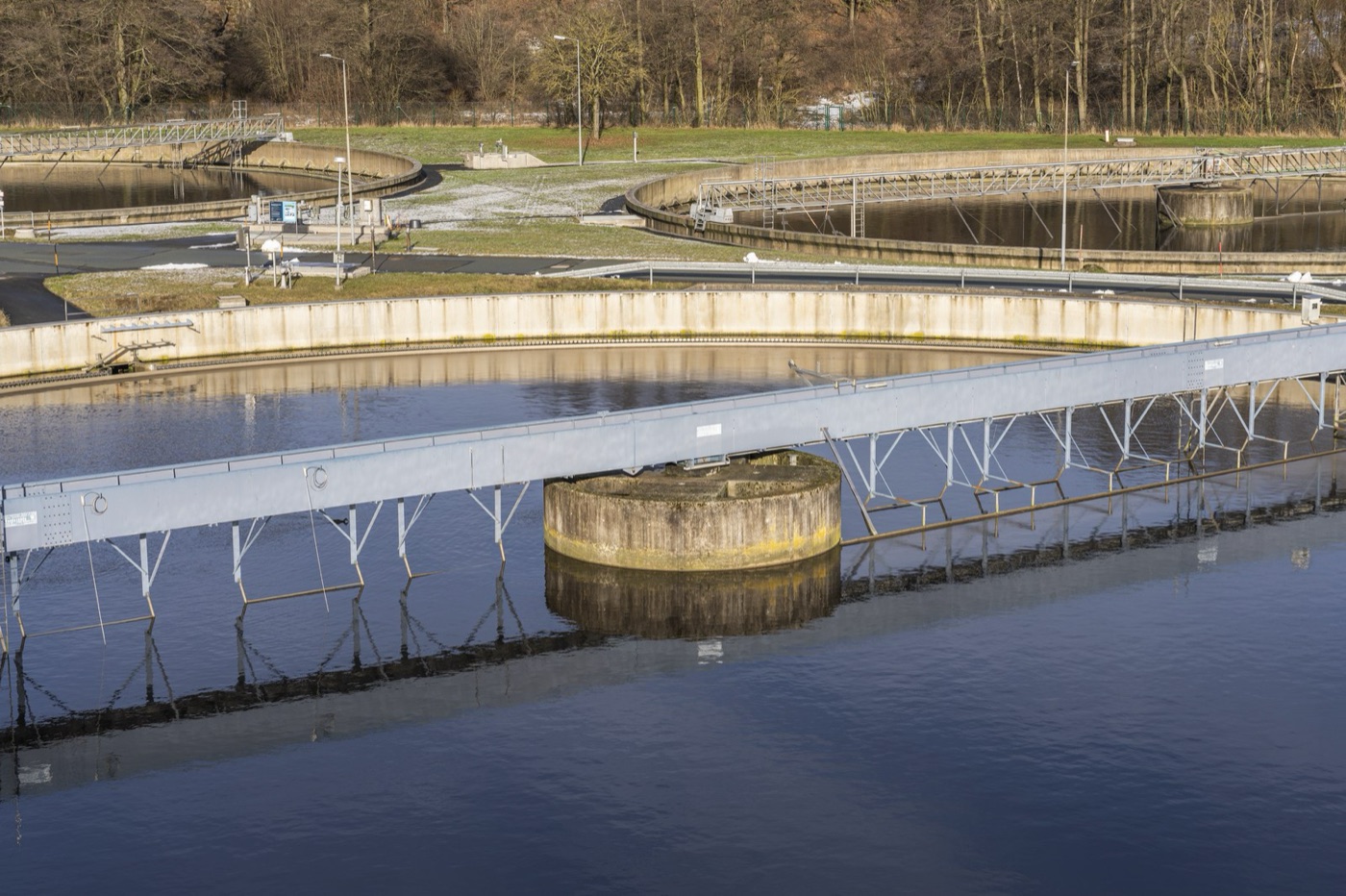
A plant only works if it is running
An ETP produces nothing that can be sold. It consumes power, chemicals and skilled labour, continuously, and returns clean water to a river that does not pay for it. From a factory's point of view it is pure cost, and the only reason to run it is that the law requires it or the buyer of the factory's goods insists on it.
Where both of those pressures are weak, the plant is the first thing switched off. In some industrial regions it is well known that treatment plants exist on paper and run on the days the inspector visits. The blowers are silent the rest of the time, the bacteria die, and the effluent goes to the river as it did before the plant was built. Nothing about this is a failure of technology. The activated sludge process is a hundred years old and thoroughly understood. It is a failure of operation, and operation is a question of money, enforcement and honesty rather than of engineering.
That is the part of the industry that is still being worked out, and it is why the people who audit textile supply chains now ask to see the plant's electricity bill rather than the plant. A bill that shows the blowers running all month is harder to fake than a set of lab results.
What a good plant looks like
After enough site visits, a treatment plant can be judged from the gate, and the signs have nothing to do with the size of the tanks.
The first is the froth. A healthy aeration basin has a fine, even boil across its whole surface, and the suspension in it is a warm brown, the colour of strong tea with milk. A basin that is still in patches has blocked diffusers. A basin that is grey or black has a population in trouble. The second is the smell. A working plant smells of wet earth, faintly, and of nothing else; a plant that smells of drains is not treating its water. The third is the laboratory. A good plant tests its own water every day, at the inlet and the outlet, and the results are on a wall or in a book that the operator will show a visitor without being asked, because they are proud of them. The fourth is the flow meter, which records how much water has actually passed through, and which an honest plant is happy to have read.
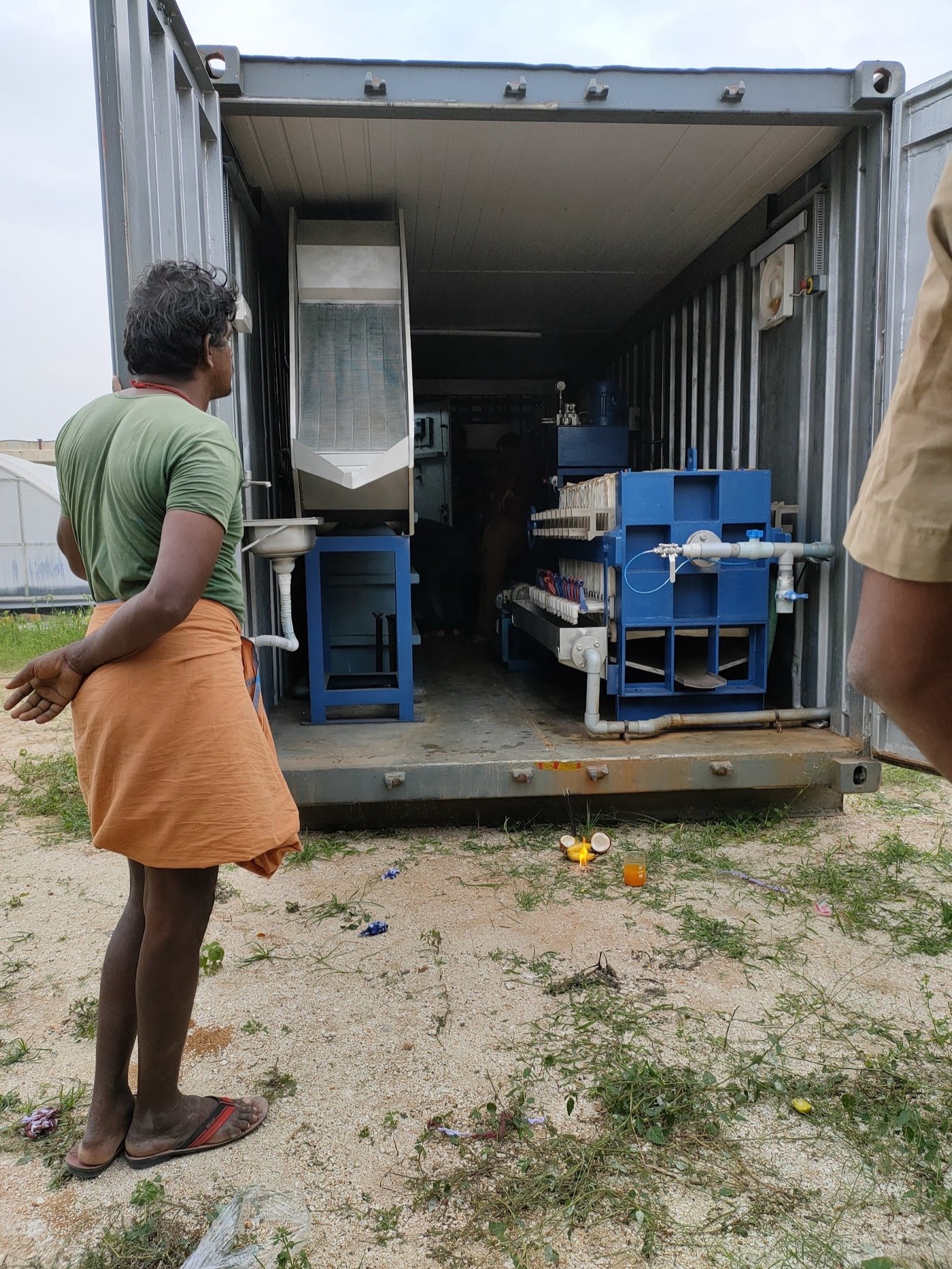
None of these can be faked for long, and the auditors who now visit textile and leather supply chains on behalf of European buyers have learned to look at exactly these things rather than at the certificates in the office. The plant is a living process. It either is running or it is not, and the tanks say which.
The plant you have already met
Anyone who has read the footprint articles on this site has met an ETP without knowing it. The blue rinse water from a pair of jeans went through one, or should have. The sugary wash water from a coffee mill went through one, or should have. The salt and dye from a t-shirt, the whey from a cheese dairy, the spent grain from a brewery: every one of them ends at a cluster of tanks in the corner of a site, humming.
The next two articles go inside that cluster. One is about the number the whole plant is judged on, the measure of how dirty the water was and how clean it became. The other is about what comes out of the tanks besides water, the pile that nobody puts on the brochure.
Sources
- Metcalf and Eddy, Wastewater Engineering, Treatment and Resource Recovery (5th edition). Primary, secondary and tertiary treatment; the activated sludge process.
- Ardern, E. and Lockett, W.T. (1914). Experiments on the oxidation of sewage without the aid of filters. Journal of the Society of Chemical Industry 33. The paper that introduced activated sludge, from the Manchester sewage works.
- Published plant energy audits (US EPA, Water Environment Federation) placing aeration at roughly half to two thirds of a biological treatment plant's electricity.
- Photographs: Cesar Chu Ortega, from effluent treatment plants in Bangladesh and India; inline: Gresham Wastewater Treatment Plant secondary clarifiers 2025 by PortlandAppraisalBlog (CC BY-SA) via Wikimedia Commons; inline: Verbandskläranlage Hof 20250106 HOF0590 RAW-Export by PantheraLeo1359531 (CC BY) via Wikimedia Commons.