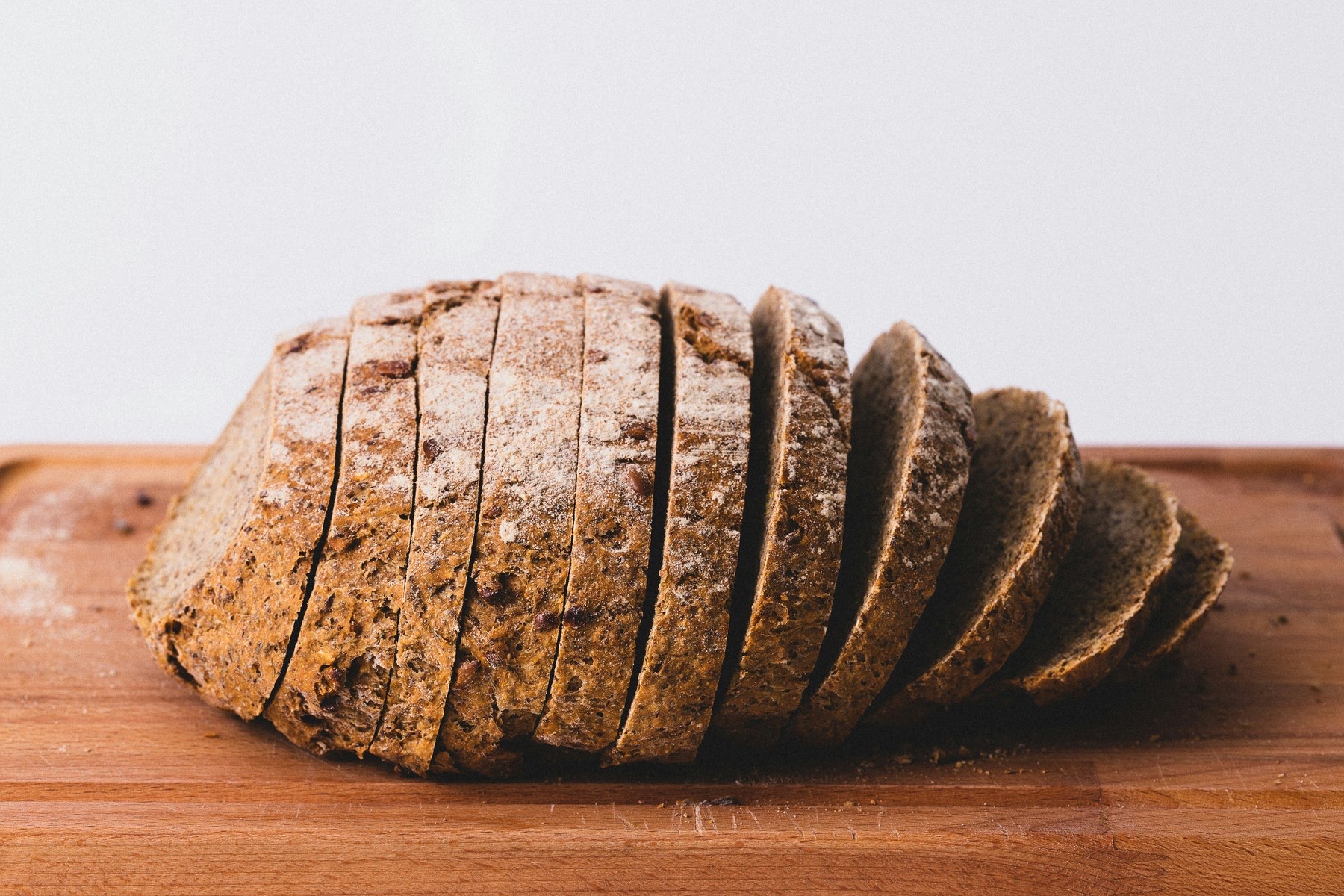
Thirsty: Bread
A kilogram of bread carries about 1,608 litres of water, roughly 65 litres a slice, and almost all of it is the wheat. Wheat covers more of the Earth than any other crop, most of it grows on rain, and the part that does not is drawn from some of the most overdrawn aquifers in the world.
Bread is the food that nobody thinks of as thirsty. It has no cow behind it, no tropical tree, no reputation. It is flour, water, salt and yeast, baked, and it is eaten in some form by most of the people on Earth most days. That ordinariness is the reason it belongs here, because the water in a loaf is unremarkable per kilogram and remarkable multiplied by the number of loaves.
Sixteen hundred litres
By the Water Footprint Network's method, bread comes to about 1,608 litres of water per kilogram in the global average, counting the rain the wheat took up, the irrigation applied to it, and the clean water needed to dilute the pollution from the field and the mill. A large loaf is roughly a kilogram, and a slice of forty grams is about 65 litres, which is what a seven minute shower uses.
| Stage | Litres | Share |
|---|---|---|
| Growing the wheat | 1,450 | 90% |
| Other ingredients: sugar, oil, salt, yeast | 100 | 6% |
| Milling and baking | 58 | 4% |
The split is approximate; the total is the citable figure. The mill and the bakery are the smallest part, and the water in the dough, a third of the loaf by weight, is a few hundred millilitres that hardly registers. Nine litres in ten grew the grain.
The biggest crop on Earth
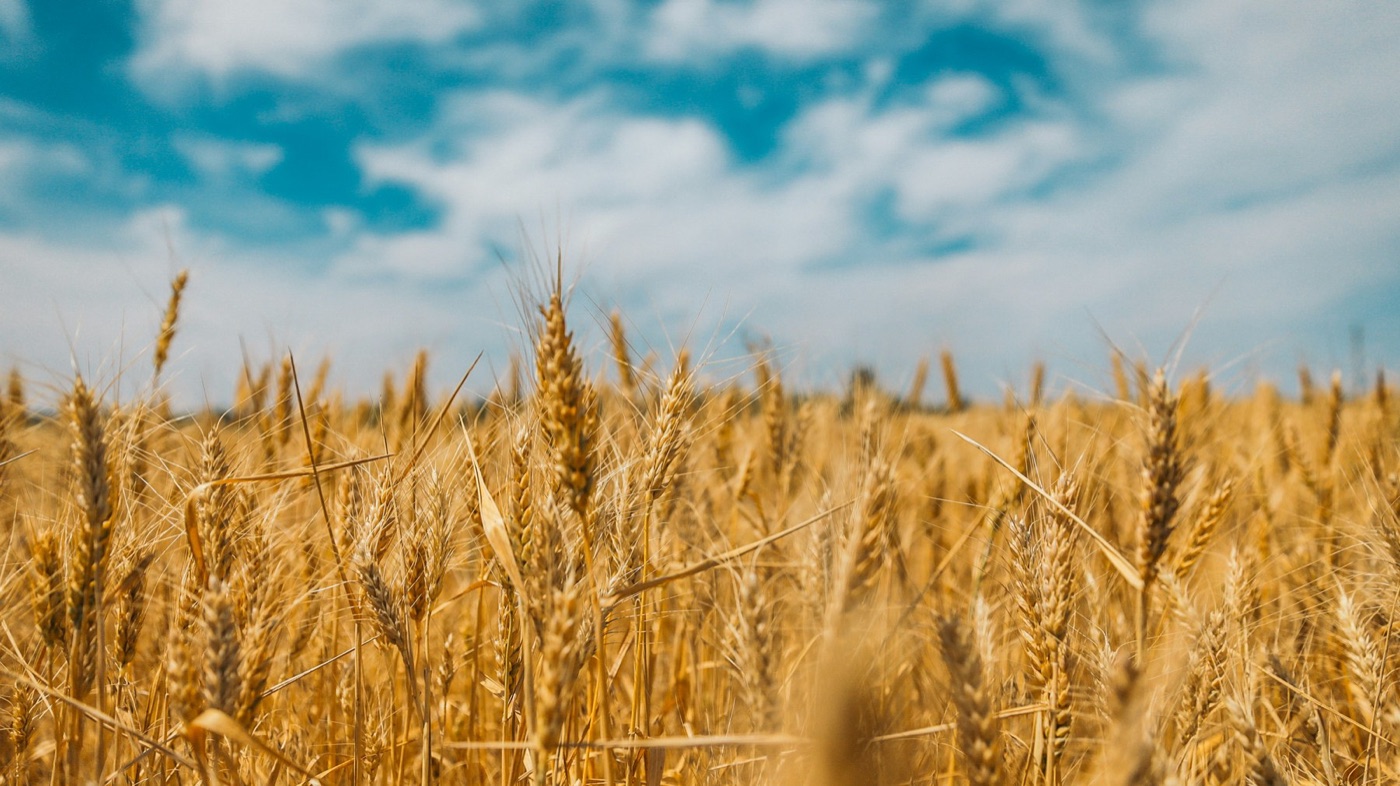
Wheat covers more farmland than any other crop, above 200 million hectares, a quiet carpet across the plains of Europe, the American and Canadian prairies, the Indo Gangetic plain, the north China plain, Russia and Ukraine, Argentina and Australia. It is a grass, sown in autumn or spring, and it spends its season doing what every crop does: pumping water from the soil into the air through its leaves, building a plant of which the grain is a modest part.
A kilogram of wheat grain takes around 1,827 litres of water before it ever reaches a mill. Milling removes the bran and germ, which is why bread carries slightly less per kilogram than the grain it came from, and baking adds a little water back. But the field's figure is the loaf's figure, near enough, and where the field was decides what kind of water it is.
From grain to loaf
The wheat leaves the field as grain, and the loaf's water is fixed at that moment; the rest of the journey adds little. At the mill the grain is cleaned, conditioned with a little water so the bran comes away cleanly, and ground between steel rollers. White flour is about three quarters of the grain by weight, the bran and germ being sifted out and sold as animal feed, which is why a kilogram of bread carries slightly less water than a kilogram of wheat. Wholemeal flour keeps everything and carries slightly more.
At the bakery the flour meets water at last, about 600 grams for every kilogram of flour, and this is the only water in the whole chain that ends up in the bread. It is a few hundred millilitres in a finished loaf, less than a fifth of one percent of the footprint. The dough is kneaded, proved and baked, and the oven drives a good part of that water back out again as steam. A large industrial bakery uses water for steam, for cooling and for cleaning, as every food plant does, and its effluent is mild by the standards of a dairy or a brewery: starch, yeast and a little fat. The bakery is the last and the smallest stage of a journey that was decided in the field.
Seventy percent rain
About 70 percent of wheat's global water footprint is green: rain that fell on the field and was taken up by the crop. Roughly 19 percent is blue, water pumped for irrigation, and around 11 percent is grey, the dilution of fertiliser that ran off.
| Kind of water | Share of wheat's global average footprint |
|---|---|
| Green, rain | about 70% |
| Blue, irrigation | about 19% |
| Grey, pollution | about 11% |
Seventy percent rain is a comfortable figure, and for most of the world's wheat it is the whole story. The plains of northern Europe, the American Midwest, the Canadian prairies, the Russian steppe, all grow wheat on what falls from the sky, and a loaf from that grain carries water that was going to fall on farmland whether or not the farmland grew wheat. The blue share, at a fifth of the total, is where the concern sits, and it is concentrated in a few places.
The flour has an address too
Wheat is irrigated where the rain is not enough, and the largest irrigated wheat regions in the world are also the ones where the water is most overdrawn.
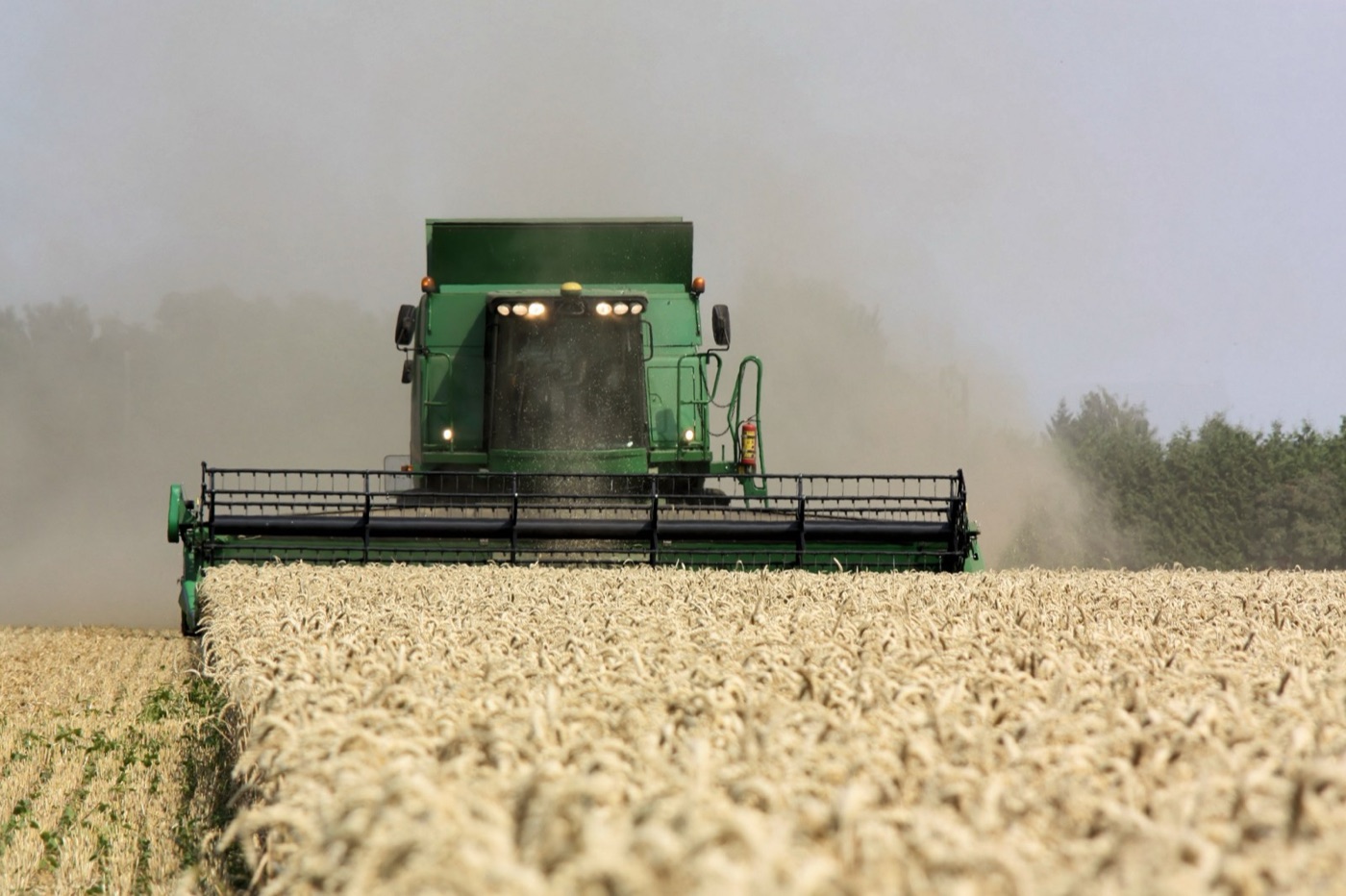
In the Punjab and Haryana, the wheat and rice belt of northwest India, farmers pump groundwater through hundreds of thousands of wells to grow a winter wheat crop that the monsoon does not water. Satellite measurements of the region's gravity, which can detect the weight of water underground, have shown the water table falling for decades at a rate that the rain does not replace. In Egypt, wheat grows on the Nile, in a country that has almost no other water. In the north China plain, wheat is irrigated from an aquifer that has dropped by tens of metres since the 1960s. In each of these places, the blue water in a loaf is water that a river or an aquifer no longer has.
Rain fed wheat from Europe or the American plains sits light. Irrigated wheat from northern India or Egypt sits heavy on the rivers and wells beneath it. The loaf does not say which one it is, and the flour is traded and blended long before it is baked, so the bakery rarely knows either.
The green revolution, and its wells
The irrigated wheat of northern India is no accident of geography. It is the legacy of one of the most successful agricultural programmes of the twentieth century, and the water beneath it is the bill.
In the 1960s, India faced famine and imported wheat by the shipload. The answer, adopted with the help of the plant breeder Norman Borlaug, was a package: dwarf wheat varieties that could carry a heavy head of grain without falling over, fertiliser to feed them, and water, on demand, to make the fertiliser work. Rain would not do, because the wheat is a winter crop and the monsoon is a summer rain, so the water came from wells. Millions of tube wells, pumped with subsidised or free electricity, turned the Punjab and Haryana into India's granary within a generation and ended the famines. Wheat yields tripled. The country has fed itself since.
The wells have been running ever since too, and the aquifer beneath the Punjab, recharged by a monsoon that falls in the wrong season and by rivers that are already spoken for, has been dropping for decades. The satellites that measure the Earth's gravity from orbit can see the region losing water year by year, and the farmers see it in the depth of their pumps. The wheat that ended a famine is now grown on water that is being spent faster than it is replaced, and nobody has yet found a way to stop that which does not also reduce the harvest.
Water that arrives as grain
Countries that lack water import wheat, and in doing so they import the water it took to grow it. Egypt is the clearest case. The Nile is the country's only significant water, it is shared with ten other countries upstream, and it is not enough to grow bread for a hundred million people. So Egypt is among the largest wheat importers in the world, and every shipload that docks at Alexandria carries, invisibly, some 1,800 litres of foreign rain or irrigation for every kilogram in the hold. The geographer Tony Allan called this virtual water, and pointed out that the Middle East's water shortage has been solved for decades by the grain trade, quietly, in a way that no dam or pipeline could have matched. Bread is the commodity that moves more virtual water around the world than any other, because it is the one that everyone eats.
The multiplication
A kilogram of bread is a manageable number. The world, though, grows around 800 million tonnes of wheat a year, and bakes, boils and steams most of it into food. Every tonne carried its water with it, and the arithmetic of a global staple makes water visible at a scale that no single loaf can. Wheat, rice and maize between them account for a large share of all the water that agriculture uses, and agriculture uses around 70 percent of all the water people withdraw from rivers and aquifers. The staple foods are where most of the world's water actually goes, and bread is the one that seems least like it.
Reading the number
Nobody is going to save water by eating less bread, and a loaf from a rain fed field is one of the gentler things in a shopping basket. What the number shows is where the water in food really is: in the grain, in the field, in quantities that are individually modest and collectively enormous. It also shows, again, that the kind of water matters more than the amount. A slice from the American plains and a slice from the Punjab carry the same 65 litres, and only one of them came out of a falling well.
Sources
- Mekonnen, M.M. and Hoekstra, A.Y. (2011). The green, blue and grey water footprint of crops and derived crop products. Hydrology and Earth System Sciences 15. Wheat about 1,827 L/kg (roughly 70 percent green, 19 percent blue, 11 percent grey); bread about 1,608 L/kg.
- FAO, FAOSTAT. Wheat is the crop with the largest harvested area in the world, above 200 million hectares.
- Rodell, M., Velicogna, I. and Famiglietti, J.S. (2009). Satellite based estimates of groundwater depletion in India. Nature 460. Groundwater decline under the wheat and rice belt of northwest India.
- Allan, J.A. (1998). Virtual water: a strategic resource. Ground Water 36. The concept of water embedded in traded grain, with the Middle East as the case.
- Stage split (wheat, other ingredients, milling and baking) is approximate and illustrative; the total is the citable figure.
- Photographs: bread by Jude Infantini, wheat by Polina Rytova, both Unsplash; inline: Combine in wheat field by Dan Kollmann (CC BY-SA) via Wikimedia Commons.