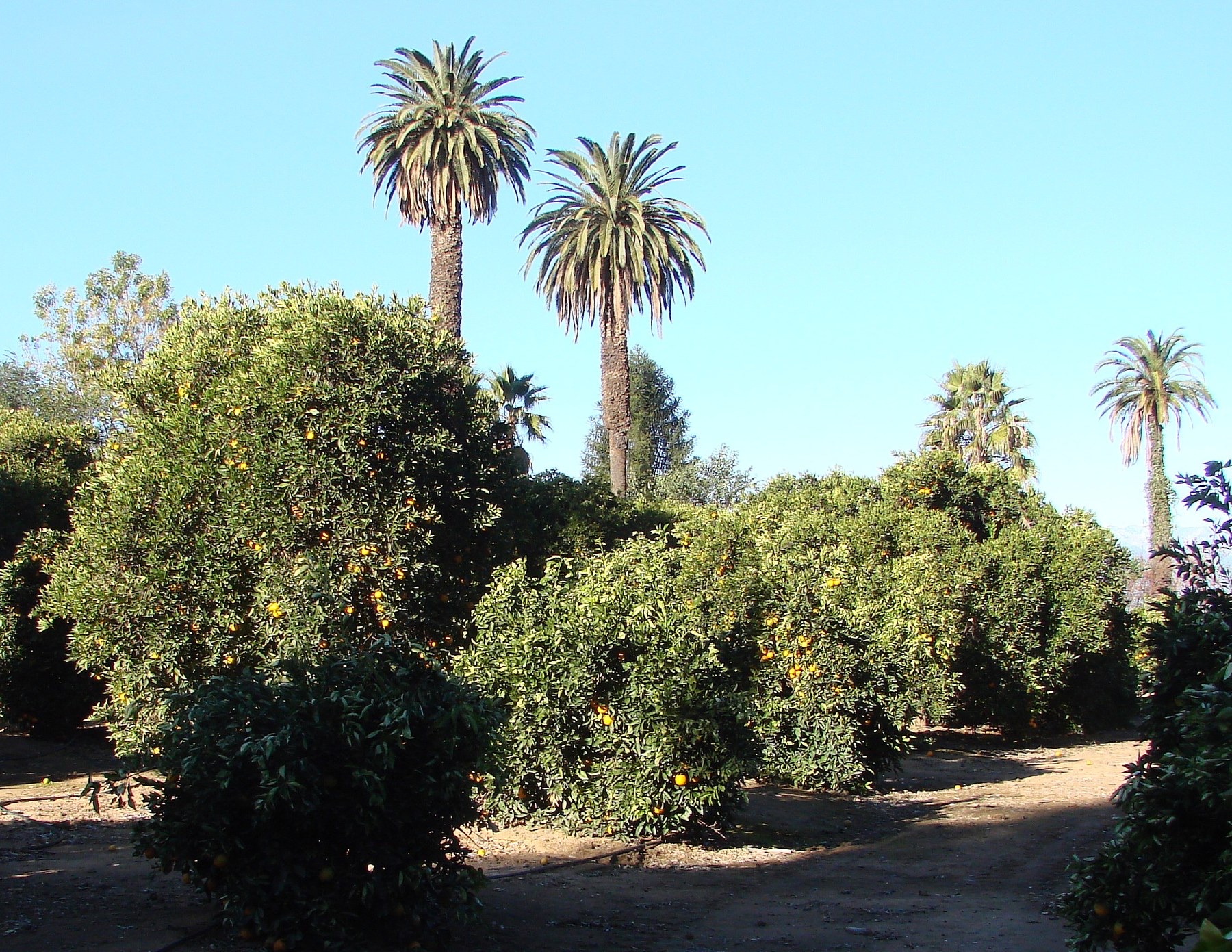
Thirsty: Orange Juice
A glass of orange juice carries about two hundred litres of water, and the juice in most glasses in Europe and North America came, frozen and concentrated, from a single state in Brazil. Where an orange's water goes, why juice carries twice the water of the fruit, what happened to Florida, why the Brazilian groves are mostly rain and the Spanish ones are mostly wells, and what it means that the world's orange juice comes from one place.
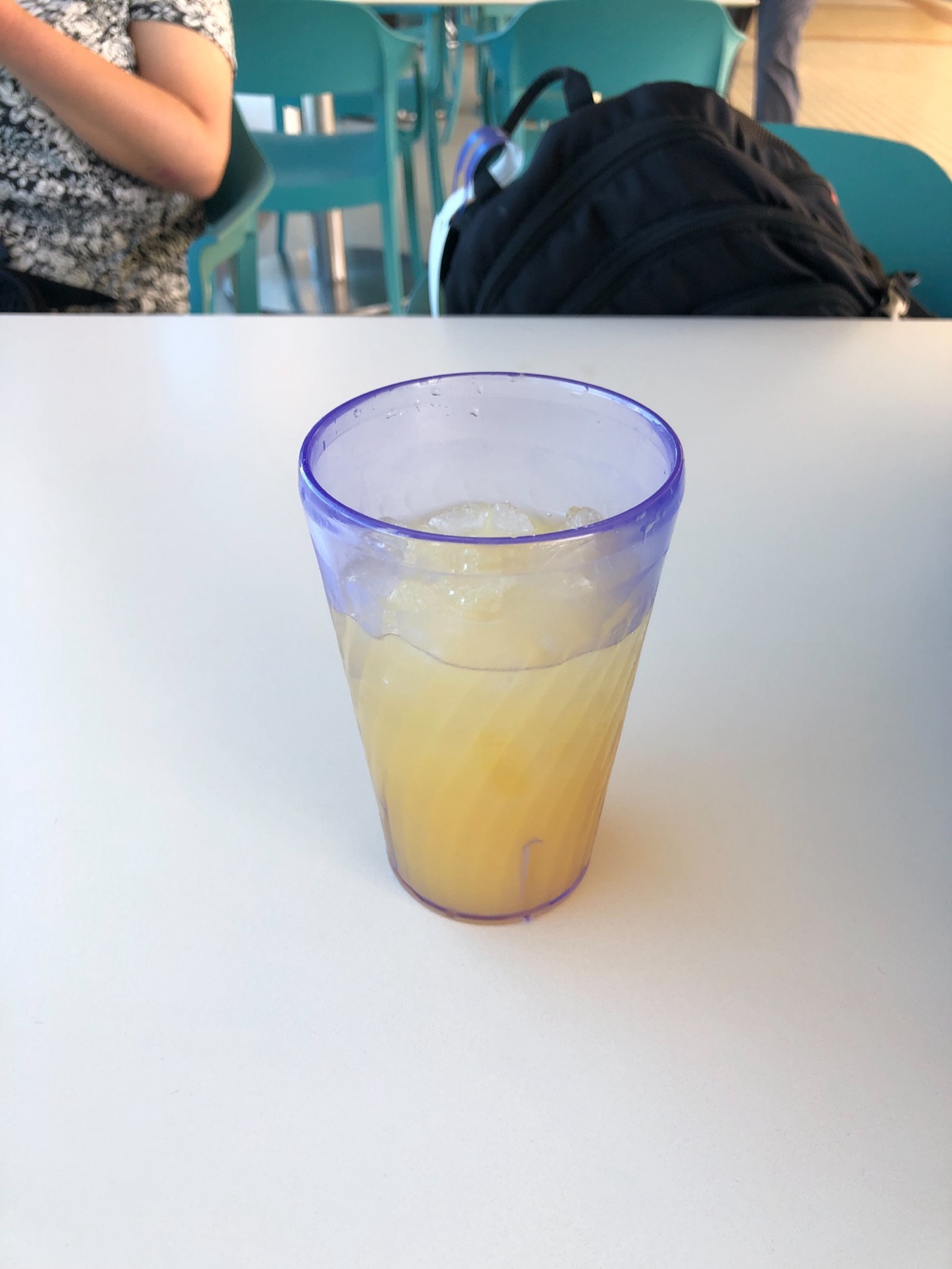
A glass of orange juice at breakfast carries about two hundred litres of water, and the odds are that the juice in it was squeezed in the state of São Paulo, frozen into a concentrate, shipped across the Atlantic in a refrigerated tanker, and reconstituted with local water in a carton plant a few hundred kilometres from the table. Orange juice is the most traded fruit product in the world and one of the most concentrated, in both senses: a kilogram of the frozen concentrate is six litres of juice with the water taken out, and three quarters of what is traded comes from one place.
This article is about where an orange's water goes, why the juice carries twice the water of the fruit, what happened to Florida, why the Brazilian groves and the Spanish ones carry different kinds of water, and what depends on a single state in Brazil.
The fruit
An orange tree is an evergreen that needs water all year and most of it in the hot months, when the fruit is sizing, and it needs about a thousand millimetres over a season, which is why it grows where the summers are wet or where the irrigation is. A grove gives twenty to forty tonnes of fruit a hectare, and the footprint per kilogram, in the global averages, is about 560 litres: roughly the same as an apple's, a third of a kilogram of rice, and a fraction of any animal product. It is a modest number for a crop that is mostly water itself, about eighty five percent.
The juice doubles it. A kilogram of oranges gives about half a kilogram of juice, and the rest, peel, pulp, membranes and seeds, is dried and sold as cattle feed, which carries a small share of the water, so that the juice carries the rest: about a thousand litres for a litre, and two hundred for a glass. The concentrate carries the same water per litre of reconstituted juice, and the tanker that ships it carries a sixth of the volume.
| Water per kilogram or litre | Litres |
|---|---|
| Oranges, fruit | About 560 |
| Orange juice, per litre | About 1,000 |
| A 200 millilitre glass | About 200 |
| Apple juice, per litre | About 1,100 |
| Milk, per litre | About 1,000 |
| Coffee, per cup | About 130 |
Brazil
The world's orange juice comes from the citrus belt of São Paulo and the western tip of Minas Gerais, a plateau of about two hundred million trees where the summers are wet, the winters are dry and cool, and the groves are, for the most part, rain fed, with irrigation added in the last decade as the dry seasons have grown longer. The industry is three companies, which own groves, crushing plants, tank farms at the port of Santos and fleets of refrigerated tankers, and it ships about three quarters of all the orange juice traded in the world, most of it to Europe and the United States, as frozen concentrate at minus ten degrees and, increasingly, as chilled juice that has never been concentrated and is shipped at a sixth of the density and six times the freight.
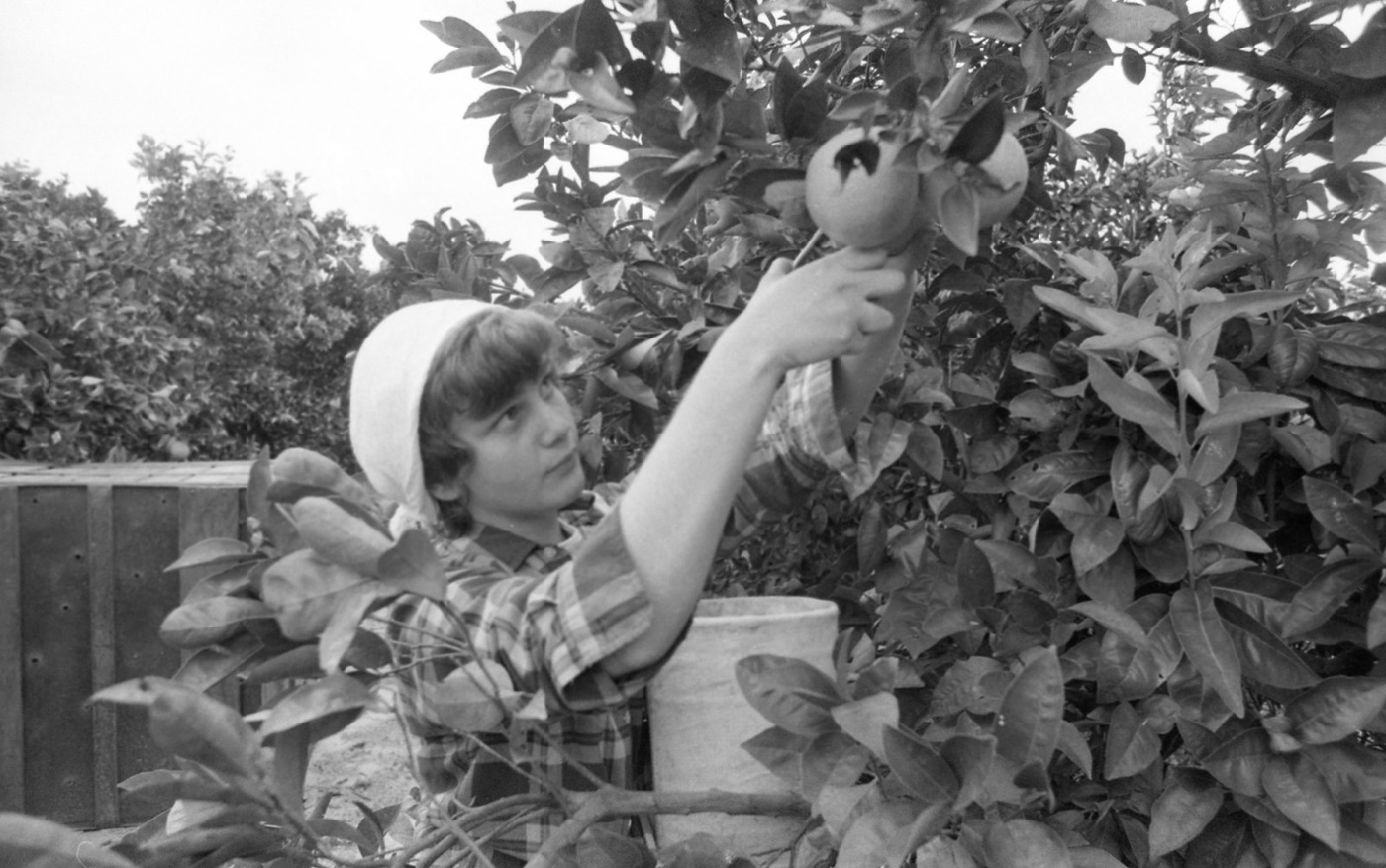
The water in a Brazilian glass is therefore mostly green, rain on a plateau, and the blue share is growing as the groves are irrigated against the droughts of the 2010s and 2020s, from rivers and wells in a region that also grows sugar cane and, as the São Paulo article on this site describes, came close to running the city dry in 2014. The grey share is the fertiliser and the pesticide, and citrus is a sprayed crop, against the insect that carries the disease of the next section.
| The world's orange juice | |
|---|---|
| Brazil, São Paulo belt | About a third of the world's oranges; about three quarters of juice exports |
| Florida | About half of the world's juice in 2000; about a tenth of that crop now |
| Mexico | Growing; juice for the United States |
| Spain | Fruit for eating, mostly; irrigated |
| China | The largest grower; almost all eaten fresh at home |
Florida
In 2000 Florida grew about ten million tonnes of oranges, nearly all for juice, and was the other half of the world's supply. In 2005 an insect called the Asian citrus psyllid, which had arrived a few years earlier, was found carrying a bacterium that causes the disease called greening, which blocks the tree's vessels, makes the fruit small, bitter and green, and kills the tree in a few years. There is no cure. By 2024 Florida's crop was down about ninety percent, the groves of the centre of the state were being sold for housing, and the juice plants had closed or turned to processing Brazilian and Mexican fruit. The disease reached Brazil at the same time and the industry there has held it, so far, with a programme of inspection, spraying and the removal of infected trees on a scale Florida's smaller growers could not afford, and with new plantings on ground the insect has not yet reached.
The point for this site is that the water of a product follows its geography, and the geography moved. A glass of juice in New York in 2000 carried Florida's water, which was rain and the aquifer under the state, drawn down by the groves; a glass in 2024 carries São Paulo's, which is rain on a plateau and a growing share of wells. The number did not change much. Where it fell did.
Spain and California
The oranges that are sold as fruit, in Europe from Valencia and Andalusia and in the United States from California, are the irrigated ones. Valencia's groves are on the coastal plain that the Moors irrigated a thousand years ago, from the Turia and the Júcar and, since the 1970s, from wells that the desalination and brine articles on this site describe as pulling the sea into the aquifer; Andalusia's are in the driest part of Europe, on water from the Guadalquivir that the olive groves and the strawberry farms also claim. California's are in the Central Valley, on the state's water project and on the wells that the Central Valley article describes as sinking the ground. A kilogram of Spanish or Californian oranges carries about the same total as a Brazilian one and a far larger blue share, from rivers and aquifers that have other claimants, in the months when the claimants need them most. The juice is Brazil's story. The fruit bowl is Spain's.
The concentrate
The concentrate plant is a food factory of the kind the food and beverage article describes, and its water is unremarkable: a few litres per litre of juice for washing the fruit, cleaning the extractors and cooling the evaporators, with an effluent high in sugar and peel oil that a biological plant treats without difficulty. The evaporator that takes the water out of the juice is the interesting part, because it removes about five litres of water from every six, and that water, condensed, is clean enough to reuse in the plant. A litre of concentrate that lands in Rotterdam is reconstituted with five litres of Dutch tap water, so that a glass of juice from concentrate is, by volume, mostly the water of the country it is drunk in and, by footprint, almost entirely the rain of São Paulo.
The frost and the price
The orange is a tree that a single night can ruin. A frost below about minus two degrees for a few hours kills the fruit on the tree, and a harder one kills the tree, and the groves of Florida were moved south through the twentieth century by a series of freezes, in 1962, 1983, 1985 and 1989, each of which ended citrus in a band of the state where it had been grown for a century. The juice futures market in New York, which is the only market in the world for frozen orange juice and the reason the product exists in its frozen form, moves on the Florida weather forecast, and the Brazilian industry, on a plateau where frost is rare, built its share in the gaps the freezes opened. Water enters the story at the edges: a grove that is irrigated can be sprayed on a frost night, because water freezing on the fruit releases heat and holds it at zero, and the sprinklers that saved the Florida groves in the 1980s drew the aquifer down on the coldest nights of the year, which is the one use of irrigation water on this site that has nothing to do with growing.
The price, in the 2020s, has been the highest ever recorded, because Florida is gone, greening is in Brazil, and the drought of 2024 cut the Brazilian crop by a fifth. A glass of juice carries two hundred litres of rain and, for the first time in fifty years, a price that reflects the fact that almost all of it falls in one place.
What it teaches
Orange juice is the product on this site that shows most clearly how a footprint travels. The number is modest and mostly rain, and it is drunk in a glass that contains, by volume, mostly local water added at a carton plant; the rain that grew it fell on a plateau in Brazil that also lost its own city's water in a drought, and the half of the world's supply that used to be Florida's has gone, to an insect, in twenty years. The oranges in the fruit bowl carry a river. The juice carries a plateau's rain and a ship.
A thousand litres a litre, two hundred a glass, and three quarters of it from one state in Brazil.
Sources
- Mekonnen, M.M. and Hoekstra, A.Y. (2011). The green, blue and grey water footprint of crops and derived crop products. Oranges about 560 litres per kilogram; orange juice about 1,018 litres per litre.
- USDA Foreign Agricultural Service, Citrus: World Markets and Trade: Brazil about 75 percent of orange juice exports; Florida production down about 90 percent from 2000 to 2024.
- Fundecitrus (Brazil), citrus belt surveys: about 200 million trees in São Paulo and Minas Gerais; greening incidence.
- University of Florida IFAS, citrus greening (huanglongbing) and its effect on Florida production and irrigation.
- Generalitat Valenciana and Spanish Ministry of Agriculture, citrus irrigation in Valencia and Andalusia.
- Photographs: opener: Orange Grove, Prospect Park, 12-2011 (6808109605) by inkknife_2000 (CC BY-SA) via Wikimedia Commons; inline: Picking oranges at Tel Mond (FL62120709) by IPPA photographer (CC BY) via Wikimedia Commons; inline: Glass of orange juice with ice by Grandmaster Huon (CC0) via Wikimedia Commons.