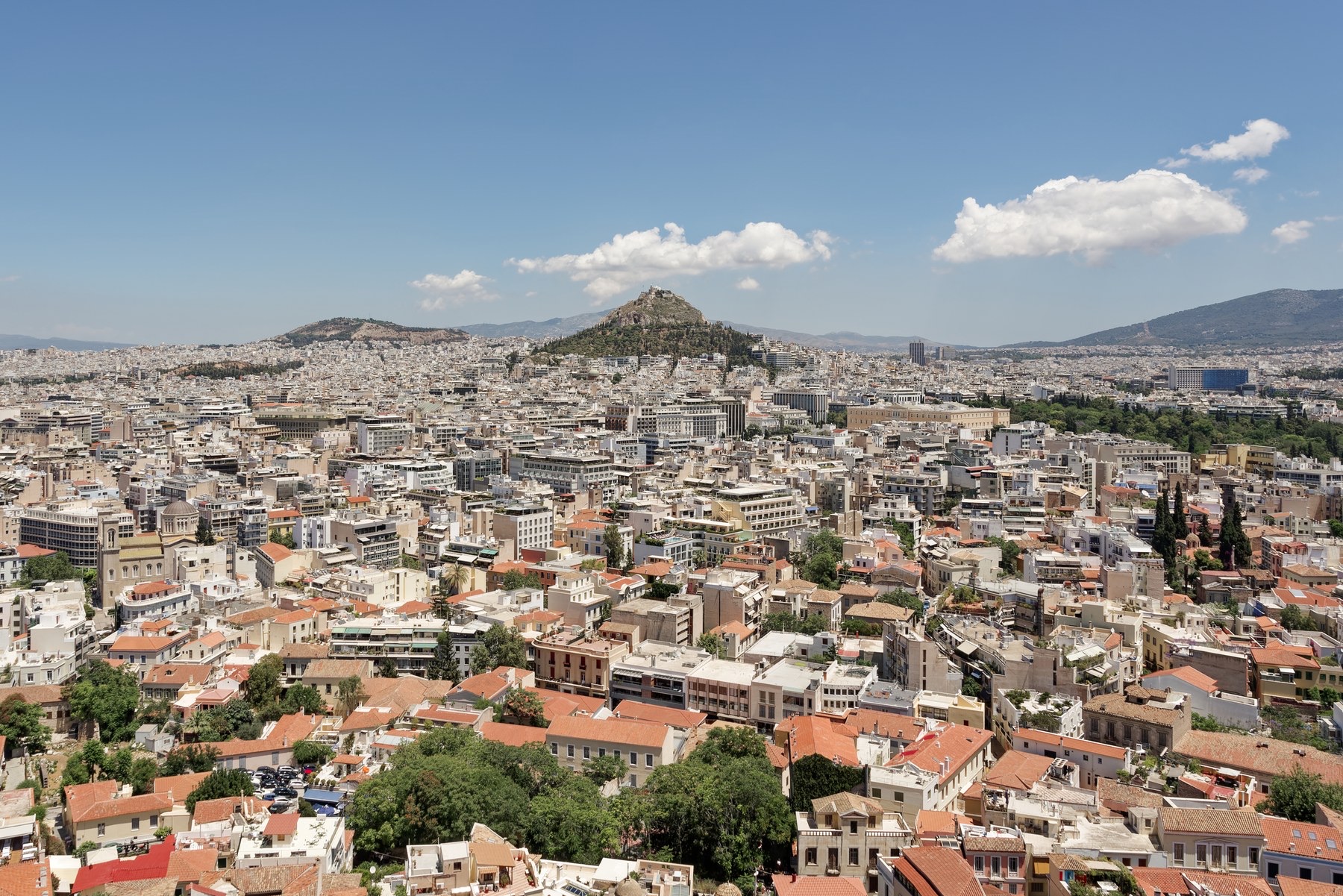
Thirsty Places: Athens
A city of four million on one of the driest coasts in Europe, which has always drunk from somewhere else: a Roman aqueduct for fifteen centuries, a lake and a dam in the twentieth, and now a reservoir two hundred kilometres away in the mountains. Where Athens's water comes from, what the aqueduct of Hadrian did and why the city is opening it again, what the droughts of 1990 and 2024 took, and why the largest water system in Greece is a set of pipes across a mountain range.
Athens gets about four hundred millimetres of rain a year, less than most of the cities on this site that are called dry, and it has no river that a city could drink from. The Kifissos and the Ilissos, which the ancient writers mention, are streams that are dry for most of the year and buried under roads for most of their length, and the city that grew round the Acropolis has, for its entire history, drunk water brought from somewhere else. The Roman emperor Hadrian dug a tunnel twenty kilometres long under the city in the second century to bring it from the foothills, and the tunnel still carries water. The modern city, four million people on a plain between the mountains and the sea, drinks from a reservoir two hundred kilometres away.
This article is about where Athens's water has come from over two thousand years, what the longest aqueduct in Europe was built for, what the droughts of 1990 and 2024 took, and why the city is reopening a Roman tunnel.
Two thousand years of bringing water
The classical city drank from springs, wells and cisterns, and from a few small aqueducts from the hills to the north and east, and it was a small city. Hadrian's engineers, around the year 140, dug a tunnel from the foot of Mount Parnitha, twenty kilometres north, at a depth of ten to forty metres, collecting the groundwater of the plain along its length through hundreds of shafts and delivering it to a reservoir on Lycabettus hill, from which it was piped to the city below. It worked for fifteen centuries, was repaired and extended by the Ottomans and by the new Greek state in the 1840s, and was the city's main supply until the 1920s, when Athens, swollen by the refugees of the exchange of populations with Turkey, outgrew it.
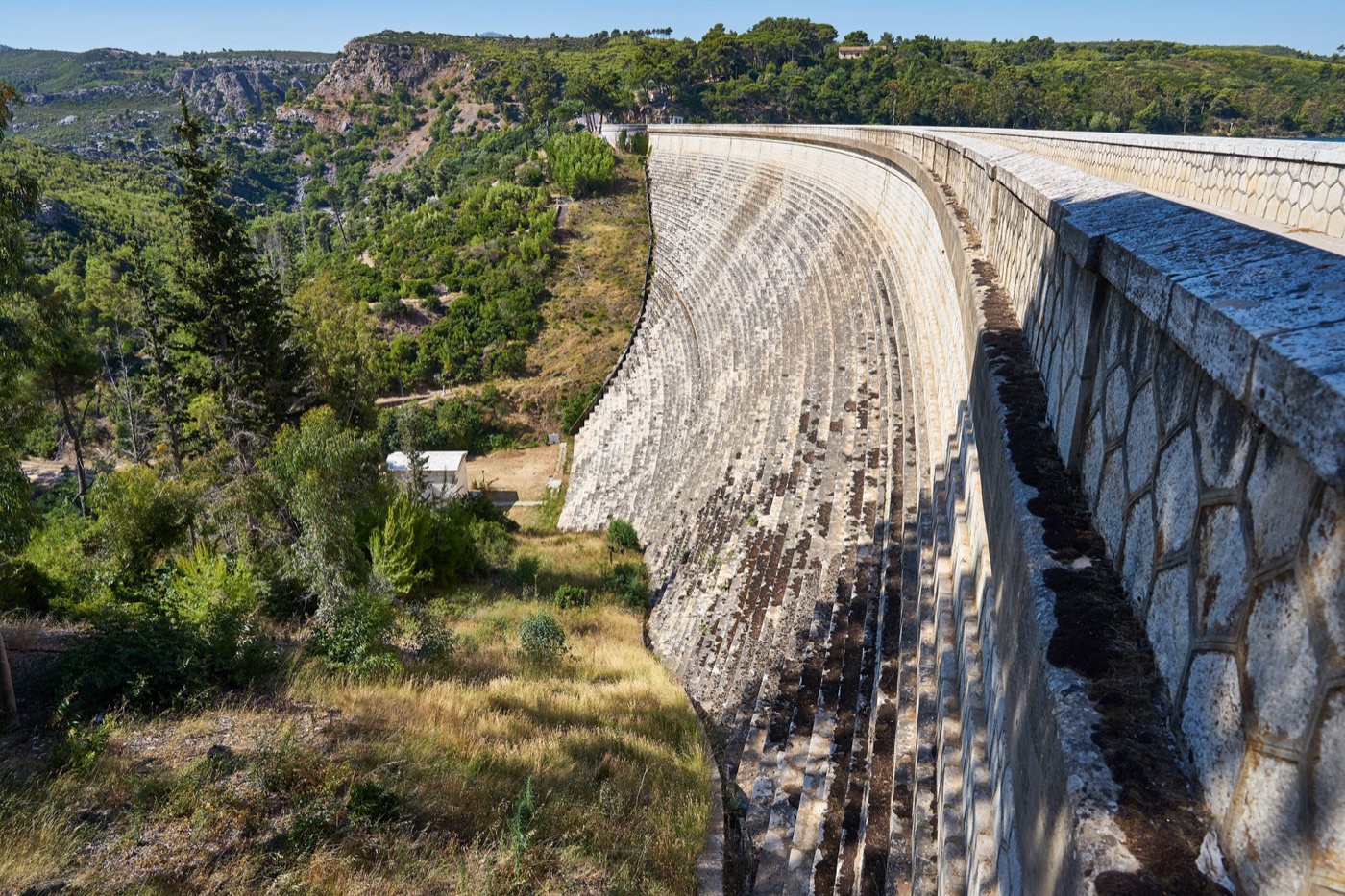
The twentieth century built what the Romans could not. The Marathon dam, finished in 1929 and faced with the same marble as the Parthenon, collected the streams of the hills north east of the city; a pipeline in the 1950s brought water from Lake Yliki, a natural lake in Boeotia sixty kilometres away, pumped up over a ridge; and when the city passed three million in the 1970s, the state dammed the Mornos river in the mountains of central Greece, a hundred and ninety kilometres to the west, and built an aqueduct across the mountains and the plain to bring it. The Mornos aqueduct, finished in 1981, is the longest in Europe, and it carries most of what Athens drinks.
| Athens's water, in order of building | |
|---|---|
| Hadrian's aqueduct, about 140 | 20 kilometres of tunnel from Parnitha; in use until the 1920s |
| Marathon dam, 1929 | The first modern reservoir; small |
| Lake Yliki, 1950s | A natural lake 60 kilometres away, pumped |
| Mornos reservoir and aqueduct, 1981 | 190 kilometres; the main source |
| Evinos dam and tunnel, 2001 | A second river, tunnelled 29 kilometres into the Mornos |
| Supply | About 1.2 million cubic metres a day |
1990
The Mornos scheme was designed for a city that would use more water each year, and it was ten years old when the rain stopped. From 1988 to 1993 the catchments of central Greece had a run of dry winters unlike any in the record, the Mornos reservoir fell to a small fraction of its capacity, and by 1990 Athens was rationing: the pressure cut by district, the price of water tripled above a basic allowance, campaigns on every channel, and a government that studied, seriously, the cost of bringing water by tanker from the Rhine and by pipe from the Acheloos. The city's use fell by a third and stayed down, as Melbourne's and Cape Town's did after their droughts, and the rain returned in 1993.
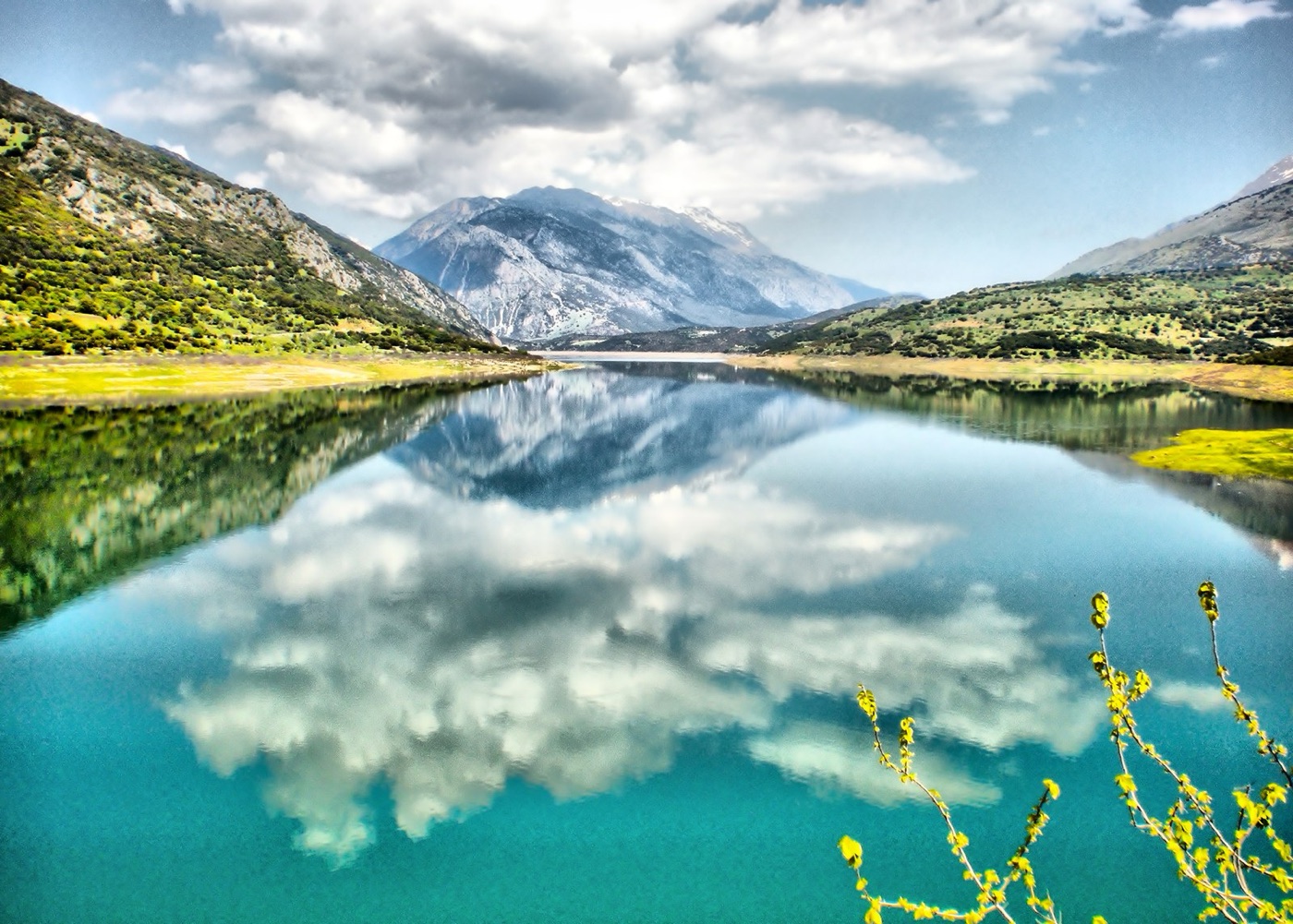
The answer built in the drought was the Evinos: a second river, the next valley west of the Mornos, dammed and tunnelled twenty nine kilometres into the Mornos reservoir, so that two catchments feed one aqueduct. It opened in 2001 and it doubled the security of the supply, and it was, for twenty years, enough.
2024
The winters of 2022 and 2023 were the driest in the Mornos catchment since the 1990 drought, and by the summer of 2024 the total storage of the four reservoirs was down by about a third in two years, the Mornos was showing the drowned village of Kallio at its bottom, which appears in the newspapers whenever the level is low enough to be a warning, and the utility had started pumping from Yliki, which it keeps for dry years because pumping from it costs electricity that the gravity aqueduct does not, and from a set of wells in the Boeotian plain that it holds as a last reserve. The storage was the lowest since the early 1990s. The government declared the region in drought, the utility asked the city to use less, and the winter of 2024 to 2025, which was not wet, did not refill the reservoirs.
The plan, published in 2025, is the plan of every dry city on this site: cut the leakage, which is a fifth of what enters the pipes; take more from the wells and Yliki in dry years; build a pipeline from the Acheloos, the river the 1990 government studied, which has been argued over for thirty years; and, in the long run, desalinate on the coast, which Athens has so far avoided and its islands have not. The city that has always brought its water from further away is running out of further.
| Athens in drought | |
|---|---|
| 1988 to 1993 | The worst on record; rationing by pressure; price tripled; use fell a third |
| Built in response | The Evinos dam and tunnel, 2001 |
| 2022 to 2024 | Storage down a third in two years; lowest since the early 1990s |
| Response | Pumping from Yliki and reserve wells; leak reduction; Acheloos pipeline studied again |
| Long run | Desalination on the Attic coast, not yet built |
Hadrian's aqueduct again
The most Athenian part of the plan is the oldest. Hadrian's tunnel still carries groundwater from Parnitha, several thousand cubic metres a day, and for a century that water has run unused into the sewers, because it is not treated to drinking standard and the city stopped drinking from the tunnel in the 1920s. From 2023 a municipality on the tunnel's route has been drawing it off to water its parks and street trees, and the utility is extending the scheme along the twenty kilometres, so that the parks of northern Athens are watered from a Roman tunnel and the Mornos water they used is kept for the taps. It is a small volume, a fraction of a percent of the city's use, and the point is the one the greywater article on this site makes: water that is not fit to drink is fit for a great deal, and a city in a dry country should not be watering a lawn from a reservoir two hundred kilometres away.
The islands
Attica's water is the mainland's problem. The Greek islands, which host most of the country's tourists in the driest months, have a worse one, and it is the hotel industry's story on this site: a resident population that triples in August on islands that have a few hundred millimetres of rain, no rivers and aquifers that the sea has already entered. For decades the answer was tankers from the mainland, sailing water to Aegina, the Cyclades and the Dodecanese at a cost per cubic metre many times Athens's, and since the 2000s it has been desalination, plant by plant, on Syros, Mykonos, Santorini and dozens more, paid for by the state and the hotels and run at full output for three months a year. The islands are Athens's future in miniature: a dry place with a growing demand, out of rivers to dam, turning to the sea.
Leaks and the last reserve
The utility's own accounting puts the losses in the network at about a fifth of what enters it, which is average for a European city and, in a drought, is the difference between the reservoirs holding and not. The pipes of central Athens date from the 1950s and 1960s, laid fast for a city that doubled twice, and the programme to replace them has run at a pace the reservoirs have not waited for. The reserve wells in Boeotia, which the utility drew on in 2024, are the last resort in a drier sense: the aquifer under the Copais plain, which the ancient lake drained in the 1880s left behind, is what the farms of the plain also pump, and the utility's draw on it in a dry year is a draw on their water too. The city has one more source after that, and it is the sea.
What it teaches
Athens is the city on this site that has been bringing its water from somewhere else for the longest, and the distance has grown with the city: twenty kilometres under Hadrian, sixty in the 1950s, two hundred by 1981. Each scheme was the answer for a generation and each was found short in a drought, and the droughts, on a coast that is drying, are coming closer together. The reservoirs will refill in the wet winters. The city is reopening a Roman tunnel and studying the sea, which is the oldest answer and the last one.
Two hundred kilometres of aqueduct, a reservoir a third down, and a tunnel from the year 140 watering the parks.
Sources
- EYDAP (Athens Water Supply and Sewerage Company), annual reports: about 1.1 to 1.3 million cubic metres a day; sources Mornos, Evinos, Yliki and Marathon; the Mornos aqueduct about 188 kilometres plus the Evinos tunnel.
- Ministry of Environment and Energy, Greece, reservoir storage data 2022 to 2025: total storage down about a third from 2022; lowest since the early 1990s.
- Koutsoyiannis, D. et al. (2003). A decision support system for the management of the water resource system of Athens. Physics and Chemistry of the Earth 28. The 1989 to 1993 drought and the Evinos scheme.
- Hadrian's Aqueduct revival project, Municipality of Chalandri and EYDAP: about 20 kilometres of the ancient tunnel, non potable use since 2023.
- Hellenic National Meteorological Service, rainfall records for Athens: about 400 millimetres a year on average.
- Photographs: opener: View from the Acropolis in Athens with the Lycabettus Hill, 20240531 1314 9656 by Jakub Hałun (CC BY) via Wikimedia Commons; inline: Τα Βαρδούσια καθρεπτίζονται στην Λίμνη του Μόρνου by George Kypreos (CC BY-SA) via Wikimedia Commons; inline: The Marathon Dam on July 22, 2020 by George E. Koronaios (CC BY-SA) via Wikimedia Commons.