Thirsty Places: Dhaka
A city of twenty million on a river delta that drinks from wells, because its rivers are too foul to treat, and whose water table has been falling by two or three metres a year for decades. Where Dhaka's water comes from, why the wettest city on this site is short of water, what the dye houses and tanneries did to the rivers, how the utility is turning back to the surface, and what it takes to treat a river that carries a city's sewage and its factories' effluent.
Dhaka is the wettest city on this site and one of the most short of water. It gets about two metres of rain a year, most of it in the four months of the monsoon, and it sits at the centre of the Ganges and Brahmaputra delta, ringed by rivers and crossed by canals, on a floodplain that the monsoon covers most years. And it drinks, for two thirds of what it uses, from wells: about nine hundred deep tube wells drilled by the utility and thousands more drilled privately, pulling water from the sand under the city faster than the rain can put it back, so that the water table has fallen by two or three metres a year for four decades and is now sixty or seventy metres down under the centre.
This article is about how a city surrounded by water came to depend on the ground beneath it, what its rivers carry, what the utility is doing to turn back to them, and what it takes to treat a river that a city has used as a drain.
The wells
Dhaka had a million people in 1970 and has more than twenty million now, in a metropolitan area that has spread across the floodplain in every direction, and the utility that serves it, Dhaka WASA, grew its supply the fastest way available: by drilling. The sand under the city is a good aquifer, the wells were cheap, the water needed only chlorination, and each new well could be sunk where the demand was. By the 2000s the city was pumping about two billion litres a day from the ground, and the aquifer, which is recharged slowly from the rivers and the rain through a layer of clay, was being emptied faster than it filled.
The consequences are the ones every article on this site about groundwater describes. The wells go deeper each year and the pumps use more power; the older, shallower wells go dry; and a city whose ground is a soft delta deposit begins, in places, to subside. The arsenic that poisons the shallow wells of rural Bangladesh, which the arsenic article on this site describes, is largely absent from Dhaka's deep aquifer, which is one reason the city drilled deep. The deep aquifer is also the one that does not refill in a human lifetime.
| Dhaka's water | |
|---|---|
| People | More than 20 million in the metropolitan area |
| Supply | About 2.6 billion litres a day |
| From wells | About two thirds, from around 900 utility wells and many private ones |
| Water table | Falling 2 to 3 metres a year; 60 to 70 metres down in the centre |
| Rivers | Buriganga, Turag, Balu, Shitalakshya; the Padma and Meghna further out |
| Plan | Two thirds from surface water by the 2030s |
The rivers
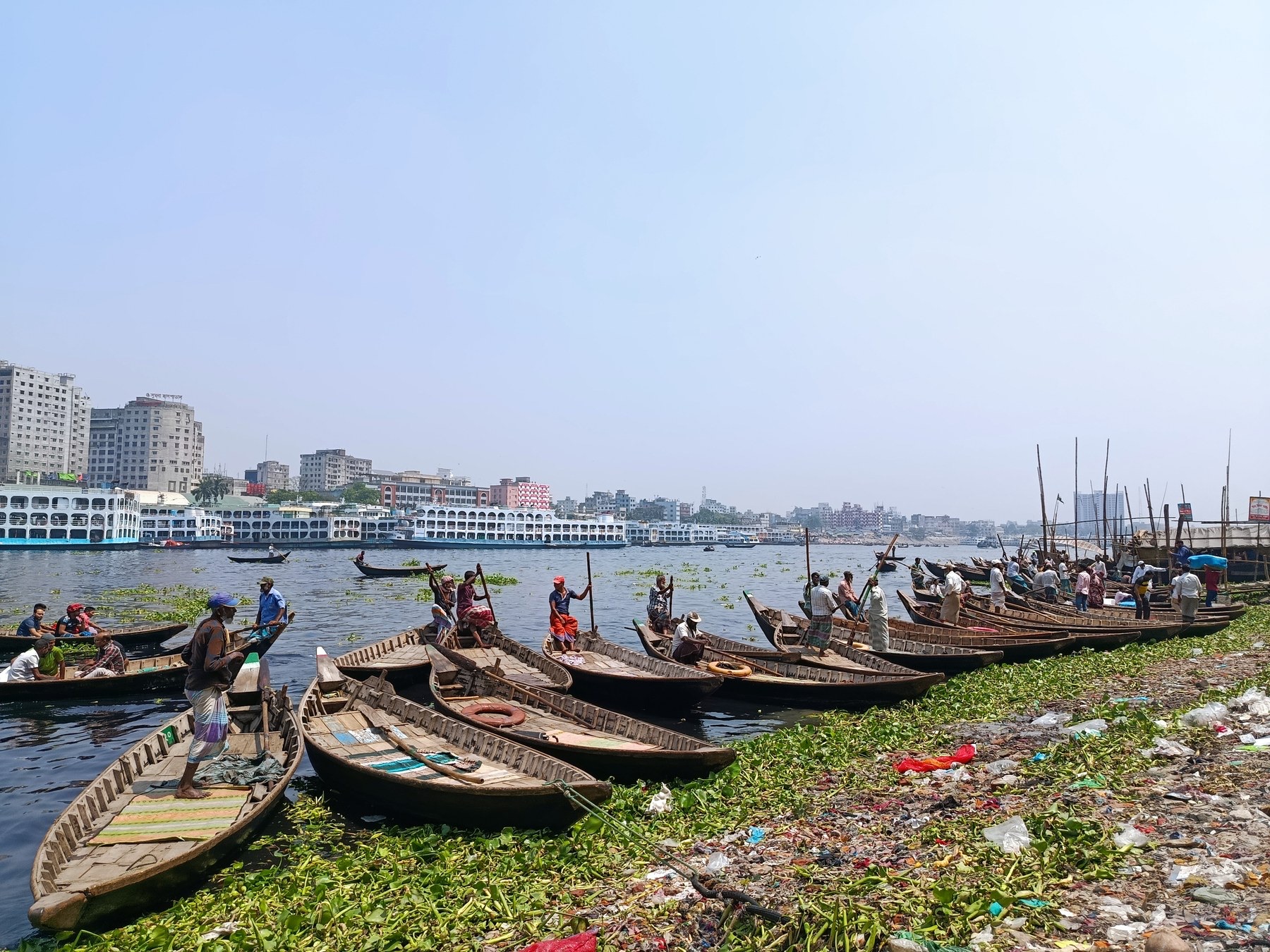
The city is ringed by rivers and it drinks from almost none of them, because of what it has put in them. The Buriganga, on the city's southern edge, is the oldest and the worst: a river that in the dry season, from November to May, has almost no oxygen in it, a black surface and a smell that reaches the streets, fed by the untreated sewage of a city of twenty million with a sewer network that reaches a fifth of it, the effluent of the garment industry's dye houses, which the textile article on this site describes, and, until the tanneries were moved in 2017, the chromium and sulphide of the leather district at Hazaribagh, which the leather article describes as one of the most polluted places on Earth. The tanneries were moved to an estate at Savar with a central treatment plant, which has not worked as designed, and the Dhaleshwari river there is now what the Buriganga was.
The Turag and Balu to the north and east carry the effluent of the industrial belts along them, and the Shitalakshya to the east, from which the city's largest surface water plant at Saidabad draws, has become so polluted in the dry season that the plant's intake has to be moved upstream. The rivers are the city's water, and the city has made them the one source it cannot use.
| What the rivers carry | |
|---|---|
| Sewage | From a city with sewers for about a fifth of its people |
| Dye house effluent | From thousands of garment washing and dyeing plants |
| Tannery effluent | Chrome and sulphide; moved from Hazaribagh to Savar in 2017, where the treatment plant underperforms |
| Dissolved oxygen, Buriganga, dry season | Near zero |
| Result | Rivers the utility cannot treat, and wells instead |
Turning back to the surface
The utility's plan since the 2010s has been to reverse the ratio and take two thirds of the city's water from rivers by the 2030s, and because the rivers at the city's edge are unusable, it is going further out. The Padma plant at Jashaldia, opened in 2019, draws from the Padma, the main channel of the Ganges, thirty kilometres away, and pipes 450 million litres a day into the city; a second plant on the Meghna to the east is planned to be larger; and the Saidabad works on the Shitalakshya is being expanded with a new intake further upstream, where the water is treatable for more of the year. Each is a conventional works of the kind the plain water pillar describes, with coagulation, settling, filtration and chlorine, and each is a large pipeline across a floodplain to a city that grows around it.
The plan is expensive and it is the only one there is. The wells are a stock being spent, the rivers at the edge are a treatment problem no plant can solve until what goes into them is treated first, and the rivers thirty kilometres out are, for now, clean enough. The utility is also spending on the other end: the sewers and treatment works that would take the sewage out of the Buriganga, which have been planned since the 1990s and built at a fraction of the pace of the city.
The garment industry
The dye houses are the part of Dhaka's water that the rest of the world buys. Bangladesh is the second largest exporter of clothing on Earth, most of it made in and around Dhaka, and the washing and dyeing of the fabric uses, as the textile article on this site sets out, between fifty and a hundred and fifty litres for every kilogram of cloth, drawn from the same wells that the city drinks from and discharged, in most plants, to the same rivers. The larger factories that supply the European and American brands have built effluent plants and, under pressure from the brands' auditors, run them, and a few have built the recycling and zero discharge systems the industry's best plants use. The thousands of smaller ones, subcontracting for the large, have not. The cloth is exported. The water stays, in the wells the industry emptied and the rivers it filled.
The monsoon and the flood
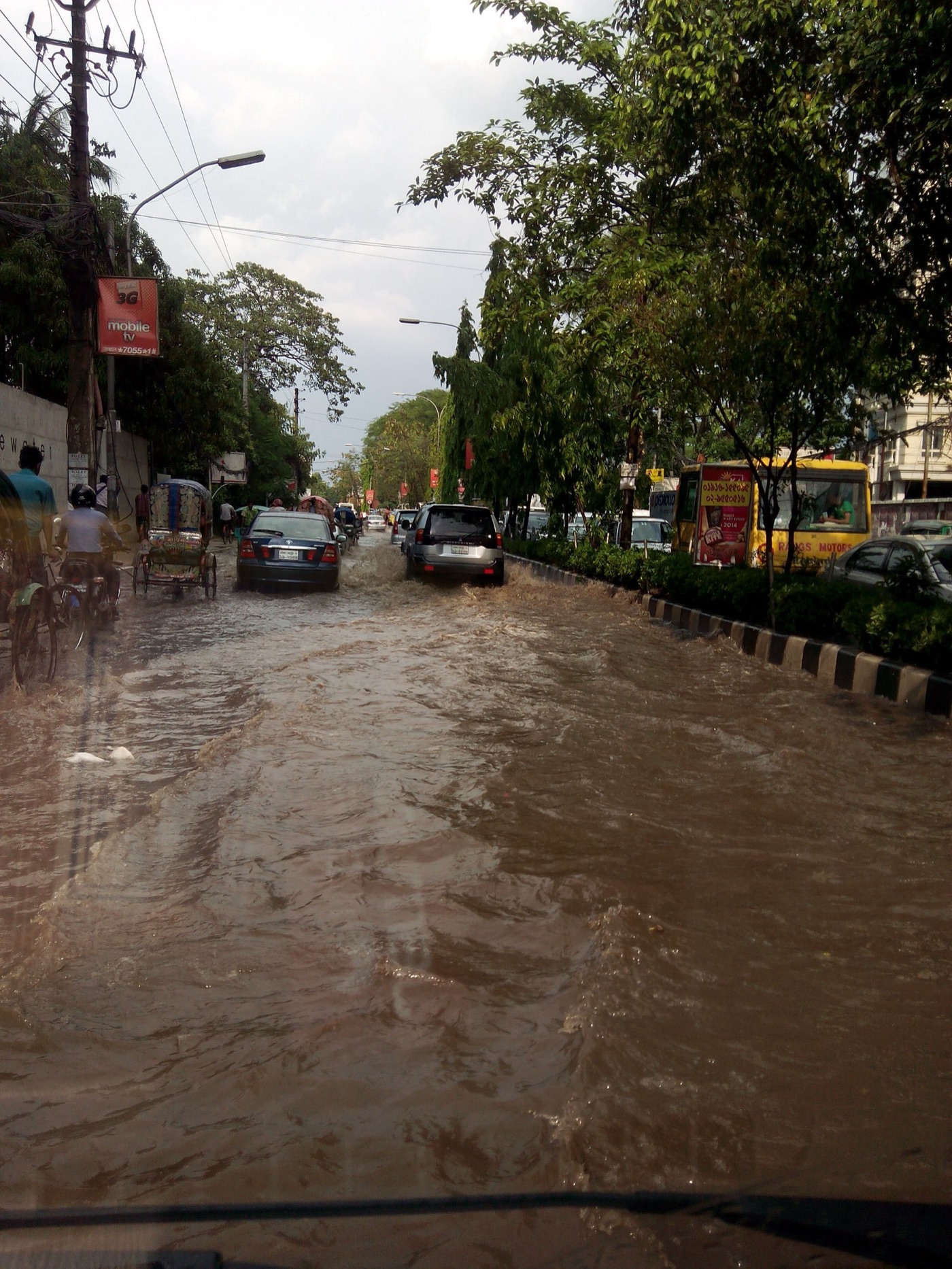
The rain that Dhaka cannot drink still arrives, four months a year, at a rate that floods the city. The monsoon delivers about three quarters of the year's two metres between June and September, the rivers rise with the snowmelt and the rain of the whole Himalayan catchment, and the low lying districts of the city, which were wetlands and paddy when the older districts were built and are housing now, go under water for weeks. The city's drains, built for a smaller city and clogged with the plastic and the silt of a larger one, back up; the canals that carried the flood out have been filled and built over; and the water that could, in a planned city, be sent into the ground to refill the aquifer is pumped out into the rivers instead. Dhaka floods in the wet season and drills in the dry one, and the two are the same water.
The planners have known this for decades, and the flood control embankment that rings the western half of the city, built after the flood of 1988, keeps the rivers out and, in the monsoon, keeps the rain in. The eastern half, which the embankment was meant to reach and did not, floods from the rivers directly. The recharge schemes that would use the flood to fill the aquifer exist on paper, at a scale a city of twenty million would need, and in practice as a few pilot wells.
What it costs a household
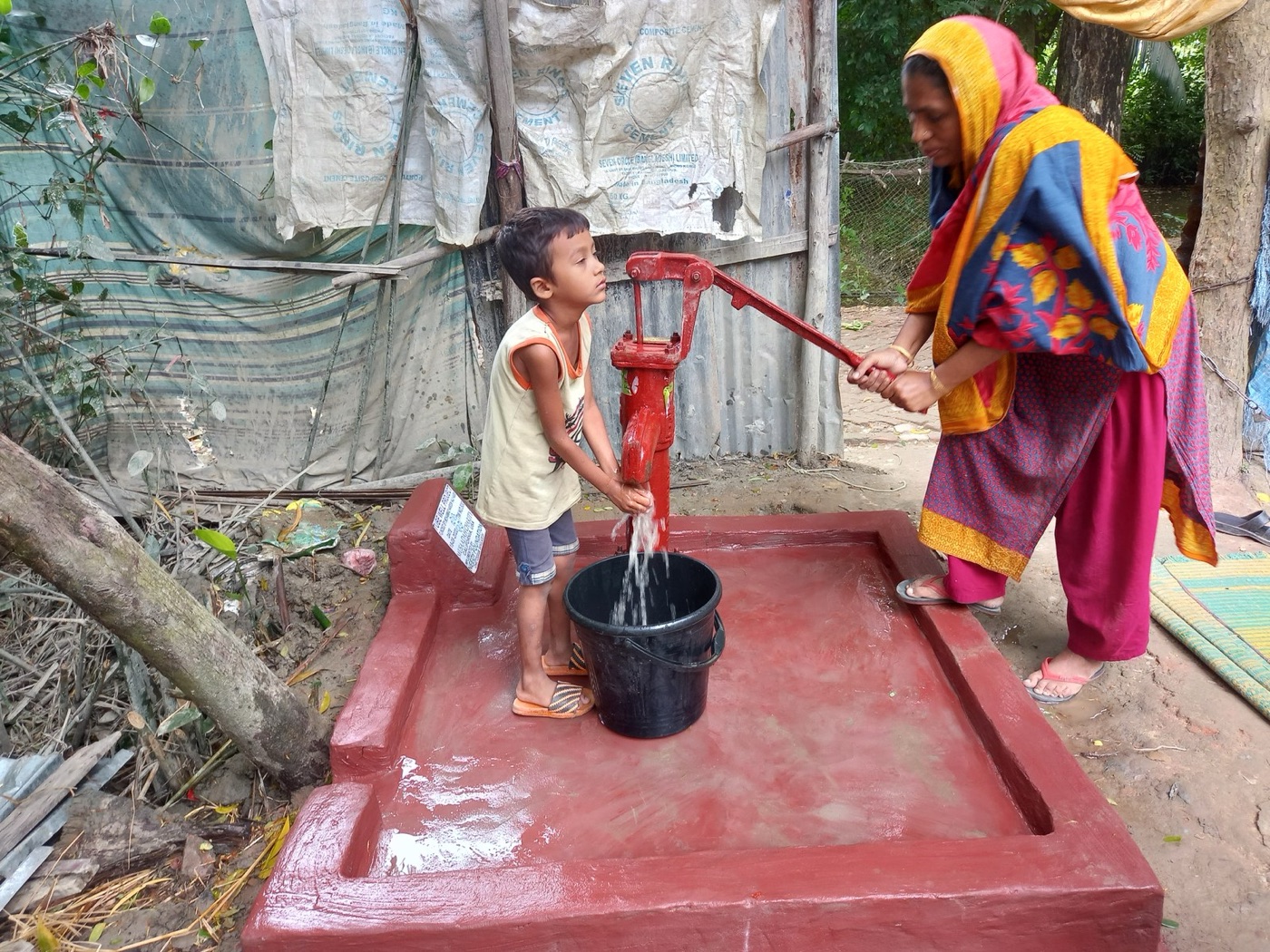
The utility's water reaches most of the city through pipes and much of the city through nothing. The older districts have connections; the newer ones and the informal settlements, which hold a third of the population, have a shared standpipe, a private well, or a vendor. The utility's water is cheap, subsidised below its cost, and the vendors' water, drawn from the same wells and sold by the jerry can, costs several times more, in the pattern of every city on this site with a network that stopped short of its people. Households that can afford it filter or boil, because the utility's own tests find bacteria in a share of the samples from the pipes, which are old, leaky and under intermittent pressure, so that what was chlorinated at the well is not always clean at the tap. The plants on the Padma will treat the river. The pipes between the plant and the tap are the other half of the work.
What it teaches
Dhaka is the city on this site that shows what a city can do to water it has too much of. It is built on a delta, watered by a monsoon and ringed by rivers, and it drinks from a falling aquifer because it has made every river at its edge untreatable. The plan to turn back to the surface is the right one and it depends on rivers thirty kilometres out staying clean, and on a city of twenty million building, at last, the sewers that would let the ones at its edge recover. The wells are the loan it took while it waited.
Three metres a year, two thirds from the ground, and rivers on every side that the city cannot drink.
Sources
- Dhaka WASA, annual reports and Master Plan: about 2.6 billion litres a day supplied; about two thirds from around 900 deep tube wells; groundwater decline 2 to 3 metres a year.
- Hoque, M.A., Hoque, M.M. and Ahmed, K.M. (2007). Declining groundwater level and aquifer dewatering in Dhaka metropolitan area. Hydrogeology Journal 15.
- Department of Environment, Bangladesh, river water quality monitoring: dissolved oxygen near zero in the Buriganga in the dry season.
- Padma (Jashaldia) Water Treatment Plant, 450 million litres a day, commissioned 2019; Saidabad Phase 3 and Gandharbpur plants.
- World Bank (2018). Toward a Multisectoral Action Plan for Sustainable Water Management in Dhaka.
- Photographs: opener: Small boats on the Buriganga River by Yahya (CC BY-SA) via Wikimedia Commons; inline: Rain filled Dhaka Street,2014 by Aashaa (CC BY-SA) via Wikimedia Commons; inline: Tube well installation project for safe drinking water supply by Needy Foundation 03 by Needy Foundation (CC BY-SA) via Wikimedia Commons.