Thirsty Industries: Textile
The textile industry withdraws 93 billion cubic metres of water a year and returns almost all of it, hot, salty and coloured. What is in that water, why the colour is more dangerous than it looks, and what the best mills have learned to do with it.
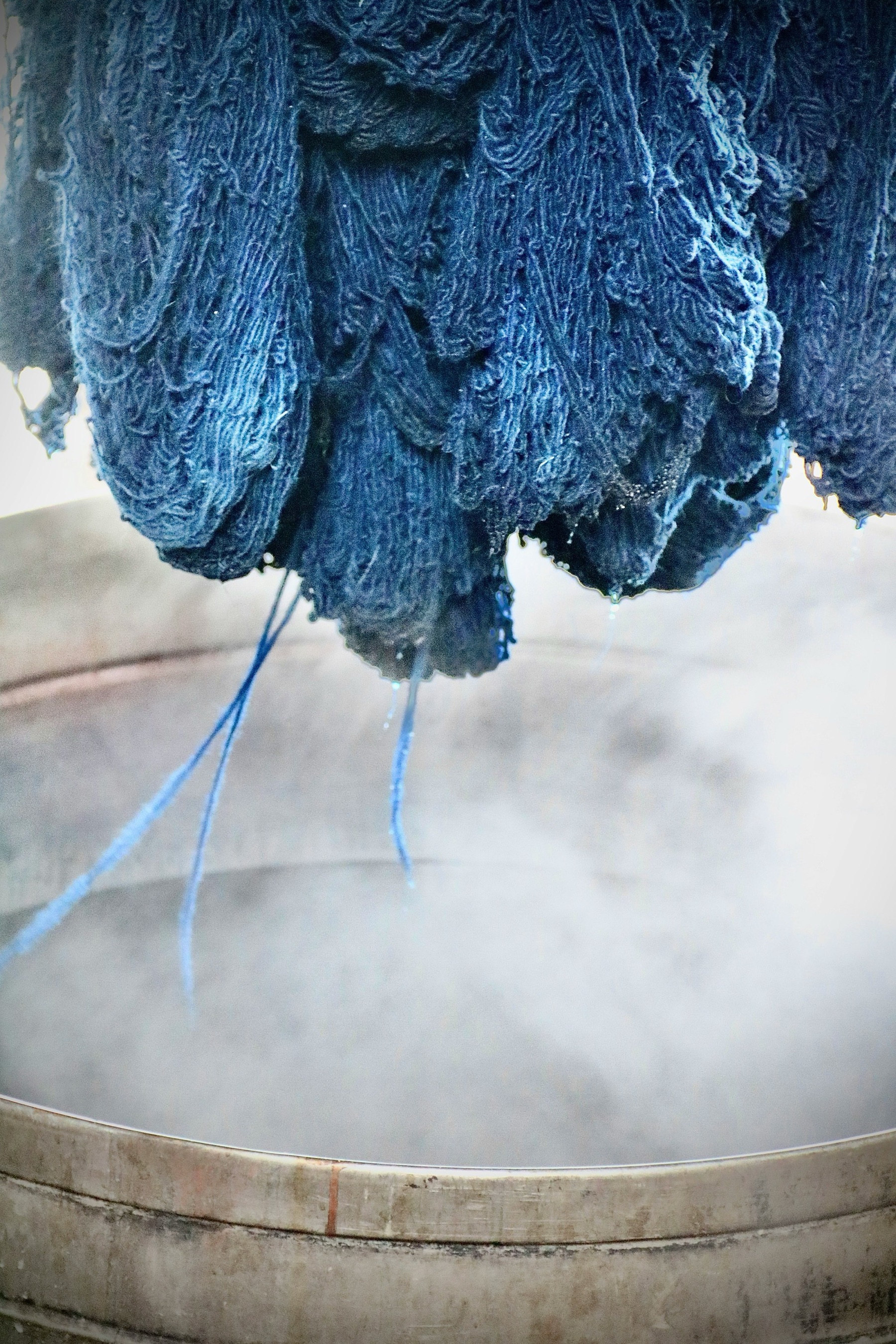
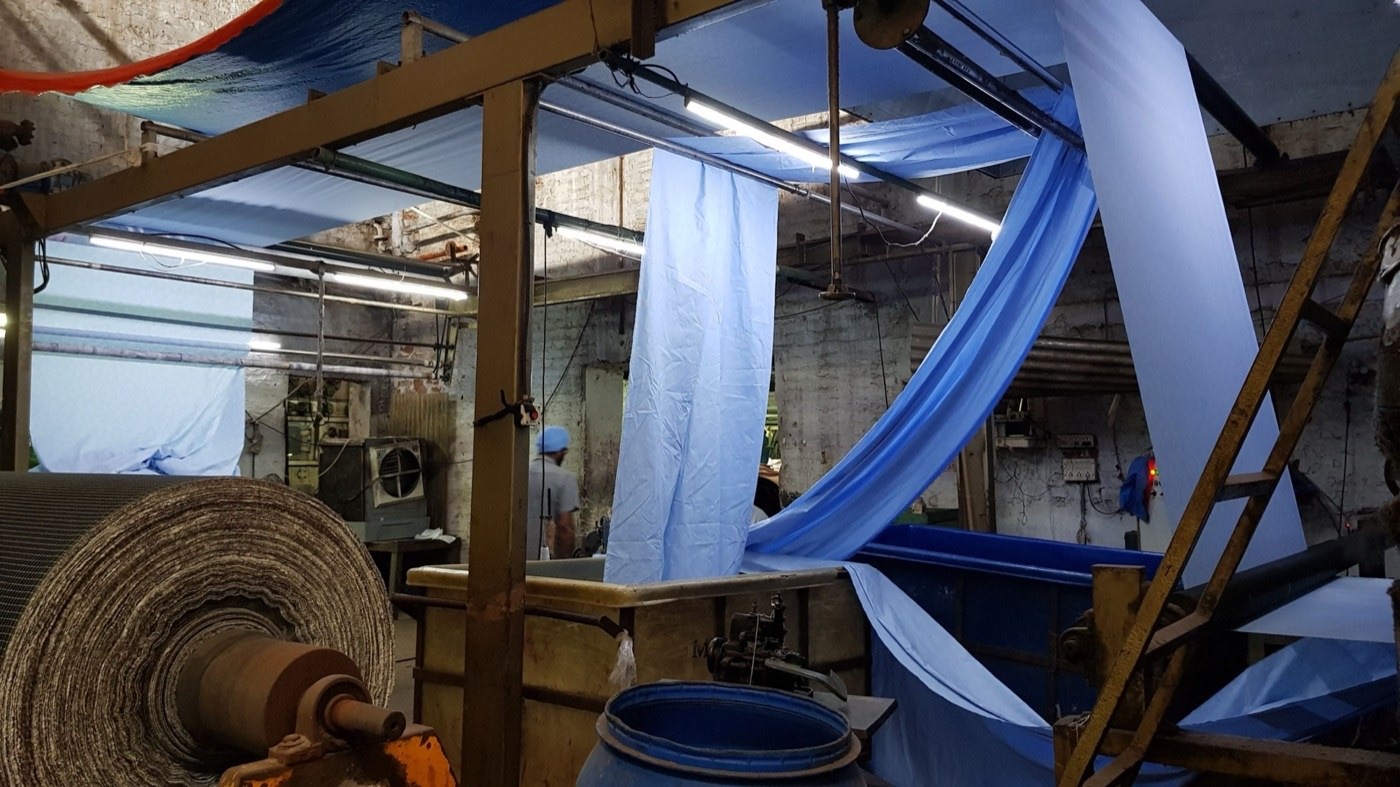
The dye house is at the back of the mill, past the spinning floor and the knitting sheds, and it announces itself before it comes into view. There is the heat first, then the smell, a mixture of wet cloth, steam and something faintly chemical, and then the noise of the machines, each one a drum the size of a small car, filling, turning, draining and filling again. On the floor, in the channels that run between the machines, the water is blue. Or red, or black, depending on the order being run that week. It is on its way somewhere, and where it goes is the subject of this article.
Every footprint on this site ends in the same place: most of the water behind a product was spent before the product existed, in a field or a factory. The field has been well covered. This is the first article about the factory, and it begins with the industry that, more than any other, made the water problem visible by colouring it.
Ninety three billion cubic metres, and the word that matters
The textile industry withdraws about 93 billion cubic metres of water a year, according to the Ellen MacArthur Foundation's 2017 study of the sector. It is a number of the kind that resists imagination, and it is usually left there, as a bare enormity. It becomes useful only when the word withdraws is taken seriously.
Reporting on industrial water routinely mixes up three different things, and textiles is the clearest example of why the distinction matters.
| Term | Meaning |
|---|---|
| Withdrawal | Taken from a river, a lake or the ground |
| Consumption | Evaporated, or built into the product, and so gone |
| Discharge | Returned to the environment as effluent, treated or not |
A cotton field consumes water. The plant drinks it and breathes it out, and the water is gone from the catchment. A dye house does something different. Very little of what it withdraws ends up in the cloth, and not much evaporates. Almost all of it goes back out through a pipe. In the strict sense the textile industry consumes little water. What it does, on a very large scale, is discharge it, and what it discharges has been changed by everything the mill does for a living.
That distinction shapes the whole story. An industry that consumed its water would be a story about scarcity. An industry that discharges it is a story about what comes out of the pipe.
What comes out of the pipe
A discharge permit for a textile mill measures a short list of things, and each item on the list is a different way the water has been altered on its way through the plant.
| Parameter | What it is |
|---|---|
| Colour | Dye that never bonded to the fibre, visible at parts per million |
| COD and BOD | The organic load, the measure of how much oxygen it will consume in a river |
| TSS | Suspended solids: fibre, lint, fragments of everything |
| TDS | Dissolved salt, and the hardest of all of these to remove |
| pH and temperature | Alkaline and hot at the point of discharge |
Each parameter has its own article in the Plain Water series. What is unusual about textile effluent is that it scores badly on all of them at the same time. A dairy produces organic load. A plating shop produces dissolved metals. A dye house produces heat, alkalinity, solids, salt and colour in a single stream, and the plant built to clean it has to answer every one of those problems in sequence.
Inside the dye house
To see why, it helps to follow a length of cotton through its wet processing, the stage between the loom and the sewing floor where the cloth is made ready to be sold.
The fabric arrives stiff with size, a starch applied to the yarn to survive weaving, and the size is washed off. It is then scoured, boiled in an alkaline bath to strip the natural waxes and oils from the cotton, and bleached to give it an even white base. Only then is it dyed, after which it is washed, and washed again, and finished with softeners or resins, and washed once more. Every one of these steps fills a machine with water, heats it, adds chemicals, drains it and rinses. A single batch of cloth may be filled and drained a dozen times before it is dry.
Dyeing is the heart of it, and cotton dyeing has a particular chemistry. Most cotton in the world is coloured with reactive dyes, so called because they form a chemical bond with the fibre itself, which is what makes the colour fast in the wash. To persuade the dye to leave the water and move onto the cloth, the bath is loaded with salt, tens of grams in every litre, and made strongly alkaline. Even then a share of the dye never bonds. It remains in the water, and when the machine drains, it leaves with the rinse, along with all the salt that was added to push it and the alkali that was added to fix it.
Nothing in this is carelessness. The chemistry of getting a fast colour onto cotton produces this water by design. The dye house could not make its product any other way, and the effluent is the direct and predictable consequence of the process rather than a failure of it.
Why the colour is not cosmetic
A coloured river is easy to read as an aesthetic problem: ugly, but surely harmless compared with the invisible poisons people worry about. Inside the industry it is read as dangerous, for a reason that has nothing to do with appearance.
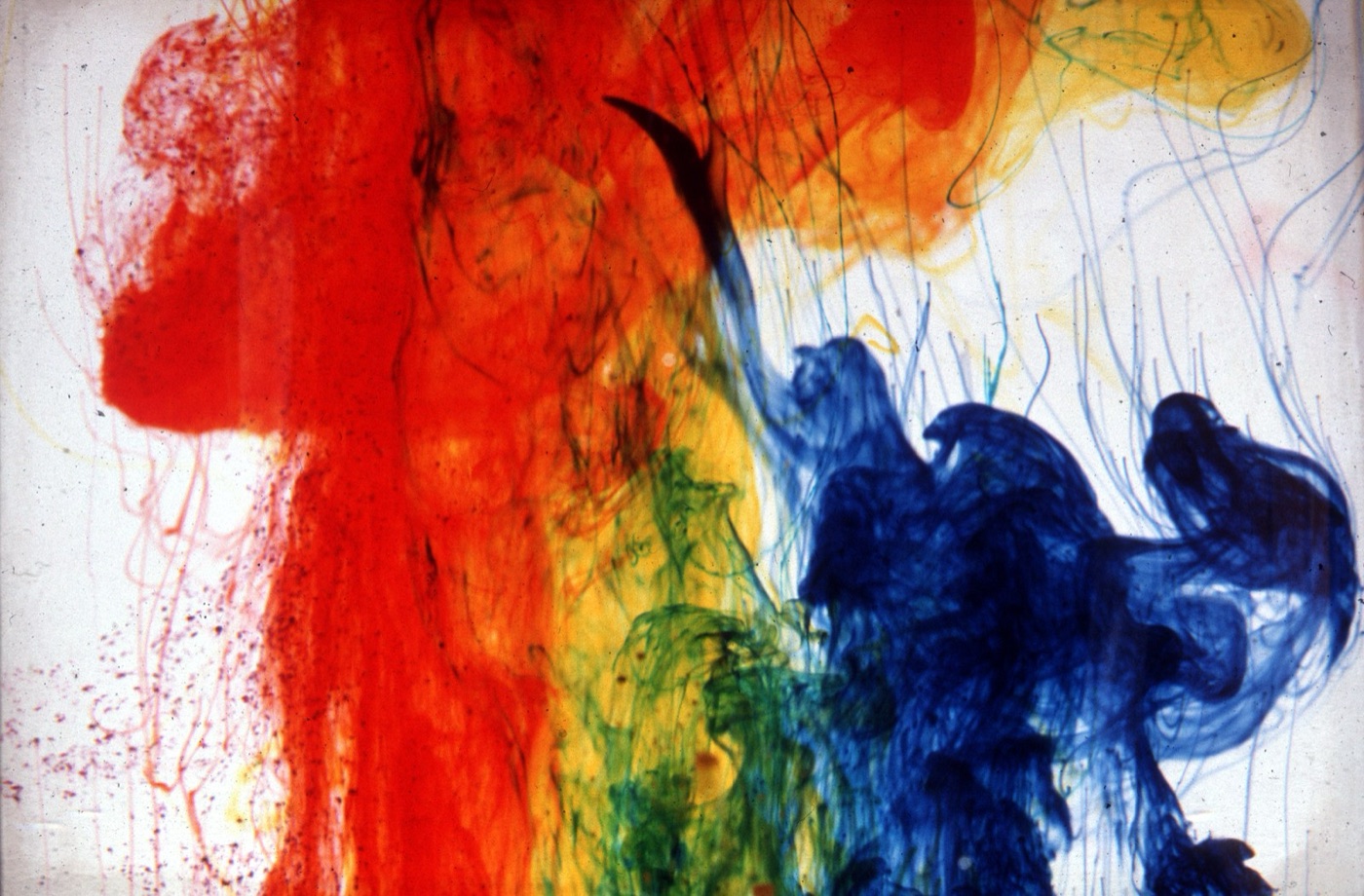
Dye absorbs light. That is what it is for. A river carrying dye lets less sunlight reach the plants and algae that live in it, and those organisms are where most of the oxygen dissolved in the water comes from. Less light means less photosynthesis, and less photosynthesis means less oxygen. Fish and everything else that breathes in the water begin to suffocate long before the dye itself reaches a concentration that would poison anything.
Add the organic load, which bacteria consume using still more oxygen, and the heat, which reduces how much oxygen water can hold in the first place, and the stretch of river below an untreated dye house can be biologically dead while looking, from the bank, merely blue. The World Bank's much cited estimate that around a fifth of the world's industrial water pollution comes from textile dyeing and finishing is a figure about this. It describes what has been done to the water rather than how much of it there was.
What the best mills already know
The remedy has two parts, and the first requires no new technology at all.
Conventional wet processing uses somewhere between 100 and 150 litres of water for every kilogram of fabric. The best run mills operate near 50 litres per kilogram, and they make the same products on similar machines. The difference is management. Counting every fill. Reusing the last clean rinse of one batch as the first dirty rinse of the next. Repairing leaks. Choosing machines that dye with less water in the bath. A mill that closes that gap has cut its water bill, its energy bill and its effluent by more than half before it has built a single new tank.
| Wet processing | Litres of water per kilogram of fabric |
|---|---|
| Conventional mills | 100 to 150 |
| The best run mills | about 50 |
The water that remains still has to be cleaned, and the industry knows how. The standard route begins with an effluent treatment plant, the building next to every serious mill that most people never notice. There the water is neutralised, the colour is knocked out with coagulants, and a large tank of bacteria eats the organic load. After that come the membranes: ultrafiltration or a membrane bioreactor to remove what remains suspended, then reverse osmosis to remove what is dissolved. That sequence can return 70 to 90 percent of a mill's effluent to the process, clean enough to dye with again.
| Stage | What it removes |
|---|---|
| Effluent treatment plant | Alkalinity, colour, solids and the organic load |
| Ultrafiltration or membrane bioreactor | Whatever is still suspended, down to bacteria |
| Reverse osmosis | The dissolved salt, leaving a brine behind |
The catch
Treatment does not make anything disappear. It sorts. The bacteria turn the organic matter into a heap of sludge, and the reverse osmosis membranes push the salt into a concentrated stream, the brine. The mill now has clean water and two leftovers, each more concentrated than anything it started with, and each with nowhere obvious to go.
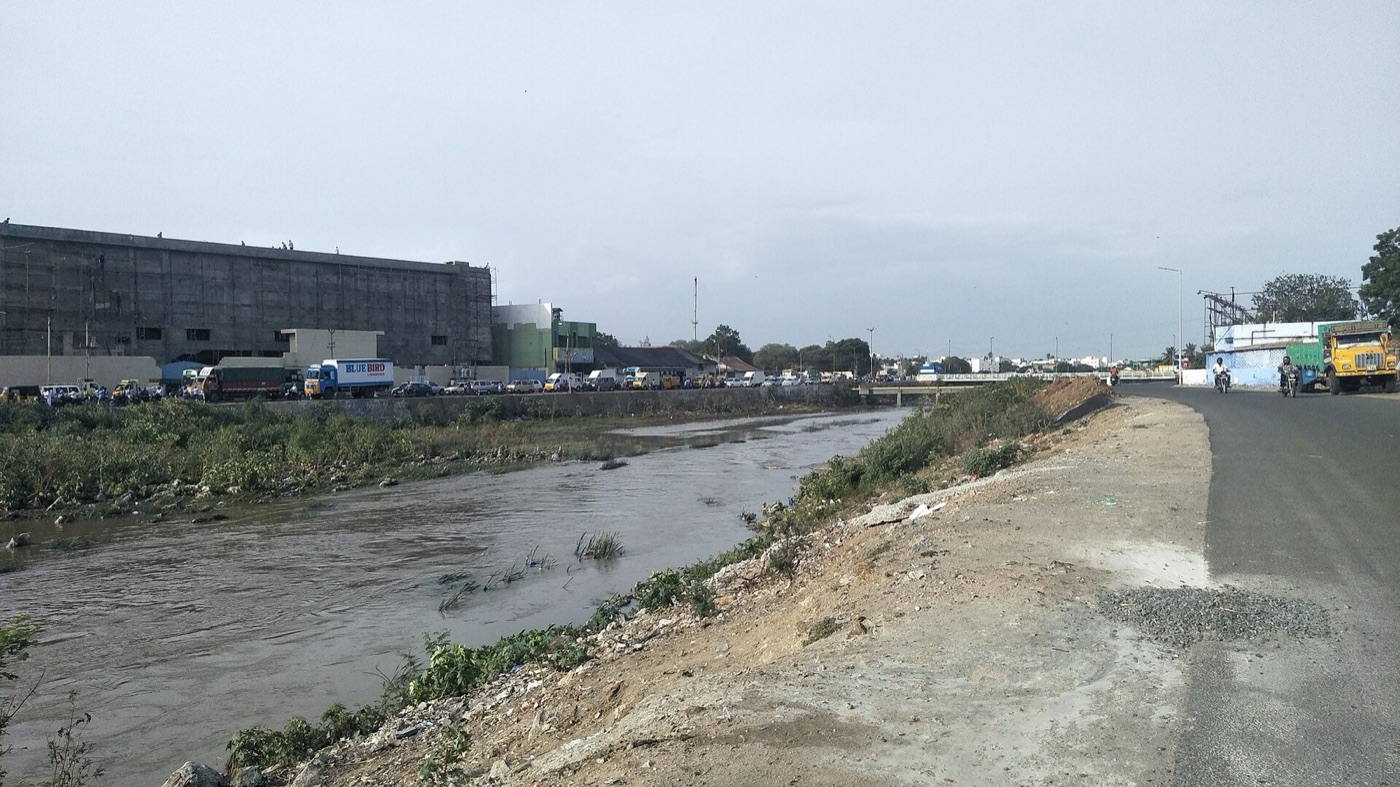
In Tirupur, the knitwear capital of southern India, this stopped being a theoretical concern in January 2011, when the Madras High Court ordered the town's dyeing units closed until they could demonstrate that they discharged no liquid at all. Zero liquid discharge became a legal requirement for an entire industrial cluster overnight. The mills had to learn to evaporate their brine and recover the salt from it, at a cost that closed some of them. It was expensive and it was slow, and it remains the clearest demonstration anywhere that the technology works when somebody insists on it.
For decades brine and sludge were simply a cost, trucked away or dried in the sun or boiled off with gas. The most interesting work in the industry now is recovery. Salt pulled back out of the brine and returned to the next dye bath. Sludge digested into biogas that heats the plant, with the nutrients that remain going to farmland. The aim is a mill where the water, the salt and even the dirt each have somewhere useful to go, and the first mills that resemble that description already exist.
The building next door
Every litre a dye house withdraws ends in the same place: a plant built to clean it, standing beside the factory, low and unglamorous, humming through the night. Inside the industry it has a nickname, the factory's kidney, and what happens inside one is a story of its own, told next in this series.
Anyone wearing cotton is wearing the output of a dye house. Some part of the colour on the cloth left the mill in rinse water, and whether that water passed through a kidney on its way out is what decides what the river below the mill looks like today.
Sources
- Ellen MacArthur Foundation (2017). A New Textiles Economy: Redesigning fashion's future. Annual water withdrawal by the textile industry, 93 billion cubic metres.
- World Bank estimates, widely cited, place textile dyeing and finishing at around 20% of global industrial water pollution.
- Water use per kilogram of fabric (100 to 150 L/kg conventional, near 50 L/kg in the best run mills) and recovery rates (70 to 90%) are published wet processing and industrial reuse benchmarks; site figures vary by process mix.
- Madras High Court order of January 2011 closing dyeing units in Tirupur, Tamil Nadu, until they achieved zero liquid discharge.
- Photographs: Noyyal river by Vkraja (CC BY-SA 4.0) via Wikimedia Commons; dye vat by Jorge Fernández Salas, Unsplash; inline: CSIRO ScienceImage 2797 Textile Dye in Water by Textile and Fibre Technology, CSIRO (CC BY) via Wikimedia Commons.
- Shore, J. (ed.) (1995). Cellulosics Dyeing. Society of Dyers and Colourists. Electrolyte (salt) additions in reactive dyeing of cotton and the share of dye that fails to fix.