Plain Water: Tailings
Behind every mine on this site is a dam holding a lake of wet ground rock, and the dam is built out of the rock it holds. There are several thousand of them, some among the largest structures on Earth, and when one fails a valley is buried in minutes. What tailings are, why the water in them is the problem, how the dams are built and why they fall, what Brumadinho changed, and what dry stacking would cost.
On 25 January 2019, at about half past twelve, the dam at the Córrego do Feijão iron mine near Brumadinho in Brazil gave way. A camera on the hillside recorded it: the face of the dam bulging, slumping, and then the whole embankment turning to liquid and pouring down the valley as a wave of red mud that reached the mine's offices, its canteen full of workers at lunch, and the road and the farms below within minutes. About twelve million cubic metres of tailings went down the valley and into the Paraopeba river. Two hundred and seventy people died, most of them employees of the mine, and the search for the last of them went on for years.
This article is about the thing that failed. A tailings dam is the largest water structure at most mines, it is built from what it holds, and there are several thousand of them in the world above valleys, rivers and towns.
What tailings are
Every mine on this site grinds rock to a powder to get its metal out, and the copper and gold articles describe the mill and the flotation tanks. What leaves the flotation tank is the powder, minus the metal, as a slurry of roughly equal parts ground rock and water, at a rate, for a large copper mine, of a hundred thousand tonnes a day or more. The slurry has to go somewhere, for as long as the mine runs, and it has nowhere to go that is not a dam.
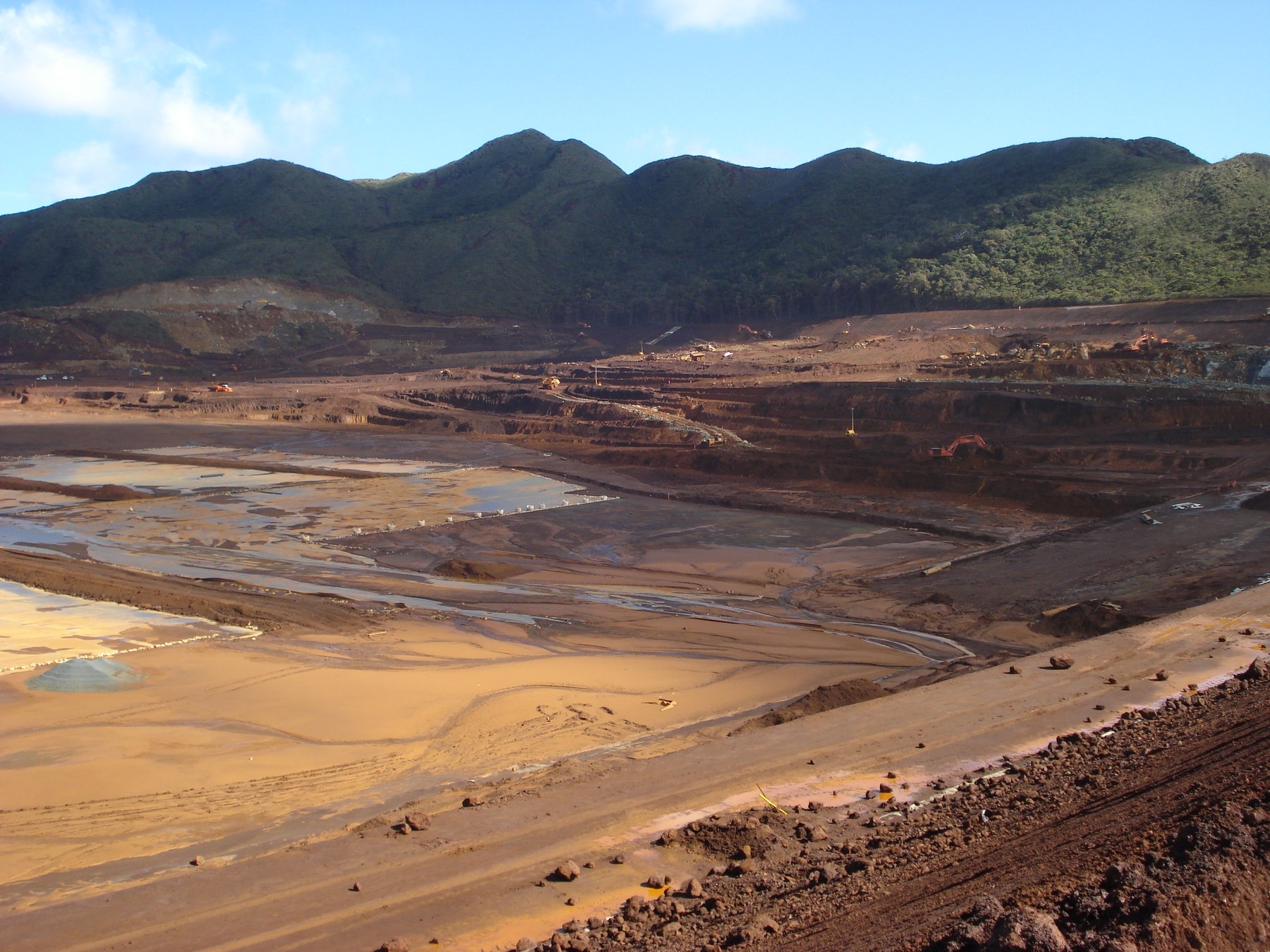
The tailings are pumped to a valley near the mine and the valley is closed with an embankment, and the embankment is raised as the pond behind it fills. The rock is fine, like flour or silt, and the water it came with drains from it slowly. The pond is designed to let the solids settle and the water to be drawn off the top and pumped back to the mill, so that at a well run mine most of the water in the slurry is used again. What is left is a lake of mud, hundreds of hectares wide and tens of metres deep, held by a wall that grows a few metres every year.
| Tailings | |
|---|---|
| What they are | Ground rock, minus the metal, with the process water and reagents |
| How much | For copper, a hundred tonnes or more per tonne of metal |
| Where they go | A dam across a valley, raised as the pond fills |
| What the dam is built of | Earth or rock at the base; then, usually, the tailings themselves |
| Dams in the world | Several thousand; about 1,700 disclosed by the largest companies |
| Largest | Hundreds of metres high, kilometres long, holding cubic kilometres |
Why the water is the problem
A tailings dam is a water problem in a way that a reservoir dam is not. A reservoir holds water behind a wall of concrete or compacted earth designed to hold it. A tailings dam holds a slurry, and, at most of the world's dams, is built out of the slurry: the coarser fraction of the tailings is used to raise the embankment, in stages, on top of the previous stage, in the method called upstream construction because each raise sits back over the mud of the pond. It is the cheapest way to build a dam, and it means that the wall is made of a material that is, to some depth, saturated with water and only loosely packed.
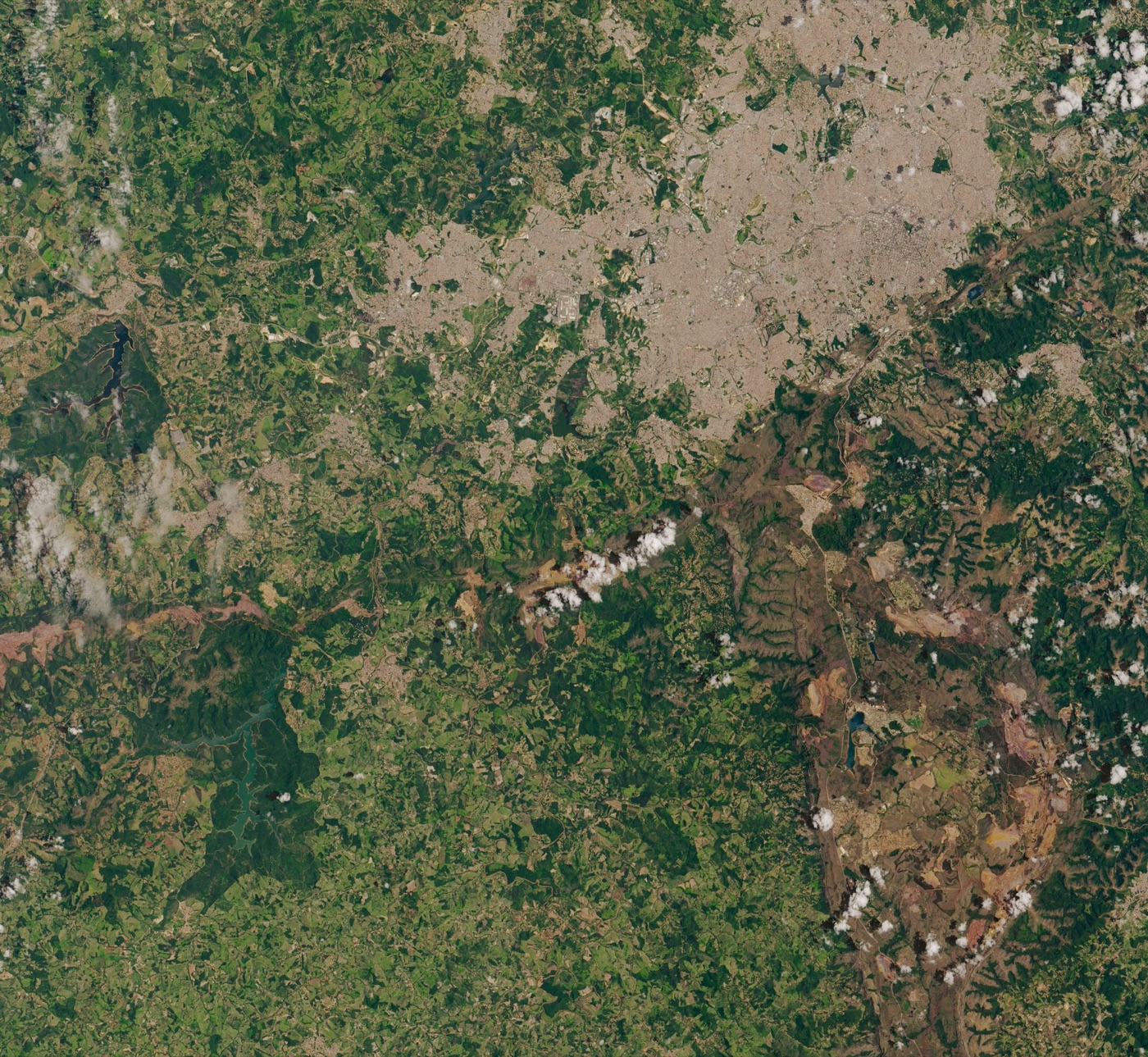
Loose, saturated, fine grained soil has a property that engineers call liquefaction. Under a shock, an earthquake, a heavy rain, a rapid raise, or simply the slow creep of a mass under its own weight, the grains can lose contact with each other and the water between them takes the load, and the material stops being a solid and flows. That is what the camera at Brumadinho recorded. The dam had not been raised for three years and was being decommissioned; it had a high water table in the embankment, because the drainage was poor and the tailings had been placed wet; and one afternoon, for reasons the inquiry could only reconstruct, the slope's creep reached the point where the whole mass liquefied at once.
The same thing, with variations, happened at Mount Polley in Canada in 2014, where a foundation failed; at Mariana, a hundred kilometres from Brumadinho, in 2015, where the Fundão dam liquefied and sent sixty million cubic metres into the Doce river, killing nineteen and fouling six hundred kilometres of river to the Atlantic; at Baia Mare in 2000, where a gold tailings pond overtopped in rain; and, by the count of the databases that track it, at a serious dam every year or two somewhere in the world since the 1960s, with the rate rising as the dams grow.
| Tailings dam failures | |
|---|---|
| Mariana, Brazil, 2015 | Fundão dam; 60 million cubic metres; 19 dead; the Doce fouled to the sea |
| Brumadinho, Brazil, 2019 | Feijão Dam I; 12 million cubic metres; 270 dead |
| Mount Polley, Canada, 2014 | Foundation failure; 24 million cubic metres into Quesnel Lake |
| Baia Mare, Romania, 2000 | Cyanide overflow; the Tisza and Danube |
| Jagersfontein, South Africa, 2022 | Diamond tailings; a township buried |
| Rate | A serious failure every year or two, worldwide |
What is in the mud
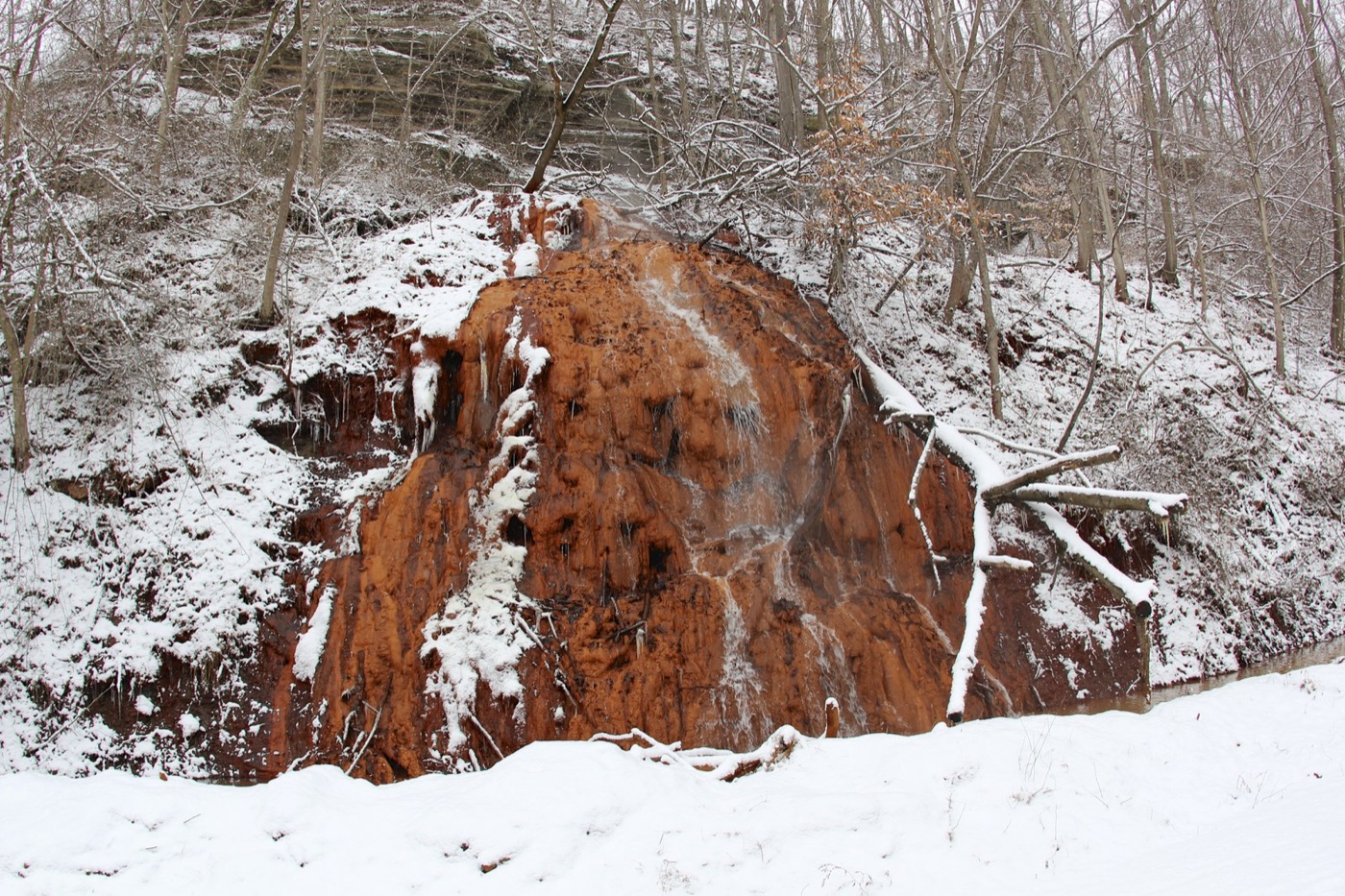
The water that a tailings dam releases when it fails, and the water that seeps from it every day when it does not, carries what was in the ore. Gold tailings carry cyanide and often arsenic; copper tailings carry copper, molybdenum and the flotation reagents; and sulphide ores of every kind carry pyrite, which, exposed to air and water, oxidises to sulphuric acid and leaches the metals out of the rock around it. Acid mine drainage, the orange stream that runs from old mines from Wales to Appalachia, is tailings and waste rock weathering, and it goes on for centuries after the mine has closed.
The pond, while it stands, seeps into the groundwater beneath it, and at a well run mine is lined, drained and monitored, and the seepage is collected and treated. At a badly run one it is not. And the pond evaporates, in a dry climate, at a rate that is often the mine's largest water loss, which is the copper article's point about the Atacama: the water a mine consumes is largely the water it stores in its tailings and loses from their surface.
Living below one
A tailings dam's consequence class, in the new standard, is set by what lies below it, and what lies below several hundred of the world's dams is a town. Mines attract settlements, the flat land in a mining valley is often downstream of the dam, and the dams were raised over decades above houses that were built after the first embankment and before the fifth. Brazil's mining state, Minas Gerais, has evacuated several such communities since 2019 on the finding that the dam above them could not be proved stable, and the residents, moved to hotels and rented houses with the sirens installed on their old streets, have in several cases been waiting for years for a dam to be lowered or a village to be rebuilt. In Peru, Chile, South Africa and the Philippines the same arithmetic applies without the evacuations. The standard asks the question the industry had not asked, which is what a failure would do, and the answer, for the dams above people, is the reason the newest ones are being built dry and the oldest ones are being taken down.
What changed after Brumadinho
The collapse produced, within eighteen months, the thing the industry had resisted for decades: a global standard for tailings dams, written by the mining industry's council, the United Nations environment programme and a group of investors who had begun, after Mariana, to ask every mining company they owned how many dams it had and where. The standard requires a dam to be designed for the worst consequence of its failure rather than its likelihood, to be reviewed independently, to have a named accountable executive, and to be disclosed. The investors built a public database, and the largest companies have listed some 1,700 dams in it, with their heights, their construction method and their consequence class; several hundred are upstream dams above people, and a few dozen are classed as extreme.
Brazil banned new upstream dams and ordered the existing ones decommissioned, on a timetable the industry has missed. Chile and Peru had banned upstream construction after earthquakes decades earlier. And the companies with the money have begun to do what the engineers had said for years could be done: to filter the tailings at the mill, press them to a damp cake, and stack them dry, in a pile that cannot liquefy because it holds no free water, and that returns most of the process water to the mill at once. Dry stacking costs more, in filters and energy and haulage, and at a copper price above eight thousand dollars a tonne the newest mines in Chile, Peru and Canada are paying it. The old dams, thousands of them, raised out of mud over fifty years, will never be filtered. They are being watched, and lowered where they can be, and the towns below them are waiting.
| After Brumadinho | |
|---|---|
| Global Industry Standard on Tailings Management | 2020; design for consequence, independent review, disclosure |
| Global Tailings Portal | About 1,700 dams disclosed; several hundred upstream, above people |
| Brazil | New upstream dams banned; existing ones to be decommissioned |
| Dry stacking | Filtered, damp tailings stacked without a pond; the standard at the newest mines |
| The old dams | Monitored, some lowered; most still there |
What it teaches
The tailings dam is the water structure on this site that most people have never seen and that has killed more of them than any other. It exists because a mine's waste is wet and has to be held, it is built from the waste it holds, and it fails when the water in the wall takes the load the rock was meant to carry. The industry has known the physics for fifty years and has changed its practice in the five years since a wave of mud reached a canteen at lunchtime. The mud is still in the valleys, and the water is still in it.
Two hundred and seventy people, twelve million cubic metres, a few minutes, and several thousand dams like it.
Sources
- Global Industry Standard on Tailings Management (2020), ICMM, UNEP and PRI, after the Brumadinho collapse.
- Church of England Pensions Board and Swedish Council on Ethics, Global Tailings Portal: about 1,700 disclosed facilities and their consequence classifications.
- Robertson, P.K. et al. (2019). Report of the Expert Panel on the Technical Causes of the Failure of Feijão Dam I. Vale.
- Morgenstern, N.R. et al. (2016). Fundão Tailings Dam Review Panel report, Samarco, Mariana.
- Bowker, L.N. and Chambers, D.M. (2015). The risk, public liability and economics of tailings storage facility failures.
- Photographs: opener: Goro mine tailings dam by Barsamuphe (CC BY) via Wikimedia Commons; inline: Another Deadly Dam Collapse in Brazil 01 by NASA Earth Observatory (Public domain) via Wikimedia Commons; inline: The Red Waterfall near Great Allegheny Passage, mile post 119 by daveynin (CC BY) via Wikimedia Commons.