Thirsty: Battery
The battery in an electric car holds about eight kilograms of lithium, and the lithium was concentrated, in most cases, by evaporating brine from under a desert. What a battery's water is, why the number is argued over more than almost any on this site, what the salt flats and the villages around them say, and what direct extraction and recycling would change.
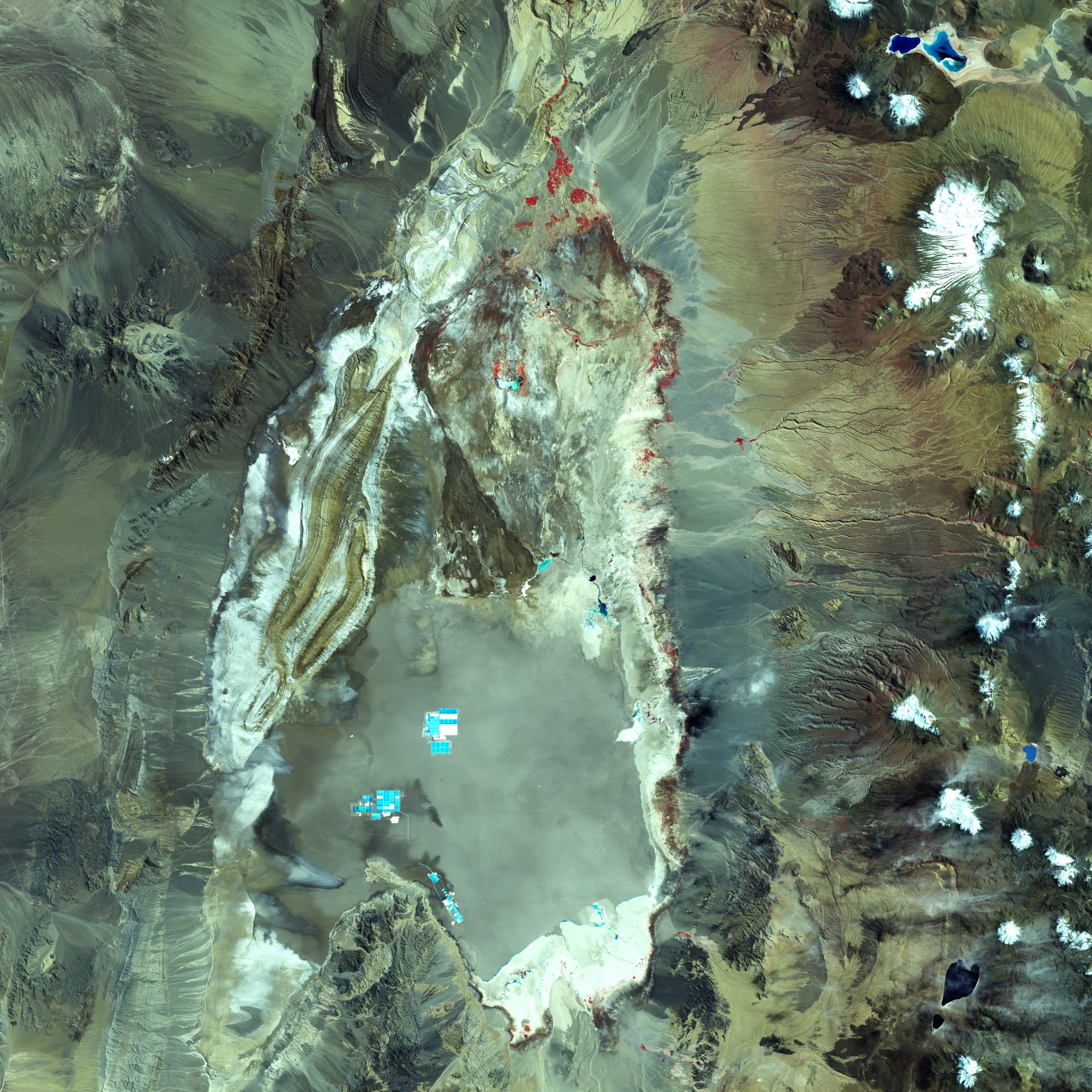
Fly over the Salar de Atacama and the pattern is unmistakable: rectangles of turquoise and yellow laid out across a white salt crust, hundreds of hectares of them, in a landscape where nothing else is any colour at all. They are evaporation ponds. Brine pumped from under the salt flat is left in them for twelve to eighteen months while the desert sun takes the water off, and what remains, concentrated to a yellow syrup, is trucked to a plant on the coast and turned into lithium carbonate, which becomes the cathode of a battery, which becomes a car.
The water in that battery is the most argued over number on this site, and the argument is not about arithmetic. This article is about what a battery's water is, why the count depends on what one calls water, and what the villages around the salt flats have been saying for twenty years.
What is in a battery
An electric car's battery pack weighs between three and six hundred kilograms and holds, inside its cells, a few kilograms each of several minerals: lithium, about eight kilograms, in the electrolyte and the cathode; nickel, cobalt and manganese in the cathode of the common chemistries; graphite, fifty or sixty kilograms, in the anode; copper and aluminium in the foils and the casing. Each mineral has a mine, a refinery and a water story, and the lithium's is the strangest, which is why it comes first.
| An electric car battery, roughly | Kilograms | Where it comes from |
|---|---|---|
| Lithium | About 8 | Brine in Chile and Argentina; hard rock in Australia, refined in China |
| Nickel | 30 to 40, in nickel chemistries | Indonesia, Russia, Philippines |
| Cobalt | 5 to 10 | Congo, about 70 percent |
| Manganese | 5 to 10 | South Africa, Gabon, Australia |
| Graphite | 50 to 60 | China, natural and synthetic |
| Copper and aluminium | 30 to 50 | The copper article's mines |
The brine
About two thirds of the world's lithium comes from two sources: brine under the salt flats of the Andes, and a hard rock called spodumene mined in Western Australia. The brine route is the cheaper and the older.
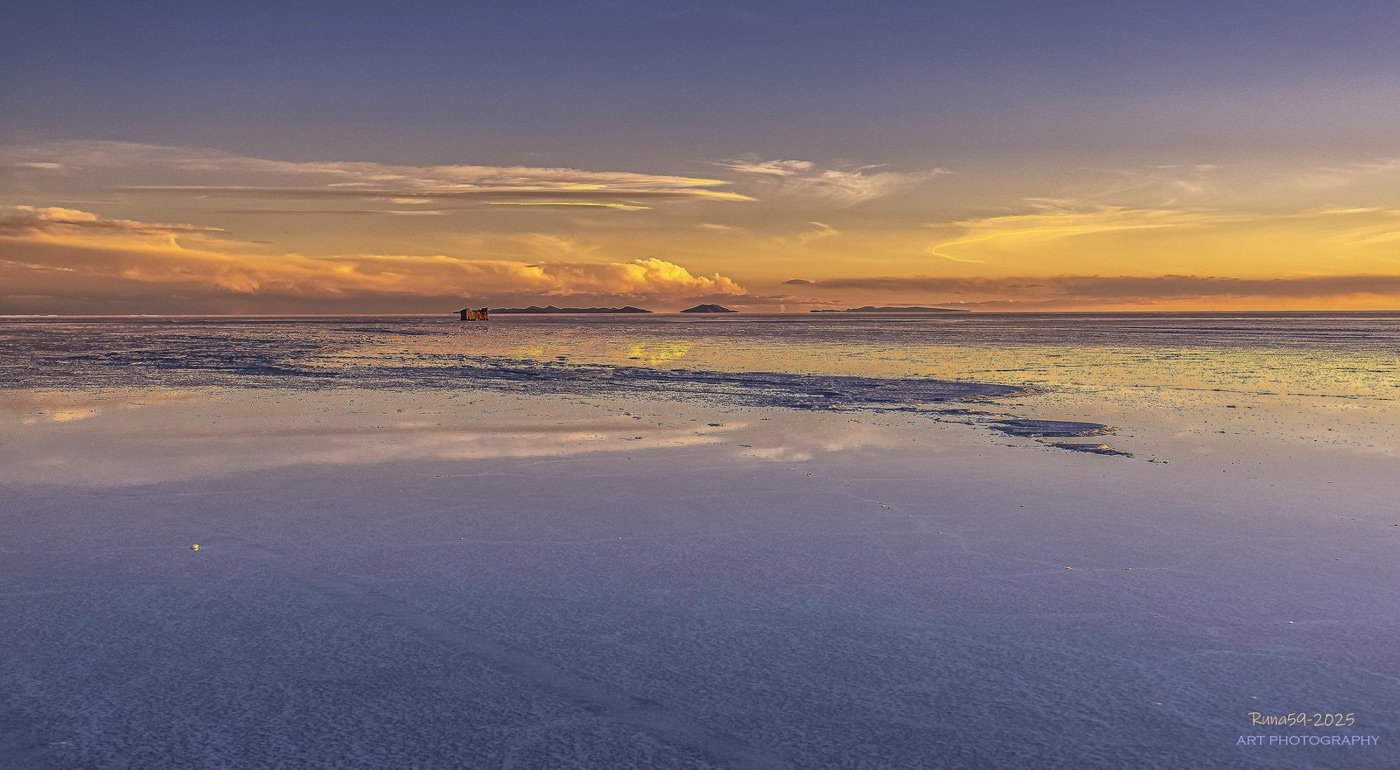
A salar is the floor of a closed basin in the high desert, where rivers from the surrounding mountains have flowed in and evaporated for millions of years, leaving a crust of salt and, beneath it, an aquifer of brine several times saltier than the sea, rich in lithium. The brine is pumped from wells into the ponds and left. About two million litres of it are evaporated for every tonne of lithium carbonate produced, and a car's eight kilograms of lithium metal is about forty kilograms of carbonate, so the car's lithium evaporated on the order of a hundred thousand litres of brine. Multiply by the millions of cars and the salt flats have, in the last decade, lost brine at a rate measured in tens of billions of litres a year.
The industry's position is that this is not water in any ordinary sense. The brine is undrinkable, unusable for farming, and comes from a layer nobody else draws on; evaporating it takes no water from anyone. The fresh water the plants use, for washing the product and for the staff, is small, a few tens of litres per kilogram of carbonate, and it is counted and reported. On that accounting, the lithium in a car carries a few thousand litres of fresh water, which is less than a cotton shirt.
The villages' position, and increasingly the hydrologists', is that the brine and the fresh water are connected. Around the edge of every salar is a zone where the fresh groundwater flowing down from the mountains meets the brine and floats on it, and that zone feeds the lagoons where flamingos breed and the springs and wetlands where the Atacameño communities have farmed for a thousand years. Pump the brine from the middle and the interface moves; the fresh water drains inward to replace it; the lagoons drop and the springs fail. Studies of the Salar de Atacama since 2015 have measured exactly that, and Chile's environmental court found in 2018 that the largest producer had drawn more brine than its permit allowed and had damaged the wetlands. The argument about whether brine is water is, for the people on the salar's edge, already settled.
| Lithium's water, two accountings | Industry | Basin |
|---|---|---|
| Brine evaporated per tonne of carbonate | About 2 million litres, not counted as water | Counted, because it is connected to the fresh water |
| Fresh water used at the plant | A few tens of litres per kilogram | The same, plus what the lagoons lost |
| Per car battery | A few thousand litres | On the order of a hundred thousand, if the brine counts |
The rock, and the rest
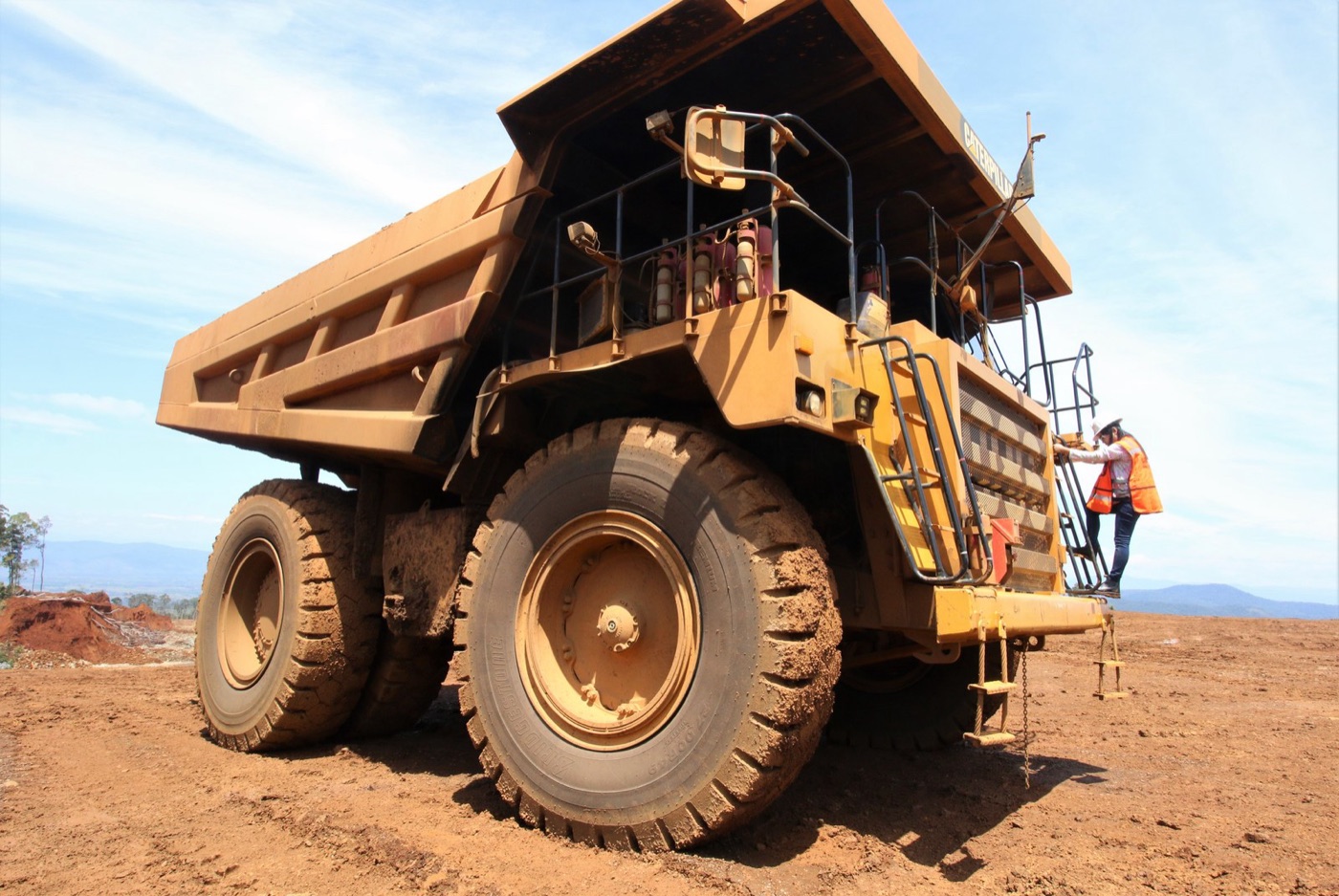
Lithium from spodumene has an ordinary mine's water: the rock is crushed and floated with water, as the copper article describes, in Western Australia's dry goldfields, and the concentrate is shipped to China and roasted and leached with acid and water into carbonate. Per kilogram it uses more fresh water than the brine route and evaporates no aquifer. It is the larger source now and its share is growing.
The rest of the battery is mining of the kind this site has met. Nickel comes increasingly from Indonesia, where laterite ore is leached with acid under pressure and the tailings, once dumped in the sea, are now piled on land in the rainforest. Cobalt comes from the Congo, much of it from industrial mines and a share from hand dug pits where the water problem is the mud and the miners. Graphite comes from China, natural graphite mined and purified with acid and water, synthetic graphite made from petroleum coke in furnaces. Each adds thousands of litres to the car's battery and a river or an aquifer to the map, and the sum, in the models that try, is comparable to the water in the rest of the car.
Argentina and the Salar de Hombre Muerto
Chile's Atacama is the best known salar and the most studied; the argument is the same across the border. Argentina's salars, in Jujuy, Salta and Catamarca, have been developed later and with looser rules, and the projects there have grown fastest in the last five years. At the Salar del Hombre Muerto the producer diverted a river to feed its plant's fresh water needs, and the communities downstream, who had watered their animals from it, took the case to court and won an order in 2024 that the province had to assess the whole basin before permitting more. The same year, the indigenous communities of the Jujuy salars blocked the roads to the plants for weeks over water and land. The pattern repeats: a resource under a desert, a fresh water margin around it that nobody counted, and the people at the edge who did. Argentina's answer, as Chile's, is to move to extraction that returns the brine, and to count the fresh water in the basin rather than at the plant.
Making the cell
The cell factory, the gigafactory of the headlines, is a dry place. The electrodes are coated as a slurry, dried and rolled in halls kept at a humidity near zero, because lithium reacts with water, and the plant's water use is modest, mostly cooling and the ultrapure water the chemistry needs, on the order of a few tens of litres per kilowatt hour of cells. It is the mines and refineries behind it, not the factory, that carry the water.
What changes it
Two things could change the number, and both are already happening.
Direct lithium extraction takes the brine, pulls the lithium out with a resin, a membrane or a solvent, and returns the brine to the aquifer, in days instead of eighteen months, without the ponds. If it works at scale, and the first commercial plants in Argentina and the United States began in the mid 2020s, it removes the evaporation that the whole argument is about and adds a plant with a water demand of its own, for washing the resin, that has to come from somewhere in a desert. The industry expects it to be most of new brine capacity by the 2030s.
Recycling takes a battery at the end of its life, shreds it, and recovers the lithium, nickel, cobalt and copper with acid and water at a plant in Europe, China or the United States. The water per kilogram of recovered metal is a fraction of a mine's, and there is no salt flat. The limit is supply: the batteries built in the 2020s will not come back until the 2030s, and until they do, the metals are mined.
What it teaches
The battery is the product on this site where the definition of water decides the number. Count only fresh water and a car's lithium is a small item spent mostly in a factory. Count the brine, and the lagoons connected to it, and it is one of the largest and it is spent under a desert whose people were there first. The hydrology says the second count is closer to the truth, and the industry's move to extraction that returns the brine is the clearest admission of that. In the meantime the ponds are still there, turquoise and yellow against the salt, and the flamingos have fewer places to stand.
Two million litres of brine per tonne, evaporated in a place with no rain, for a car that will never see it.
Sources
- Flexer, V., Baspineiro, C.F. and Galli, C.I. (2018). Lithium recovery from brines: a vital raw material for green energies with a potential environmental impact in its mining and processing. Science of the Total Environment 639. About 2 million litres of brine per tonne of lithium carbonate.
- Marazuela, M.A. et al. (2019). Hydrodynamics of salt flat basins: the Salar de Atacama example. Science of the Total Environment 651. Brine and freshwater interaction.
- International Energy Agency (2021). The Role of Critical Minerals in Clean Energy Transitions.
- Argonne National Laboratory GREET model, water consumption for lithium ion battery materials and cell manufacture.
- Comisión Chilena del Cobre and SQM, Salar de Atacama brine extraction rates and the 2018 environmental compliance case.
- Photographs: opener: Salar de Atacama, Chile - NASA Earth Observatory by NASA's Earth Observatory (CC BY) via Wikimedia Commons; inline: Crepúsculo salino (Explore) - Flickr - Runa 59 by Runa 59 (CC BY) via Wikimedia Commons; inline: Big Yellow by Kolong (CC BY-SA) via Wikimedia Commons.