Thirsty: Car
A car is about a tonne and a half of steel, aluminium, plastic, glass, rubber and copper, and every one of those was made with water. The estimates run from fifty to four hundred thousand litres, and the spread is the story: where the number comes from, which parts carry most of it, what a paint shop does with water, and why an electric car moves the water from the refinery to the mine.
A car arrives at a showroom dry, polished and smelling of nothing, and it is the product of more water than most of the things on this site put together. Behind the tonne and a half of metal, plastic, glass and rubber are a steelworks, an aluminium smelter, a copper mine, a rubber plantation, a glass furnace, a paint shop and a few thousand suppliers, and every one of them used water. The estimates of how much run from about fifty thousand litres to four hundred thousand, and the spread is a lesson in itself.
This article is about where a car's water goes, why the counts disagree, and what changes when the engine is replaced by a battery.
Why the numbers disagree
Most of the products on this site have one dominant ingredient, and their water is the water of that ingredient: cotton for a shirt, feed for a chicken. A car has hundreds, from dozens of industries, in a chain that reaches four or five tiers of suppliers deep, and the water of a car is the sum of all of them. Nobody has measured it directly. The studies that have tried build it up from the materials and the processes, and they differ on two things: how far back to go, and whether to count water withdrawn or water consumed.
The distinction, which runs through the power station and steel articles, matters more for a car than for anything else here. A steelworks borrows a river and returns nearly all of it; the water it keeps is a tenth of what it takes. A study that counts withdrawal arrives at several hundred thousand litres. A study that counts consumption, the water evaporated or locked into the product, arrives at fifty to a hundred thousand. Both are honest. The European study most often cited found about 52,000 litres consumed per car and a withdrawal several times larger, and a middle figure of around 150,000 is where most summaries land.
| A car's water, by the material | Litres, roughly, consumed |
|---|---|
| Steel, about 900 kilograms | About 3,000 to 5,000 |
| Aluminium, about 150 kilograms | Several thousand; the smelter's electricity is the largest share |
| Plastics and rubber, about 200 kilograms | A few thousand, rubber being a crop |
| Copper, about 25 kilograms | Around 2,000 |
| Glass, paint, textiles, fluids | A few thousand |
| Assembly, including the paint shop | About 3,000 to 4,000 at the plant |
| The refinery that made the fuel, over the car's life | Many times all of the above |
The last row is the one that most counts leave out and that matters most. A litre of petrol takes several litres of water to refine, more if the oil came from sands or fracking, and a car burns tens of thousands of litres of fuel in its life. Counted in, the fuel is the largest water item of a petrol car by a distance, and it is spent at the refinery rather than the factory.
The materials
Steel is most of a car by weight and, per kilogram, among the least thirsty of its materials: the steel article explains why, and the number for a car's worth of it is a few thousand litres consumed. Aluminium, which the industry uses more of every year to save weight, is thirstier, because smelting it takes enormous electricity and the electricity, in most of the world, takes cooling water at the power station; a car's aluminium can carry as much water as its steel at a sixth of the mass. Copper, in the wiring, motors and electronics, is mined from lean ore in dry places, as its own article describes, and the twenty five kilograms in a petrol car carry a couple of thousand litres from the mill and the tailings dam.
Rubber is the crop. Natural rubber is latex tapped from trees in Thailand, Indonesia and Vietnam, and it has a farm's footprint, mostly rain; synthetic rubber comes from oil. A set of tyres, mixed of both, is a few thousand litres. Plastics, a fifth of the car's weight, are oil with a refinery's water. Glass is sand melted with a furnace's cooling water. And the seats, carpets and headliner are textiles, with the footprint the textile article describes, in small quantities.
The tyres, and the rubber tree
The tyres deserve a paragraph of their own, because they are the one part of a car that is partly a crop. Natural rubber, about a fifth of a passenger tyre and more of a truck's, is latex tapped from trees that grow in plantations across Thailand, Indonesia, Vietnam, Malaysia and, increasingly, West Africa, and it carries a plantation's water footprint, mostly rain in the wettest climates on Earth, with the plantation's other costs in cleared forest. Synthetic rubber, the rest of the tyre, comes from oil with a refinery's water. A tyre wears away over its life, at a rate of a kilogram or two per tyre, into the fine black dust that the microplastics article names as the largest single source of microplastic in the environment, washed off the road into the drains and the rivers. The tyre's water at the factory is modest. What it leaves on the road is the part the river notices.
The paint shop
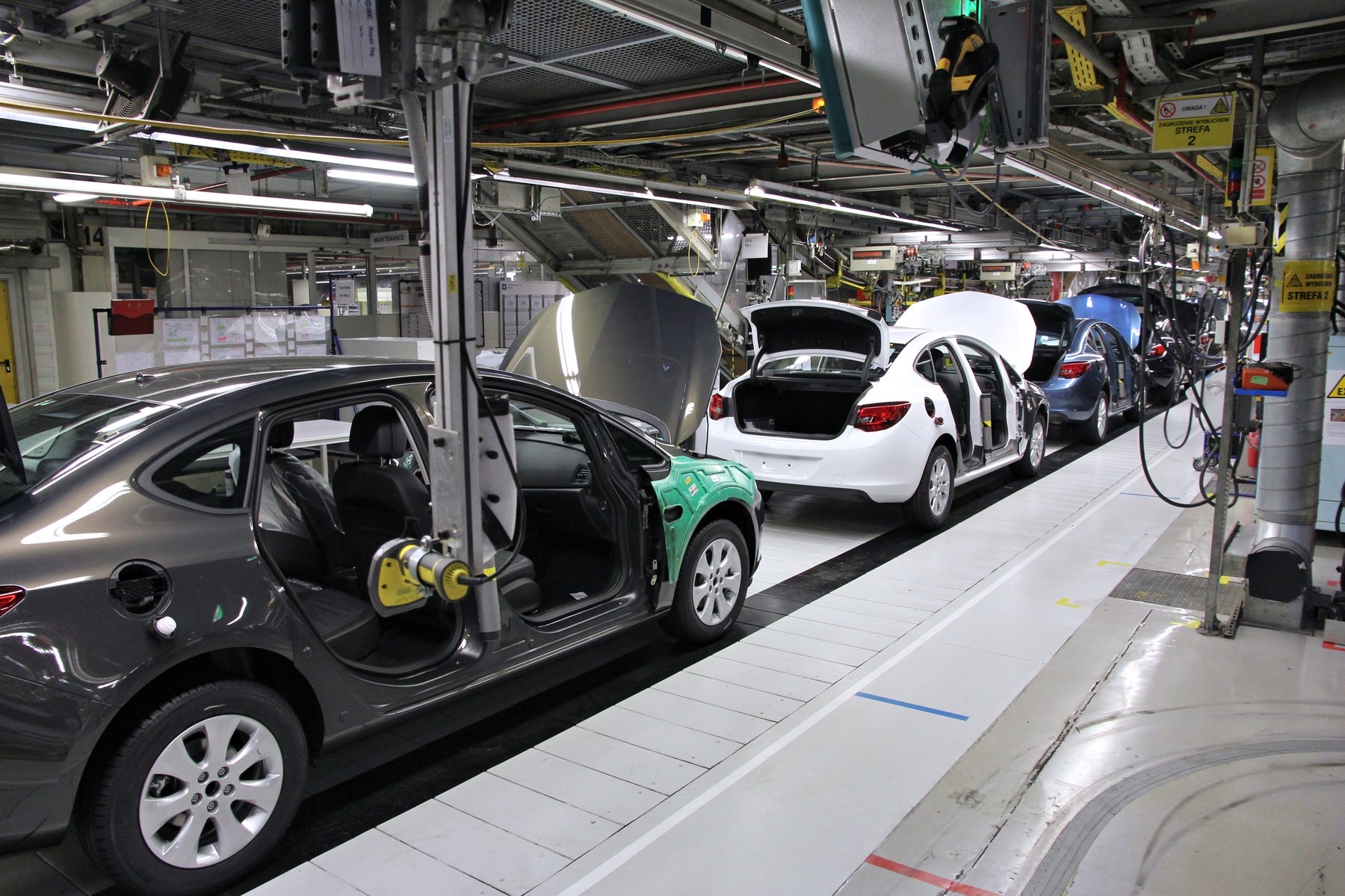
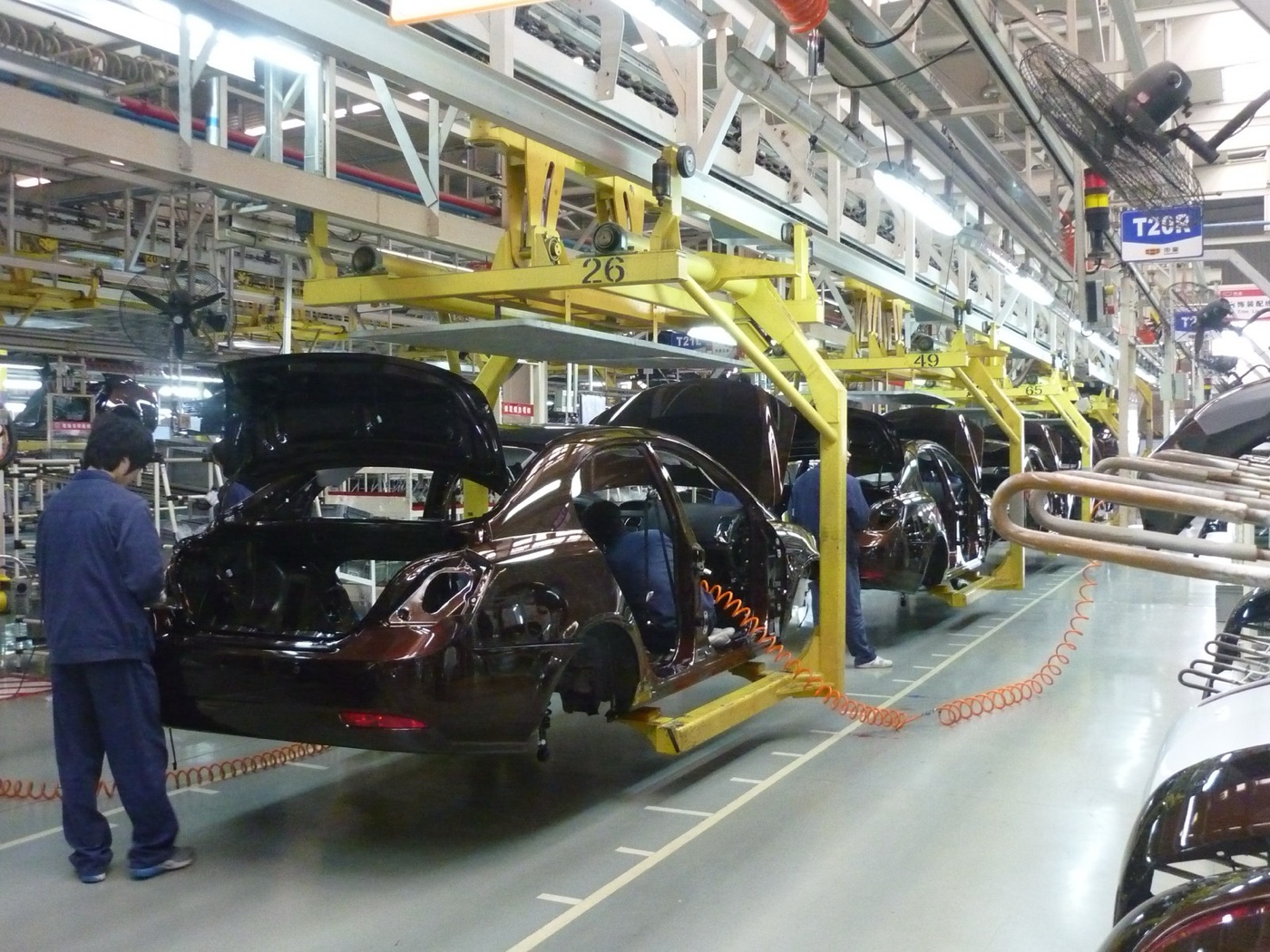
Inside the assembly plant, which takes all of those materials and joins them, the water is in one building. A car body arriving from the press and weld shops is oily, dusty and scratched, and before it can be painted it is cleaned, phosphated to give the paint a grip, electrocoated by dipping the whole shell in a tank of primer under a current, and rinsed after every stage, a dozen baths and sprays in a line several hundred metres long. The paint booths that follow scrub their overspray from the air with curtains of water. The paint shop is, at a typical plant, two thirds of the site's water and nearly all of its wastewater, and it is the reason the industry's water per vehicle, about three to four cubic metres at the better plants, is what it is.
It used to be far more. Plants of the 1980s used ten to twenty cubic metres per car, and the fall since is the same story as every industry on this site: rinses cascaded from the cleanest stage to the dirtiest, water recycled through membranes, dry scrubbing replacing wet in the booths, and, at the newest plants, wastewater treated and reused on site so that the paint shop's discharge is close to nothing. Toyota, Ford and the German makers publish their per vehicle figures, and the figures have halved twice.
| Water at the assembly plant | |
|---|---|
| Per vehicle, well run plant | About 3 to 4 cubic metres |
| Per vehicle, 1980s | About 10 to 20 cubic metres |
| Largest user | The paint shop, about two thirds |
| Other uses | Cooling, testing, cleaning, the staff |
| What leaves | Paint shop effluent: phosphate, metals, solvents, treated on site |
Electric cars
An electric car has no engine, no gearbox, no fuel tank and no exhaust, and a battery that weighs several hundred kilograms. The water moves accordingly.
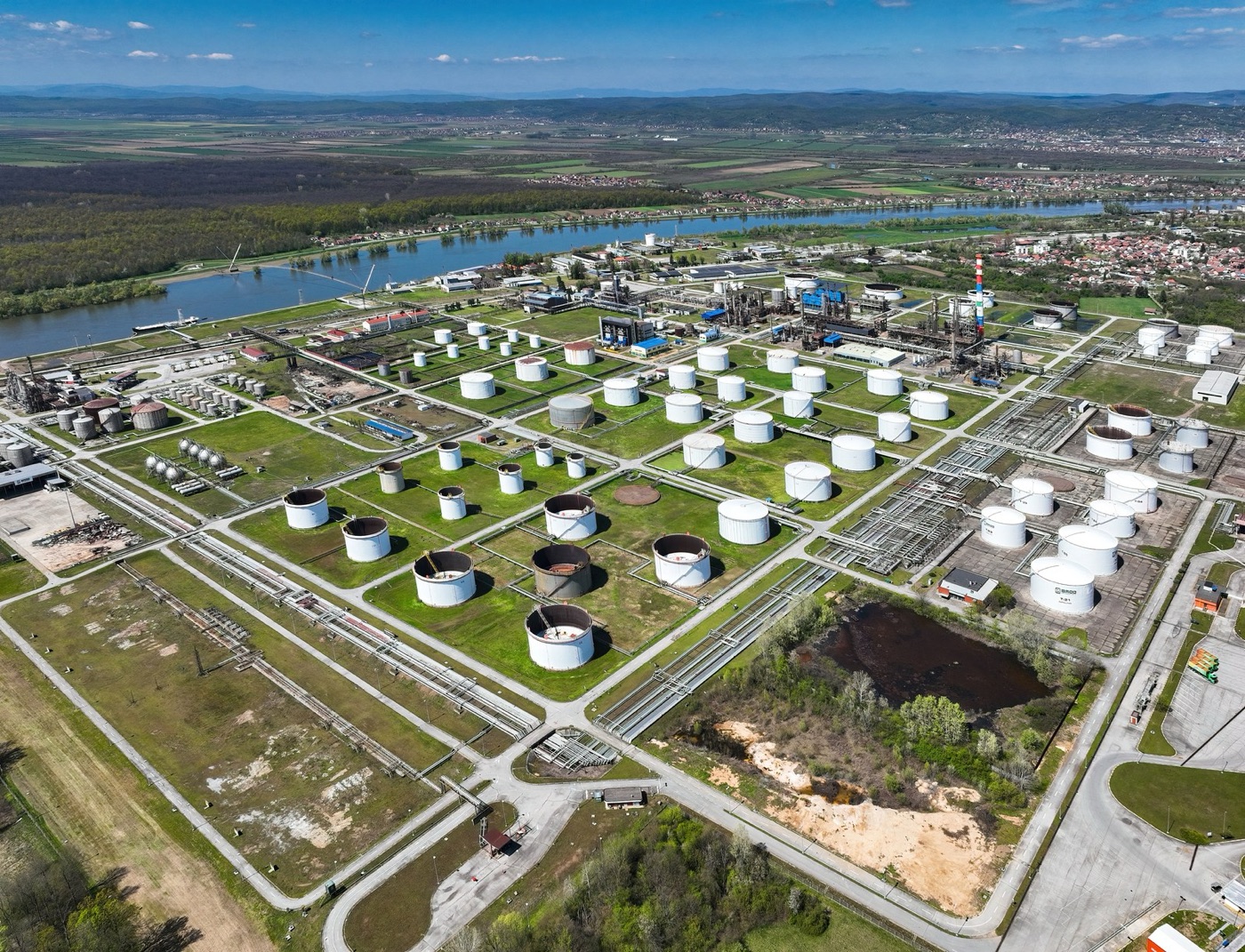
What goes: the engine's iron and aluminium, and, over the car's life, the refinery, which was the largest item. An electric car's electricity has a water footprint too, at the power station, and it is smaller per kilometre than petrol's in most grids and falling as the grids move to wind and solar, which use almost none.
What arrives: the battery. Its lithium comes, for the most part, from the brine ponds of Chile and Argentina, described in the brine article, where the water is evaporated from a desert aquifer, or from hard rock in Australia refined in China. Its nickel comes from Indonesia and Russia, its cobalt from Congo, its graphite from China, and each has a mine and a refinery with a mill's water and a tailings dam. The battery's water, in the estimates that exist, is on the order of the water in the rest of the car's materials, and it is spent, more than any other part, in dry places. And an electric car carries about eighty kilograms of copper, three times a petrol car's, for the reasons the copper article gives.
The result, on the water footprint alone, is a car with a similar number at the factory gate and a much smaller one over its life, because the refinery is gone. The place on the map changes: from the oil fields and refineries of the Gulf, Texas and Russia to the salars of the Atacama and the mines of the Congo and Sulawesi. Whether that is better depends on which aquifer one is standing over.
| Petrol against electric, water | Petrol | Electric |
|---|---|---|
| Materials, at the factory gate | Steel, aluminium, copper, rubber, plastic | The same, minus the engine, plus a battery and more copper |
| Largest lifetime item | The refinery that made the fuel | The battery's minerals, then the power station |
| Where the water is spent | Oil regions and refineries | Salt flats and mines, then the grid |
| Total over the life | Larger, because of the fuel | Smaller, and falling with cleaner grids |
What it teaches
A car is the product on this site whose water is hardest to count and easiest to misstate, because it is the sum of a hundred industries and because withdrawal and consumption differ by a factor of five. The useful facts are simpler than the total. Most of a petrol car's water is in its fuel, spent at a refinery over its life. Most of the factory's water is in the paint shop, and the industry has cut it in half twice. And an electric car does not so much use less water as use it somewhere else, in the deserts where its battery comes from, which is the argument the next decade of mining will be about.
150,000 litres, give or take a factor of three, and the most of it spent before the car had a colour.
Sources
- Berger, M. et al. (2012). Water footprint of European cars: potential impacts of water consumption along automobile life cycles. Environmental Science and Technology 46. About 52 cubic metres consumed per car, with a much larger withdrawal.
- World Steel Association (2015). Water management in the steel industry. About 3.3 cubic metres consumed per tonne of crude steel.
- International Aluminium Institute, Water use in the aluminium industry, and Northey et al. on copper.
- Ford Motor Company and Toyota sustainability reports: water per vehicle at assembly plants, about 3 to 4 cubic metres.
- Argonne National Laboratory GREET model, water consumption for vehicle materials and battery manufacture.
- Photographs: opener: 001 Car factory assembly line - Opel factory in Gliwice, Poland by Marek Ślusarczyk (Tupungato) Photo portf (CC BY) via Wikimedia Commons; inline: Geely assembly line in Beilun, Ningbo by Siyuwj (CC BY-SA) via Wikimedia Commons; inline: Рафинерија нафте Брод (Oil refinery Brod, Republika Srpska) by Petar Milošević (CC BY-SA) via Wikimedia Commons.