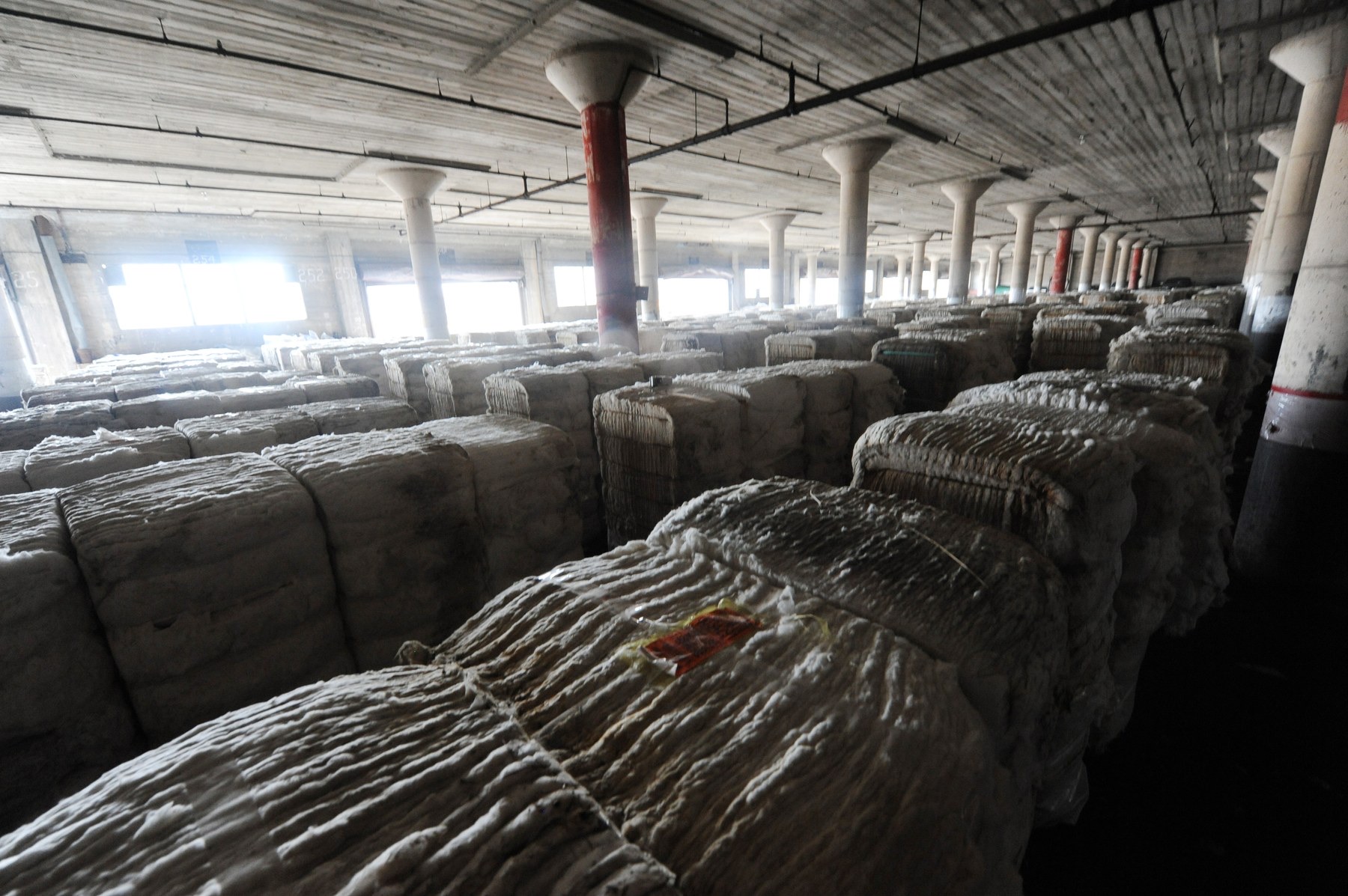
Thirsty: Cotton or Polyester
A cotton t-shirt takes about 2,700 litres of water to make and a polyester one takes a few dozen, and that is the beginning of the argument rather than the end of it. Where each fibre's water is spent, what polyester does to a river that cotton does not, why the washing machine matters more than the field for one of them, and how to choose between them without fooling yourself.
Pick up two plain t-shirts of the same size and colour, one cotton and one polyester, and there is no way to tell from the label which one used more water. The answer is lopsided. The cotton shirt took about 2,700 litres, nearly all of it on a farm months before the shirt existed. The polyester shirt took somewhere between thirty and a hundred, in a chemical plant and a spinning mill. By the measure this site uses most, cotton loses by a factor of forty.
The argument is worth having anyway, because the two fibres do their damage in different places and at different times, and because the fibre the world is choosing, in ever larger quantities, is the one with the small number. This article is about how to compare them honestly.
The two fibres
Cotton is a plant, a shrub of the mallow family that grows in a long hot season and produces a boll of white fibre around its seeds. It has been spun into cloth for five thousand years, and it is still about a fifth of all the fibre the world makes. The largest growers are India, China, the United States, Brazil and Pakistan, and a large share of the crop grows in dry country under irrigation, because the plant likes heat and sun and does not like rain on its open bolls.
Polyester is a plastic. It is made from ethylene glycol and terephthalic acid, both derived from oil or gas, reacted into a polymer called PET, the same material as a drinks bottle, and then melted and pushed through a plate of tiny holes to make filaments that are stretched, textured and spun into yarn. It was commercialised in the 1950s, and it passed cotton as the world's most made fibre around 2000. It is now more than half of everything, and it is what most sportswear, fleece, cheap fashion and blended fabric is made of.
| The world's fibres, roughly | Share of production |
|---|---|
| Polyester | About 54 percent |
| Cotton | About 22 percent |
| Other synthetics, nylon, acrylic, elastane | About 10 percent |
| Wool, silk, linen, hemp | A few percent |
| Viscose and other cellulose fibres | About 6 percent |
Where cotton's water goes
The cotton shirt's 2,700 litres are almost entirely the field. A kilogram of cotton lint takes, in the global average, around 10,000 litres to grow, and a t-shirt holds about a quarter of a kilogram. The water is the rain the plant took from the soil, the irrigation that made up the rest in dry country, and the volume needed to dilute the fertiliser and pesticide that ran off, cotton being among the most sprayed crops on Earth. Ginning, spinning, weaving and dyeing add a few hundred litres more, and the dyeing, as the textile article on this site describes, is where the water comes out dirty.
The number that matters is the split. Cotton grown in the rain fed south of the United States or in Brazil is mostly green water, rain that fell on a field and would have fallen anyway. Cotton grown in Uzbekistan, Egypt, Pakistan or Xinjiang is mostly blue water, pumped from rivers that had other uses, and the Aral Sea article tells what that did to one of them. Two shirts with the same footprint can carry very different burdens.
| A cotton t-shirt, about 250 grams of fibre | Litres |
|---|---|
| Growing the cotton, global average | About 2,500 |
| Ginning, spinning, weaving | A few tens |
| Dyeing and finishing | A hundred or two, and it comes out dirty |
| Total | About 2,700 |
Where polyester's water goes
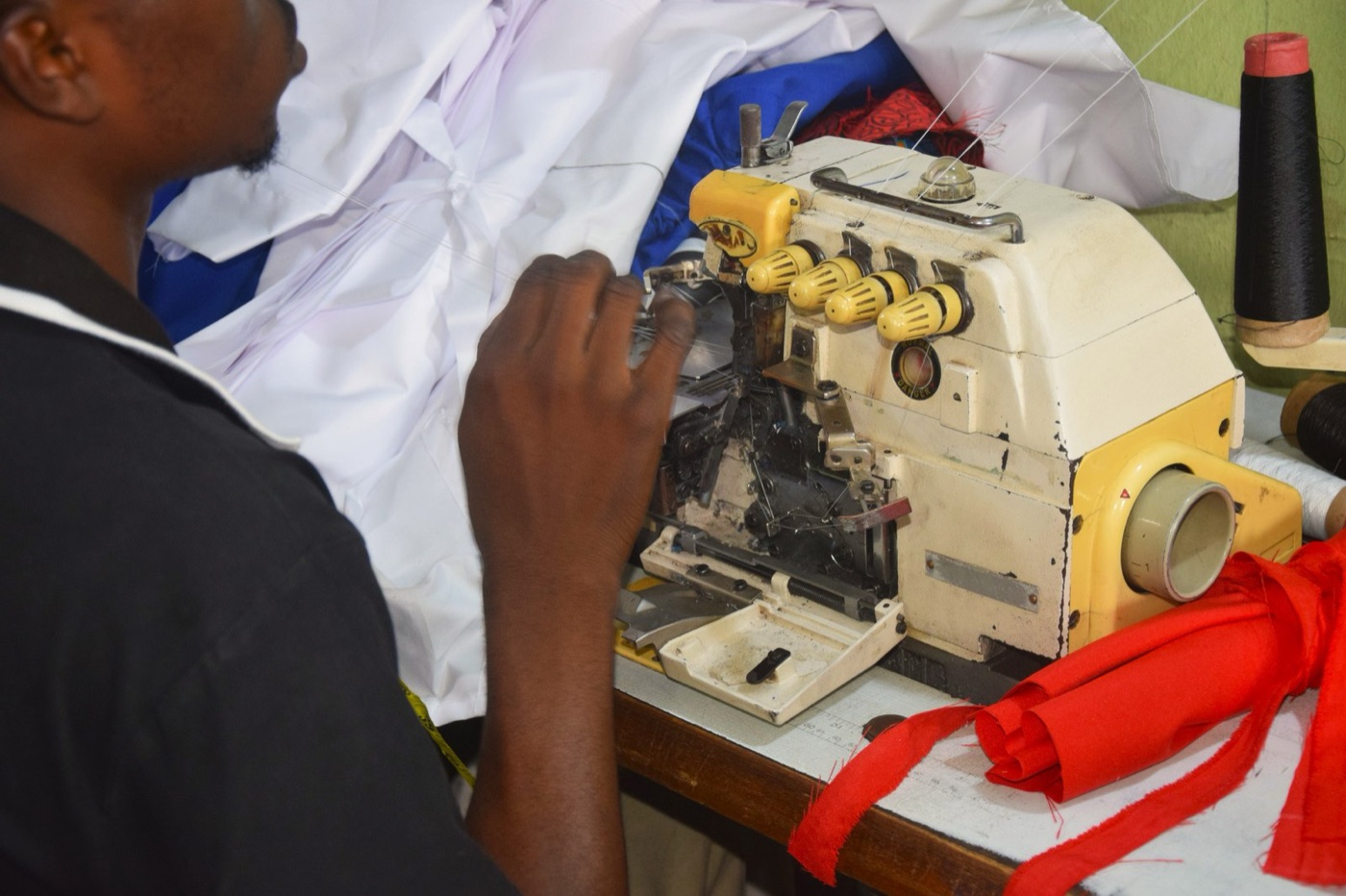
The polyester shirt's water is spread thin across an oil well, a refinery, a polymer plant and a mill. Extracting and refining the oil uses water, mostly for cooling, and returns most of it. Making PET is a chemical process with cooling water and some process water. Spinning the filament uses water to cool and wash it. Dyeing polyester is done under pressure at high temperature and uses somewhat less water per kilogram than cotton, with a dye chemistry that is harder to treat. Add it up, in the estimates that have tried, and a polyester shirt lands at a few tens of litres, with the widest estimates reaching a hundred.
The number is small because there is no field. A plastic fibre does not drink or transpire, and the whole of its water is industrial, withdrawn and mostly returned, in the places where oil is refined and polymers are made, which are, on the whole, places with water to spare.
The dye house, for both
Between the fibre and the shirt is the dye house, and it treats the two fibres differently in a way that matters for the river. Cotton takes reactive dyes in a warm bath of salt and alkali, and a large share of the dye, often a third, never fixes to the fibre and leaves with the rinse, along with the salt, which is the coloured, salty effluent the textile article describes. Polyester takes disperse dyes at high temperature under pressure, fixes more of them, and uses somewhat less water and no salt, and its effluent carries the carriers and levelling agents the process needs, which are harder for a treatment plant's bacteria to eat. Neither is clean. Cotton's dye water is larger and saltier; polyester's is smaller and stranger. A shirt of either fibre dyed at a mill with a working effluent plant, of which there are more every year in Tirupur and Dhaka, carries none of this to the river; a shirt dyed at one without carries all of it. The label rarely says which.
Where the argument turns
If the story ended at the shop, polyester would be the plain answer for anyone worried about water, and the fashion industry, which has moved to it for cost rather than for water, could claim the credit. The story does not end at the shop, and there are three places it goes on.
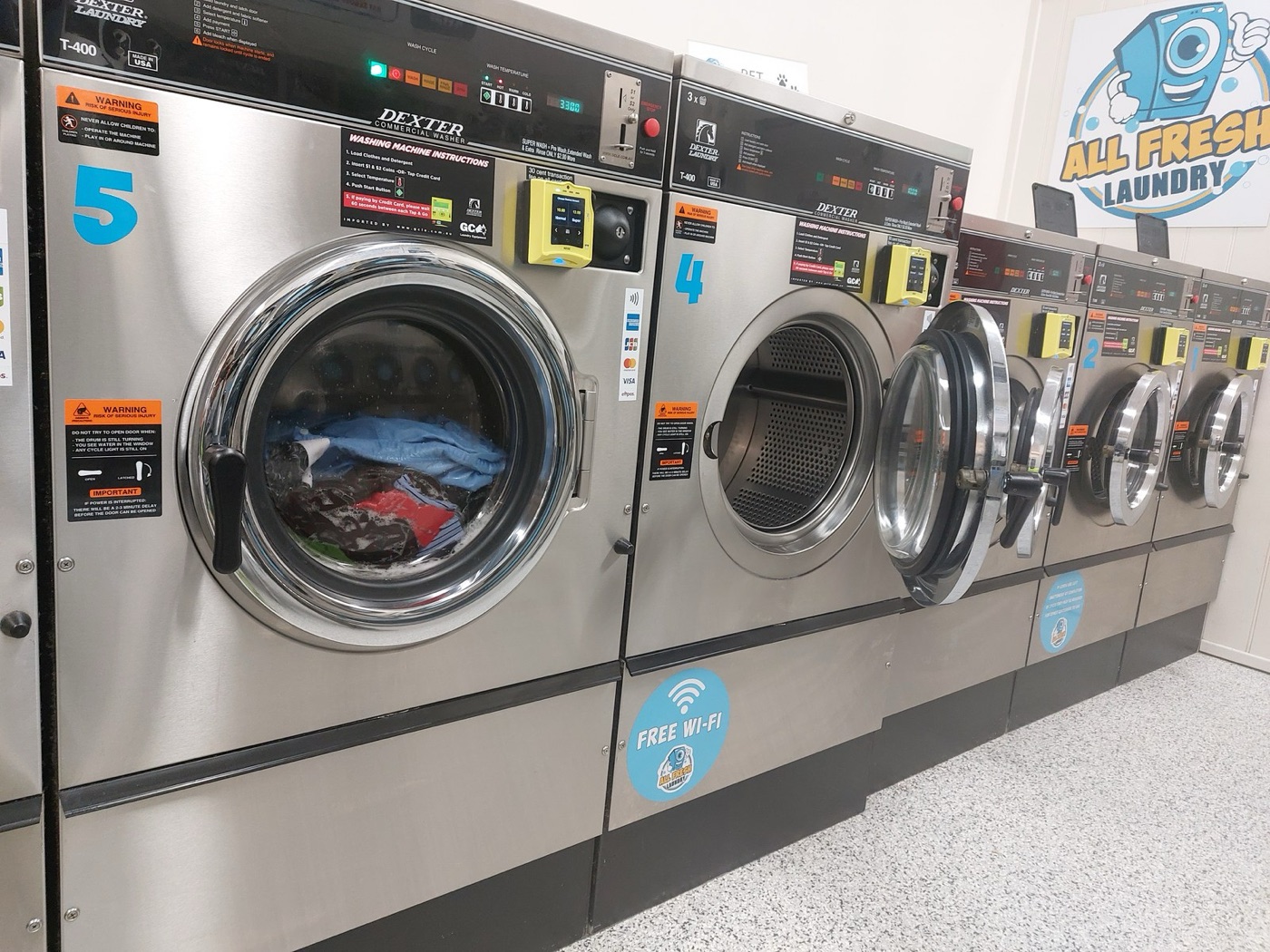
The first is the washing machine. Every wash of a polyester garment sheds plastic fibres, and the measured numbers are large: several hundred thousand fibres from a single load of synthetic clothes, most of them too fine for the machine's filter or the sewage works. They go to the sludge, and from the sludge to the fields, and from the fields and the outfalls to the sea, where they are the largest share of the microplastic in the oceans by count. The microplastics article on this site describes what is and is not known about the harm. Cotton sheds fibres too, in similar numbers, and they are cellulose, which rots in weeks. Polyester's do not.
The second is the end. A cotton shirt in a landfill or a compost heap breaks down in months. A polyester one lasts for centuries, and most polyester clothing is landfilled or burned, because the recycling of textile to textile is a small fraction of what is claimed for it. The fibre with the small water footprint is the one that never leaves.
The third is the oil. Polyester is about sixty million tonnes a year of plastic made from fossil fuel, and its carbon footprint per kilogram is higher than cotton's, before the microfibres and the landfill are counted. The water saved on the farm is paid for elsewhere.
| The comparison, honestly | Cotton | Polyester |
|---|---|---|
| Water to make one shirt | About 2,700 litres | A few tens of litres |
| Where the water is | A field, often irrigated in a dry place | Refineries and mills, mostly returned |
| What washing sheds | Cellulose fibres, which rot | Plastic fibres, which do not |
| At the end | Breaks down in months | Lasts for centuries |
| Raw material | A crop, with pesticide and fertiliser | Oil or gas |
| Durability | Good | Often better, which is the point below |
What the number does not say
The water footprint is a measure of water, and it says nothing about plastic, oil or what a garment does in a landfill. That is a limit of the method, not an error in it, and it is the reason this site keeps saying that a number is the start of a question. Anyone who chooses polyester for its water footprint alone has answered the water question and ignored the others; anyone who chooses cotton for its naturalness has ignored the Aral Sea. The two fibres are bad in different ways, and the numbers make it possible to say which way matters where.
There is a fourth thing, and it is the one that decides. A shirt worn a hundred times carries a hundredth of its footprint per wear, whichever fibre it is. The garments with the largest water and plastic footprints per wear are the ones bought cheap and worn a few times, and those are, overwhelmingly, polyester, because polyester is what cheap is made of. The fibre with the small number is also the fibre of the habit that makes the numbers large.
What to do with it
Three things follow, and none of them is a fibre.
Buy fewer garments and wear them longer, which divides both footprints by the number of wears. Wash synthetic clothes less, colder, and in a bag or with a filter that catches the fibres, which the microplastics article describes and which France now requires in new machines. And when buying cotton, prefer it grown on rain, which the better labels now certify, over cotton grown on a river that no longer reaches the sea. The fibre matters less than the field it came from and the number of times it is worn.
2,700 litres against sixty, and the shirt that wins is the one still in the drawer in ten years.
Sources
- Mekonnen, M.M. and Hoekstra, A.Y. (2011). The green, blue and grey water footprint of crops and derived crop products. Value of Water Research Report 47. Cotton lint and fabric.
- Chapagain, A.K. et al. (2006). The water footprint of cotton consumption. Ecological Economics 60. About 2,700 litres per cotton t-shirt.
- Textile Exchange, Preferred Fiber and Materials Market Report 2023: polyester 54 percent of global fibre production, cotton about 22 percent.
- Napper, I.E. and Thompson, R.C. (2016). Release of synthetic microplastic plastic fibres from domestic washing machines. Marine Pollution Bulletin 112. Up to 700,000 fibres per wash.
- Ellen MacArthur Foundation (2017). A New Textiles Economy. Fibre production, water and microfibre release.
- Photographs: opener: FEMA - 38943 - Cotton Bales Damaged by Hurricane Ike in Texas by Jocelyn Augustino (public domain) via Wikimedia Commons; inline: Sewing a new cloth with polyester fabric 1 by Kambai Akau (CC BY-SA) via Wikimedia Commons; inline: Laundromat Washing Machines & Laundry Equipment by ArtOfHappiness (CC BY-SA) via Wikimedia Commons.