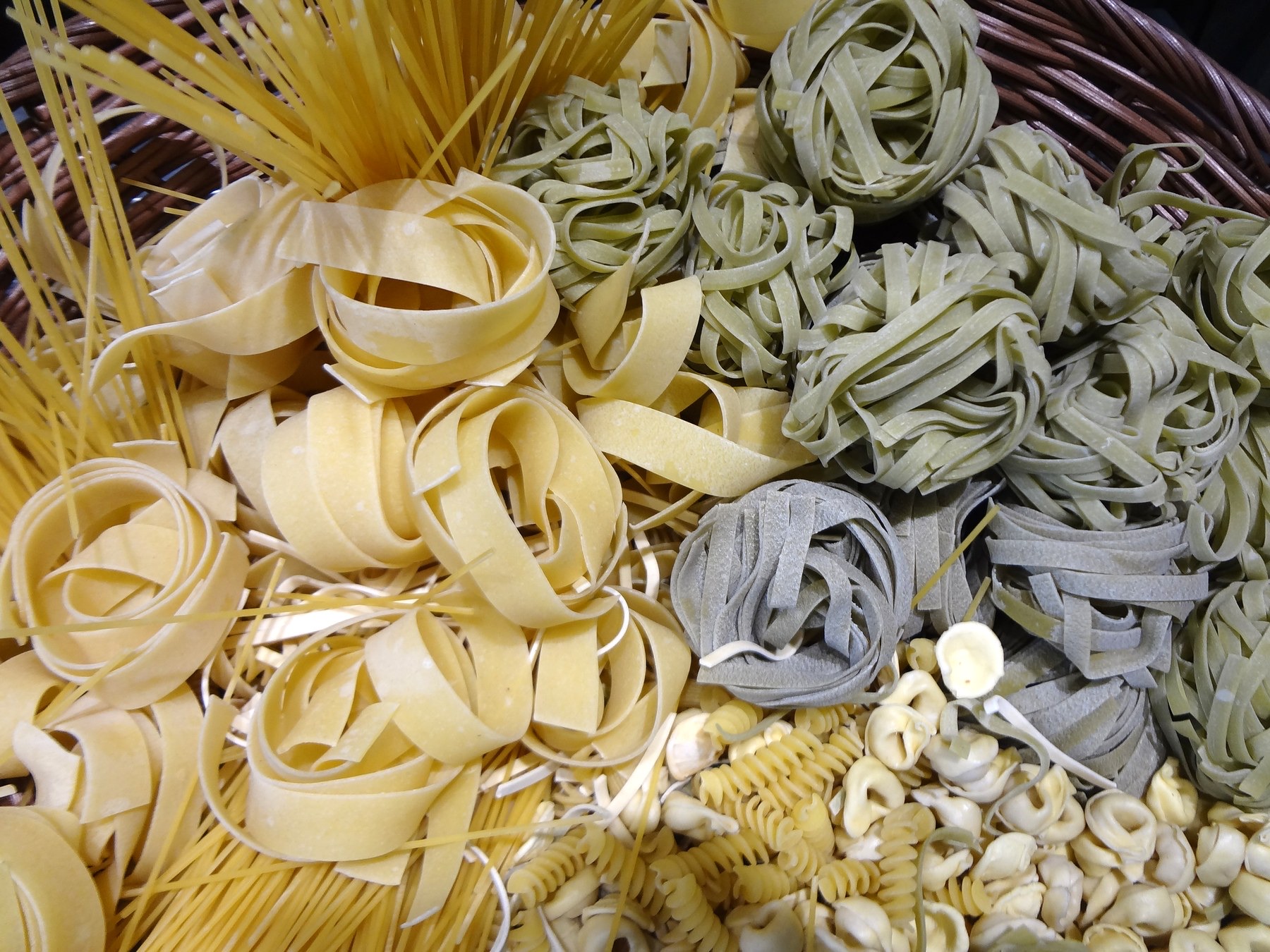
Thirsty: Pasta
A kilogram of dry pasta carries about eighteen hundred litres of water, nearly all of it in the durum wheat, and the pot it is cooked in adds ten more, which is the largest share of any food's water that happens in the kitchen. Where pasta's water goes, why durum wheat is a dry country crop that Italy imports from Canada, what a pasta factory uses, why the cooking water matters and what the argument about it in Italy was, and what a plate of spaghetti carries against the sauce on top of it.
A kilogram of dry pasta carries about 1,850 litres of water, and about 1,800 of them fell as rain on a field of durum wheat before the grain was harvested. The bread article on this site does this arithmetic for soft wheat; pasta's is the same on a harder grain, grown in drier places, with a factory that adds almost nothing and a kitchen that adds, per kilogram, the largest share of any food on this site. This article is about where pasta's water goes, why the crop is a dry country's and Italy imports it from Canada, what a factory uses, what the pot uses and why that became an argument in Italy, and what a plate of spaghetti carries against the sauce on top of it.
The grain
Durum is a hard, amber wheat with a high protein content and a gluten that makes a dough which holds its shape when extruded and dried, which is why pasta is made from it and bread, for the most part, from softer wheats. Durum is a crop of hot dry summers: the south of Italy, Puglia and Sicily above all, where it has been grown since the Romans; the Canadian prairies, which grow more of it than any country, on the summer rain of Saskatchewan; the northern plains of the United States; Kazakhstan; and the dry parts of Greece, Turkey, Syria and North Africa, where it is the wheat of couscous and bulgur. It is sown in autumn or spring, harvested in high summer, and grown almost entirely on rain, so that the footprint is green in the way the wool and sunflower articles use the word: water that fell on farmland that would have grown something else, or nothing.
A hectare yields two to four tonnes, less than soft wheat, which is why the per kilogram figure is a little higher than bread's, and the grey share, for the fertiliser that runs off, is a few percent.
| Water per kilogram | Litres |
|---|---|
| Durum wheat, grain | About 1,800 |
| Dry pasta | About 1,850 |
| Bread, for comparison | About 1,600 |
| Rice | About 2,500 |
| The pot, per kilogram cooked | About 10 |
| A 100 gram serving, dry | About 185, plus a litre in the pot |
Italy and Canada
Italy makes about a third of the world's pasta, eats more of it per person than anywhere, about twenty three kilograms a year, and grows about half the durum it needs, on the dry plains of the south where the yields are modest and the drought years, which the olive oil article on this site describes for the same fields, take a share. The rest is imported, and the largest supplier for most of the last thirty years has been Canada, whose prairies grow durum at a scale and a protein content the south of Italy cannot match, with the United States, Greece, Kazakhstan and, in some years, Australia behind. The argument in Italy about foreign wheat in Italian pasta, which produced a labelling law in 2017 requiring the origin of the grain on the packet, was about farmers' prices and about a herbicide that Canadian growers use before harvest and Italian ones may not. The water was never in it. A bowl of spaghetti in Rome carries, for the share that came from Canada, the rain of Saskatchewan, which is water nobody in Saskatchewan was short of.
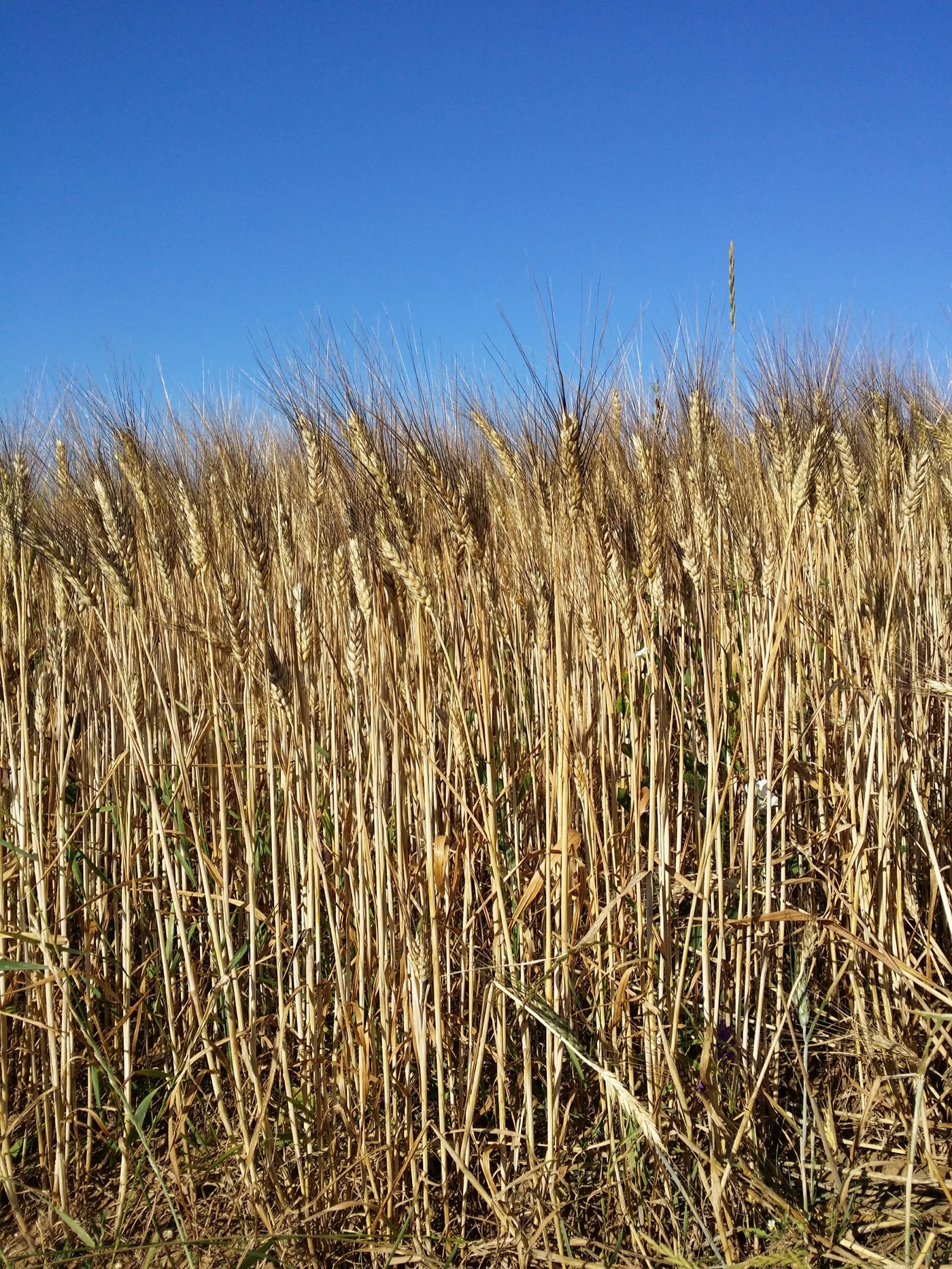
The pattern is the virtual water article's on this site: a dry country importing the crop of a wet one's rain, in the form that travels best, which is grain, and the trade flows from the places with rain to spare to the places without.
The factory
The pasta factory is a mill and an extruder. The durum is milled to semolina, the coarse yellow flour, mixed with about a third of its weight in water into a stiff dough, forced through bronze or teflon dies into the shape, and dried, slowly, in long warm tunnels that take the moisture back out to about twelve percent so that the pasta keeps for years. The water that went in comes out again as vapour in the drier, and the factory's net use is small: a few litres per kilogram for the mixing, the cleaning of the lines and the cooling, which is a fraction of a percent of the grain's. The effluent is starch water from the cleaning and is mild. Pasta is one of the few foods on this site whose processing is close to nothing in water and modest in energy, because the product is dry and the shelf life is long, which is why it has been the food of dry countries and long voyages for five hundred years.
The pot
The pot is where the cook's share is. The instruction on every packet, a litre of water for every hundred grams of pasta, means ten litres for a kilogram, which is more water per kilogram than any other food on this site uses in the kitchen, and all of it is brought to the boil and, at the end, poured down the sink. The ten litres are about half a percent of the pasta's footprint and, in the terms the dishwasher and hot tap articles use, they are the only part of it the cook can change. They are also most of the energy: the life cycle studies of a plate of pasta put the cooking at a third or more of its energy footprint, because heating ten litres of water to the boil and holding it there for ten minutes is more energy than the milling, the extrusion, the drying and the transport together.
In 2022 the Italian physicist Giorgio Parisi, who had just won a Nobel prize, said in a post that pasta could be cooked with the heat turned off after two minutes and the lid on, saving most of the gas, and Italy had an argument. The chefs said the texture suffered; the industry's association published a guide agreeing that the heat could be turned off and the lid put on, and that less water could be used than the packet said; and the physicists pointed out that the pasta does not know how much water it is in, only how hot. The argument was about gas and tradition, and it was, underneath, the one this site keeps finding in the kitchen: the water that runs while nobody is using it, or in this case boils.
| The pot | |
|---|---|
| Packet instruction | 1 litre per 100 grams; 10 litres a kilogram |
| Share of the pasta's water | About half a percent |
| Share of a plate's energy | About a third or more, in the boiling |
| Less water | Works; the pasta needs to be covered and stirred |
| Lid on, heat off | Works, after the water returns to the boil |
| The water afterwards | Down the sink; or on the plants, cooled, if unsalted |
The sauce
The pasta is the smaller half of the plate. A hundred grams of dry pasta carries about 185 litres of water and a litre in the pot; the tomato sauce on it, at a hundred and fifty grams of tomatoes, carries about thirty, from the tomato article on this site; the olive oil, a tablespoon, carries about two hundred, from the olive oil article; the cheese, twenty grams of Parmesan, carries about a hundred, from the cheese article; and a meat sauce with a hundred grams of minced beef carries fifteen hundred. A plate of spaghetti with tomato and cheese is about five hundred litres and a plate of bolognese is two thousand, and the difference is the beef, which is the finding every meal on this site produces. The pasta itself, the thing the plate is named for, carries rain on a dry field, and less of it per calorie than almost any staple except the potato.
The dry countries' food
Pasta, couscous and bulgur are the durum foods, and they are the foods of the countries with the least water around the Mediterranean, because durum grows on the winter rain of a dry climate and its products keep without refrigeration through a hot summer. A kilogram of couscous in Morocco or bulgur in Turkey carries the same water as a kilogram of spaghetti, on the same grain, from the same kind of field, and the countries that grow the most of it are among the driest on this site. The trade runs the same way as Italy's: North Africa imports durum from Canada and France in the years its own rain fails, which is more years than it was, and the water in a plate of couscous in Algiers is, in those years, the rain of the Canadian prairie shipped as grain. It is the virtual water pattern that this site finds in every staple, and durum is the clearest case of a crop bred for the dry and now bought from the wet.
What it teaches
Pasta is the food on this site whose water is almost entirely rain on a dry field, whose factory adds nothing, and whose kitchen adds the one share the cook can see: ten litres in a pot, boiled and poured away, which is the argument Italy had with a physicist and the argument this site has with every tap that runs while nobody is using it. The plate's water is in the sauce. The pasta's is in Puglia and Saskatchewan, and it fell from the sky.
1,850 litres a kilogram, ten of them in the pot, and a Nobel laureate who said to put the lid on.
Sources
- Mekonnen, M.M. and Hoekstra, A.Y. (2011). The green, blue and grey water footprint of crops and derived crop products. Durum wheat and pasta about 1,850 litres per kilogram; wheat global average about 1,800.
- International Pasta Organisation and UN.A.FOOD Italia, world pasta production about 17 million tonnes; Italy about 3.6 million tonnes.
- Italmopa and Coldiretti, Italian durum supply: domestic production about 4 million tonnes; imports about 2 million, mainly Canada, the United States, Greece and Kazakhstan.
- Barilla Center for Food and Nutrition, Double Pyramid and pasta life cycle assessment: cooking about 30 to 40 percent of the energy footprint of a plate of pasta.
- Parisi, G. (2022). Statement on passive cooking of pasta, and the Italian pasta industry's response; Unione Italiana Food guidance on cooking water ratios.
- Photographs: opener: (Pasta) by David Adam Kess (pic.2) by David Adam Kess (CC BY-SA) via Wikimedia Commons; inline: Triticum durum sl3 by Stefan.lefnaer (CC BY-SA) via Wikimedia Commons; inline: Cooked dry pasta by MarkTraceur (CC BY-SA) via Wikimedia Commons.