Plain Water: Hard water
The scale in a kettle, the film on a shower screen and the reason soap will not lather in some towns are all the same two minerals. What hardness is, why it is the most harmless of water's complaints and the most expensive for industry, and what a softener actually does with it.
Move house from Manchester to London and the first sign that the water is different comes from the kettle. Within a month there is a crust on the element, white and rough, and tea has a faint film on it. The shower screen clouds. Soap needs more rubbing. Nothing tastes wrong, nobody is ill, and the water company will confirm, if asked, that the water is perfectly good. It is simply hard.
Hardness is the one property of water that most people in the temperate world have an opinion about, and it is the one the industry worries about least, at least for drinking. For a boiler or a membrane plant it is another story, and the two stories are the subject of this article.
What hardness is
Hardness is the amount of calcium and magnesium dissolved in water. It is a part of the total dissolved solids described in an earlier article, the part that came from rock, and it is reported, for historical reasons, as if all of it were calcium carbonate: milligrams per litre as CaCO₃.
The mechanism is geology. Rain falls carrying a little dissolved carbon dioxide, which makes it faintly acid. Where it soaks through chalk or limestone, that weak acid dissolves a little of the rock, and the water arrives at a well or a spring carrying calcium and bicarbonate. Where it soaks through granite, sandstone or peat, there is little to dissolve, and the water stays soft. A map of water hardness is, very nearly, a map of the rock underneath.
| Classification | Hardness, mg/L as calcium carbonate |
|---|---|
| Soft | Below 60 |
| Moderately hard | 60 to 120 |
| Hard | 120 to 180 |
| Very hard | Above 180 |
London's water, most of it drawn from the Thames and from wells in the chalk beneath the city, runs at around 280 milligrams per litre, which is very hard by any classification. The water of Manchester, Glasgow or Cardiff, coming off hills of hard rock, sits at a tenth of that. Much of the north of France, Belgium, the Netherlands and the American Midwest is hard; Scandinavia and most mountain regions are soft.
Temporary and permanent
There are two kinds of hardness, and the difference explains the kettle.
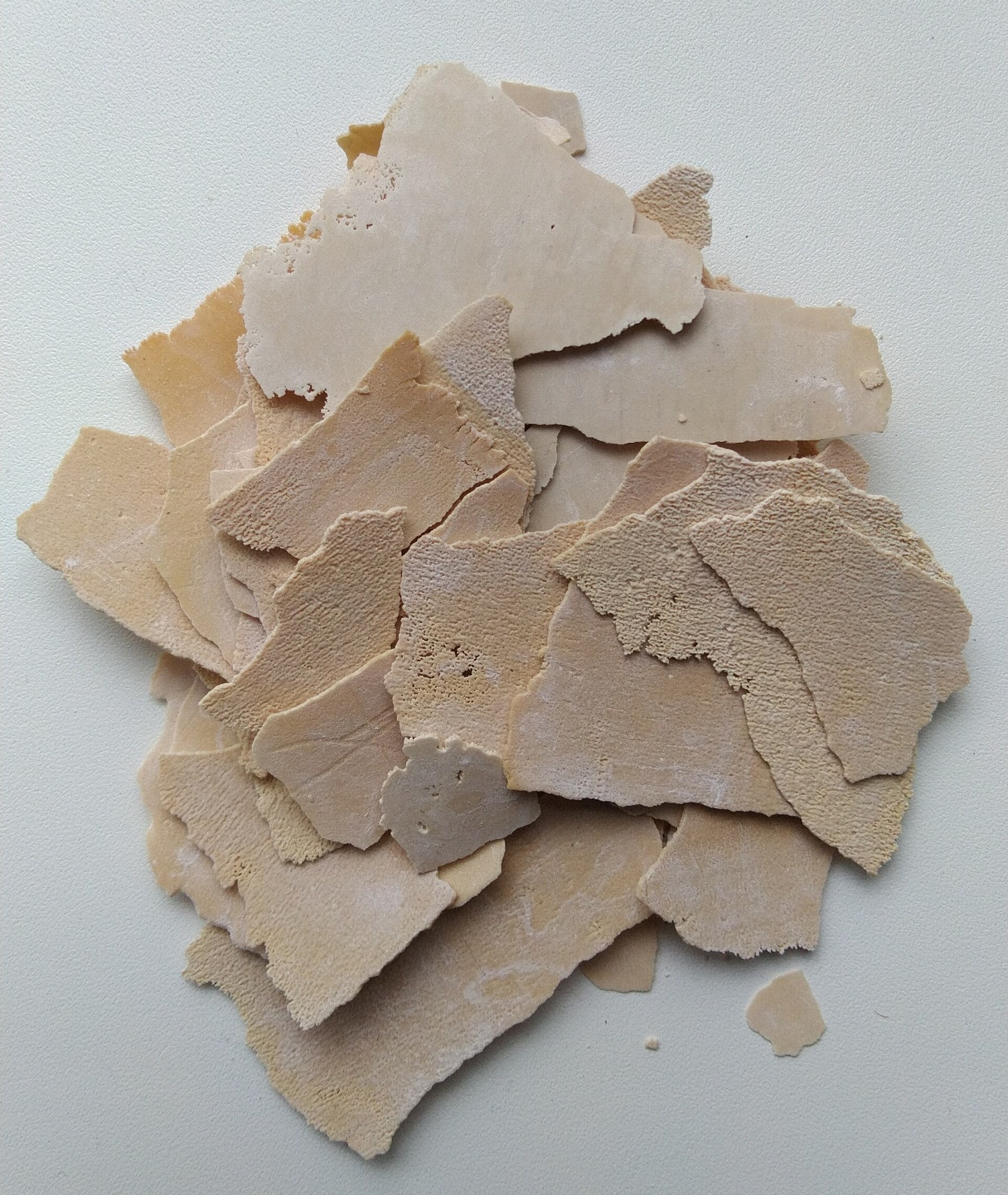
Calcium that arrived as bicarbonate is called temporary hardness, because heating the water drives off carbon dioxide and the calcium falls out of solution as calcium carbonate, which is limescale. The kettle, the boiler, the hot water pipe and the shower head are where this happens, because they are where the water is heated. The scale is the rock the water dissolved on its way in, put back.
Calcium and magnesium that arrived as sulphate or chloride are called permanent hardness, because heating does not remove them. They stay dissolved, and they are the part that stops soap lathering: the soap reacts with the calcium to form an insoluble scum, and only once all the calcium has been used up does the rest of the soap do its job. That is why hard water areas use more soap and more detergent, and why washing powders contain softening agents.
| Kind | What it is | What removes it |
|---|---|---|
| Temporary | Calcium and magnesium bicarbonate | Heating, which precipitates it as scale |
| Permanent | Calcium and magnesium sulphate and chloride | A softener or a membrane |
The most harmless complaint
For drinking, hardness is close to harmless, and it is worth saying so plainly because a great deal of equipment is sold on the suggestion otherwise.
The World Health Organization sets no health based limit for hardness. Calcium and magnesium are nutrients, and hard water contributes a small but real share of both to the diet; a number of studies have looked for a protective effect of hard water on the heart, and the evidence is suggestive without being settled. What hardness does affect is taste, which people acclimatise to, and appliances, which they do not. Kettles fur, dishwashers need salt, and the hot water cylinder in a very hard water house can lose a meaningful share of its efficiency to the scale on its element. These are costs, and they are the reason domestic softeners exist, but they are not risks.
Soft water has its own complication, which is that it is slightly corrosive. Water with little dissolved in it dissolves what it finds, and what it finds in an old house is the pipes. Soft water regions are where lead pipes released the most lead, and it is why utilities in soft water areas sometimes harden their water slightly on purpose, with lime, to protect the network.
What a softener does
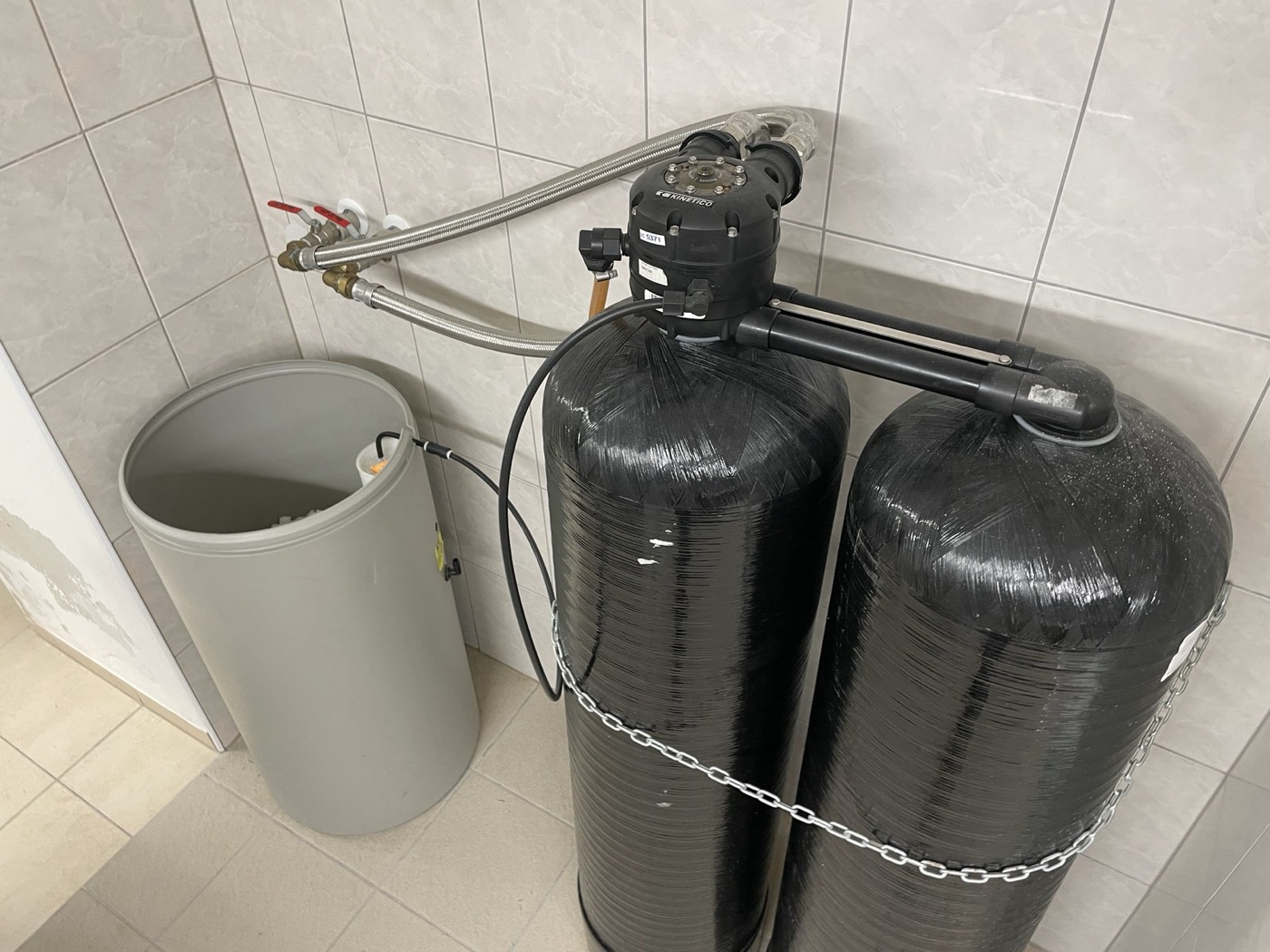
A domestic water softener is a small version of the ion exchange process described in the article on TDS. Water passes through a cylinder of resin beads that hold sodium ions on their surface. Calcium and magnesium in the water are held more strongly than sodium, so they swap places: the calcium sticks to the resin and the sodium goes into the water. The water leaves soft. The resin, once it has filled up with calcium, is reset by flushing it with strong brine, which pushes the calcium off and reloads the sodium, and the calcium rich rinse goes to the drain.
Three things follow. The softened water carries a little more sodium, which is why softeners are usually plumbed to leave one tap unsoftened for drinking. The salt has to be bought and topped up. And the hardness is not destroyed but moved, into the brine that went down the drain, which is the story of nearly every water treatment on this site.
How it is measured
Hardness is measured by titration. A measured volume of water is coloured with an indicator dye that turns red in the presence of calcium and magnesium, and a solution of a chemical called EDTA, which binds those two metals and nothing else, is added drop by drop until the colour turns blue. The volume of EDTA used is the hardness. It is a five minute test that has not changed in seventy years, and the same chemistry, dried onto a paper strip, is what a domestic hardness test kit contains.
The units are a small tangle of history. The industry reports hardness as milligrams per litre of calcium carbonate, whether or not the calcium arrived as carbonate, because it makes the arithmetic of softening simple. Germany reports it in German degrees, one degree being ten milligrams of calcium oxide per litre; France in French degrees, ten milligrams of calcium carbonate; and Britain, for a long time, in Clark degrees, one grain of calcium carbonate per imperial gallon. Dishwasher instructions still carry all four. London's 280 milligrams per litre is about 16 German degrees, 28 French, or 20 Clark, and a dishwasher set for the wrong scale will either waste salt or fur up.
Where hardness costs money
Industry cares about hardness far more than households do, for two reasons.
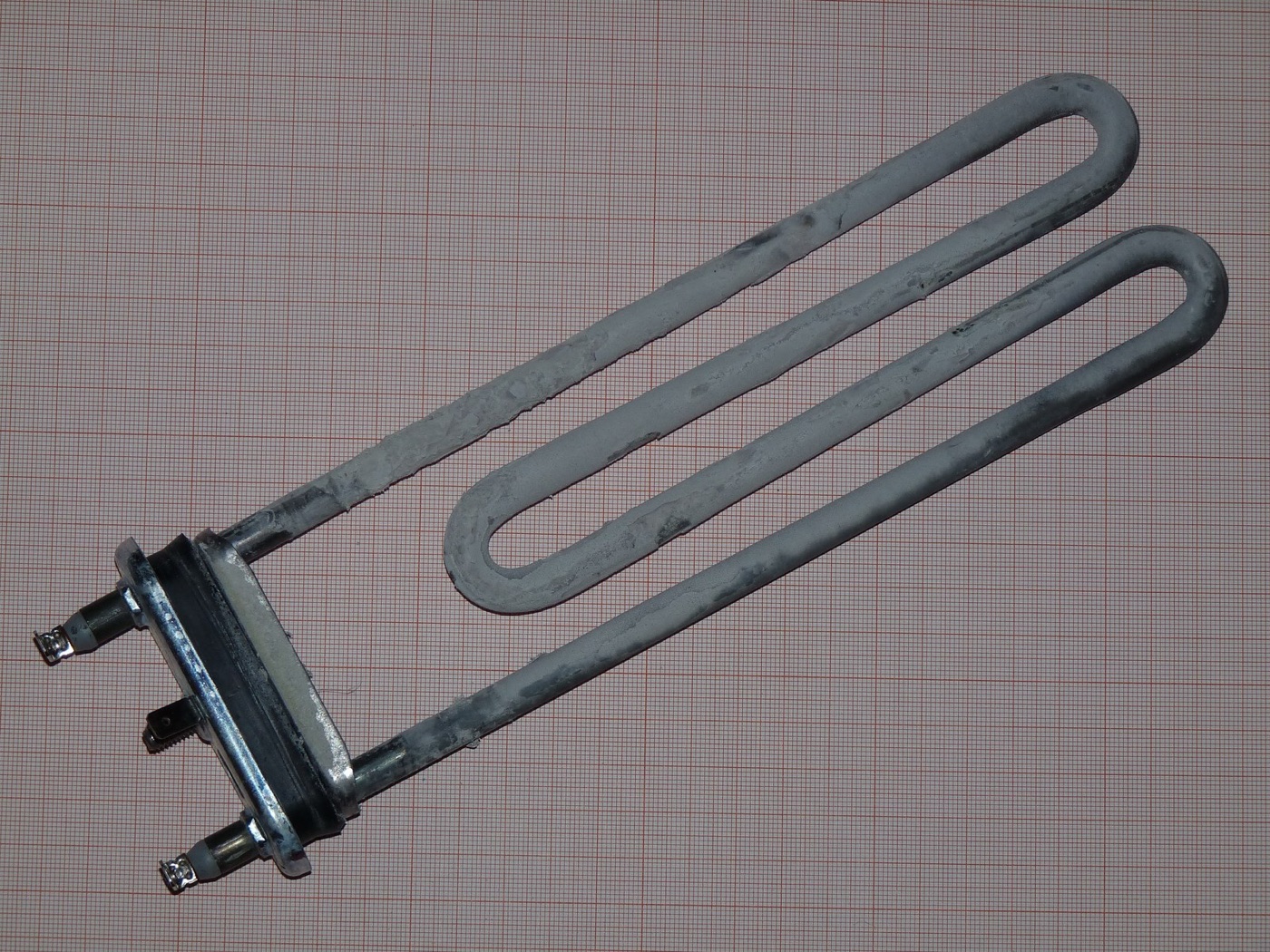
The first is the boiler. A steam boiler heats water continuously, and every litre it evaporates leaves its calcium behind on the tubes. A layer of scale a millimetre thick insulates the steel from the water, so that the fire has to burn hotter for the same steam, and it is the reason boiler water is softened and treated in every plant that raises steam. Scale that is allowed to build can overheat a tube to failure, and boiler explosions in the nineteenth century were often, at root, scale.
The second is the membrane. Reverse osmosis concentrates everything it rejects, and a hard water that is concentrated four or five times on the reject side of a membrane will pass the point at which calcium carbonate and calcium sulphate come out of solution, on the membrane surface, where they block it. Every reverse osmosis plant therefore either softens its feed or doses an antiscalant, a chemical that holds the calcium in solution past the point where it would otherwise fall out, and the choice between the two is one of the first decisions in designing the plant. A plant that gets it wrong cleans its membranes with acid every few weeks, and replaces them early.
| Where hardness is a cost | The problem | The fix |
|---|---|---|
| The kettle and the hot water cylinder | Scale on the element | Descaling, or a softener |
| The steam boiler | Scale insulates the tubes, wastes fuel | Softened feed water, chemical treatment |
| The reverse osmosis plant | Scale blocks the membrane on the reject side | Softening or antiscalant dosing |
| Laundry and dishwashing | Soap scum, spotting | Detergent additives, dishwasher salt |
Hardness in the footprint articles
Hardness turns up, unnamed, in several of the products on this site. The brewery article described how the water of Burton upon Trent, hard with gypsum, made a style of ale that other brewers learned to imitate by hardening their own water; that is permanent hardness, calcium sulphate, put to work. The coffee article left it out, though baristas know that very soft water makes flat coffee and very hard water makes scale in the machine, and the specialty trade publishes target hardness ranges for brewing water. And the article on TDS placed hardness as the part of the dissolved solids that comes back out when water is heated, which is the kettle again. The same two minerals, in every case, reporting from the rock.
Reading the water
The hardness of a water is one of the first things an engineer looks up about a new site, before the pH, before the salt, because it decides what the boiler and the membranes will need and it is on the utility's website. It is also one of the few properties of water that a householder can read without an instrument. A furred kettle, a cloudy shower screen and a bar of soap that will not lather are calcium and magnesium, reporting from the chalk the water came through, and they are telling the truth about the ground under the town.
Sources
- World Health Organization, Guidelines for Drinking water Quality, background document on hardness in drinking water: no health based guideline value; classification of soft to very hard water.
- USGS Water Science School, water hardness classification: soft below 60 mg/L as calcium carbonate, moderately hard 61 to 120, hard 121 to 180, very hard above 180.
- Thames Water and other UK supplier data: hardness around 250 to 300 mg/L as calcium carbonate across the London chalk supply.
- Standard Methods for the Examination of Water and Wastewater (APHA, AWWA, WEF), method 2340, hardness by EDTA titration.
- Photographs: limescale by Alexander Davronov (CC BY-SA 4.0) via Wikimedia Commons; Cesar Chu Ortega; inline: Water preparing bottles by Muselsom (CC BY-SA) via Wikimedia Commons; inline: Whirlpool 461973080572 limescale by Dmitry G (CC BY-SA) via Wikimedia Commons.