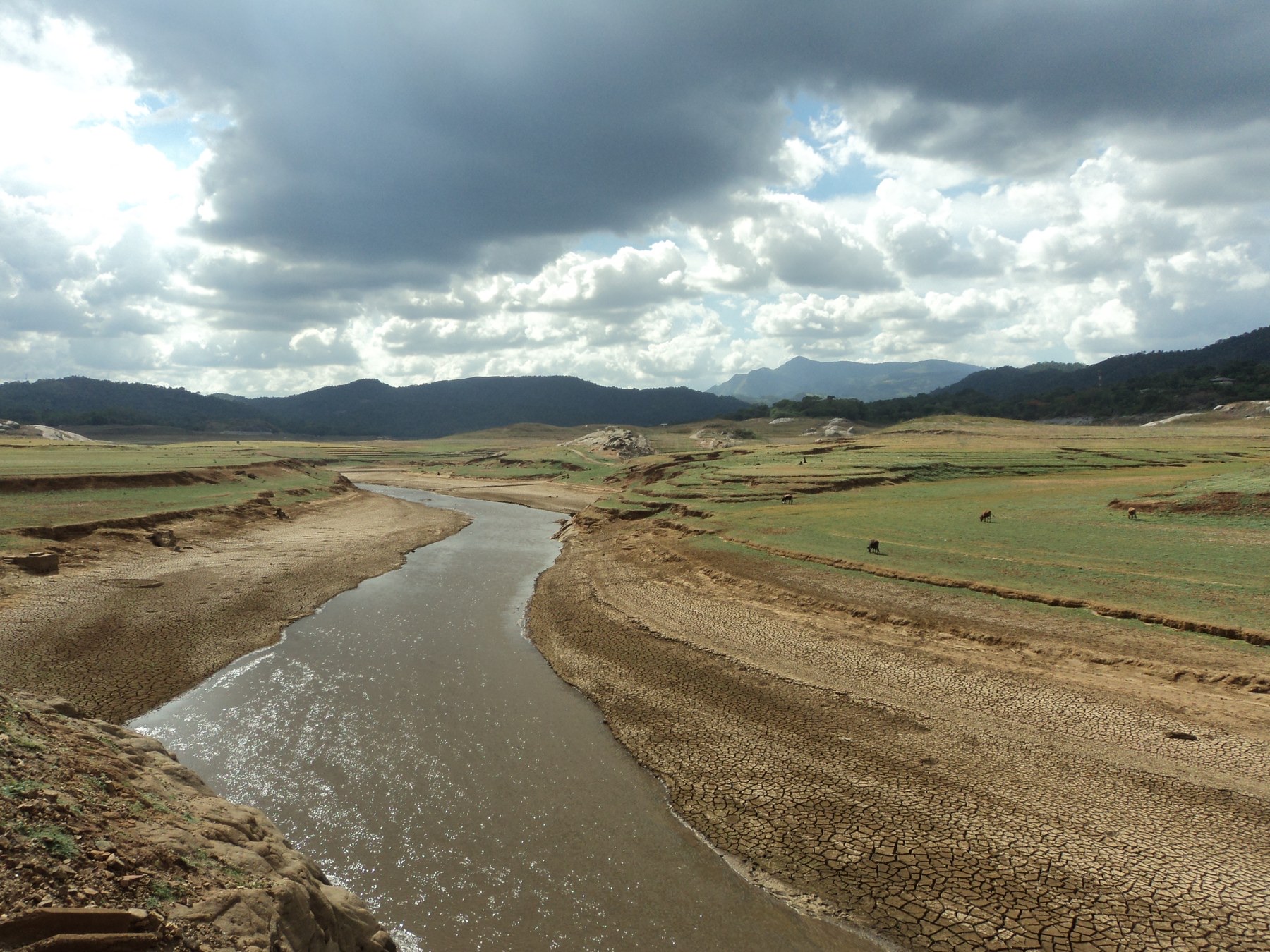
Plain Water: Day Zero
The phrase entered the language in 2018 as the date on which a major city's taps would be switched off. What it actually meant, how a city gets there, what the last weeks before it look like, and why the number that mattered was not the date but the litres per person per day.
The phrase arrived in the world's vocabulary in January 2018, in a statement from the mayor of Cape Town, and within a month it was on front pages in every language. Day Zero: the day a city of four million people would turn off its taps. It was given a date, the twelfth of April, and then the date moved, and moved again, and in the end it never came. What it meant, precisely, and how a modern city arrived within weeks of it, is the subject of this article; the story of Cape Town itself has its own.
What the phrase means
Day Zero is the day on which a city's reservoirs fall to the level at which its water supply can no longer be maintained through the pipes, and the utility switches to emergency distribution instead. In Cape Town's plan that level was 13.5 percent of dam capacity, the point below which the remaining water is mud, silt and the dead storage that the pumps cannot draw. On that day the mains would be closed to most of the city, hospitals and a few essential users would keep their supply, and everyone else would collect a ration of 25 litres per person per day from around two hundred collection points guarded by police and the army.
It is important to see what kind of thing this is. Day Zero is a projection, not a scheduled event. It is a date calculated, every week, from three inputs: how much water is in the dams, how fast the city is using it, and how much rain is expected before the winter. Change any of the three and the date moves. A city that cuts its consumption pushes the date back. Rain pushes it back further. A hot, windy week that evaporates the dams pulls it forward. The date is the utility's way of telling a city how many days of water it has left at the current rate, and of making a number that people can feel.
| What decides Day Zero | Effect |
|---|---|
| Water in the dams | The starting balance |
| Consumption, in litres per day | How fast the balance falls |
| Evaporation and leakage | A steady loss the city cannot control |
| Rain, when it comes | The only deposit |
How a city gets there
Cities do not run dry in a single dry year. They run dry in the third one, because the first two are absorbed by the reservoirs that were built for exactly that purpose, and by the time the third arrives the reserve is gone and the habits have not changed.
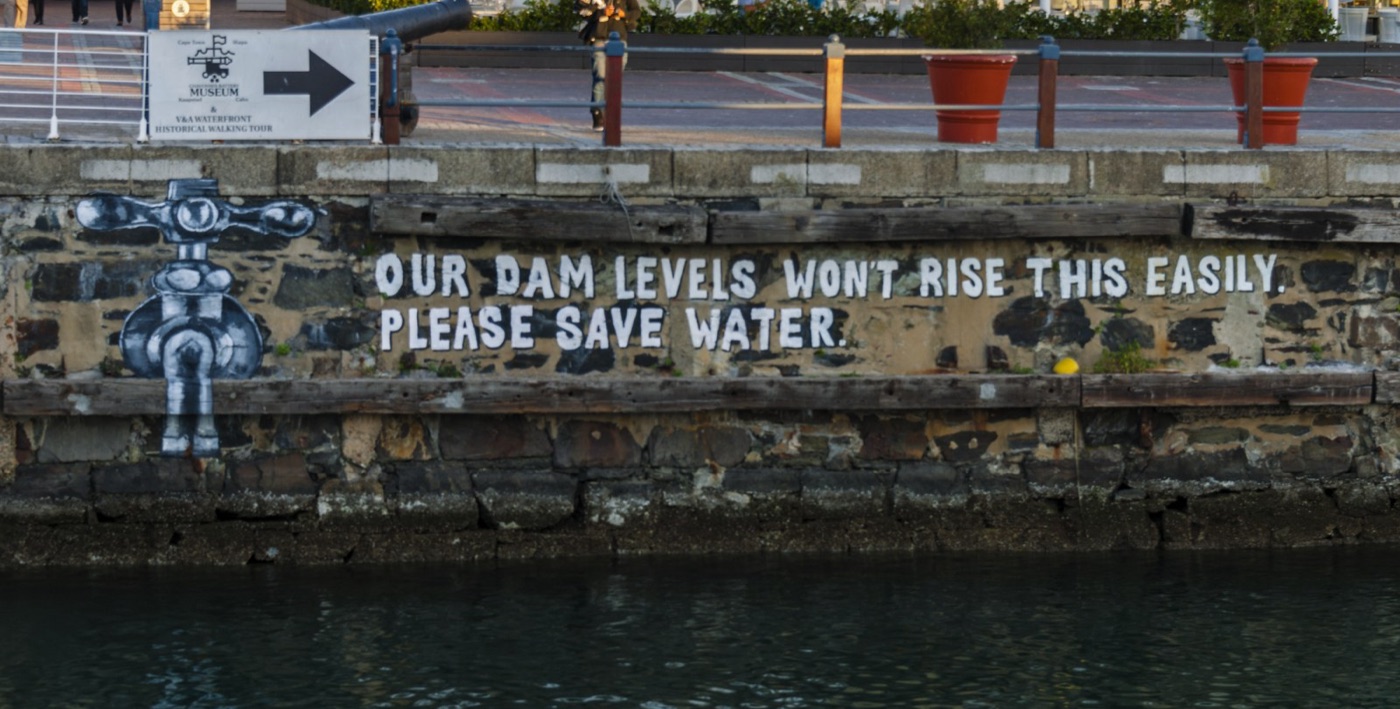
Cape Town's dams were designed to carry the city through a two year drought with its normal consumption. The winter rains of 2015 were poor, those of 2016 were poor again, and those of 2017 were the lowest on record for the catchment. Three years of deficit took the dams from full to a fifth. Through the first two the city drew down its reserve and asked for restraint; only in the third did it impose the restrictions that would have saved the reserve had they come earlier. This is the pattern in every city that has approached Day Zero, from São Paulo in 2015 to Chennai in 2019: a reserve built for two years, a drought that lasts three, and a response that starts one year late.
The last weeks
What the weeks before a projected Day Zero look like is worth recording, because Cape Town lived through them and most cities have not.
Consumption became a public number. The city published its dam levels and its daily usage every week, on a dashboard that people checked the way they check the weather, and the target, 450 million litres a day for the whole city, then 500 as the restrictions bit, was on the news each night. Water pressure across the network was reduced, so that taps ran slowly and leaks lost less. Households were limited to 50 litres per person per day, with punitive tariffs above it and flow restrictors fitted to the meters of those who ignored them. Car washes closed. Swimming pools could not be filled. Restaurants served on paper. Shops sold out of bottled water, then of storage tanks, then of the pumps to fill them. The collection points were mapped and the army rehearsed them.
And people changed. Showers went to two minutes, with a bucket underfoot to catch the water for the toilet. Toilets went unflushed until necessary. Laundry went to once a week. A city that had used more than 1,200 million litres a day in 2015 was using around 500 million by early 2018, a cut of more than half, most of it achieved by households in their bathrooms. That cut, more than any dam or desalination plant, is what moved the date.
| Cape Town's consumption | Million litres a day |
|---|---|
| 2015, before the drought | About 1,200 |
| Early 2018, under Level 6B restrictions | About 500 |
| The target set by the city | 450 |
| The Day Zero ration, per person | 25 litres |
The number that mattered
Fifty litres per person per day deserves a moment, because it is the figure that a city under Day Zero rules actually lives on, and because it is worth knowing what it buys.
A short shower with a low flow head is about 20 litres. A toilet flush is 6 to 9 in a modern cistern, more in an old one. Cooking, drinking and washing hands take perhaps 10. Fifty litres is one shower, two or three flushes, and the kitchen, with nothing left for laundry, the garden, the car or the dog. A person in a European city uses two to three times that, without feeling extravagant, and the difference is almost entirely the length of the shower, the number of flushes and the washing machine.
The World Health Organization puts the minimum for health at around 20 litres a day, and the level at which most household needs can be met at 50 to 100. Cape Town chose 50 because it was the lowest figure a city could hold without illness, and because it was a number people could count. It worked. The date moved from April to May to June, and in June the rain came.
What Day Zero is not
Two misreadings of the phrase are common enough to correct.
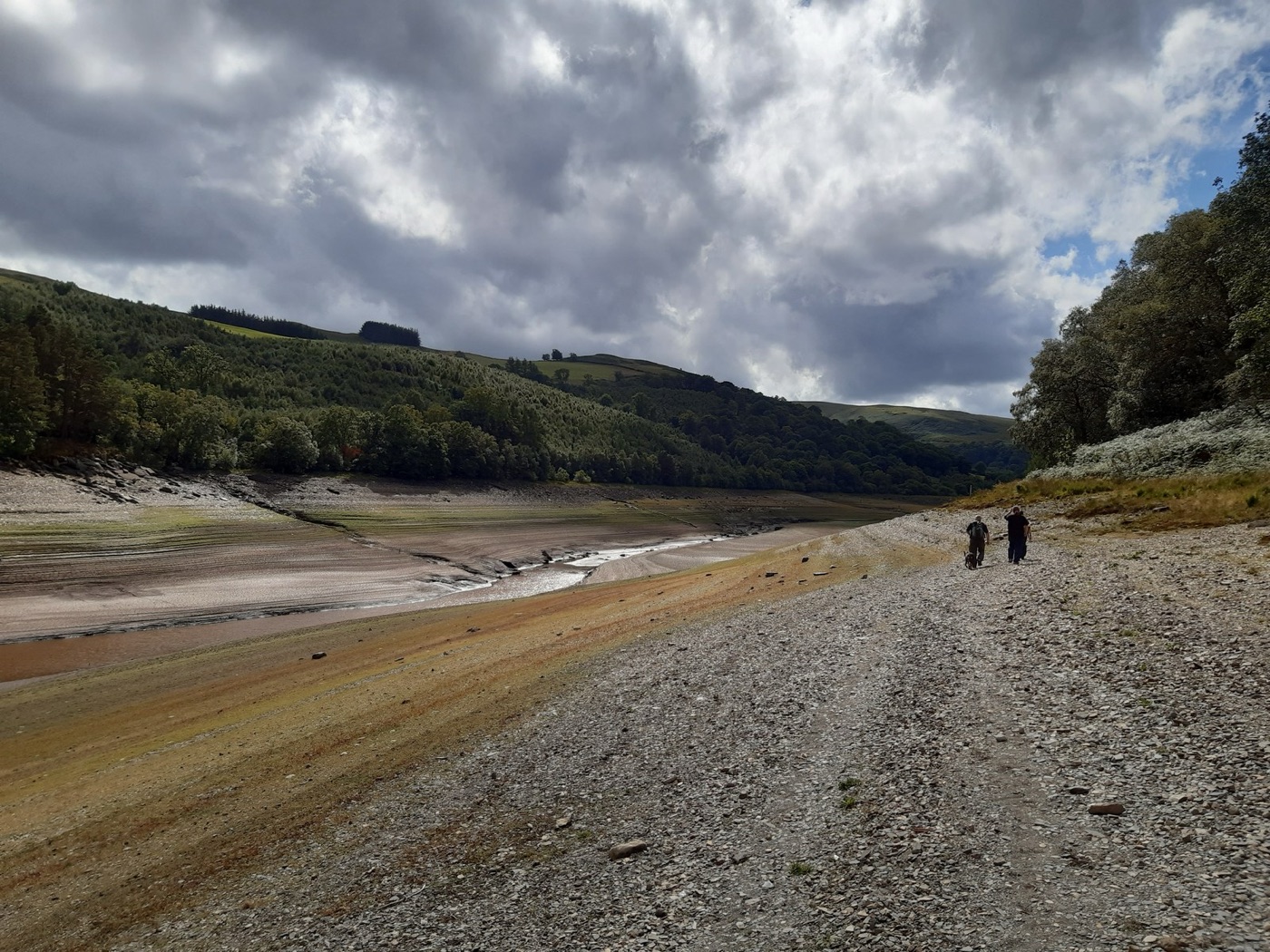
It is not the day the water runs out. There is water below 13.5 percent, and there is water in aquifers, in emergency desalination, in tankers from elsewhere. Day Zero is the day the pipes stop delivering it to homes, which is a different and a more survivable thing, though nobody who has planned for it would call it survivable lightly.
And it is not, mainly, a story about climate. The drought was real and severe, and a warming climate makes such droughts more likely in the Western Cape. But the city arrived at Day Zero because a reserve built for two years met a drought of three, because consumption had grown with the city while the dams had not, and because the restrictions came a year late. Those are decisions, and the cities that have studied Cape Town since have mostly drawn that lesson: build the reserve for the drought you might get, and act in the first dry year, not the third.
Other cities on the countdown
Cape Town gave the phrase its name, and it was neither the first city to approach the day nor the last.
São Paulo, in 2014 and 2015, drew its main reservoir system, the Cantareira, below the level of its intakes and pumped the dead storage at the bottom, the water the dams were never designed to release, while the city rationed by cutting pressure at night. It did not name a day, and it was rescued, as Cape Town was, by rain. Chennai, in June 2019, ran its four main reservoirs entirely dry after a failed monsoon, and for weeks the city of ten million was supplied by tankers and by trains of water wagons from a reservoir two hundred kilometres away. Its day came, for a large share of its residents, without a name. Mexico City, in 2024, watched the Cutzamala system that supplies a third of its water fall to the lowest levels recorded and talked openly of Day Zero, and was, again, saved by the rains of that summer.
The pattern across the four is the one this article has described. Each city had a reserve built for the droughts of the past, each drought lasted longer than the reserve, and each city's decisive measures came in the last year rather than the first. None of them has had a dry year since without watching the dam levels the way Cape Town now does.
Where the phrase has gone
Day Zero has become a term of art since 2018. Utilities now publish Day Zero projections as a planning tool, in Chennai, in Mexico City, in parts of Iran and Spain, even where the date is years away, because a date is a number that a city council and a public can hold onto in a way that a dam percentage cannot be. That is the phrase's real contribution. It turned a hydrological calculation into a deadline, and a deadline, as Cape Town found, is something four million people can work to.
Sources
- City of Cape Town, Water Dashboard and Water Outlook 2018. Dam levels, consumption, the Level 6B restrictions of February 2018 and the 50 litre per person per day limit.
- Muller, M. (2018). Cape Town's drought: don't blame climate change. Nature 559. The governance and demand side of the crisis.
- South African Weather Service and the University of Cape Town Climate System Analysis Group on the 2015 to 2017 rainfall deficit.
- Photographs: opener, Mahaweli River at sunken city of Teldeniya victoria reservoir sri lanka by Hasindu2008 (CC BY-SA) via Wikimedia Commons; inline: Water conservation message on retaining wall at Cape Town waterfront by Daniel Case (CC BY-SA) via Wikimedia Commons; inline: Depleted water in Caban Coch reservoir (geograph 7279394) by Gareth James (CC BY-SA) via Wikimedia Commons.