Plain Water: Fluoride
Fluoride is the substance that water utilities in some countries add on purpose and utilities in others spend fortunes to remove. At a milligram per litre it protects teeth. At three or four, in the groundwater of the East African Rift, the plains of India and the villages of northern China, it stains teeth and bends bones. What fluoride does, where it comes from, why the line is so narrow, and what it takes to get it out.
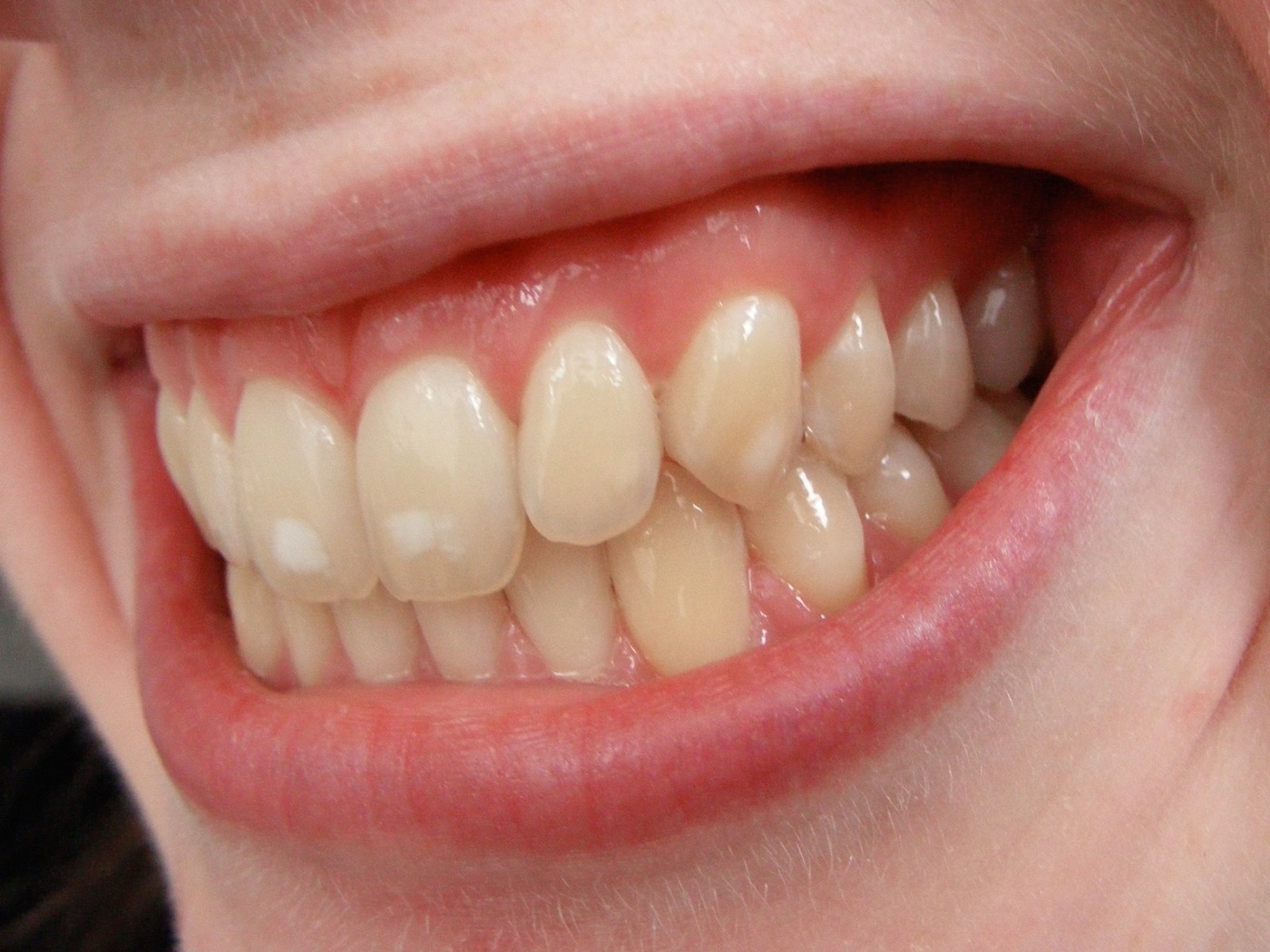
In a village in the Rift Valley of Ethiopia or the desert of Rajasthan, the children's teeth are the first sign. They come through with white flecks, then brown stains, then pits, and the older people have something worse: a stiffness in the back and the hips that sets in over years, a bending of the legs, and in the worst cases a spine fused into a stoop. The cause is in the well. The water is clear, cool and tastes of nothing, and it carries fluoride at three, five, ten milligrams a litre, dissolved from the rock it passed through.
Six thousand kilometres away, in a city in the United States or Ireland, the water utility is adding fluoride to the supply, on purpose, at about 0.7 milligrams a litre, because at that dose it protects teeth, and has done for eighty years. Fluoride is the only substance on this site that is both a treatment and a contaminant, and the line between the two is narrower than for anything else people drink. This article is about that line.
What fluoride does
Fluoride is the ion of fluorine, the most reactive element there is, and in the body it goes to one place: the mineral of teeth and bone. In small amounts, in the mouth while the teeth are forming and at the surface of the enamel afterwards, it makes the mineral harder and more resistant to the acid that bacteria produce from sugar, and children who grow up drinking water with about a milligram a litre have measurably fewer cavities than children who do not. That observation, made in the American Midwest in the 1930s, is where fluoridation came from, and it was, before toothpaste carried fluoride, the largest single improvement in dental health in history.
The same affinity is the problem. Above about 1.5 milligrams a litre the enamel takes up too much, and it forms with flecks and stains, a condition called dental fluorosis, which is cosmetic at its mildest and disfiguring at its worst. Above about three or four, over years, the bones take up the excess, and they thicken, stiffen and calcify at the ligaments, a condition called skeletal fluorosis that in its advanced form is crippling and has no cure. The dose that helps and the dose that harms are separated by a factor of two, and the harm depends on how much water a person drinks, which in a hot country doing manual work is a great deal.
| Fluoride in water, milligrams per litre | |
|---|---|
| Fluoridated city supply | About 0.7 |
| WHO guideline, the upper limit | 1.5 |
| Dental fluorosis common | Above about 1.5 to 2 |
| Skeletal fluorosis, over years | Above about 3 to 4 |
| Groundwater in the worst affected districts | 5 to 10, and higher in places |
Where it comes from
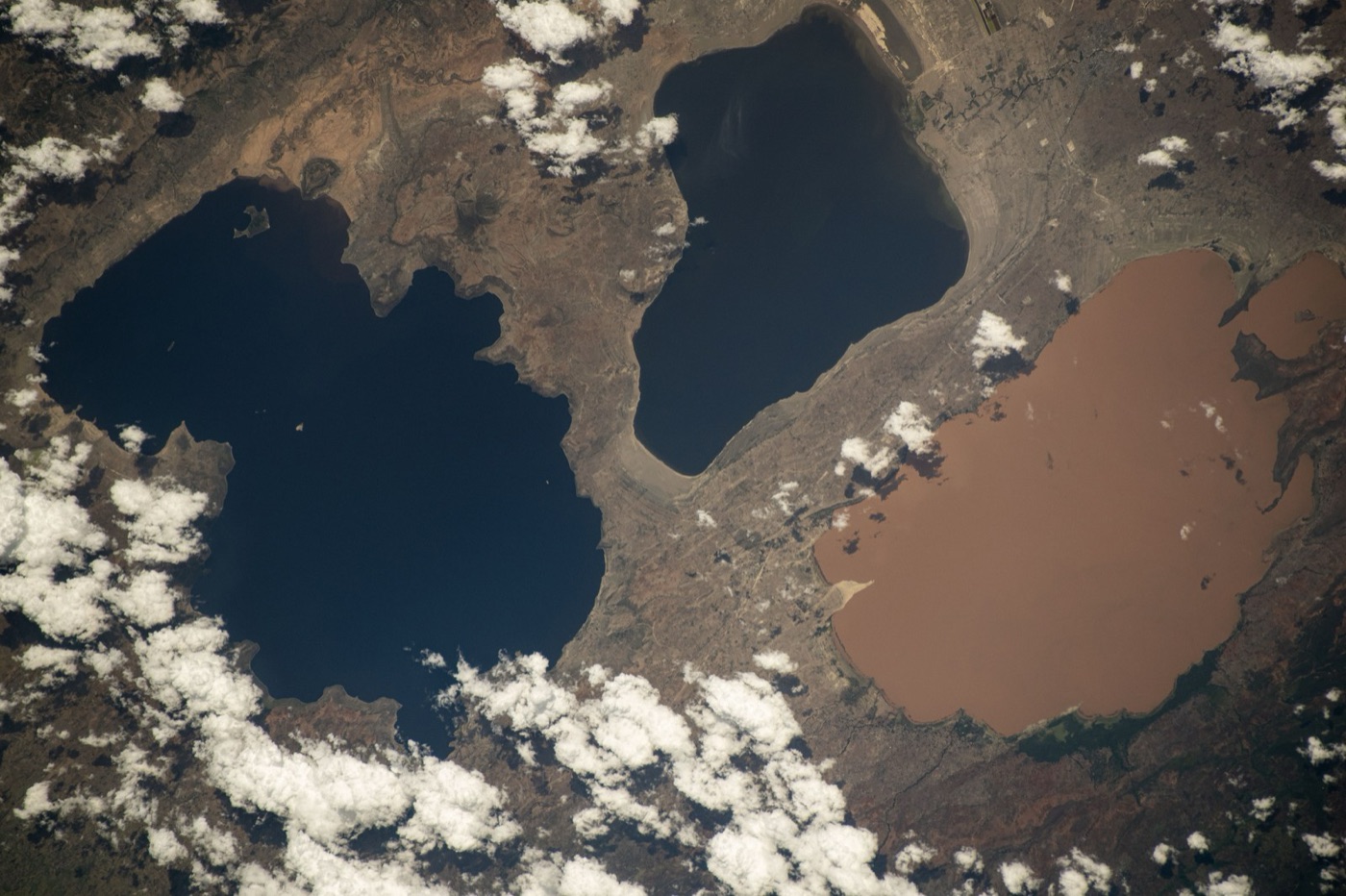
High fluoride water is natural, in almost every case. Fluoride sits in certain minerals, fluorite, apatite and the micas, and in volcanic ash and glass, and where groundwater moves slowly through rock of that kind, especially alkaline water low in calcium, it dissolves out. The geography follows the geology. The East African Rift, from Ethiopia through Kenya and Tanzania, is a line of volcanoes, and its groundwater and its soda lakes carry some of the highest fluoride on Earth. The granites and the alkaline aquifers of Rajasthan, Gujarat, Andhra Pradesh and a dozen other Indian states supply wells with several milligrams a litre to tens of millions of people. The loess plateau of northern China, the deserts of Iran and the Arabian peninsula, parts of Argentina, Mexico and the American south west all have it.
The people affected drink from wells, and the story rhymes with the arsenic article: the wells were sunk to replace unsafe surface water, they solved the microbes, and they delivered a slow poison that nobody tested for, because the tests of the time looked for germs. The two elements even overlap, in parts of India and China, in the same aquifers.
| Where fluorosis is endemic | |
|---|---|
| India | Some 20 states; tens of millions exposed above 1.5 |
| China | Northern provinces, the loess plateau, and coal smoke in the south west |
| The East African Rift | Ethiopia, Kenya, Tanzania, Uganda |
| Elsewhere | Iran, Iraq, Pakistan, Sri Lanka, Mexico, Argentina, parts of the United States |
| People affected worldwide | Estimates run to over 200 million exposed above the guideline |
There is one manmade source worth noting. In parts of south western China the fluoride comes from coal, burned indoors in stoves without chimneys to dry the grain and the chillies, and the fluoride in the smoke settles on the food. It is fluorosis without water, and it is being ended by chimneys.
Getting it out
Fluoride is dissolved, which as the TDS article explains puts it beyond sand filters, settling and bacteria. Three methods work, and the choice depends on money.
The oldest is coagulation with lime and alum, in a version developed for Indian villages and called the Nalgonda technique after the district where it was tested: a dose of lime, a dose of alum, stirring, settling, and the fluoride goes down with the floc. It is cheap, it works at the household and the village scale, and it needs a fairly large dose of chemicals and a person to run it, which is where it has often failed.
The second is adsorption. Activated alumina, a granular form of aluminium oxide, binds fluoride strongly, and a column of it, regenerated with acid and alkali when it is full, is the standard treatment at plants in the affected districts of India and the United States. Bone char, charred cattle bone, does the same job more cheaply and was the method of choice in East Africa until a supply of clean bone became the difficulty.
The third is the membrane. Reverse osmosis, in its own article, removes fluoride along with everything else, and a small unit in a village, run by a committee and selling water by the can, has become the common fix in Rajasthan and Gujarat, for the same reason it has for salt: it is reliable, and the concentrate it rejects, now rich in fluoride, is the problem it leaves behind.
| Taking fluoride out | |
|---|---|
| Lime and alum, the Nalgonda technique | Cheap; chemical dosing at the village; needs an operator |
| Activated alumina columns | Reliable; regeneration with acid and alkali; the standard at plants |
| Bone char | Cheap and effective; needs a clean source of bone |
| Reverse osmosis | Removes nearly all; energy and a fluoride rich reject |
| A different source | Rainwater, a deeper or shallower well, or a piped surface supply; the best fix where it exists |
The best answer, as with arsenic, is often another source. A well in a different layer, a piped supply from a river, or rainwater harvested from the roof, as the rain article describes, avoids the problem instead of treating it, and the Indian programme against fluorosis has, in its better districts, spent its money on pipes rather than on filters.
The village scale
What the treatments look like on the ground is worth describing, because the difference between a method that works in a laboratory and one that works in a village is the subject of half of this site. In the fluorosis districts of Rajasthan the standard fix of the last decade has been a small reverse osmosis plant, of a few thousand litres an hour, in a shed by the village well, run by a local committee or a franchisee who sells the water by the twenty litre can at a price that covers the electricity and the membranes. It works where the committee is paid and the membranes are replaced, and it stops where they are not, and the households that cannot pay for the can go back to the well. The Nalgonda plants of the 1980s and 1990s failed, mostly, because nobody was paid to dose them. The deep wells and the pipelines, where the state has built them, have lasted, because a pipeline needs no committee. The lesson is the one the Chennai and Jakarta articles draw about utilities: the treatment that survives is the one somebody is responsible for, every day.
The other argument
Fluoride is also, in the countries that add it, the subject of a long argument, and the argument deserves a fair sentence. Fluoridation at 0.7 milligrams a litre has eighty years of evidence for its benefit to teeth and no established harm at that dose, and it remains endorsed by the health authorities of every country that practises it. In 2024 a United States government review concluded, with moderate confidence, that fluoride at more than twice that level, above 1.5, the WHO's limit, was associated with lower IQ in children, on the strength of studies from the high fluoride regions described above, and it found the evidence at 0.7 insufficient to say either way. The finding has sharpened the argument about whether cities should add fluoride at all, now that toothpaste carries it, and it has strengthened the case, which nobody disputes, for taking it out of the wells that carry more than 1.5. Both things can be true, and the line between them is the number at the top of this article.
The test, again
Fluoride, like arsenic, is found by a test and by nothing else. The water carries no taste at the levels that matter, and the first sign in a village is a dentist's, years after the exposure began. The field test is a colour reagent, cheaper than the arsenic strip and about as easy, and the laboratory test is an electrode that reads the ion directly. India's national programme has mapped its affected districts well by now, and the map is a good one; what it has not always done is retest, because a well's fluoride rises as the water table falls and the water is drawn from deeper, more mineralised layers, so that a village tested safe in a wet decade is not necessarily safe in a dry one. The wells that were painted in Bangladesh needed repainting for the same reason. A number on a well is a photograph of the aquifer on the day the sample was taken, and aquifers move.
What it teaches
Fluoride is the clearest lesson on this site that the dose is the poison. The same ion, in the same water, is a public health measure at one milligram and a crippling disease at four, and the difference is invisible, tasteless and known only by a test. Tens of millions of people, most of them poor, most of them in villages with wells that were sunk to help them, drink the higher dose every day, and the treatments that would stop it are cheap and old. It is, like arsenic, a problem of attention rather than of engineering.
1.5 milligrams a litre. Below it, a dentist's friend. Above it, a village's stoop.
Sources
- World Health Organization, Guidelines for Drinking water Quality: fluoride guideline value of 1.5 mg/L, and the 2006 monograph Fluoride in Drinking water.
- US Public Health Service (2015). Recommendation for fluoride concentration in drinking water for the prevention of dental caries: 0.7 mg/L.
- Ayoob, S. and Gupta, A.K. (2006). Fluoride in drinking water: a review on the status and stress effects. Critical Reviews in Environmental Science and Technology 36. Endemic fluorosis in India, China and East Africa.
- UNICEF and the Government of India, National Programme for Prevention and Control of Fluorosis: affected districts and the Nalgonda technique.
- National Toxicology Program (2024). Monograph on the state of the science concerning fluoride exposure and neurodevelopment, concerning levels above 1.5 mg/L.
- Photographs: opener: Glass of water ouside by Kurt Kaiser (CC0) via Wikimedia Commons; inline: Dental fluorosis by josconklin (CC BY-SA) via Wikimedia Commons; inline: A Trio of Ethiopian Lakes (iss071e132461) by NASA Johnson Space Center (public domain) via Wikimedia Commons.