Plain Water: Lead
The water that leaves a treatment plant has no lead in it. The lead comes from the pipe between the street and the kitchen, laid a century ago because lead was soft and cheap, and it comes off in amounts that depend on the chemistry of the water running through it. What Flint got wrong, why there is no safe level, why the fix is a pipe and not a plant, and how to tell whether your own tap has one.
The water that leaves a treatment plant has no lead in it, or none worth measuring. The river it came from had almost none, the plant's coagulation and filters would have taken it, and the water that goes into the mains is, on this one point, as clean as a laboratory's. The lead in a glass of tap water got there in the last thirty metres, in the pipe that runs from the main under the street to the tap, and it got there because a plumber a century ago chose the softest, cheapest metal there was for the job of bending a pipe round a house.
This article is about the one contaminant in drinking water that the plant cannot remove, because it is added after the plant, and about what a city has to do instead.
Why the pipe is lead
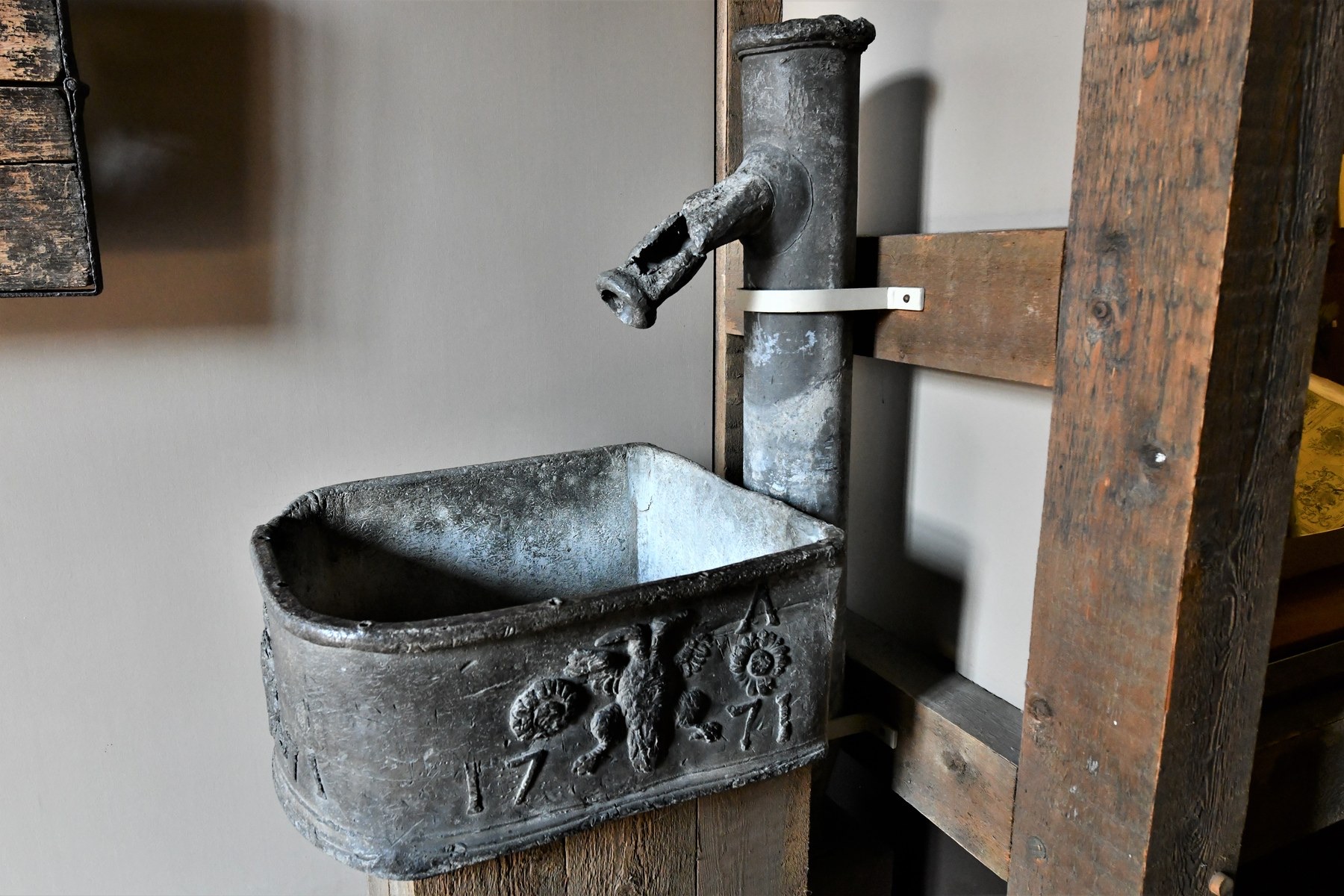
Lead is soft enough to bend by hand, easy to join with a wiped solder joint, and does not rust. For two thousand years it was the plumber's metal: the word plumber comes from the Latin for lead. The pipe that connects a house to the main, called the service line, is a small pipe that has to follow the ground's contours and turn corners, and until the 1950s in most of the industrialised world, and in some places into the 1980s, it was made of lead. So, often, was the solder that joined copper pipes inside the house, and the brass of taps and fittings still contains some.
The cities built before 1950 are therefore full of it. The United States estimates about nine million lead service lines in the ground, most in the old industrial cities of the north east and midwest. Britain has lead in a large share of its pre war housing, France, Germany and the Netherlands in their older towns, and the older cities of Canada, Australia and Japan likewise. The pipes are under private gardens and public pavements, unmapped for the most part, and nobody knows exactly where they are.
| Lead in the water system | |
|---|---|
| In the river and at the plant | Almost none |
| In the main under the street | Iron or plastic; no lead |
| Service line, street to house, pre 1950 | Often lead |
| Solder on copper pipe, pre 1986 in the US | Lead |
| Brass taps and fittings | Some lead, less since 2014 |
| US lead service lines | About 9 million |
Why it does not always matter, and then does
A lead pipe with water in it does not, on its own, poison the water. What decides how much lead dissolves is the chemistry of the water: its pH, its alkalinity, its chloride and sulphate, and whether the utility adds phosphate. Water of the right chemistry deposits a thin film of lead carbonate and phosphate on the inside of the pipe, and the film seals the metal from the water so that very little dissolves. Utilities call this corrosion control, and every utility with lead pipes in its area does it, by adjusting the pH and adding orthophosphate at the plant, and it keeps the lead at most taps below the limits most of the time.
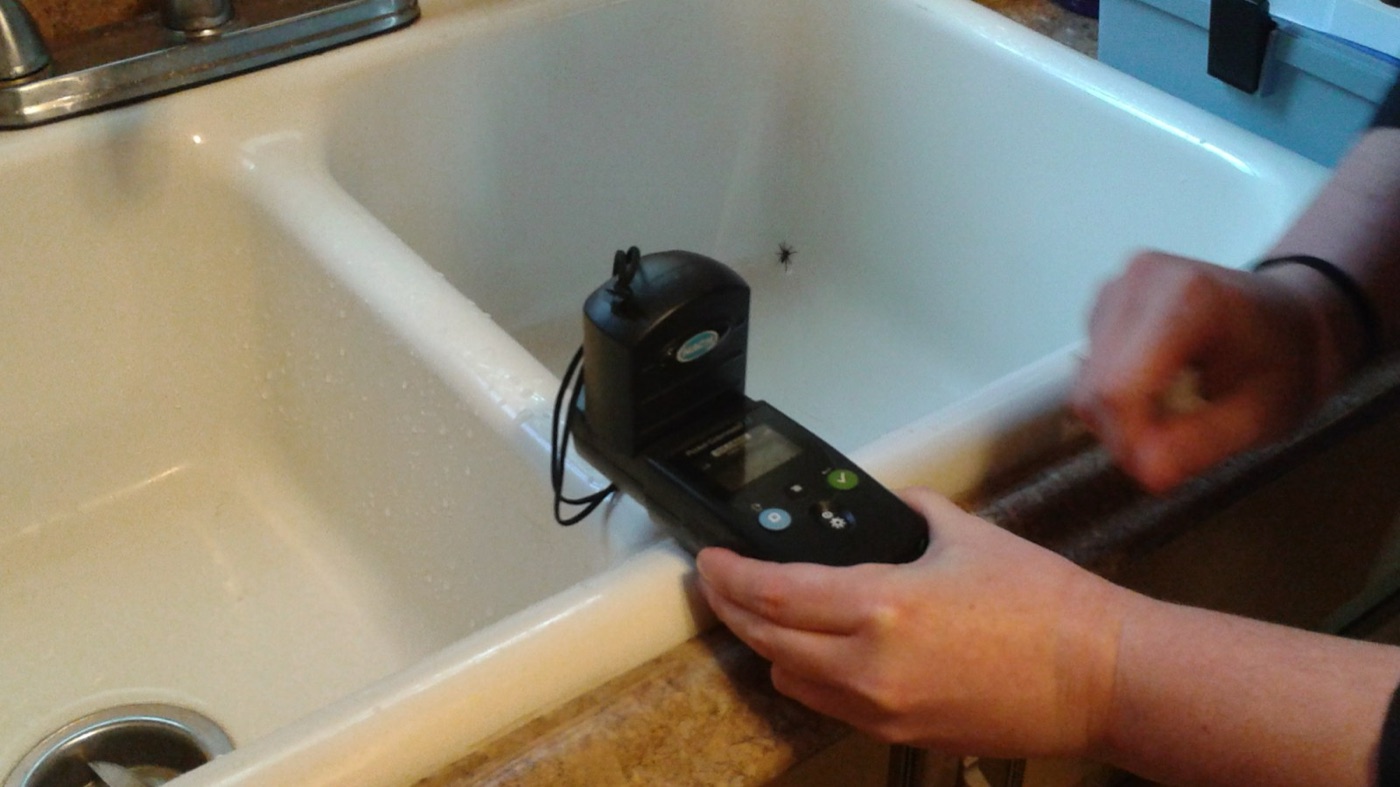
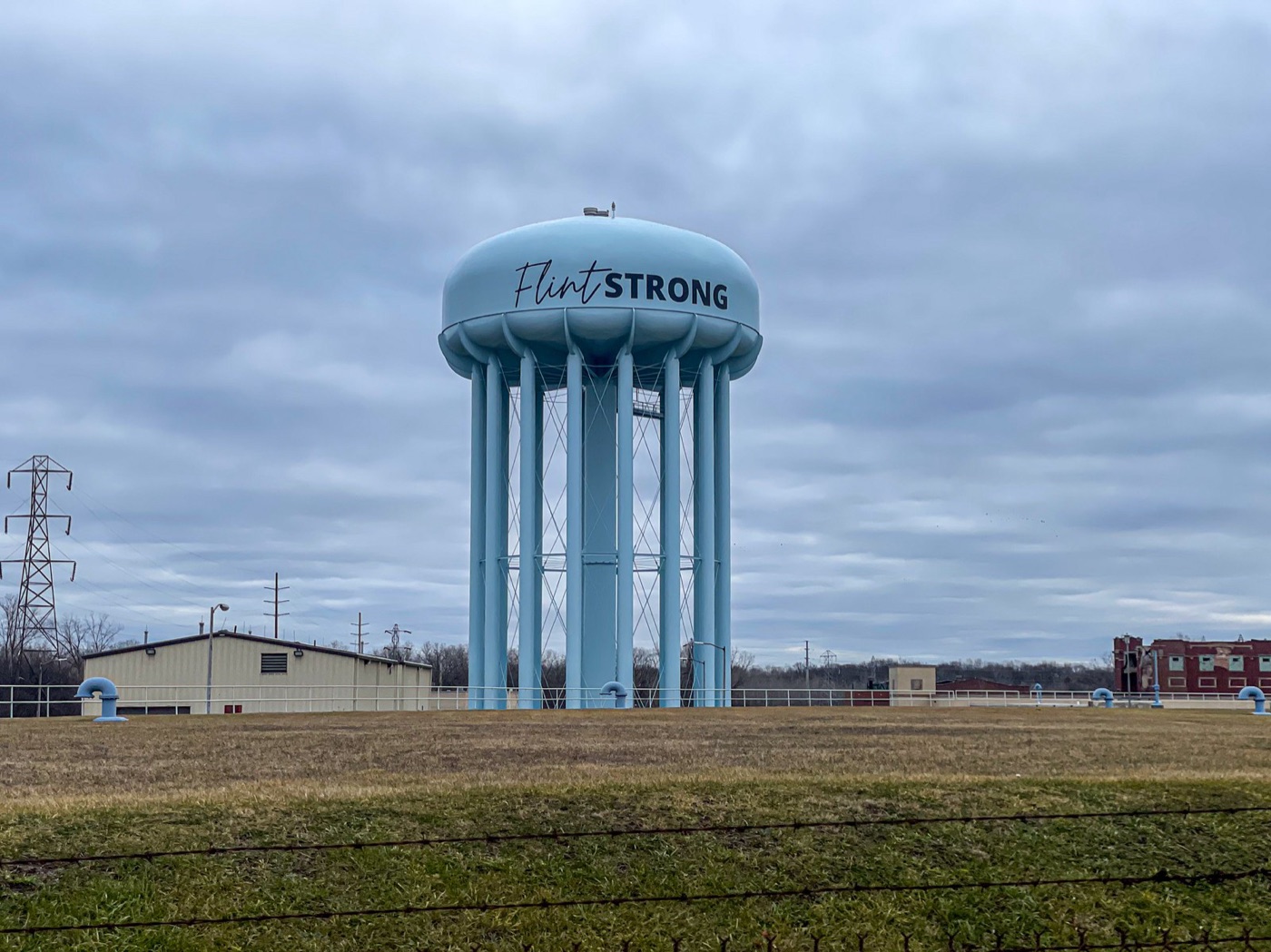
Change the water and the film goes. That is what happened in Flint, Michigan, in 2014. The city, to save money, stopped buying treated water from Detroit and began treating the Flint River itself, and the new water was higher in chloride, more corrosive, and, through an oversight that later put officials in court, was not dosed with the phosphate that Detroit's water had carried. The film inside the city's lead pipes dissolved over months, the lead followed it into the water, and the share of the city's children with elevated blood lead doubled, in a pattern that a paediatrician mapped to the pipes street by street. The Legionella article on this site describes what the same water did to the city's chlorine. It took a year and a half for the city to admit the problem and switch back, and the pipes had to be replaced anyway, because a film once lost does not reliably return.
Flint was the famous case and not the only one. Washington DC had a similar episode in 2001 to 2004 when it changed its disinfectant; Newark, New Jersey in 2017; and a run of smaller cities since. The pattern is the same each time: a change of water or treatment, made for cost or for another regulation, that undoes the corrosion control that nobody had thought of as the thing keeping the pipes safe.
What lead does
Lead is a poison with no known threshold. In children it damages the developing brain, and the effect on intelligence, attention and behaviour has been measured down to blood levels that were considered normal a generation ago, without a floor. In adults it raises blood pressure and damages the kidneys. It accumulates in bone over a lifetime and comes back out in pregnancy. The World Health Organization's guideline for drinking water is ten micrograms a litre, and the WHO says in the same sentence that no level is safe and the figure is what treatment can achieve. The United States' action level is fifteen, being lowered to ten; the European Union is lowering its limit from ten to five by 2036; the goal in every regulation is zero, and no city with lead pipes meets it.
| Lead limits in drinking water | Micrograms per litre |
|---|---|
| Level below which no harm is found | None |
| WHO provisional guideline | 10 |
| United States action level | 15, lowered to 10 under the 2024 rule |
| European Union | 10, falling to 5 by 2036 |
| Canada | 5 |
Why the plant cannot fix it
Every other contaminant on this site is removed at the plant, by a process this series has described, and the water arrives at the tap as clean as it left. Lead is the exception, because it is added after the plant, in the last stretch of pipe, and the only things the plant can do are indirect: keep the chemistry right so the film holds, and test at the taps to check that it does. Both are done, and both fail when the water changes or the pipe is disturbed. A lead pipe knocked by a road crew, or partly replaced, sheds flakes of scale for months afterwards, and the flakes carry lead at concentrations far above anything the film allowed.
The fix, and the only one, is to take the pipe out. The United States required it in 2024: every lead service line in the country to be replaced within ten years, at a cost estimated in the tens of billions of dollars, paid partly by the federal government and partly by the utilities and their customers. Britain's water companies have been replacing lead on a slower programme for decades. The European directive's lower limit is, in effect, a replacement order, since no corrosion control reaches five micrograms reliably. The pipes go out a street at a time, the utility's half from the main to the property line and the owner's half from there to the house, and the second half is the argument, because it is on private land and somebody has to pay.
Finding the pipes
The first step in taking the pipes out is knowing where they are, and most utilities do not. The service lines were laid by plumbers a century ago, the records, where they exist, are on cards in a basement, and the pipe is under a lawn and a pavement. The 2024 American rule requires every utility to produce an inventory of its service lines, and the methods have become a small industry: reading the old records, predicting from the age of the house, sending crews to scratch a pipe at the meter to see if it is grey and soft, and, at scale, statistical models that use the records and the scratches to guess the rest. Where the material is unknown, the rule counts the pipe as lead until proved otherwise. The inventories published so far have found more lead than the utilities expected, in older suburbs as much as in city centres, and the replacement programmes are being sized to them.
In the meantime
For the household with a lead pipe, or one that does not know, three things are worth knowing.
The first is that the water that has stood in the pipe overnight has the most lead in it, so running the tap for half a minute before filling the kettle in the morning, until the water runs cold, flushes the standing water out of the service line. The second is that hot water dissolves more lead than cold, so the kettle and the cooking pot should be filled from the cold tap. The third is that a filter certified for lead, a jug or an under sink cartridge that carries the standard, removes it, and that boiling does nothing, because lead does not evaporate. And the utility will usually say, if asked, whether the street was laid with lead, and the newest rules oblige it to.
What it teaches
Lead is the clearest lesson on this site that a water system is only as clean as its last pipe. The plant, the mains and the treatment can all be perfect, and a child in a house with a lead service line drinks what the pipe gives, at a dose set by a chemistry that a utility can lose track of when it changes something else. Flint was a failure of oversight, and the failure it exposed was older: that the industrialised world laid its cities in lead and has left it there for a century, kept safe by a thin film that nobody thinks about until it is gone.
Zero is the goal, ten is the guideline, and the pipe is the only fix.
Sources
- US Environmental Protection Agency, Lead and Copper Rule Improvements (2024): full lead service line replacement within ten years, an estimated 9 million lines.
- World Health Organization, Guidelines for Drinking water Quality: lead provisional guideline of 10 µg/L, with the note that no level is known to be safe.
- Hanna Attisha, M. et al. (2016). Elevated blood lead levels in children associated with the Flint drinking water crisis. American Journal of Public Health 106.
- European Union, Directive (EU) 2020/2184: lead limit lowered from 10 to 5 µg/L from 2036.
- Pieper, K.J. et al. (2017). Flint water crisis caused by interrupted corrosion control. Environmental Science and Technology 51.
- Photographs: opener: Salisbury Museum, Lead pump and water trough dated 1771 - geograph.org.uk - 7047733 by Michael Garlick (CC BY-SA) via Wikimedia Commons; inline: EPA water quality testing in Flint by unknown, United States Environmental Pro (public domain) via Wikimedia Commons; inline: Flint Water Tower by Alberryii (CC BY-SA) via Wikimedia Commons.