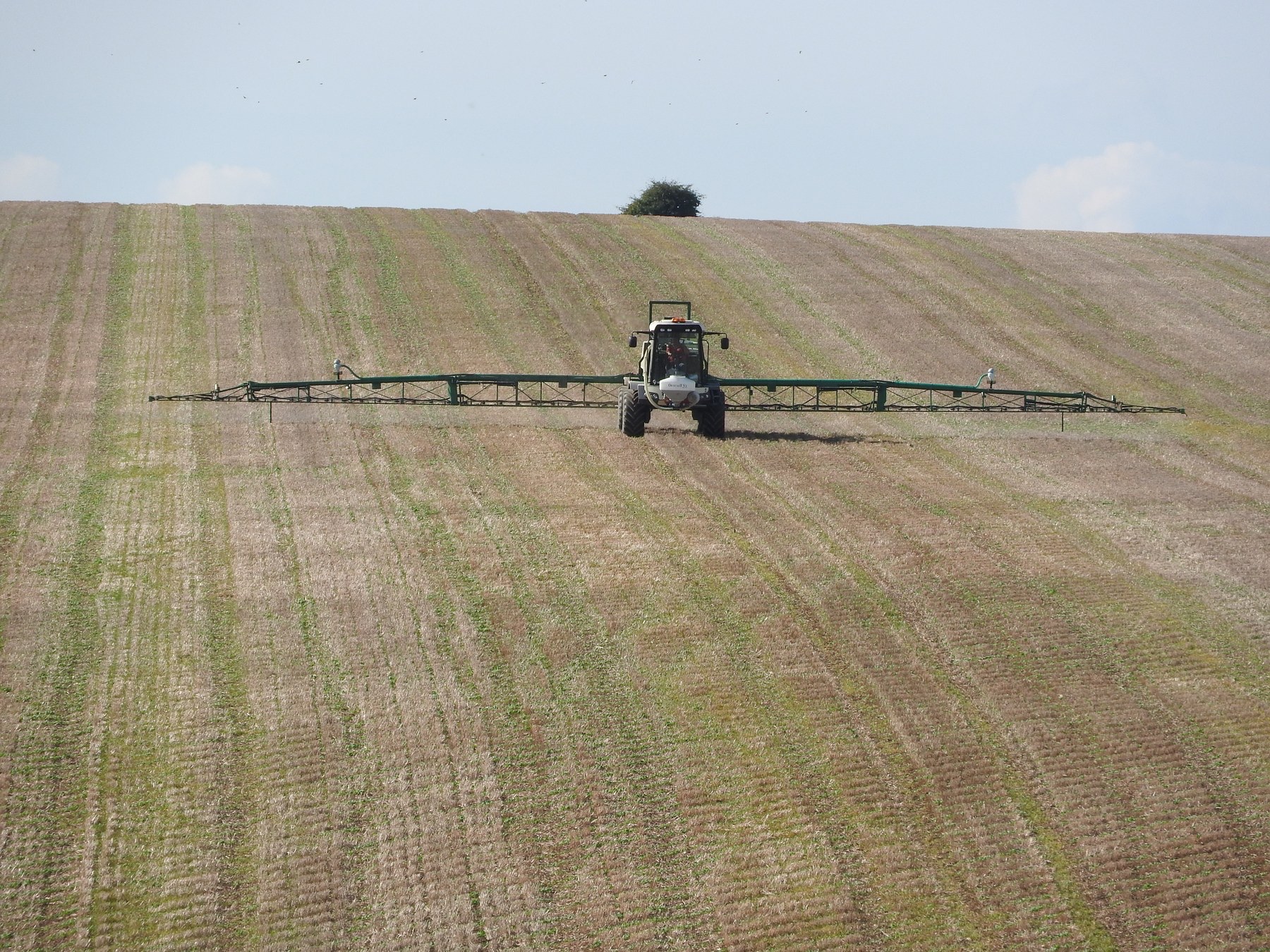
Plain Water: Nitrate
Nitrate is the fertiliser that grew the food and the contaminant that followed it into the well. It is in the groundwater of every farming region on Earth, it takes decades to arrive and decades to leave, and it is the reason a large share of Europe's and America's rural water fails its standard. What nitrate does in a body and a river, where it comes from, why a well can take thirty years to catch up with a field, and what the treatment costs.
The water in a well in a farming district is, in most of the world, the cleanest water anyone there can get: cold, clear, free of the bacteria of the river, filtered through metres of soil and sand. It also carries, in a large share of those districts, a chemical that the soil put into it, in amounts that exceed the standard for drinking, and that will keep rising for years after the farms above it change what they do. The chemical is nitrate, and it is the fertiliser that grew the food, gone somewhere else.
This article is about the contaminant that farming made, why it is in the groundwater of every intensively farmed region on Earth, why it takes decades to arrive and decades to leave, and what a utility does when a well fails on it.
What nitrate is
Nitrogen is the element plants need most and can least get for themselves. It makes up most of the air and almost none of the soil, and a crop's growth is limited, more often than not, by how much of it the roots can find. Nitrogen fertiliser, made from the air by the Haber process since 1913, is the reason the world's harvests tripled in the twentieth century, and the nitrogen article on this site describes what it does to a lake or a bay when it runs off the field.
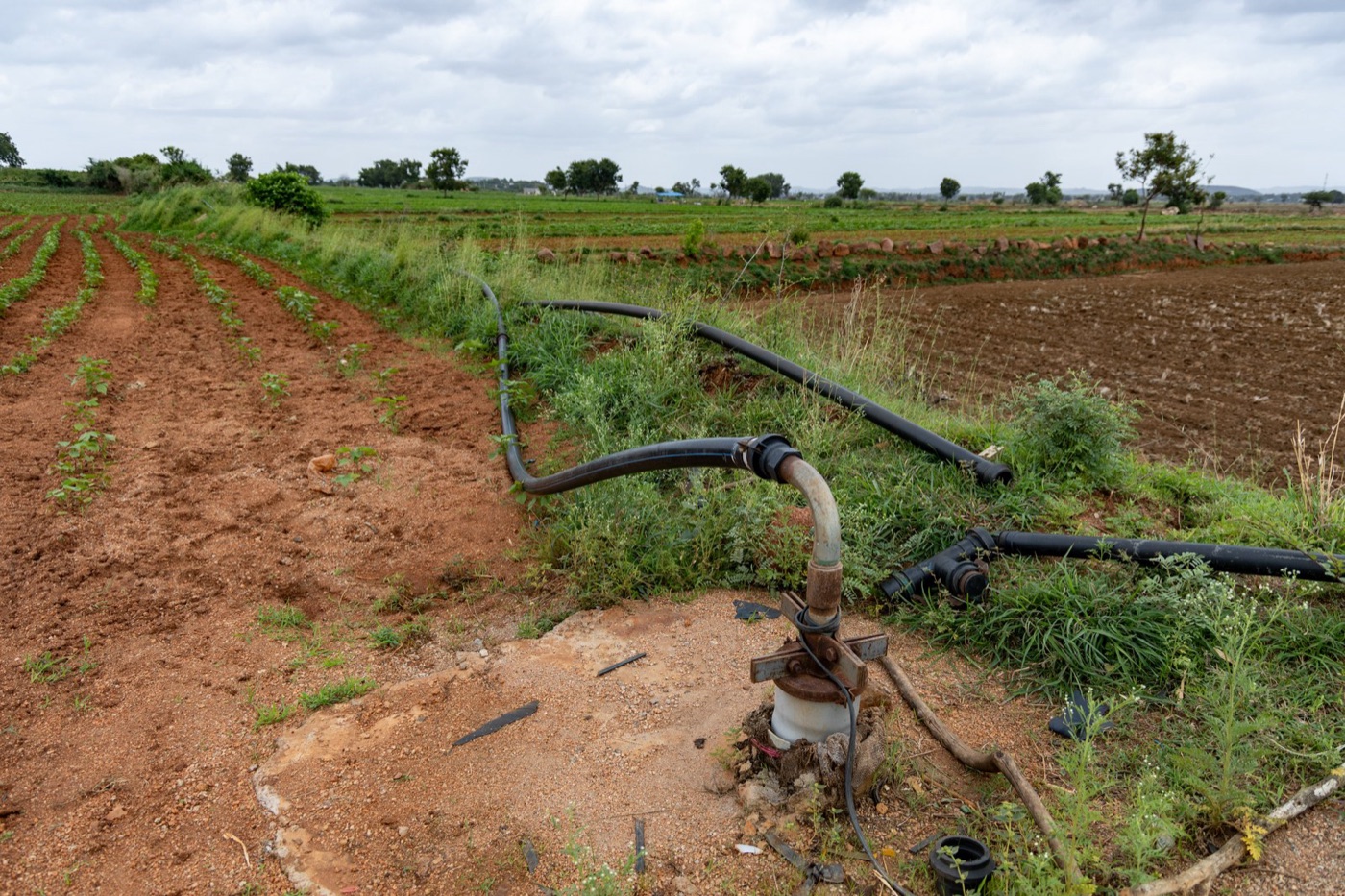
In the soil, fertiliser nitrogen, and the nitrogen in manure and in the residue of the last crop, is turned by bacteria into nitrate, which is the form the plant takes up and also the form that dissolves in water and does not stick to soil. A crop takes up around half of the nitrogen it is given. The rest is lost: some to the air, some to the streams in runoff, and much of it downward, with the rain that soaks through the soil below the roots, into the groundwater. There it stays, because nothing in an aquifer removes it, and it moves with the water, slowly, towards the wells and the springs.
| Nitrate in water | |
|---|---|
| Where it comes from | Fertiliser, manure and crop residue, converted by soil bacteria and leached by rain |
| Share of applied nitrogen a crop takes up | About half |
| Where the rest goes | The air, the streams, and the groundwater |
| Limit for drinking water, WHO and EU | 50 milligrams per litre as nitrate |
| United States limit | 10 milligrams per litre as nitrogen, about the same |
| Groundwater stations above the limit, EU | About 14 percent, and over 20 percent in intensive regions |
What it does
The limit was set by babies. Nitrate in the gut of an infant under about six months is converted by bacteria into nitrite, which binds to the blood's haemoglobin and stops it carrying oxygen, and a baby fed formula made up with high nitrate well water can turn blue and, in the worst cases recorded in the farming districts of the American midwest and Europe in the 1940s and 1950s, die. The condition is methaemoglobinaemia, the blue baby syndrome, and the fifty milligram limit is the level below which it did not occur. The condition is rare now, because the limit is enforced and because well water is tested where babies are fed from it, and it is the reason the number is what it is.
The other effects are under study and argued. Nitrate in the body can form nitrosamines, which cause cancer in animals, and a run of large studies since 2010 has found associations between nitrate in drinking water, at levels below the limit, and cancers of the colon and, in some studies, the thyroid, and with some birth defects. The evidence remains unsettled and the regulators have kept the limit, and the direction of the research is that fifty milligrams may be a limit for babies rather than a safe level for everyone.
In a river, a lake or a coastal bay, nitrate is food for algae, and the nitrogen article describes what follows: the bloom, the dead zone, the toxins. The Gulf of Mexico's dead zone is the nitrate of the corn belt, carried down the Mississippi.
Why the well lags the field
The strangest thing about nitrate is time. Rain that falls on a field takes years to reach the water table below it, in a sandy soil, and decades in a clay or a deep chalk, and the groundwater then moves towards the well at metres a year. The nitrate arriving at a well today fell as fertiliser ten, twenty or forty years ago, and the fertiliser applied this year will arrive at the wells of the 2040s and 2050s whatever the farms do between now and then.
That lag has two consequences. The first is that the nitrate in Europe's and America's groundwater is still rising in many places, not because farming is getting worse but because the water is still carrying the fertiliser of the 1980s and 1990s, when application peaked. The second is that a region that cuts its nitrate losses today sees nothing at its wells for a decade or more, which is the hardest kind of policy to keep. Denmark, which began regulating fertiliser in the mid 1980s after its groundwater and fjords fouled, cut its nitrate leaching by about half over thirty years, and its groundwater nitrate, measured in the wells that draw young water, began to fall in the 2000s. It is the clearest demonstration that the trend can be turned, and of how long it takes.
| The lag | |
|---|---|
| Fertiliser to water table | Years in sand, decades in clay and chalk |
| Water table to well | Metres a year |
| Nitrate arriving at wells now | Fertiliser of the 1980s to 2000s |
| Fertiliser applied now | Reaches wells in the 2040s and 2050s |
| Denmark, regulation from 1985 | Leaching halved; groundwater falling from the 2000s |
Getting it out
A conventional treatment plant does nothing to nitrate. It is dissolved, as the TDS article explains, and it passes coagulation, settling, sand and chlorine untouched. Three things work, and the treatment article's pattern holds: each moves the nitrate rather than destroying it.
Ion exchange resin, chosen for nitrate, swaps it for chloride as the water passes through, and is regenerated with brine, which carries the nitrate off as a concentrated waste. It is the standard fix for a single well and the cheapest. Reverse osmosis removes it with everything else, at the energy and brine cost the membrane article describes. And biological denitrification, which uses bacteria in a reactor fed with a little carbon to turn the nitrate back into nitrogen gas, is the only method that gets rid of it, and it is used at larger plants and, in the wastewater world, at every sewage works that removes nitrogen.
The cheaper fix is not to treat. Utilities blend a high nitrate well with a low one to bring the mix under the limit, or close the well and drill deeper into older water that the fertiliser has not reached yet, or buy a new source. All three are common, and all three are ways of waiting for the field to change.
| Taking nitrate out | |
|---|---|
| Ion exchange | Cheap, standard for a well; a nitrate brine to dispose of |
| Reverse osmosis | Removes it with everything else; energy and brine |
| Biological denitrification | Destroys it; a reactor and a carbon feed; used at scale |
| Blending, deeper wells, new sources | The common fix, and a deferral |
The field
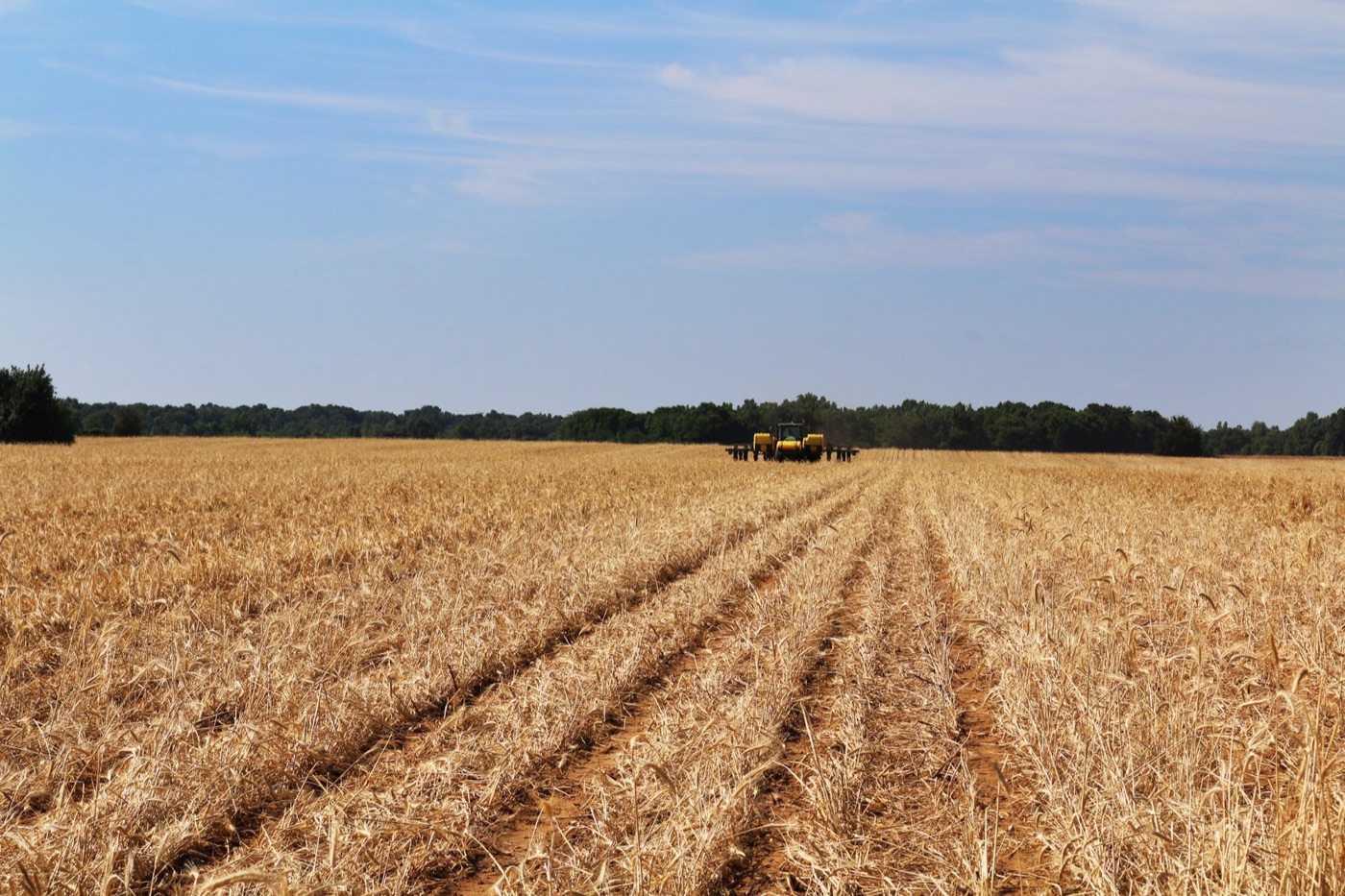
The cure is upstream, and it is known. Apply less nitrogen, and apply it when the crop is growing and can take it up rather than in autumn when it leaches. Test the soil and the crop, and fertilise to the measured need rather than the habit. Plant a cover crop after harvest, to hold the nitrate in living roots through the winter rains instead of letting it wash down. Keep livestock manure out of the wet months and the stream margins. And, in the most intensive regions, keep fewer animals per hectare, which is what the Netherlands has been ordered to do by its courts and its nitrate directive and what its farmers have blocked motorways over.
Europe has had a nitrates directive since 1991 and most of its farming regions are still above the limit, because the directive is enforced unevenly and the lag hides the result. The United States regulates the wells and not the fields. China and India, where fertiliser use per hectare is highest, have barely begun. The groundwater under all of them is a record of the last forty years of farming, moving towards the wells.
What it teaches
Nitrate is the contaminant on this site that connects the field to the tap most directly, and with the longest delay. It is the fertiliser that fed the century, half of which the crop never took, moving down through the soil to arrive at the wells a generation later, where a plant cannot remove it without moving it somewhere else. The only fix is the one on the field, and the reward for making it arrives, in the water, twenty years on. Denmark waited, and its wells are clearing. Most places have not started the clock.
Fifty milligrams a litre, set by a blue baby, and the water arriving now fell on the fields of the 1990s.
Sources
- World Health Organization, Guidelines for Drinking water Quality: nitrate guideline of 50 mg/L as nitrate, based on methaemoglobinaemia in infants.
- European Environment Agency (2021). Nitrate in groundwater: about 14 percent of groundwater monitoring stations in the EU above 50 mg/L, higher in intensive farming regions.
- US Geological Survey, National Water Quality Assessment: nitrate in shallow groundwater beneath agricultural land.
- Ward, M.H. et al. (2018). Drinking water nitrate and human health: an updated review. International Journal of Environmental Research and Public Health 15.
- Hansen, B. et al. (2017). Groundwater nitrate response to sustainable nitrogen management. Scientific Reports 7. Denmark's nitrate trend since 1990.
- Photographs: opener: Tractor spreading fertilizer(^) near Down Barn - geograph.org.uk - 4710573 by Vieve Forward (CC BY-SA) via Wikimedia Commons; inline: Borewell pump and irrigation pipes in a Raichur, India agricultural fields growing cotton by Vraj Acharya (CC BY-SA) via Wikimedia Commons; inline: Planting Peanuts Into a Winter Wheat Cover Crop IMG 5273 by Alabama Extension (CC0) via Wikimedia Commons.