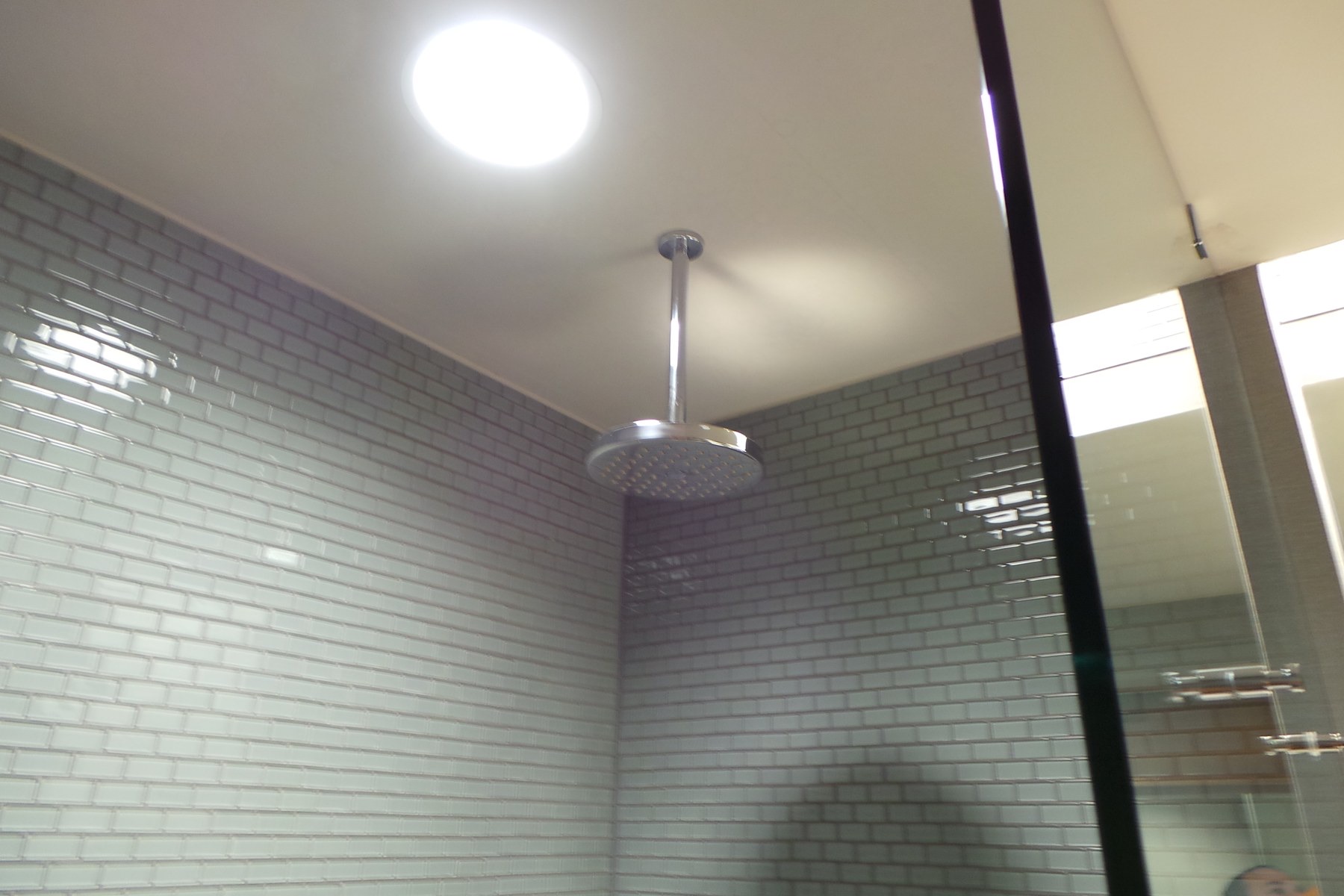
Plain Water: Legionella
The bacterium that killed twenty nine people at a convention in Philadelphia in 1976 lives in warm water, in the pipes of buildings, in cooling towers, hot tubs and showers, and it kills by being breathed rather than drunk. What Legionella is, why it is the water disease of the rich world, why the answer is a temperature, and what Flint's outbreak had to do with the lead.
In July 1976 the American Legion held its annual convention at a hotel in Philadelphia, and within a week of going home 182 of the people who had attended were in hospital with pneumonia, and 29 of them died. It took six months to find the cause: a bacterium nobody had described, living in the water of the hotel's air conditioning cooling tower, sprayed into the air above the street and drawn into the lobby, and breathed. The bacterium was named Legionella, the disease Legionnaires' disease, and the water industry acquired a problem it had not known it had.
This article is about the water disease that is caught by breathing rather than drinking, that grows in the pipes of buildings rather than the rivers outside them, and that is, for that reason, the characteristic water disease of the countries with the most plumbing.
What it is
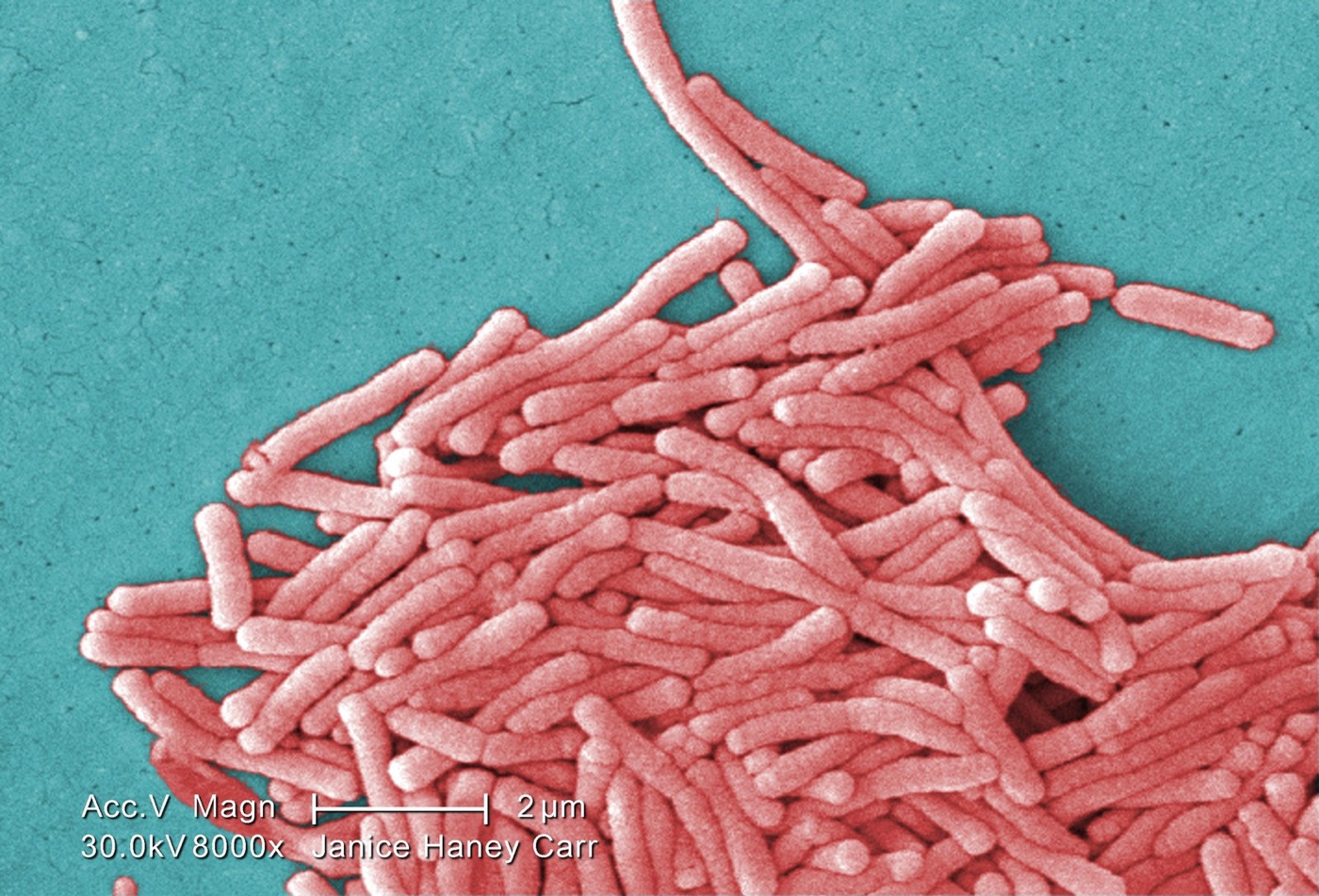
Legionella is a bacterium that lives, in small numbers, in almost every river, lake and patch of wet soil on Earth, where it does no harm to anyone. It has one habit that matters: it multiplies inside amoebae and in the film of slime, the biofilm, that coats any surface water touches, and it does so fastest in water between about 25 and 45 degrees that is standing still. In a river the water is cold and moving and the bacterium stays rare. In a building's hot water tank, run at 40 degrees to save energy, in a dead leg of pipe behind a closed valve, in a cooling tower, in a hot tub, in the head of a shower that has not been used for a fortnight, it finds warmth, stillness and slime, and its numbers rise by a thousand fold.
It is not caught by drinking. A person infects themselves by breathing in a fine mist of water that carries the bacterium, from a shower, a tap, a fountain, a hot tub's bubbles, or the plume of a cooling tower, and the bacterium lodges in the lungs, where it does what it does in an amoeba, which is to multiply inside the cells that are meant to destroy it. The result is a pneumonia, severe, treatable with the right antibiotics if it is recognised, and fatal in about one case in ten, more among the old, the smokers and the people whose immune systems are already weak.
| Legionella, in short | |
|---|---|
| Lives in | Rivers, soil, and the biofilm inside pipes, tanks and towers |
| Grows between | About 25 and 45 degrees, fastest around 37 |
| Killed by | Water above 60 degrees; disinfectant; drying |
| Caught by | Breathing a mist, never by drinking |
| Kills | About one patient in ten |
| Reported cases | About 10,000 a year in the European Union, a similar number in the United States, and rising |
Where it grows
Every outbreak is a building, and the buildings are of a few kinds.
Cooling towers are the classic source, because a cooling tower is a machine for spraying warm water into the air. The article on data centres describes them: warm water from an air conditioning plant or a factory, sprayed through a tower on the roof, where some evaporates and the rest collects at the bottom at about 30 degrees, full of nutrients and slime, and is sprayed again. A neglected tower breeds Legionella by the billion and sends it downwind in a plume, and the largest outbreaks on record, in Philadelphia, in Murcia in Spain in 2001 with more than 600 cases, in Quebec, in Melbourne, have been towers.
Hot water systems are the commonest source, in hospitals, hotels, care homes and apartment blocks, because they are large, warm, and full of dead legs and little used outlets where water stands. A hospital's hot water at 43 degrees, chosen so that patients cannot scald themselves, is exactly the temperature the bacterium prefers. Showers deliver it as a mist to the people least able to fight it.
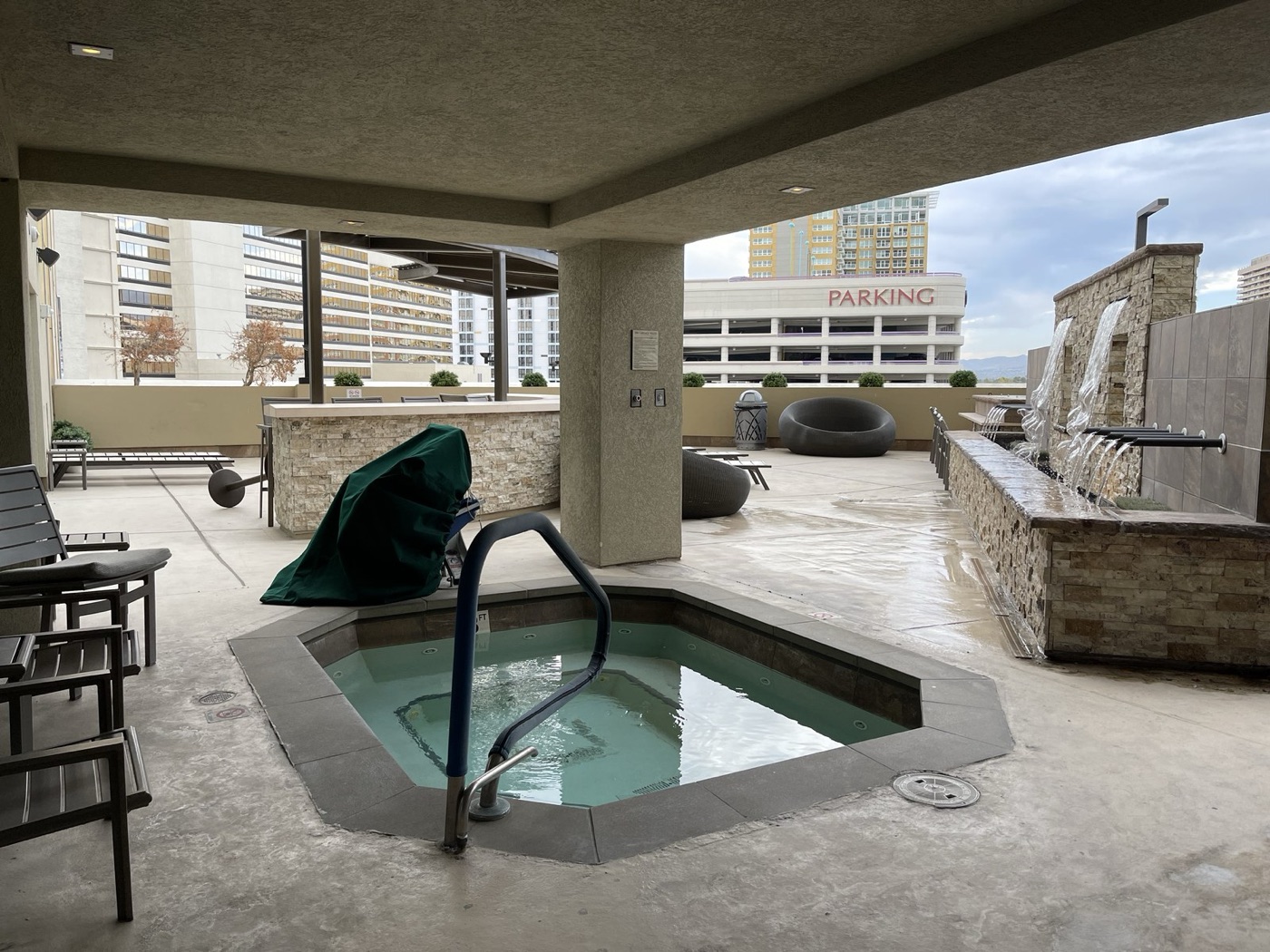
And then the smaller things: hot tubs and spa pools, which are warm, bubbling and shared; decorative fountains in lobbies; the water in a car's windscreen washer, which has caused cases; and, in the largest single source of cases in some countries, the domestic hot water of ordinary homes where the tank runs cool.
The temperature
The control is, above everything, a number. Legionella does not grow below about 20 degrees, and it dies above 60, and the whole of building water safety turns on keeping every part of the system on one side of that band or the other and never in the middle. The code of practice in the United Kingdom, which is typical, requires hot water to be stored at 60 degrees or more and to reach every tap at 50 within a minute, and cold water to be kept below 20, which in a hot building in summer means insulating the tanks and the pipes. Dead legs are cut out. Little used outlets are flushed weekly. Showers are descaled and cleaned, because the scale of the hard water article is where the slime grows. Cooling towers are dosed with biocide, cleaned and tested on a schedule, and, in most countries since Murcia, registered with the authorities so that an outbreak can be traced.
| Keeping Legionella out of a building | |
|---|---|
| Hot water stored | At or above 60 degrees |
| Hot water at the tap | At least 50 degrees within a minute |
| Cold water | Below 20 degrees, insulated |
| Dead legs and unused outlets | Removed, or flushed every week |
| Cooling towers | Biocide, cleaning, monthly testing, registration |
| Where temperature cannot be used, as in hospitals | Chlorine dioxide, copper and silver ions, or point of use filters on the showers |
None of it is difficult, and all of it is maintenance, which is the thing buildings stop doing when money is short. The outbreaks that still happen are, almost without exception, in buildings where the schedule lapsed: a hotel whose tower was not cleaned, a hospital whose hot water was turned down, a housing block whose tanks were forgotten.
Flint
The clearest recent case of what neglect does came in Flint, Michigan, in 2014 and 2015, and it is usually told as a story about lead. It was also a story about Legionella, and the two were the same story. When the city switched its water source to the Flint River to save money, the new water was more corrosive and, without the corrosion control the old supply had carried, it stripped the lead from the pipes, which is the part that made the news. The same corrosion consumed the chlorine in the water, so that the disinfectant that keeps bacteria down in a network fell, in parts of the city, close to nothing. In the eighteen months that followed, the county recorded about ninety cases of Legionnaires' disease and twelve deaths, against a handful in a normal year, most of them among people who had been in the city's largest hospital, whose water came from the same pipes. A study afterwards found that the risk of the disease rose as the chlorine in the water fell, street by street. The lead poisoned the children. The Legionella killed the adults, and it did so because a water system had been allowed to run without the disinfectant that the disinfection article describes as the last line of defence.
The hospital
The building where the disease matters most is the one whose patients can least survive it, and hospitals have their own version of the rules. Their hot water cannot be run at 60 degrees at the tap, because patients scald, so they mix it down at the outlet with thermostatic valves, which are themselves a place where warm water stands, and which have to be serviced. Their plumbing is the longest and oldest of any building type, with wards closed and reopened, wings added, and dead legs behind every renovation. And their showers deliver mist to people on ventilators and chemotherapy. The hospitals that have kept the disease out have done so by treating their water as a second pharmacy: continuous dosing of the whole system with chlorine dioxide or with copper and silver ions, which kill the bacterium in the biofilm where temperature cannot reach; point of use filters on the showers of the most vulnerable wards, changed monthly; and a sampling programme that tests the outlets and acts on the results. It is expensive, and it is cheaper than an outbreak, which closes the wards and, in the cases that have reached court, costs more than the plumbing would have.
Why it is rising
Cases of Legionnaires' disease have risen several fold in Europe and the United States since the 1990s, and the reasons are the reasons buildings have changed. Populations are older, and the old are the ones the disease kills. Water heaters are run cooler to save energy, and low flow fixtures leave more water standing in pipes. Buildings are larger and their plumbing longer, with more dead legs. Cooling towers have multiplied with the air conditioning and the data centres. And, on the other side, doctors test for it more, and find more of what was always there.
The pandemic added a lesson of its own. In 2020 offices, hotels and schools stood empty for months with their water systems full and warm, and the guidance issued in every country before they reopened was, in effect, this article: flush every outlet, heat the hot water, clean the towers, and test, because a building that has stood still is a building that has been growing Legionella.
What it teaches
Legionella is the water disease that the treatment plant cannot prevent, because it grows after the water has left the plant, in the last hundred metres of pipe that belong to the building rather than the utility. It is the reason the water industry's responsibility does not end at the meter, and the reason every large building has, or should have, a person whose job is a thermometer and a schedule. The cure was known within a year of Philadelphia. The outbreaks since have been buildings that did not apply it.
Sixty degrees in the tank, fifty at the tap, and a cooling tower somebody cleans.
Sources
- Fraser, D.W. et al. (1977). Legionnaires' disease: description of an epidemic of pneumonia. New England Journal of Medicine 297. The 1976 Philadelphia outbreak, 182 cases and 29 deaths.
- World Health Organization (2007). Legionella and the prevention of legionellosis.
- European Centre for Disease Prevention and Control, Legionnaires' disease annual epidemiological reports: about 10,000 cases a year in the EU, most from building water systems.
- Zahran, S. et al. (2018). Assessment of the Legionnaires' disease outbreak in Flint, Michigan. PNAS 115. The link between the change of water source, low chlorine and the outbreak.
- UK Health and Safety Executive, Approved Code of Practice L8 and HSG274: temperature regimes of 60 °C storage and 50 °C at outlets.
- Photographs: opener: InterContinental Chicago O'Hare (11299940475) by beowabbit from Quincy, MA, United States (CC BY-SA) via Wikimedia Commons; inline: Legionella pneumophila (SEM) by Janice Haney Carr; provided by CDC/ Marg (public domain) via Wikimedia Commons; inline: The Spa at the Silver Legacy - 2021-10-17 - Sarah Stierch 05 by Missvain (CC BY) via Wikimedia Commons.