Plain Water: Nitrogen
The element that feeds the world's crops also arrives at every sewage works, as ammonia, and does three kinds of harm to a river if it is let through. What nitrogen does in water, how a plant removes it with two sets of bacteria that want opposite things, and why the dead zones at the mouths of rivers are made of fertiliser.
The air is four fifths nitrogen, and for all of history it did nothing, because nitrogen gas is among the least reactive substances there is. Then, in 1909, a German chemist found a way to force it into ammonia, the fertiliser industry was born, and the nitrogen that feeds about half the people alive today has been drawn from the air ever since. It passes through crops, through people and animals, into drains and rivers and, at the end, into the sea, and at every step it is doing something. This article is about the step that a sewage works handles, and about why the element that feeds the world has become one of the water industry's largest jobs.
Where it comes from
Nitrogen arrives at a treatment plant almost entirely as ammonia, and almost entirely from urine. The body takes in protein, uses the nitrogen, and excretes the surplus as urea, which breaks down into ammonia within hours of reaching the sewer. Typical raw sewage carries around 40 milligrams of nitrogen per litre, most of it ammonia, and it is one of the few things in sewage that the classic plant of the twentieth century, described in the ETP article, did not remove. The bacteria in the aeration tank ate the organic matter and left the ammonia to flow to the river.
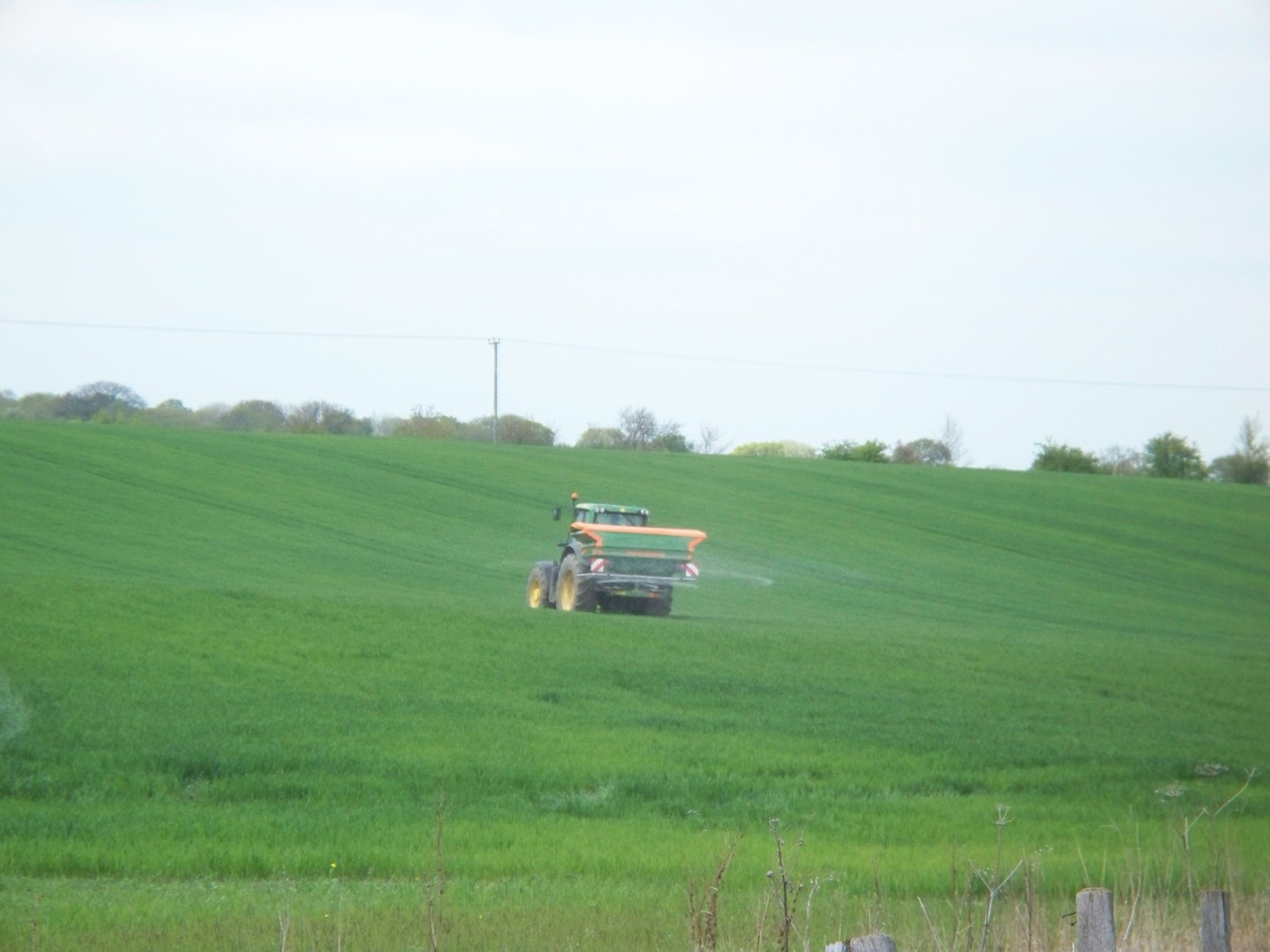
Industry adds its own. Fertiliser plants, food processing, tanneries with their ammonium salts from deliming, and the runoff from farmland all carry nitrogen, as ammonia or as nitrate, and farmland is the largest source of all, because fertiliser that the crop does not take up washes off into streams and down into groundwater.
| Nitrogen in water | Form | Source |
|---|---|---|
| Ammonia | Dissolved gas, and the ammonium ion | Urine, industry, manure |
| Nitrate | An oxidised salt, very soluble | Fertiliser, and the product of nitrification |
| Organic nitrogen | In proteins and their fragments | Food, waste, biology |
| Nitrogen gas | Dissolved from the air | Harmless, and the goal of treatment |
Three kinds of harm
Nitrogen let through to a river does three different things, and each one is a reason to remove it.
Ammonia is toxic. In its uncharged form, ammonia gas dissolved in water, it damages the gills of fish at concentrations of a fraction of a milligram per litre, and the share of ammonia in that form rises with pH and temperature, as the pH article described. A warm, alkaline river below an old sewage works in summer can kill fish with ammonia alone.
Ammonia consumes oxygen. Bacteria in a river oxidise ammonia to nitrate, and they use a great deal of oxygen to do it, about four and a half milligrams for every milligram of nitrogen. The 40 milligrams in a litre of sewage carry an oxygen demand nearly as large as the organic matter's, and the BOD article's sag in the river's oxygen curve is deepened by it.
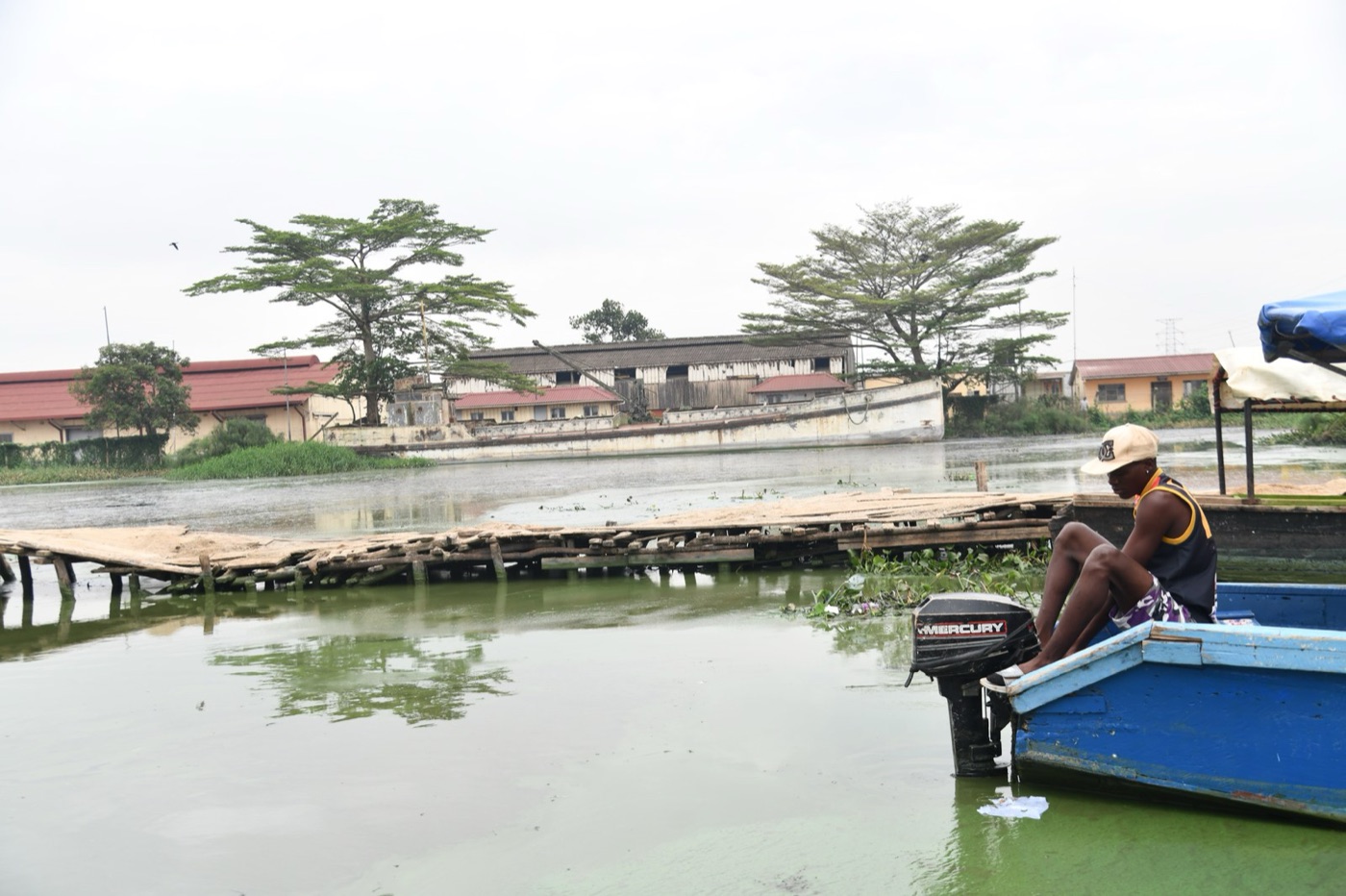
Nitrogen is fertiliser. Whatever survives the river reaches a lake, an estuary or the sea, and there it does what it does on a field: it grows things. Algae bloom on the nitrogen, die, sink and rot, and the rotting consumes the oxygen in the deep water until nothing can live there. The process is called eutrophication, and its result is the dead zone: the area of the Gulf of Mexico off the Mississippi delta, thousands of square kilometres in a bad summer, where the bottom water has no oxygen, and the basins of the Baltic where the same has happened over decades. Those dead zones are made, in large part, of fertiliser from the farms of the Mississippi and Baltic basins, with the cities' sewage adding its share.
Two sets of bacteria that want opposite things
Removing nitrogen from water is biology, like most of treatment, and it is a two step biology that a plant has to run in two different environments.
The first step is nitrification. A group of slow growing bacteria, with plenty of oxygen, oxidise ammonia to nitrite and then to nitrate. They are fussy: they need more oxygen than the bacteria that eat organic matter, they need the water to be warm enough, they need alkalinity, which they consume as they work, and they grow so slowly that a plant has to keep its sludge for longer, ten days or more, to hold onto them. A plant designed only to remove organic matter loses them; a plant designed to remove nitrogen keeps its aeration tanks larger and its bacteria older to keep them.
The second step is denitrification. A different group of bacteria, in the absence of oxygen, use nitrate instead of oxygen to breathe, and in doing so convert it to nitrogen gas, which bubbles out of the water and returns to the air. They need organic matter to eat while they do it, which means the plant has to bring nitrate rich water back to a tank where there is still food and no air.
| Step | Bacteria want | What happens | The plant provides |
|---|---|---|---|
| Nitrification | Oxygen, warmth, alkalinity, time | Ammonia becomes nitrate | Large aeration tanks, long sludge age, lime if needed |
| Denitrification | No oxygen, and something to eat | Nitrate becomes nitrogen gas | An anoxic tank fed with nitrate and raw sewage |
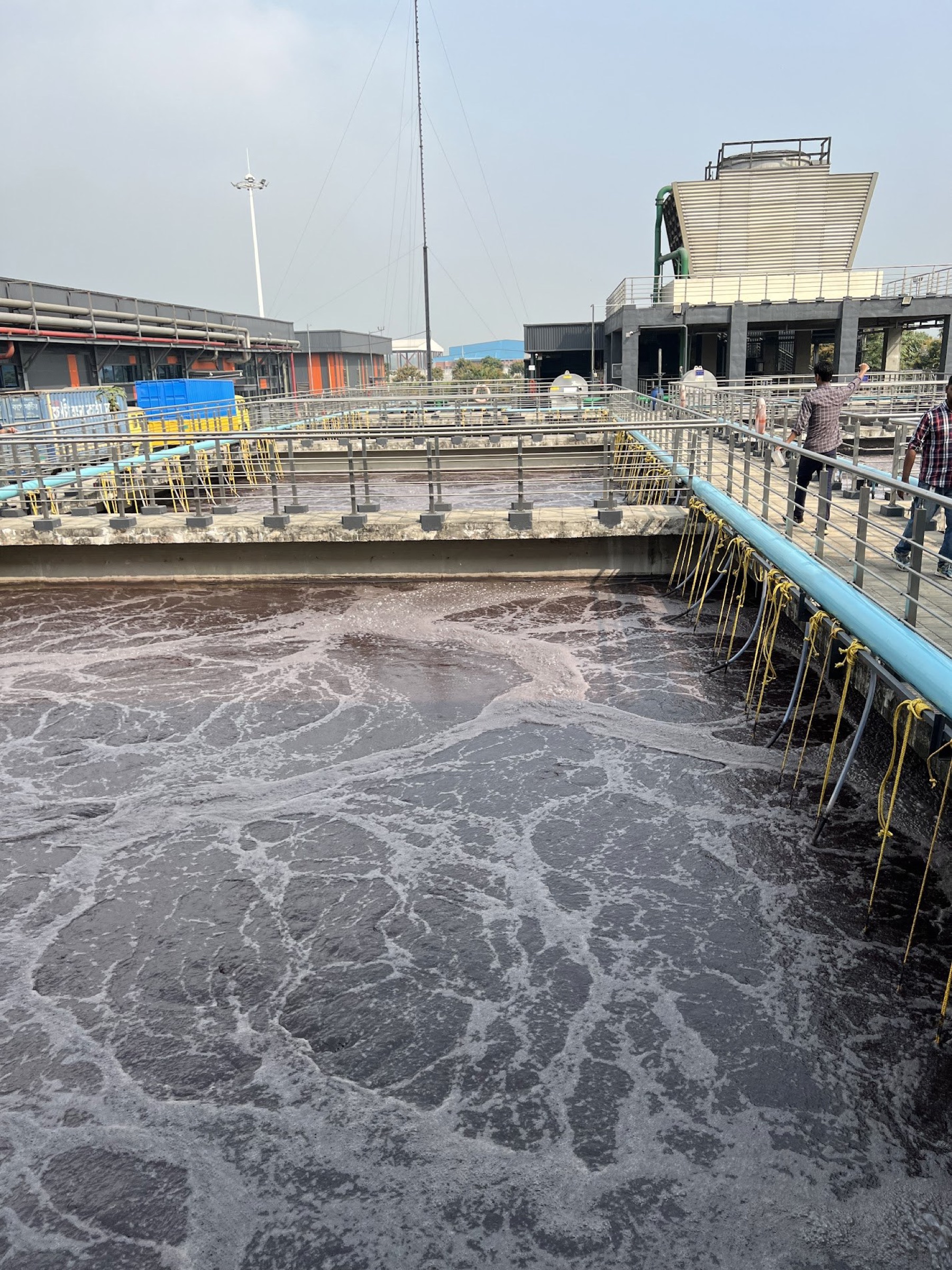
The usual arrangement puts an unaerated tank in front of the aerated one, feeds it with the incoming sewage for food, and pumps nitrate rich water back from the end of the aeration tank into it. The water circulates: ammonia is oxidised in the aerated tank, the nitrate is sent back to the anoxic tank, the bacteria there breathe it to gas, and the gas leaves. It is elegant, it costs energy and tank volume, and it is the reason a modern plant has more tanks than an old one.
The bacteria that skip a step
In the 1990s, in a Dutch treatment plant, engineers noticed ammonia disappearing from a tank where, by the textbook, it should have stayed, and the explanation turned out to be a group of bacteria nobody had described. They convert ammonia and nitrite directly to nitrogen gas, without oxygen and without needing anything to eat, in a single step. They are called anammox bacteria, from anaerobic ammonium oxidation, they grow extraordinarily slowly, and they are red. Since their discovery, plants have learned to farm them, mostly on the concentrated ammonia liquor that drains from sludge digesters, where they remove nitrogen using a fraction of the air and none of the carbon that the two step process needs. The technology is spreading to the main flow of the largest plants, and it is the first fundamental change in how nitrogen is removed since the aeration tank.
Nitrate under the fields
The nitrogen that never reaches a plant is the larger problem, and it is underground. Fertiliser that a crop does not take up leaches as nitrate through the soil into the aquifer below, where it stays for decades, because nothing down there removes it. Across the arable regions of Europe and North America the nitrate in groundwater has been rising since the 1950s, and wells that supply towns in Brittany, Denmark, the English Midlands and the American Corn Belt have passed the drinking water limit and been closed, blended or fitted with treatment. The Nitrates Directive of 1991 limits how much fertiliser and manure may be spread in Europe's vulnerable zones, and the water in the aquifers is still responding to what was spread before it.
The limits
Europe requires nitrogen removal from sewage works above a certain size that discharge to sensitive waters, which now means most of them: 15 milligrams per litre of total nitrogen, or 10 for the largest plants, from the 40 that arrives. The Baltic states, the Netherlands and Denmark, whose seas showed the damage first, go further. The United States sets limits catchment by catchment, with the Chesapeake Bay programme the largest. And the drinking water limit for nitrate, 50 milligrams per litre as nitrate, exists because nitrate in groundwater, from a century of fertiliser, is now above that limit under farmland across Europe and North America, and a well that exceeds it is closed or blended.
| Nitrogen limits | |
|---|---|
| Raw sewage | About 40 mg/L total nitrogen |
| Treated effluent, EU sensitive areas | 15 mg/L, or 10 for large plants |
| Drinking water, EU | 50 mg/L as nitrate, about 11 mg/L as nitrogen |
The loop
The nitrogen that a fertiliser factory took from the air a century ago has been going round ever since: into crops, into food, into people, into sewers, into rivers, and, where a plant removes it, back into the air as gas, to be taken again. The plant closes the loop that the factory opened. The nitrogen that a plant does not remove, and the far larger share that washes off farmland without ever passing a plant, goes to the sea instead, and the dead zones are the sea's account of it.
That is why nitrogen is one of the water industry's largest jobs, and why it is one the industry took on late: the harm is downstream, slow, and diffuse, and a plant that lets ammonia through kills nothing at its own outfall. The tanks that remove it are the sewage works' answer to the fertiliser factory, and the next article is about the other nutrient, the one that cannot be returned to the air, because it was never there.
Sources
- Metcalf and Eddy, Wastewater Engineering, Treatment and Resource Recovery (5th edition). Nitrogen in raw sewage; nitrification and denitrification; process configurations.
- Council Directive 91/271/EEC, Annex I: total nitrogen limits of 15 mg/L (10 mg/L for larger plants) for discharges to sensitive areas.
- Council Directive 91/676/EEC, the Nitrates Directive, and the drinking water limit of 50 mg/L as nitrate.
- Rabalais, N.N. et al. (2002). Gulf of Mexico hypoxia, the dead zone. Annual Review of Ecology and Systematics 33. Nutrient driven hypoxia at the mouth of the Mississippi.
- Photographs: Cesar Chu Ortega, from treatment plants in India and Bangladesh; inline: Spreading the fertilizer - geograph.org.uk - 1893815 by Michael Dibb (CC BY-SA) via Wikimedia Commons; inline: A seasonal green layer that appears on lake Victoria, locally called Mubiru by Ssemmanda will (CC BY-SA) via Wikimedia Commons.