
Plain Water: PFAS
A family of several thousand chemicals that repel water and grease, that are in nearly every person's blood, and that do not break down. What PFAS are, how they got into drinking water, why the new limits are measured in parts per trillion, and what it takes to get them out.
There is a class of chemicals that most people have in their blood and almost nobody could name until a few years ago. They are in the coating of a non stick pan, the finish on a waterproof jacket, the lining of a fast food wrapper, the foam that airports keep for fuel fires, and, at concentrations measured in parts per trillion, in the tap water of a large share of the towns in the industrialised world. They are called PFAS, they do not break down, and in 2024 the United States set a limit for two of them in drinking water that is the strictest limit ever set for any substance.
This article is about what they are, how they got into water, what the new numbers mean, and what it takes to get them out. It is a subject on which the water industry has had to learn quickly, because the chemistry that makes these compounds useful is the chemistry that makes them a problem.
What they are
PFAS stands for per and polyfluoroalkyl substances, and the family runs to several thousand compounds. What they share is a chain of carbon atoms in which the hydrogens have been replaced by fluorine. The carbon fluorine bond is the strongest single bond in organic chemistry, and a molecule built of them is indifferent to almost everything: it repels water, it repels oil, it survives heat, acid, sunlight and bacteria. That indifference is why they were made, from the 1940s onwards, and it is why every kilogram ever made is still somewhere.
The two best known are PFOA, used to make Teflon, and PFOS, used in Scotchgard and in firefighting foam. Both were phased out of production in the United States and Europe in the 2000s and 2010s, after their makers' own studies of their workers linked them to kidney and testicular cancer, thyroid disease, high cholesterol and effects on the immune system and on birth weight. The replacements, with shorter chains and new names, are less studied, and several of them are now regulated too.
| The PFAS family | |
|---|---|
| Compounds | Several thousand |
| Made since | The 1940s |
| Used in | Non stick coatings, waterproofing, food packaging, firefighting foam, chrome plating, semiconductors |
| Why they persist | The carbon fluorine bond does not break in nature |
| Found in | The blood of about 97 percent of people tested in the United States |
How they got into water
The routes are few and well mapped, and they are the reason this is a water article.
The first is the factory. Plants that made or used PFAS discharged them, for decades, into the rivers beside them. The case that made the chemicals famous was in Parkersburg, West Virginia, where a plant making Teflon released PFOA into the Ohio River and the local groundwater for forty years, and where a lawsuit brought by a farmer whose cattle were dying uncovered the company's own knowledge of the harm. A similar story has since been told in the Netherlands, in Italy's Veneto, in Belgium and in several other places, each with a factory and a plume in the aquifer.
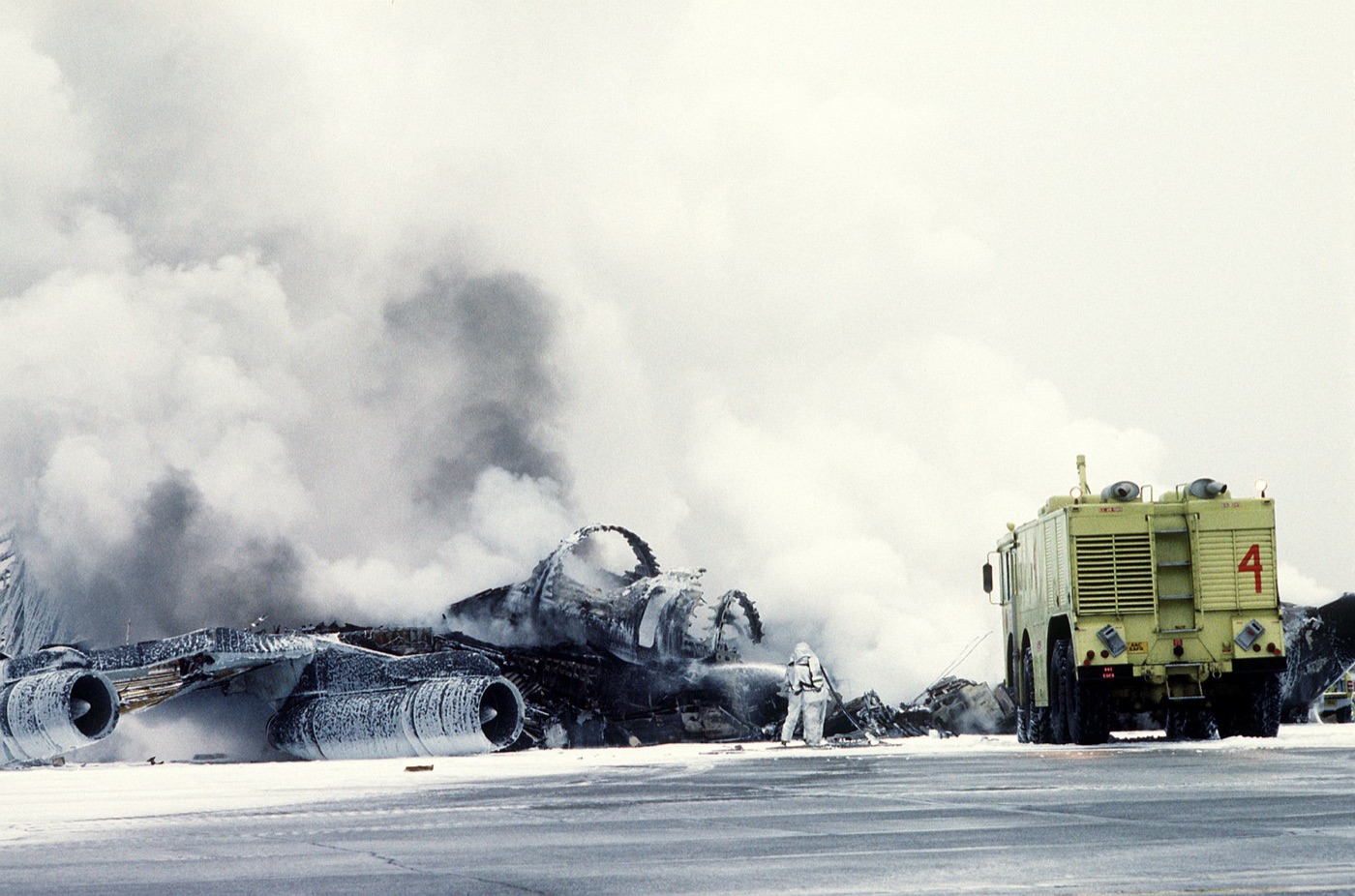
The second is foam. Firefighting foam for fuel fires was made with PFAS because nothing else spreads so well over burning petrol, and it was sprayed for training, year after year, at airports and military bases. The foam soaked into the ground and reached the wells. Around a large share of the air bases in the United States, and around civil airports in many countries, the groundwater now carries PFAS at concentrations that make it undrinkable.
The third is the sewage works. PFAS in products go down the drain and arrive at the treatment plant, where the biology described elsewhere on this site cannot touch them. They pass through into the effluent, and they concentrate in the sludge. Where the sludge is spread on farmland, as it is in much of Europe and the United States, the chemicals go to the soil and, from there, to the crops and the groundwater. Maine banned sludge spreading in 2022 after finding whole farms contaminated.
The fourth, quieter route is rain. PFAS are volatile enough to travel in the air, and they now fall in rainwater everywhere on Earth, at levels that in some places exceed the new drinking water limits before the water has touched the ground.
The numbers
The new limits are small enough to need explaining. The United States set its limit for PFOA and PFOS at four nanograms per litre. A nanogram is a billionth of a gram, so this is four parts per trillion. A single drop of pure PFOA in twenty Olympic swimming pools of water would exceed it. The European Union set a limit of a tenth of a microgram per litre, a hundred nanograms, for the sum of twenty named PFAS, which applies across the Union from 2026, and several member states have gone lower.
| Drinking water limits | |
|---|---|
| United States, PFOA and PFOS, each | 4 nanograms per litre, from 2024 |
| United States, PFHxS, PFNA, HFPO DA | 10 nanograms per litre |
| European Union, sum of 20 PFAS | 100 nanograms per litre, from 2026 |
| Denmark, sum of 4 PFAS | 2 nanograms per litre |
| A part per trillion | A drop in about twenty swimming pools |
The reason for the tiny numbers is that the compounds accumulate. A person drinking water at a few parts per trillion for years carries the chemicals at parts per billion in the blood, a thousand times higher, because the body clears them slowly, over years. The limits were set by working backwards from the blood level at which effects were seen, and they came out below what most laboratories could measure ten years ago.
Getting them out
The conventional plant does nothing to PFAS. Coagulation, settling, sand filtration and chlorine, the chain that has made tap water safe for a century, leave the concentration where it was, and the biology of a sewage works leaves it there too. Three methods work, and all three are familiar from this site.
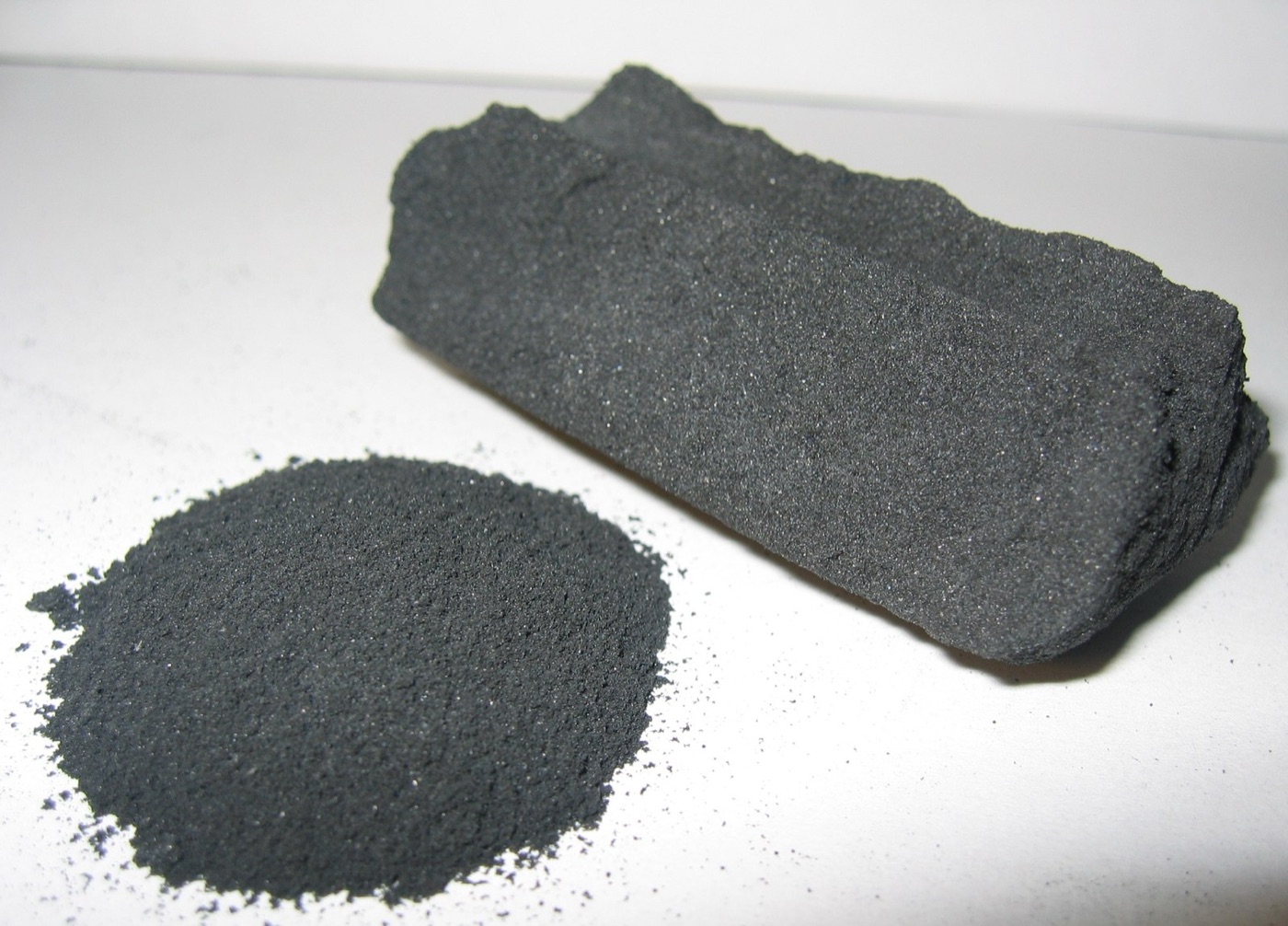
Activated carbon, the same material as in a jug filter, adsorbs the longer chained PFAS well and the shorter ones poorly, and a large bed of it, replaced or regenerated every year or two, is the most common fix in the United States. Ion exchange resin, chosen for the job, holds them more tightly and for longer, and is replacing carbon at many plants. Reverse osmosis, described in its own article, removes nearly all of them, along with everything else, at the cost of pressure and a brine.
| Treatment | Removes | The catch |
|---|---|---|
| Granular activated carbon | Long chain PFAS well, short chain poorly | Large beds, frequent replacement |
| Ion exchange resin | Most PFAS, at high capacity | The spent resin has to be destroyed |
| Reverse osmosis | Nearly all PFAS | Energy, and a brine that now holds them |
Each method has the same problem at the end. The chemicals have been moved, from the water to a bed of carbon, a drum of resin or a stream of brine, and they are still indestructible. Burning the spent carbon at very high temperatures is the current answer, and there is real argument about whether ordinary incinerators break the bond or scatter the compounds. Newer methods, using electricity, ultraviolet light or superheated water, are in trials. For now, the industry is very good at taking PFAS out of water and not yet good at making them go away.
Where a reader meets it
Most people meet PFAS first as a question about their own tap. In the United States and Europe the utilities are now required to test and to publish, and a reader who wants to know what is in their water can, for the first time, look it up. Where the level is above the limit, the utility has a few years to fix it, and the fix is one of the three above. In the meantime the household answers are limited and worth knowing. A jug filter with activated carbon removes some PFAS and is rated for that by a few makers; most are not, and a filter that is not rated for PFAS should be assumed to pass them. An under sink reverse osmosis unit removes nearly all of them and is the most reliable home fix. Bottled water is no guarantee, since it is often drawn from the same aquifers and tested less. Boiling does nothing, and concentrates them slightly. The pan in the kitchen, which is where the story began, is a small route by comparison with water, since the coating is inert once it is made; the chemicals of concern were in the making of it, and in the river next to the plant that made it.
The cost, and who pays
The utilities that have to meet the new limits estimate the cost in the tens of billions of dollars in the United States alone, in carbon beds, resin vessels and, in the worst cases, membrane plants, and the argument about who pays has moved to the courts. The manufacturers have settled with water utilities for more than ten billion dollars, and more cases are pending. It is the largest liability in the history of drinking water, and it arises from a family of chemicals that were, for most of their history, legal to discharge.
What it teaches
PFAS are the clearest example on this site of the difference between clean water and water that contains nothing harmful. The plants that produce the tap water of the industrialised world were built to remove particles and kill germs, and they do it well. They were never designed for a molecule that survives everything and matters at a part per trillion, because no such molecule was known when they were built. The industry is now retrofitting for it, at a cost that will be on water bills for a generation, and it will be retrofitting for the next such molecule after that. The lesson is upstream. A chemical that cannot be destroyed should not be made unless there is somewhere for it to go, and for eighty years nobody asked.
Four parts per trillion. The number is very small, and the reason it is that small is that the chemical never leaves.
Sources
- US Environmental Protection Agency (2024). PFAS National Primary Drinking Water Regulation: maximum contaminant levels of 4.0 ng/L for PFOA and PFOS, with limits for PFHxS, PFNA and HFPO DA.
- European Union, Directive (EU) 2020/2184 on the quality of water intended for human consumption: 0.1 µg/L for the sum of 20 PFAS, and 0.5 µg/L for total PFAS, applying from 2026.
- US CDC, National Health and Nutrition Examination Survey: PFAS detected in the blood of about 97 percent of Americans tested.
- Interstate Technology and Regulatory Council (2023). PFAS Technical and Regulatory Guidance Document: sources, fate and treatment.
- Rich, N. (2016). The lawyer who became DuPont's worst nightmare. New York Times Magazine. The Parkersburg case.
- Photographs: opener: Circulon by Colin (CC BY-SA) via Wikimedia Commons; inline: A crash crewman uses a handline from a P-2R aircraft firefighting and rescue truck to spray a foam-water agent on an Alaska Air National Guard KC-135E Stratotanker aircraft that exp - DPLA - d27b87fa3138f0a439114d015657135a by Department of Defense. American Forces I (public domain) via Wikimedia Commons; inline: Activated Carbon by Ravedave (talk) (CC BY) via Wikimedia Commons.