Plain Water: Sludge
A treatment plant does not make dirt disappear. It gathers everything it took out of the water into one pile, and that pile is almost entirely water, eats up to half the running costs, and is at once a fertiliser, a fuel and a problem. Where the dirt actually goes.
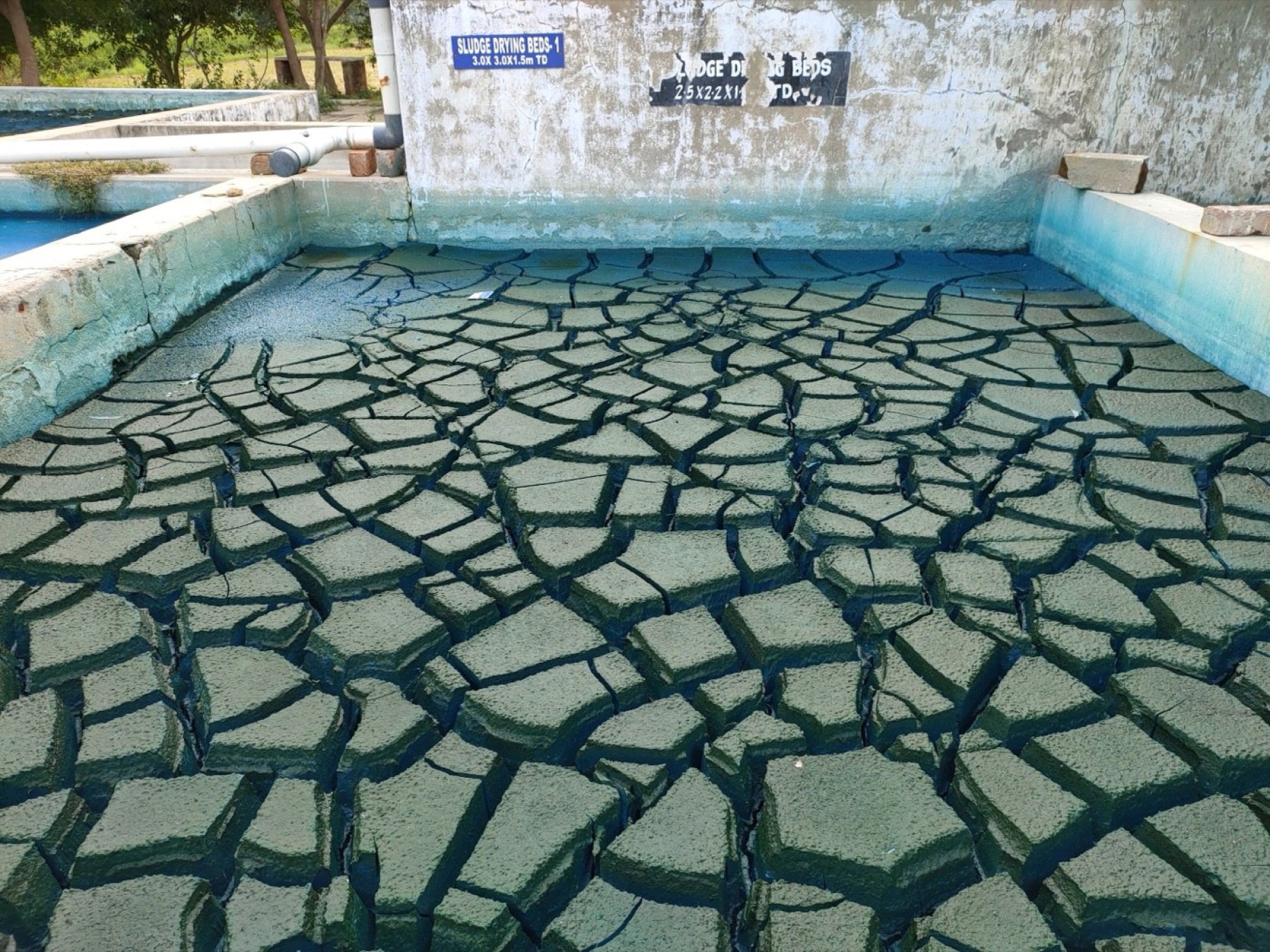
Every treatment plant has a corner that visitors are not taken to. It is downwind of the offices, it has its own access road, and on a warm day it is where the smell comes from. Trucks come and go. There may be a row of long shallow beds with something dark drying in them, cracked like a riverbed in a drought. This is where the dirt goes, and it is the part of the water industry that nobody puts on the brochure.
The previous articles in this series followed water into a plant and out again, cleaner. This one follows the other stream. A plant does not destroy pollution. It sorts. Clean water leaves by one pipe, and everything that was in it is gathered into a single pile, and the pile has a name.
Where sludge comes from
Sludge is produced at two points in a plant, and both were mentioned in the article on the ETP.
The first is the settling tank at the front, where the heavy solids in the incoming water sink under gravity. What is scraped off the floor of that tank is primary sludge: the grit, the fibre and the organic solids that arrived with the water. The second is the settling tank after the biology basins, where the bacteria that ate the dissolved dirt are themselves settled out. Most of them are pumped back to eat again. The surplus, the population growth of a tank that is fed all day, is secondary sludge, and it is made of living and recently living microbes.
| Source | What it is |
|---|---|
| Primary sludge | Solids that settled out of the raw water |
| Secondary sludge | Surplus bacteria grown in the biology tanks |
Both have to be taken out of the plant and dealt with, and together they are the plant's product, apart from clean water. A large city produces hundreds of tonnes of it a day.
It is almost entirely water
The first surprise about sludge is what it is made of. Fresh sludge, as it leaves a settling tank, is about 99 percent water. It looks like a thick brown liquid because that is what it is: a suspension of a few grams of solids in every litre, pumpable, pourable, and enormously bulky for what it contains.
That bulk is the problem. A tonne of fresh sludge is ten kilograms of solids and 990 litres of water, and the water has to come out before anything useful can be done with the solids, because nobody will truck water to a farm or burn it in an incinerator. So a large share of the machinery in a treatment plant, the thickeners, the digesters, the belt presses and centrifuges, exists to remove water from something that was just removed from water. There is a circularity to it that new engineers find either funny or dispiriting, depending on temperament.
The four things that happen to it
| Step | What it does | Solids content afterwards |
|---|---|---|
| Thickening | Let it settle, pour the water back | 3 to 6% |
| Digestion | Bacteria eat it in a sealed tank | Less of it, and stable |
| Dewatering | Squeeze it into a solid cake | 20 to 30% |
| Destination | Farmland, incinerator or landfill |
Thickening. The sludge is left to settle again, in a quieter tank, and the water that separates is poured off and sent back to the front of the plant. This is the cheapest water removal there is, and it roughly halves the volume.
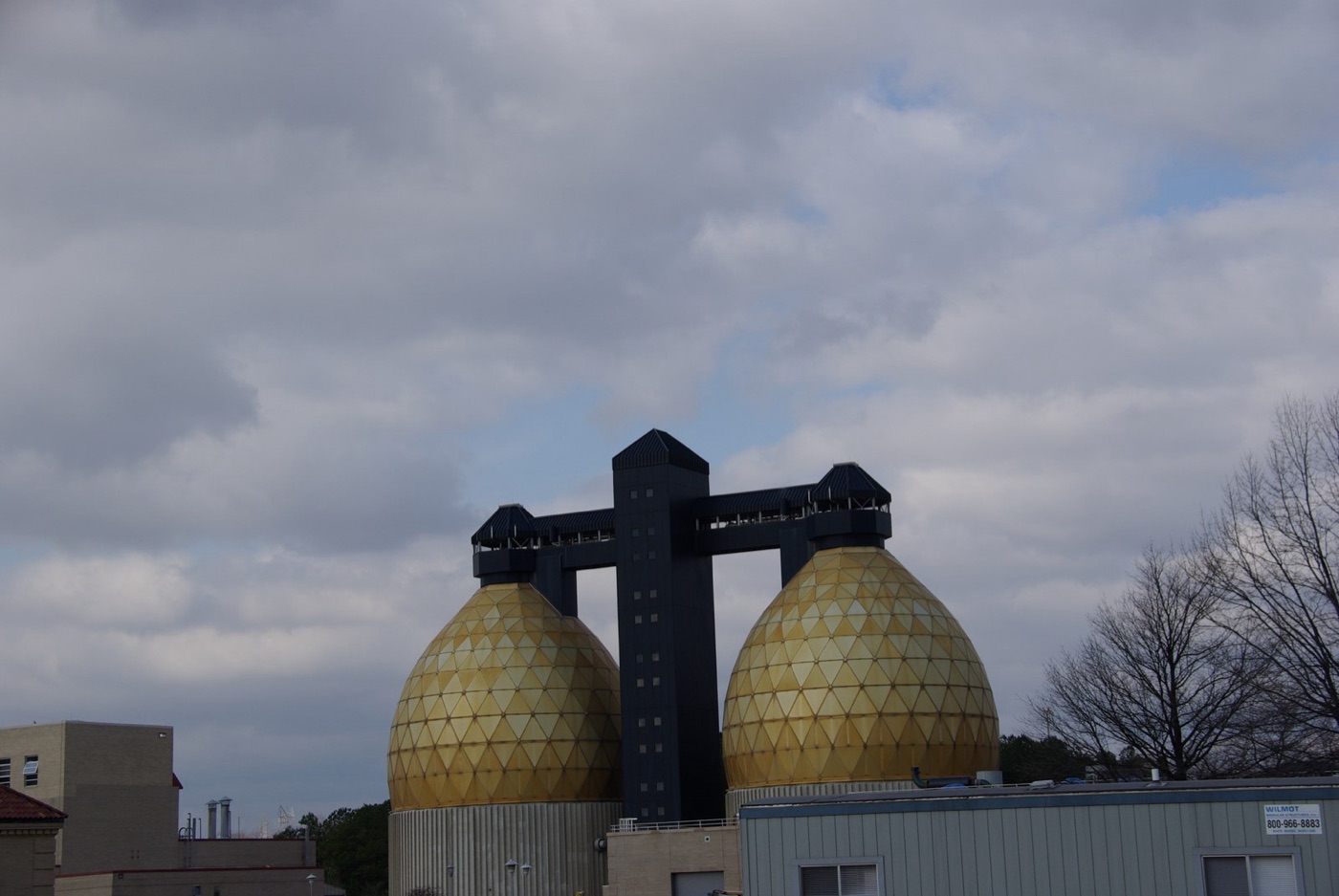
Digestion. The thickened sludge is pumped into large sealed tanks, usually with domed roofs, and held there at roughly body temperature, around 35 degrees, for two to three weeks. Inside, a different community of bacteria from the ones in the aeration basins digests it without oxygen. They break down the organic matter, shrink the pile by around a third, kill most of the pathogens in it, take away the worst of the smell, and give off gas. The gas is roughly two thirds methane and one third carbon dioxide, and it is worth money.
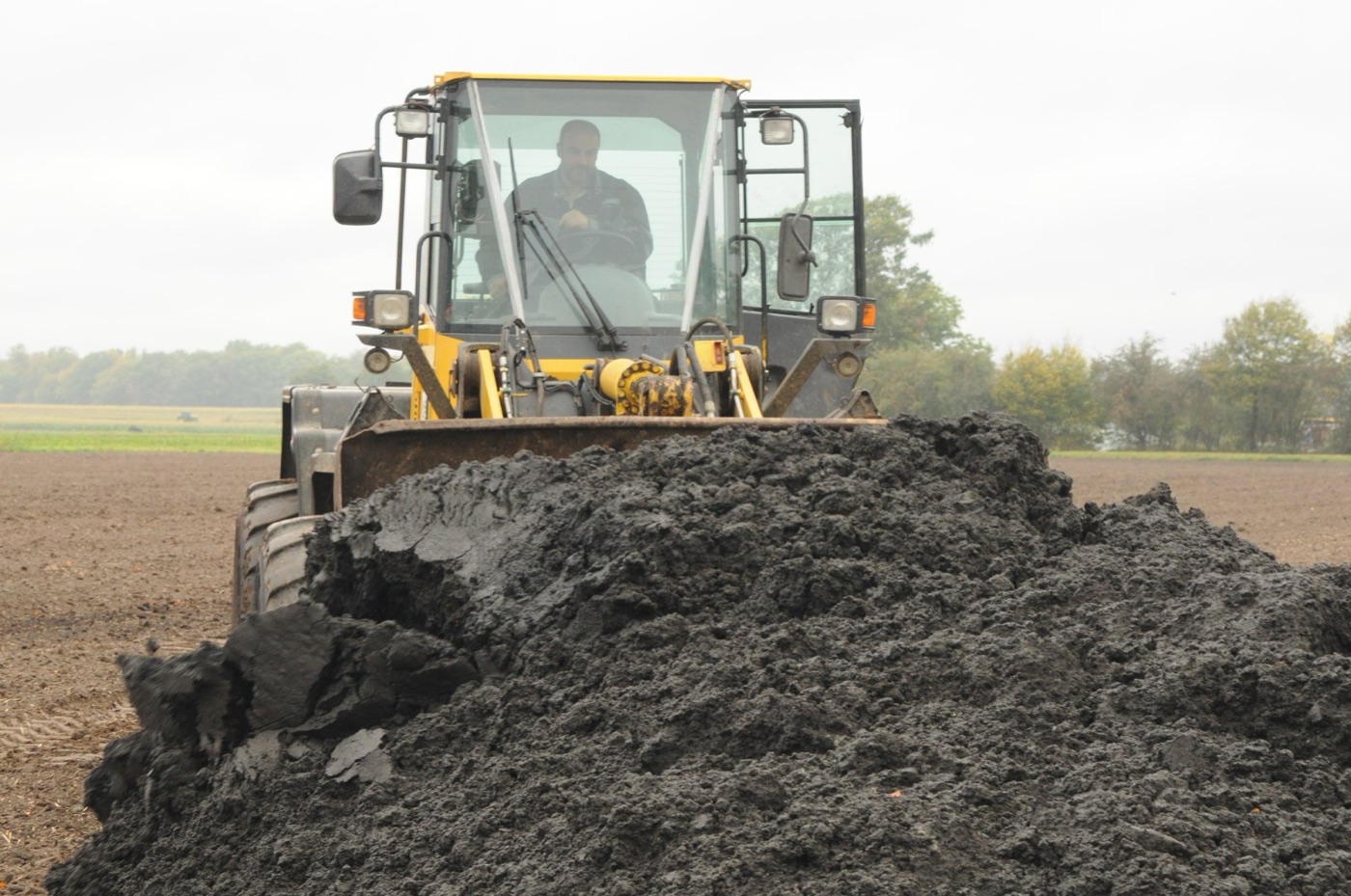
Dewatering. What comes out of the digester is still a liquid. It is fed through a belt press or a centrifuge, machines that squeeze or spin the water out, until what remains is a damp, crumbly cake, somewhere between a fifth and a third solids, that can be handled with a shovel and loaded onto a truck. In hot, dry countries the same job is done by sunlight, in the long shallow beds of the opening paragraph.
Destination. The cake goes to one of three places: farmland, an incinerator, or a landfill. Which one depends on what is in it, what the law allows, and what the plant can afford, and the choice is the most argued over question in the sector.
The biggest line on the budget
The clean water gets the credit. The sludge gets the budget. Handling it, through all four steps and the trucks at the end, accounts for somewhere between a third and a half of a municipal plant's running costs. In a plant with a hard effluent, where the chemistry of the third stage produces extra sludge of its own, the share can be higher still.
| What a plant spends on sludge | |
|---|---|
| Share of running costs | 30 to 50% |
| Solids in fresh sludge | about 1% |
| Solids in dewatered cake | 20 to 30% |
| Digestion time | 15 to 25 days at about 35 °C |
| Biogas | roughly two thirds methane |
Most of that money goes on removing water, and the rest on moving what is left. A plant manager who can dewater a little better, or find a nearer destination, saves more than one who tunes the aeration.
It is also a resource
There is a genuinely good story in the pile, and it has two parts.
The first is the gas. Biogas from the digesters is burned in engines on site, and the electricity and heat they produce run the plant. The better plants generate most of their own power this way; a few generate more than they use and export the rest. Since the biggest single cost of a plant is the air pumped into the biology tanks, and the gas comes from what those tanks removed, a plant can, with care, be made to run partly on its own dirt.
The second is the cake itself. Digested sludge, which the industry has renamed biosolids for reasons that are not hard to guess, is rich in nitrogen and phosphorus, which is precisely what farmland wants. Phosphorus in particular is a mined mineral, dug from rock in a handful of countries, and it is not unlimited; agriculture cannot function without it, and a city's sewage contains a great deal of the phosphorus that its food arrived with. Returning it to fields closes a loop that has been open since cities began. Spreading treated sludge on farmland is legal across Europe under a directive dating from 1986, subject to limits on metals and rules about which crops, and a large share of the continent's sludge goes that way.
What comes along for the ride
The complication is that everything anyone pours down a drain ends up in the same heap. Sludge concentrates whatever was in the water, and that includes things a farmer would not choose to spread.
Metals, from industry and from old pipes, have been regulated for decades and are the reason the 1986 directive has limits. Microplastics, from washing synthetic clothes, are newer and largely unregulated. And in the last few years the sector has had to reckon with PFAS, the family of fluorinated chemicals used in non stick coatings, waterproofing and firefighting foam, which do not break down in the environment at all and which turn up, at low concentrations, in nearly every sludge tested.
In 2022 the state of Maine became the first place to ban the spreading of sludge on farmland outright because of PFAS, after contamination was found in milk and in farmers' own wells. Other states and several European countries are reviewing the same question. The alternative destinations are incineration, which destroys the organic matter and the PFAS but costs energy and loses the phosphorus, and landfill, which loses everything.
So the pile is at once a fertiliser, a fuel and a puzzle, and the industry is currently somewhere in the middle of working out which of those it mostly is. The likely answer is all three, sorted more carefully than before: phosphorus recovered from the ash or the digester, gas burned for power, and the residue disposed of according to what is in it.
The tanks with the domed lids
Next time a treatment plant appears beside a motorway, the round tanks with the domed roofs are the digesters, and inside each one something is having dinner. The long shallow beds, in a hot country, are where the pile dries in the sun. The trucks on the access road are carrying the last one percent of everything a city put down its drains, on its way to a field, a furnace or a hole in the ground.
That is where the dirt actually goes. It does not disappear. It is gathered, dried, digested, and sent somewhere, and the somewhere is one of the more consequential decisions a city makes about its water without ever discussing it.
Sources
- Metcalf and Eddy, Wastewater Engineering, Treatment and Resource Recovery (5th edition). Sludge thickening, anaerobic digestion (mesophilic, about 35 °C, 15 to 25 days), dewatering to 20 to 30 percent solids; biogas composition of roughly 60 to 70 percent methane.
- Published plant operating cost studies (Water Environment Federation, US EPA) placing sludge handling at 30 to 50 percent of the operating cost of a municipal plant.
- Council Directive 86/278/EEC on the protection of the environment when sewage sludge is used in agriculture.
- State of Maine, LD 1911 (2022), prohibiting the land application of sludge and sludge derived compost because of PFAS.
- Photographs: Cesar Chu Ortega, from treatment plants in India and Bangladesh; inline: Anaerobic Digesters - Back River Wastewater Plant by Kristian Bjornard from Baltimore, Maryland (CC BY-SA) via Wikimedia Commons; inline: Shovel excavator loading the sewage sludge (6305610332) by SuSanA Secretariat (CC BY) via Wikimedia Commons.