
Plain Water: TDS
Total dissolved solids is the single most useful measurement in the water business. It explains why water tastes of anything, why limescale forms in a kettle, and why the hardest part of cleaning water is the part nobody can see.
Every bottle of mineral water sold in Europe carries, somewhere near the bottom of its label, a line of small print that almost nobody reads. It says something like dry residue at 180 °C, and it is followed by a number. Depending on the brand the number might be 50, or 300, or well over a thousand. The units are milligrams per litre.
That line is the closest most people ever come to the measurement that the water industry uses more than any other. It has an unlovely name, total dissolved solids, and a three letter abbreviation, TDS, that engineers say without thinking. Once it is understood, a surprising amount of everyday water makes sense: why one water tastes of something and another of nothing, why a kettle furs up, why a desalination plant costs what it does, and why the last step in cleaning water is always the most expensive.
What dissolved means
Water is a remarkable solvent. As it moves through soil and rock it takes things with it, and it takes them in two distinct ways. Some of what it carries is suspended: particles of clay, fibres, fragments of leaf, small enough to hang in the water and make it cloudy but still, at heart, particles. Given time they settle, and given a filter they can be strained out.
The rest is dissolved. Salt, calcium, magnesium, bicarbonate, sulphate, and traces of nearly everything else in the periodic table have not merely been carried along. They have come apart in the water, separated into charged fragments called ions, each one surrounded by water molecules and barely larger than they are. Dissolved matter does not make water cloudy. Seawater is perfectly clear. It does not settle, however long it is left. And it passes through any ordinary filter as easily as the water itself.
Total dissolved solids is the weight of all of it, per litre. The oldest way to measure it is also the most literal, and it is where the label's wording comes from. Take a known volume of water, filter out the suspended matter, boil the rest away, dry the residue in an oven at 180 degrees so that no water clings to it, and weigh what remains. The standard laboratory method still works exactly this way. The number on the bottle is that weight.
A scale worth carrying around
A measurement only means something in relation to other measurements, and TDS rewards a little memorising. The scale runs over four orders of magnitude, and where a water sits on it tells you most of what you need to know about it.
| Water | TDS, mg/L |
|---|---|
| Rain, freshly fallen | around 10 |
| Typical tap water | 100 to 500 |
| Brackish groundwater | 1,000 to 10,000 |
| Seawater | about 35,000 |
| Brine from a seawater desalination plant | 60,000 to 80,000 |
Rain is nearly pure, having been distilled by the sun. By the time it has travelled through a landscape and arrived at a tap it has picked up a few hundred milligrams of minerals per litre, more in limestone country, less on granite. Groundwater that has spent a long time underground can be brackish, too salty to drink but nowhere near the sea. The sea itself, at roughly 35 grams of salt in every litre, is the reference point for everything above it.
The last row is a piece of arithmetic rather than geology, and it matters later. A desalination plant does not remove the salt from seawater so much as move it. If half the water passes through the membranes as fresh water, the other half is left carrying the salt of the whole, and it goes back to the sea roughly twice as concentrated as it arrived.
The taste of nothing
The first thing TDS explains is flavour. Pure water tastes of nothing, and not in a pleasant way. Distilled water, which has a TDS close to zero, is described by most people as flat, slightly odd, and faintly unpleasant, and it is not sold as a drink for that reason. What people experience as the taste of water is the taste of what is dissolved in it: a little calcium and magnesium give it body, bicarbonate gives it a rounded softness, sodium and chloride begin to make it taste salty.
The World Health Organization's drinking water guidelines, which are careful about such things, note that water below about 600 milligrams per litre is generally regarded as good on taste, and that above about 1,000 it becomes increasingly unpalatable to most people. Between those two figures is a matter of preference and habit.
This is also why mineral water brands print the number and advertise the minerals rather than hiding them. The strongest sparkling waters carry well over a thousand milligrams per litre and charge a premium for it. In the same supermarket, a few aisles away, are jugs with cartridges designed to take those same minerals out of tap water. Both products are selling taste. Their customers simply prefer different ones.
Measuring it in a second
No treatment plant boils water in an oven to find out its TDS. Dissolved ions carry an electric charge, and charged particles conduct electricity, so the more of them there are, the more readily a current passes through the water. A TDS meter is a conductivity meter with a conversion factor built into it. Two electrodes on the end of a probe, a small current between them, and a reading on the screen within a second or two.
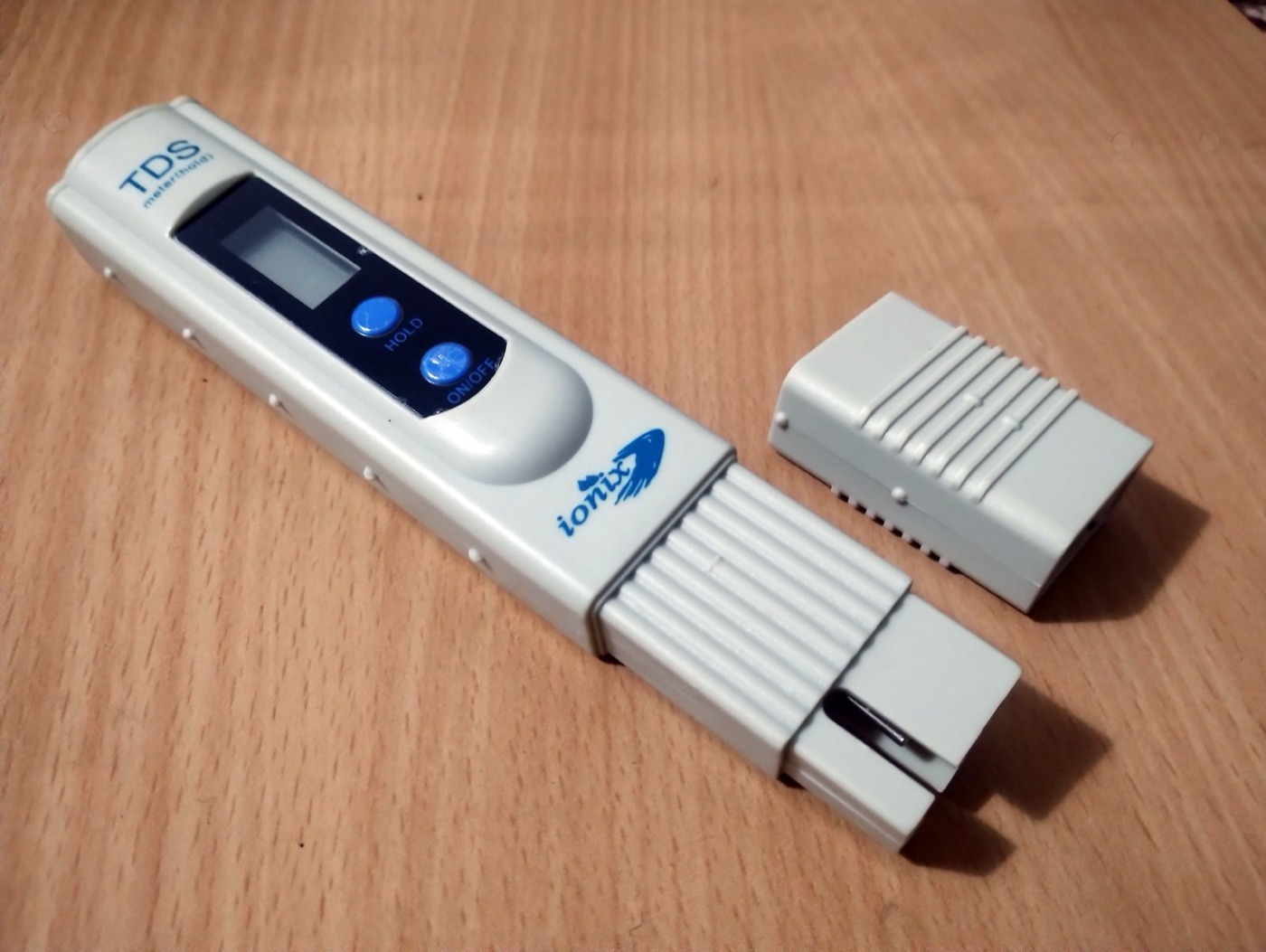
Every operator carries one, and every operator knows its limits. It is instant, cheap and close enough for most decisions, and it says nothing about which minerals are present, only how much of them there is in total. A water with a TDS of 400 might be hard and harmless or might carry a problem worth knowing about. For that, a sample goes to a laboratory, where each ion is measured on its own. The pen tells you whether to be curious. The lab tells you what to do.
Why dissolved is the hard problem
The second and larger thing TDS explains is the shape of the entire water treatment industry.
Nearly every way of cleaning water works on things that are bigger than water. A sand filter catches particles because they cannot fit between the grains. A settling tank lets heavy things sink. The biological stage of a sewage works uses bacteria to eat organic matter. Even a fine membrane, of the kind that holds back bacteria and viruses, does so because those organisms are far larger than its pores.
Dissolved salt defeats all of them. Its ions are barely bigger than the water molecules around them, so no pore can hold them back while letting water through. They do not sink. Nothing eats them. A conventional treatment plant, the kind that turns sewage into clear water fit to discharge, leaves the TDS almost exactly where it found it. The water goes in salty and comes out clean and salty.
There are only three ways to take salt out of water, and every one of them costs energy.
| Method | How it works | Where the energy goes |
|---|---|---|
| Membrane, reverse osmosis | Water is pushed through a membrane at 55 to 80 bar; the salt stays behind | High pressure pumps |
| Evaporation | The water is boiled off and condensed; the salt stays behind | Heat |
| Ion exchange | Salt ions are swapped onto a resin, which is later flushed with brine | The salt used to reset the resin, and the brine it produces |
Push it through a membrane. Reverse osmosis uses a membrane so tight that water molecules pass and ions, for the most part, do not. Nature pulls in the other direction: when salty water and fresh water sit either side of such a membrane, fresh water flows towards the salt, and for seawater that pull is worth about 27 bar of pressure. To run the process backwards, the plant has to push harder than the sea pulls, so seawater membranes are driven at somewhere between 55 and 80 bar, roughly thirty times the pressure in a car tyre. The pumps that produce that pressure are where the energy goes.
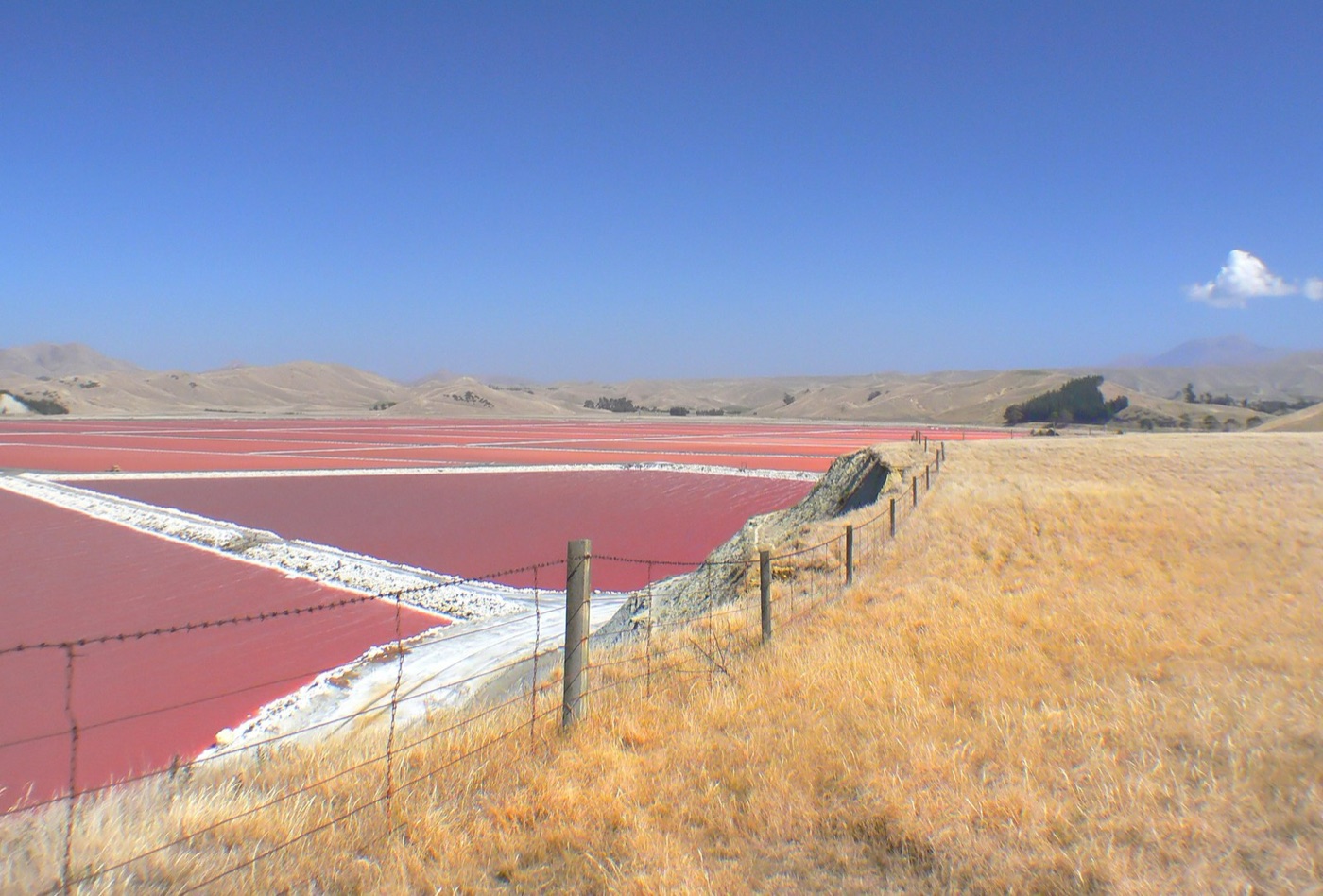
Boil it away. Evaporate the water and the salt stays behind, then condense the vapour. This is how the oldest large desalination plants in the Gulf work, and it is robust and simple, but heating water is one of the most energy hungry things that can be done to it.
Trade it onto a resin. Ion exchange resins are tiny beads that swap the ions in the water for ions they hold on their surface. A household water softener works this way, exchanging the calcium that causes limescale for sodium, which does not. When the beads are full they have to be flushed with strong salt water to reset them, which produces a salty waste of its own. The salt has been moved, again, rather than removed.
The wall at the end of every reuse project
Put those facts together and the central difficulty of the industry comes into view. A factory can treat its wastewater and bring 70 to 90 percent of it back into the process, which is an excellent result. But the salt in that water does not leave with the clean stream. It stays behind in the 10 to 30 percent the membranes rejected, and that stream, called the brine or the concentrate, is now more concentrated than anything the factory started with.
Somebody has to deal with it. Discharged to a river, it moves the problem downstream. Evaporated, it costs heat. Processed to recover the salt for reuse, which is where the most interesting work in the field is happening, it means building something close to a small chemical plant next to the water plant. Every reuse scheme eventually arrives at a meeting about the brine, and the number on the whiteboard in that meeting is TDS.
A caveat on the word high
It is worth being clear about what the measurement does not say. A high TDS says nothing, on its own, about safety. The figure reports how much is dissolved and stays silent about what. Some of the most prized mineral waters in Europe carry more than a thousand milligrams per litre and are drunk with pleasure and without harm. Conversely a water with a modest TDS can carry a specific contaminant that matters. TDS is a measure of taste, of scale and of treatment cost. It is not a measure of danger, and the two are often confused.
Three encounters in a day
The measurement is easier to remember once it is attached to the places it turns up. The scale that forms inside a kettle is calcium and magnesium coming back out of solution when the water is heated; that fraction of TDS has its own name, hardness, and its own article.
The small print on a bottle of mineral water is the same measurement, used as a selling point. The brine leaving a desalination plant on the coast is the same measurement again, now a disposal problem that costs money by the cubic metre.
One number, three settings. It is rarely the headline figure in the water business, and it is the one that decides, more often than any other, what a water can be used for and what it will cost to make it usable.
Sources
- World Health Organization, Guidelines for Drinking water Quality, background document on total dissolved solids in drinking water (palatability thresholds).
- Directive 2009/54/EC of the European Parliament and of the Council on the exploitation and marketing of natural mineral waters (labelling of dry residue).
- APHA, AWWA, WEF. Standard Methods for the Examination of Water and Wastewater, method 2540 C (total dissolved solids dried at 180 °C) and 2510 (conductivity).
- Photographs: opener: עץ על אי מלח באמצע ים המלח by ערן רזניק (CC BY-SA) via Wikimedia Commons; inline: TDS Water meter, (2025) by Gpkp (CC BY-SA) via Wikimedia Commons; inline: Solar salt. Grassmere NZ. (8107345297) by Bernard Spragg. NZ from Christchurch, New Zealand (CC0) via Wikimedia Commons; inline: Dripping Faucet by Angelsharum (CC BY-SA) via Wikimedia Commons.
- Salinity ranges and seawater reverse osmosis operating pressures (55 to 80 bar) are standard values from desalination design practice; osmotic pressure of seawater is roughly 27 bar at 35,000 mg/L.