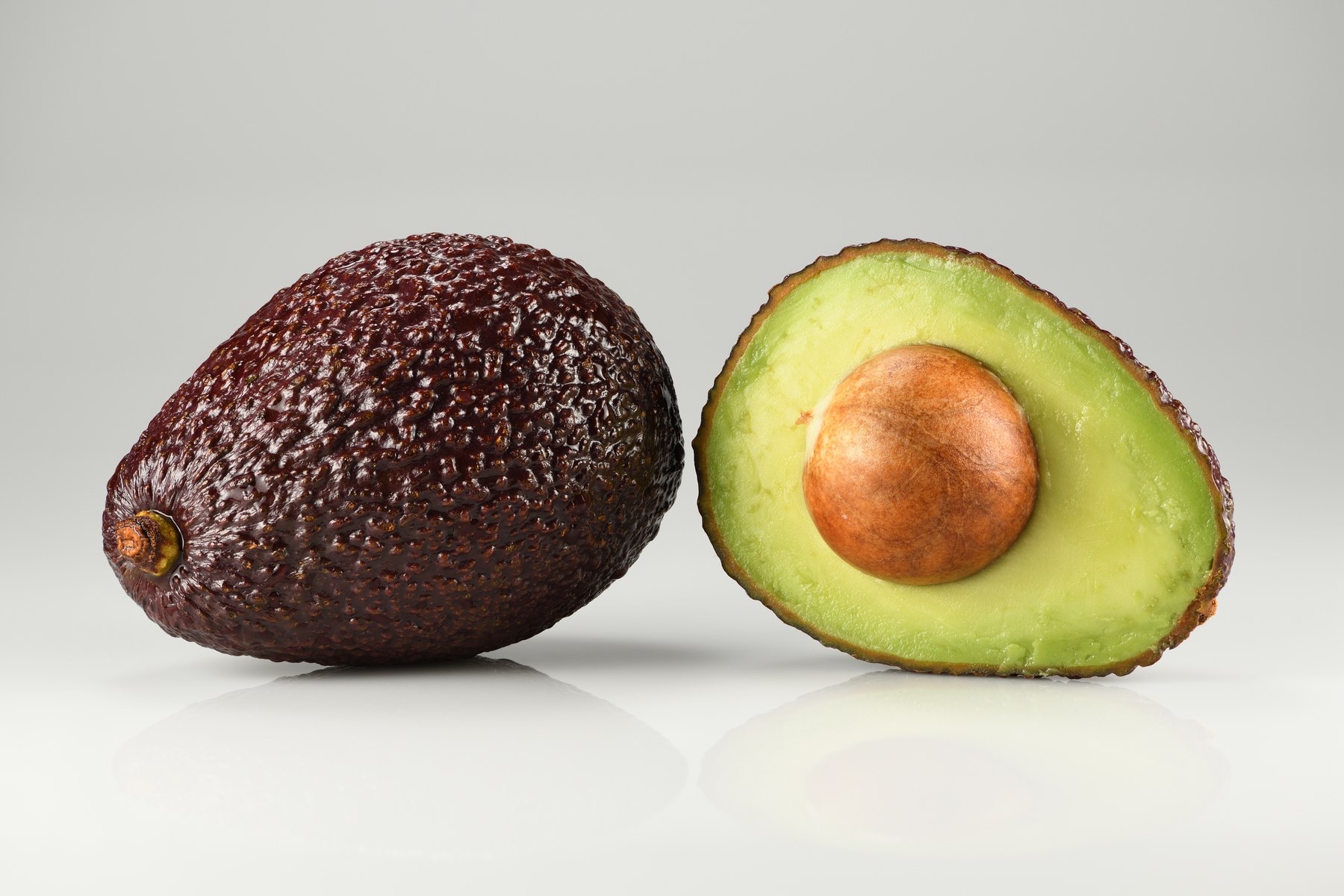
Thirsty: Avocado
Every footprint on this site has argued that a big water number is not automatically bad news. The avocado is where that argument stops. About 400 litres for one fruit, and in the dry places where avocados grow, that water arrives through a pipe, from a river or a well that had other uses for it.
Most of the footprints on this site come with a reassurance attached. Coffee carries 140 litres, and nearly all of it was rain on a hillside that was going to be rained on anyway. Chocolate carries 1,700, and 98 percent of it fell on a farm in the wet tropics. Beef, bread and milk are mostly rain on fields and pasture. The numbers are large, and the article goes on to explain why they are less alarming than they look.
The avocado is where that argument stops. Its number is not the largest on this site, and it is not the smallest. What sets it apart is the kind of water it is, and where.
Four hundred litres
By the Water Footprint Network's method, avocados come to about 2,000 litres of water per kilogram in the global average. An avocado of 200 grams is therefore about 400 litres, and a smaller fruit of 160 grams, which is the assumption behind the 320 litre figure often quoted, a little less. Both numbers come from the same research and differ only in the size of the fruit.
| Fruit | Litres per kilogram |
|---|---|
| Avocado | about 2,000 |
| Mango | about 1,800 |
| Apple | about 820 |
| Banana | about 790 |
Per kilogram, an avocado sits at the top of the fruit table, above the mango and more than twice the apple. That is a matter of botany: the avocado is an oily fruit from a large evergreen tree that yields modestly, and the litres per kilogram follow, as they do for every tree crop. It is not, on its own, a reason for concern. The reason for concern is in the next section.
Pumped, not rained
Cocoa and coffee are crops of the wet tropics, and their footprints are green because rain is what they grow on. The avocado is a crop of the dry Mediterranean climate: hot summers, mild winters, and long months with no rain at all. The world's avocados come from Mexico above all, then from Chile, Peru, Spain, Israel, South Africa, Kenya, California and Australia, and in nearly every one of those places the growing season is the dry season and the water arrives through a pipe.
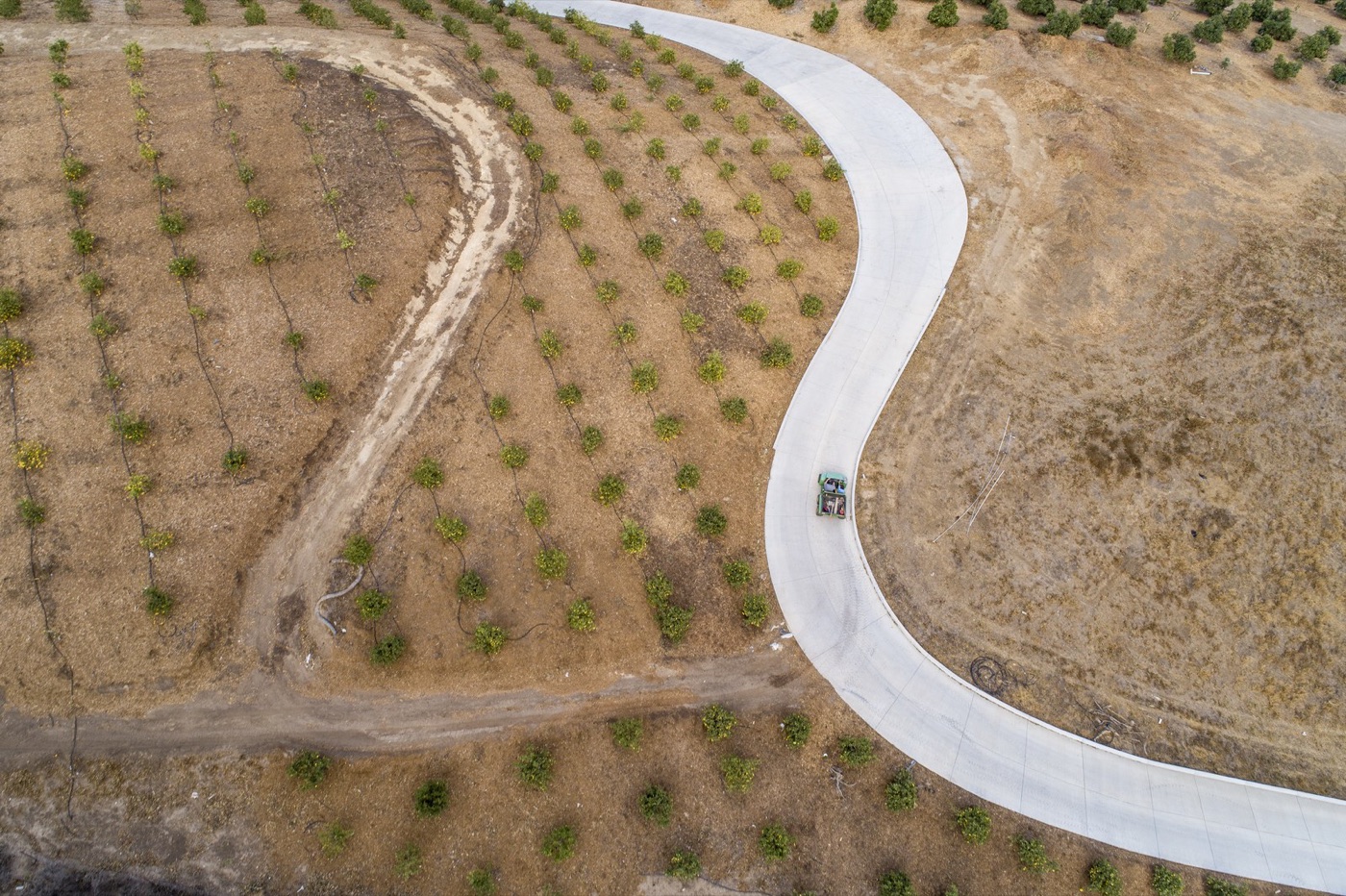
An avocado orchard in summer is irrigated, from a river, a canal or a well, for months on end. That water was pumped by someone, it was not going to fall on the orchard by itself, and once it has passed through the trees it is not available to anyone else. In the footprint that shows up as a large blue share, and blue water is the kind that a river is missing afterwards.
| Crop | Where it grows | What it grows on |
|---|---|---|
| Cocoa | The wet tropics | Rain, almost entirely |
| Coffee | Tropical highlands | Mostly rain |
| Avocado | Dry Mediterranean climates | Irrigation, in the dry season |
This is the whole difference between the avocado and the reassuring footprints that came before it. The number is similar. The water is a different kind, from a different place, with other people waiting for it.
Petorca
Everyone who works in water knows the name of one Chilean province, because it is the case where the footprint stopped being a calculation and became a truck.
Petorca, north of Santiago, is a dry valley that became one of Chile's largest avocado growing regions from the 1990s onwards, as plantations spread up the hillsides on the strength of export demand. The valley's rivers, never large, were drawn down by the orchards' wells and the water rights that Chile's system allowed to be bought and traded. By the 2010s the rivers ran dry for long stretches, the shallow wells that villages depended on failed, and residents of the valley were receiving their drinking water by tanker truck, a few dozen litres per person per day, while the orchards on the slopes above them stayed green. Investigations by Danish and British journalists in 2017 and 2018 put the province on front pages in the countries that bought the fruit, and Petorca has been the reference case for avocados and water ever since.
None of this is captured by a footprint number. Four hundred litres for a fruit describes the water. It does not describe the well that failed, the truck in the village, or the fact that the water in the fruit and the water the village lacked were the same water. That is what blue water means when it is looked at closely, and Petorca is the clearest picture of it.
How the orchard is watered
An avocado tree is a large evergreen that keeps its leaves all year and transpires through all of them, and in the climates where it is grown commercially it needs something like a thousand millimetres of water a year, most of it in the months when none falls. The tree is shallow rooted and intolerant of both drought and waterlogging, so the water has to be delivered often and in measured amounts, which in a modern orchard means drip lines or micro sprinklers under every tree, fed from a pump.
The pump draws from wherever the grower has rights: a canal from a river, a borehole into the aquifer, a reservoir filled in winter. Drip irrigation is efficient, in the sense that little is wasted between the pipe and the root, and the industry is right to say so. Efficiency, though, changes how much is taken from the river, and not where the water came from. A drip irrigated orchard in a dry valley is a smaller draw on the river than a flooded one, and it is still a draw, in a season when the river has least to give.
Chile's water code
Petorca is also the story of a law. In 1981, under the Pinochet government, Chile adopted a water code that separated water rights from land and made them private property, to be bought, sold and held like any other asset. The idea was that a market would move water to its most valuable use. In a dry valley with a booming export crop, it did exactly that: the rights flowed to the orchards that could pay for them, and away from the small farmers and villages that could not. When the rivers fell, the holders of the rights were entitled to their water and the villages were entitled to a tanker.
The code was amended in 2022, after years of drought and protest, to declare water a public good for human consumption first and to limit new rights in stressed basins. The orchards remain, the old rights remain, and the reform is a beginning rather than a solution. But Petorca made the argument, in a way that no footprint number could, that the water in a fruit is also a question of who was allowed to take it.
The demand side
The reason the orchards spread is on the other end of the supply chain. Avocado consumption in Europe and North America has multiplied several times over in two decades, from a specialist fruit to a supermarket staple, and the growers of Chile, Peru, Mexico and Spain planted to meet it. Peru's avocados come largely from the Ica valley, a coastal desert where the aquifer has been drawn down by export agriculture in much the same way as Petorca's rivers. The market that made the fruit ordinary is a long way from the valleys that grow it, and it has, until recently, seen none of the cost.
Michoacán, and the others
Petorca is the famous case, and it is not the only one. Michoacán in Mexico, which grows more avocados than any other region on Earth, has seen forest cleared for orchards, wells drilled without permits, and disputes over water that have turned violent. In Spain's Málaga province, avocado growing in a region already short of water has become a political question in dry years. In each case the pattern is the same: a valuable export crop that needs water through the dry months, in a place that does not have water to spare, and a market a long way away that does not see what it costs.
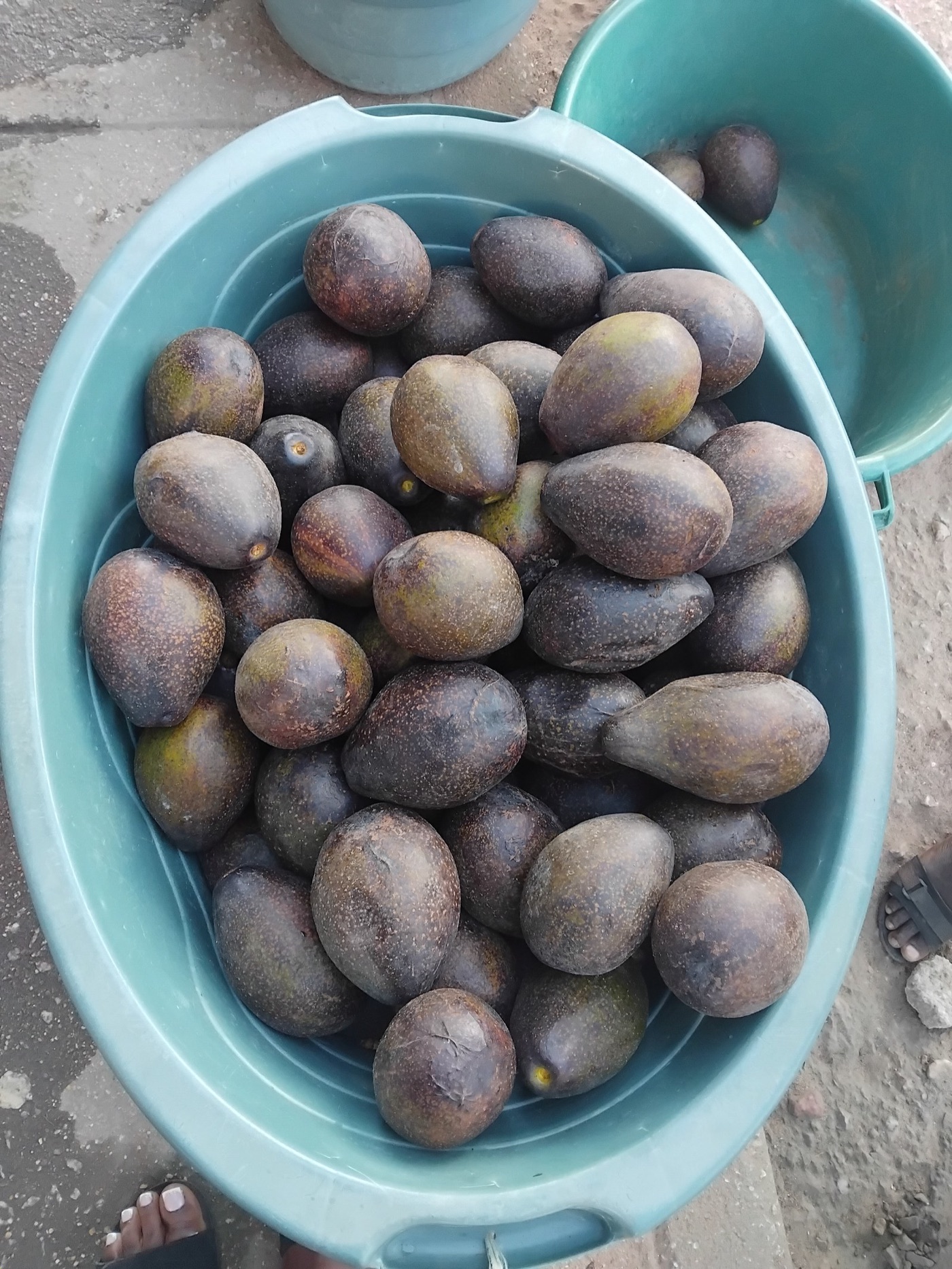
Not every avocado comes from a place like this. Kenya and parts of Colombia grow avocados largely on rain; so do wetter parts of Mexico. The trouble is that the fruit on a shelf does not say, and the country of origin, which it does say, is the best guide a buyer has.
What the sticker says
None of this makes avocados forbidden, and a boycott would hurt the growers of Petorca before it helped anyone. What it makes them is the fruit where origin actually matters, more than for anything else on this site. The country on the sticker is a better guide to the water in an avocado than any number on a chart, because the number is much the same everywhere and the water behind it is not. A fruit from a rainy region and a fruit from a drought zone are, in water terms, different purchases, and this is the one product where a shopper can tell them apart at the shelf.
Reading the number
The avocado closes the first run of footprints on this site, and it closes an argument. The argument was that a large water number is a starting point rather than a verdict, that the colours of the water matter more than the total, and that most large numbers, looked at closely, turn out to be rain. All of that is still true. The avocado is the fruit that shows what the argument looks like when it fails: a modest number, a dry valley, and a truck.
Sources
- Mekonnen, M.M. and Hoekstra, A.Y. (2011). The green, blue and grey water footprint of crops and derived crop products. Hydrology and Earth System Sciences 15. Avocado about 1,981 L/kg, mango about 1,800, apple about 822, banana about 790, global averages.
- Reporting on the Petorca province, Chile: Danwatch (2017), Avocados and stolen water; subsequent coverage by the Guardian, Reuters and Chilean media on tanker truck deliveries and the province's water emergency.
- Chile, Código de Aguas (1981) and its reform, Law 21.435 (2022), on private water rights and the priority of human consumption.
- Both the 320 and 400 litre figures for one avocado derive from the same per kilogram footprint and differ only in the assumed weight of the fruit.
- Photographs: opener: Avocado Hass - single and halved by Ivar Leidus (CC BY-SA) via Wikimedia Commons; inline: Avocado and lemon orchards, California (9323) by Lance Cheung/USDA (public domain) via Wikimedia Commons; inline: Avocados from the orchard by MaiDenzel (CC BY-SA) via Wikimedia Commons.