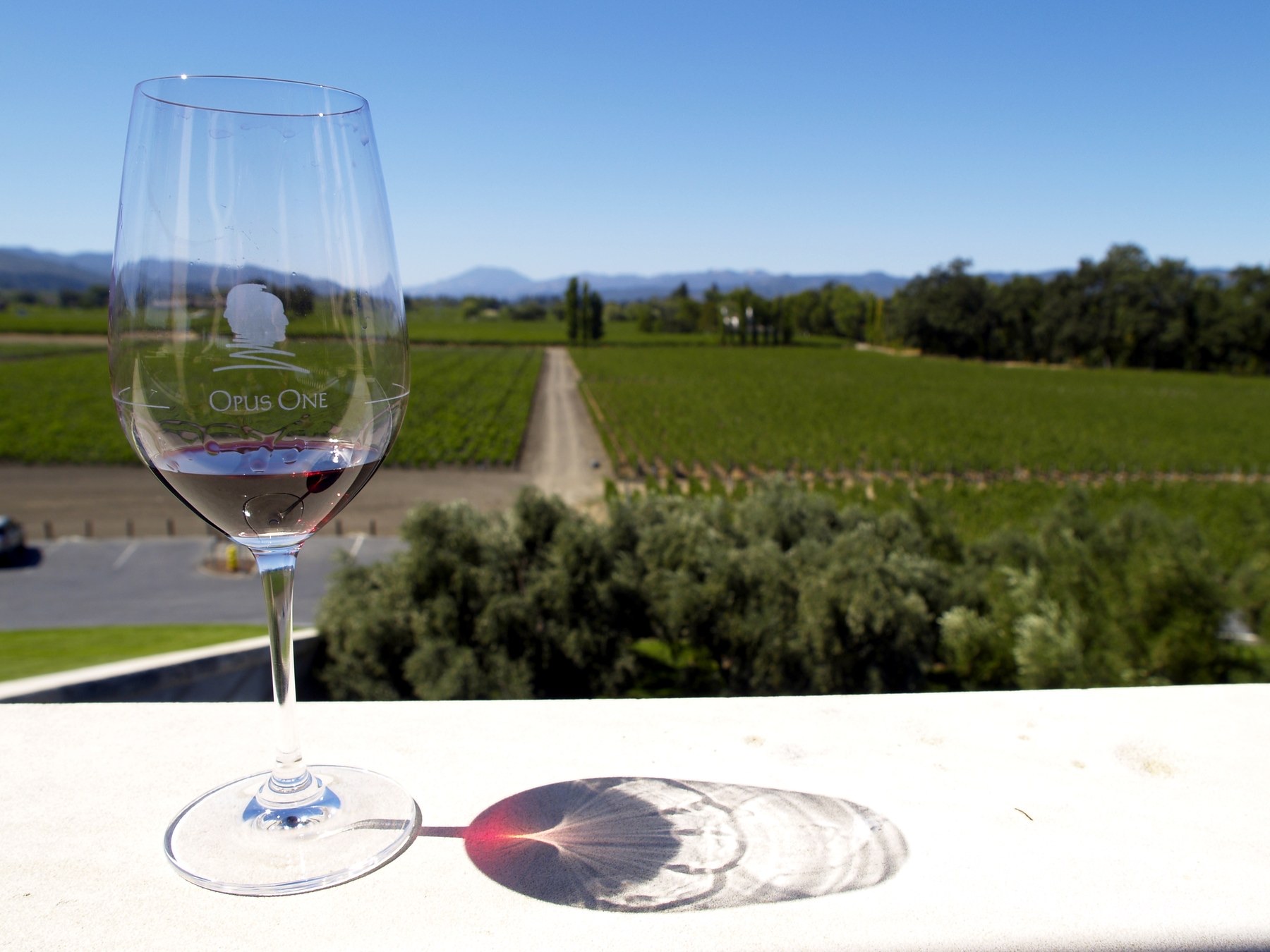
Thirsty: Wine
Almost every farmer on Earth is trying to get more water to their crop. Winemakers are the exception, spending their careers keeping the vine a little thirsty. A glass of wine still carries about 109 litres, three times what beer does per litre, and the old rules about not watering vines are starting to bend in the heat.
Walk through a vineyard in August in the south of France and the ground between the rows is bare and cracked, the leaves are small, and the vines look, to anyone used to a garden, as if somebody has forgotten to water them. Nobody has forgotten. In most of the famous wine regions of Europe the vines are not watered on purpose, and for a long time it was against the rules to water them at all. Wine is the one crop on this site whose growers spend their careers keeping the plant slightly thirsty, and that makes its water footprint an odd one to read.
A hundred and nine litres
By the Water Footprint Network's method, wine comes to about 869 litres of water per litre in the global average, counting the rain the vines took up, the irrigation applied where there was any, and the clean water it would take to dilute the pollution from the vineyard and the winery. A 125 millilitre glass is a seventh of that, about 109 litres.
| Stage | Litres | Share |
|---|---|---|
| Growing the grapes | 100 | 92% |
| Winery cleaning | 6 | 5% |
| The bottle and the rest | 3 | 3% |
The split is approximate; the total is the citable figure. As with everything on this site that grows, the vineyard is nearly all of it, and the winery, where the water goes on washing tanks, barrels and floors, is a small share.
Per litre, wine costs roughly three times what beer does, at 869 litres against 298. Grapes are not especially thirsty as fruit go, at around 600 litres per kilogram, well below an avocado. The difference is concentration: it takes somewhere between 1.2 and 1.5 kilograms of grapes to make a bottle of wine, where a litre of beer needs less than 200 grams of grain, and the water follows the fruit.
The vine wanted less
Here is the fact that sets wine apart from every other footprint in the series. A vine with plenty of water grows a big canopy of leaves and large, watery grapes, and the wine made from them is thin. A vine that has to work for its water sends its roots deep, sets fewer and smaller grapes, and concentrates sugar, acid and flavour into them, and that is the wine that ends up tasting like something. The plant, mildly stressed, makes a better product.
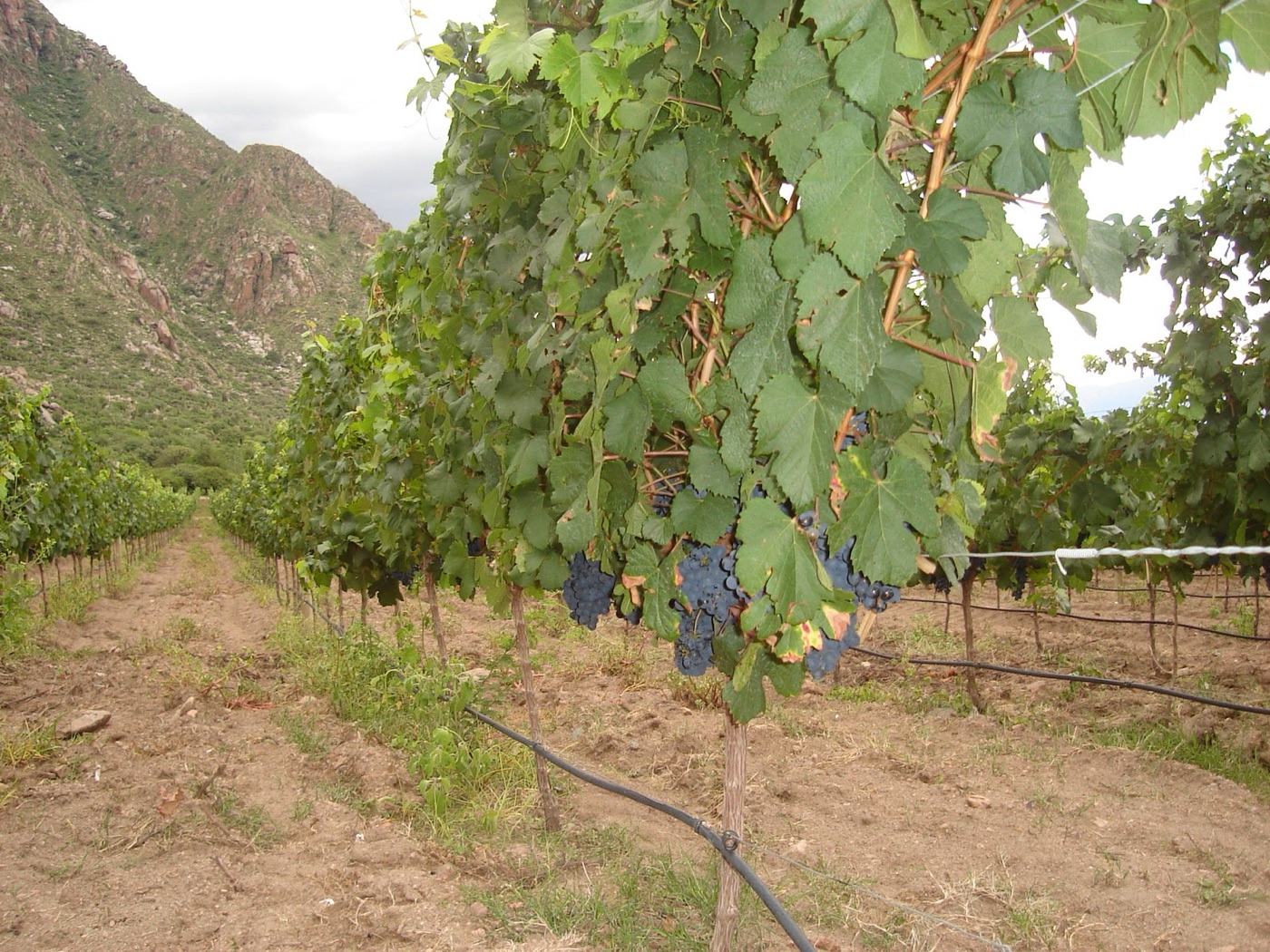
Growers have known this for centuries, and the modern name for managing it deliberately is deficit irrigation: giving the vine less water than it would take if offered, at the stages of the season when a little stress improves the fruit, and enough at the stages when it would only do harm. In the New World, in California, Australia, Chile and Argentina, most vineyards are irrigated and the deficit is managed with a valve. In much of Europe the deficit is managed by planting the vine in a place where the rain is a little short, and leaving it to cope.
| What water does to a vine | |
|---|---|
| Plenty of water | Large canopy, big watery grapes, thin wine |
| A managed shortage | Deep roots, small concentrated grapes, better wine |
| Too little | Stalled ripening, lost crop |
That is why the vineyard in August looks neglected. The bare ground and the small leaves are the point.
The rule that forbade watering
In the appellation system that governs the classic wine regions of France, and in the similar systems of Italy and Spain, the vine's thirst was written into law. For most of the twentieth century French rules prohibited irrigating vines during the growing season in appellation vineyards, on the principle that a vineyard which needed watering was planted in the wrong place, and that the character of a wine came from the land and the weather it was given rather than from a pipe. Several of the most famous appellations kept, and still keep, outright bans.
The result is a wine footprint that, in Europe, is almost entirely green. The vine drinks what falls on it, over a season, from the soil, and the 869 litres per litre in the global average is mostly rain on a hillside that was going to be rained on regardless. Irrigated New World vineyards carry a blue share, drawn from rivers in dry valleys, and it is worth knowing which bottle came from where.
Where the world's wine grows, and on what
The global average hides two different industries. The old wine countries of Europe, France, Italy and Spain, still make around half the world's wine, mostly in temperate or Mediterranean climates where winter rain stores enough moisture in the soil to carry an unirrigated vine through summer, and where the rules described above kept the pipes out. Their footprint is green almost to the last litre.
The newer wine regions were planted where the sun was reliable and the rain was not. The vineyards of Australia's Murray Darling basin, of California's Central Valley, of Chile's central valleys and of Argentina's Mendoza, a desert at the foot of the Andes, produce wine of every quality, and nearly all of it on irrigation drawn from rivers and aquifers that other users, cities and other crops among them, also depend on. In a drought year the competition is direct. During Australia's long drought of the 2000s the price of water rights in the Murray Darling basin rose until some growers found it paid better to sell their water than to make wine with it, and the vineyards that survived were the ones with the deepest pockets or the oldest rights.
| Where wine grows | What the vines drink |
|---|---|
| The classic European regions | Winter rain stored in the soil, and the rules forbid much else |
| Australia, California, Chile, Argentina, South Africa | Irrigation from rivers and aquifers, managed by deficit |
| Cooler new regions, New Zealand, Oregon, England | Mostly rain |
A bottle from Bordeaux and a bottle from Mendoza can carry a similar number of litres, and in one case they fell from the sky onto a field that would have been rained on anyway, and in the other they were pumped from a river in a desert. As with every product on this site, the label's most useful line, for water, is the one that says where.
Grapes per bottle
The arithmetic that makes wine three times beer is worth a moment, because it is not about the plant being thirsty. A vine uses water roughly the way any fruit tree does, and grapes at around 600 litres per kilogram are middling among fruits. The multiplier is yield. A bottle of wine needs between 1.2 and 1.5 kilograms of grapes, crushed and pressed, and the skins, seeds and stems, a quarter of the weight, are left behind as pomace. A litre of beer needs under 200 grams of barley. Wine simply contains more crop per glass, and the deficit irrigation that makes it taste of something lowers the yield further, concentrating the water along with the flavour.
The winery
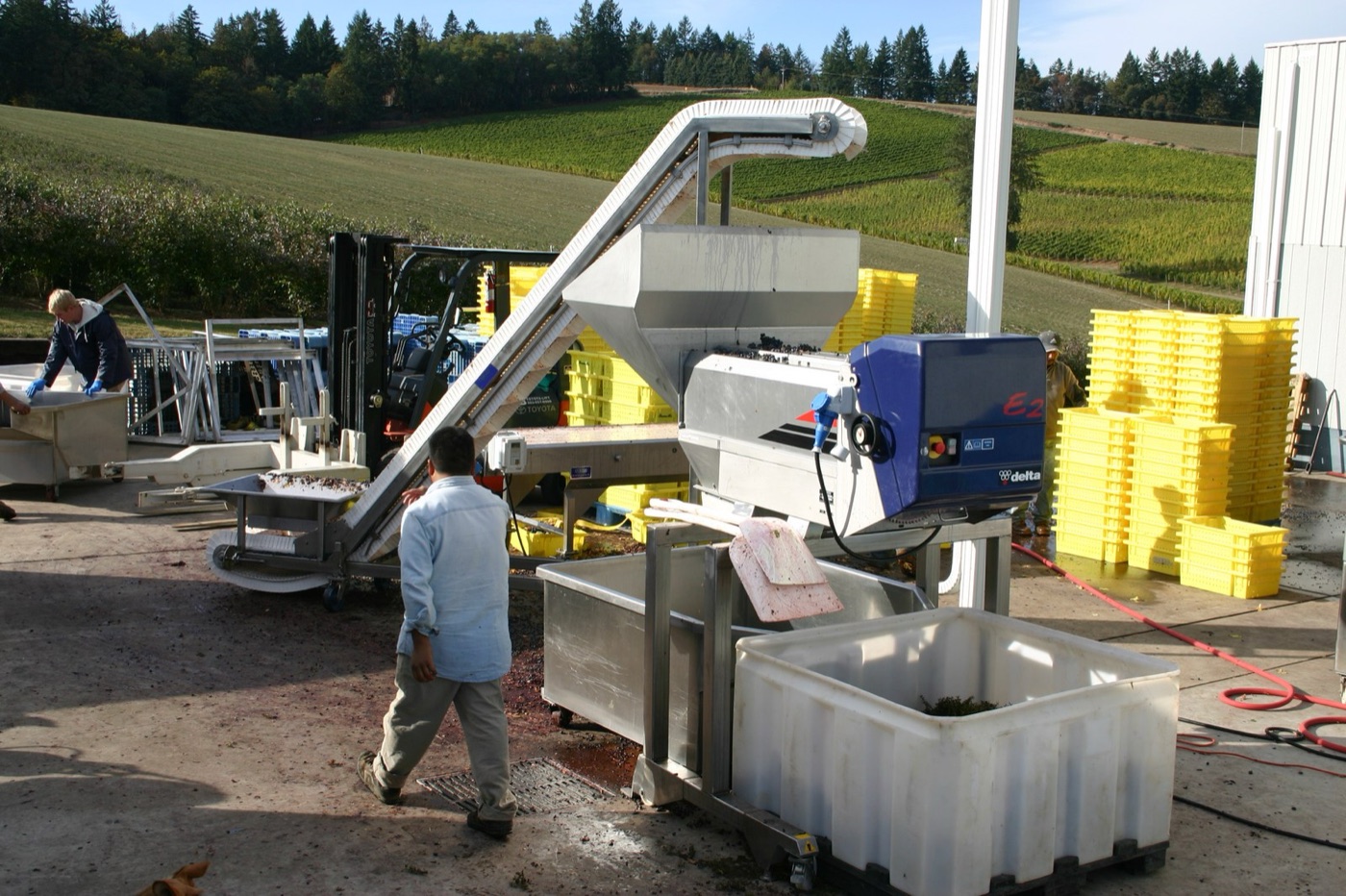
The winery's water is a small share and a familiar story. Grapes are crushed, the juice or the must is fermented in tanks, the wine is racked from vessel to vessel, aged, filtered and bottled, and every tank, hose, press and barrel is washed between uses, because grape sugar feeds every microbe that would spoil a wine as readily as the yeast that makes it. A winery uses somewhere between two and six litres of water for every litre of wine, nearly all of it cleaning, and the water that leaves carries sugar, yeast and lees, and is treated like a brewery's or a dairy's, increasingly by digestion into biogas. Harvest is the pressure point: a winery may crush its whole year's fruit in six weeks, and its water use and its effluent peak with it.
The rule is starting to bend
The part of the story worth watching is what heat is doing to the old rules. Regions that built their identity on never irrigating are facing summers their vines were not planted for: longer droughts, higher temperatures, ripening that races ahead of flavour, and in the worst years vines that simply stop. France permitted irrigation under conditions in 2006 and has extended the derogations in drought years since. Individual appellations have loosened their own rules through the 2010s and 2020s, allowing drip lines to be laid in vineyards where a decade earlier they would have cost a grower the right to use the name on the label. Southern Spain and parts of Italy have moved the same way.
A tradition built around scarcity is running into actual scarcity, and the argument inside the wine world is a real one. Irrigation keeps a vineyard alive in a summer it would not otherwise survive. It also risks producing exactly the large, watery grapes the tradition was designed to avoid, and it draws on rivers and aquifers in regions that are drying for the same reason the vines are struggling. The likely outcome is a middle: deficit irrigation, managed by hand and by sensor, in places that used to manage it by faith.
Reading the number
A glass of wine at 109 litres is a large number for a small glass, and it is mostly rain on a hillside, drunk by a plant that its growers were trying to keep slightly short. Of all the footprints in this series it is the one where more water would make a worse product, which is a useful thing to keep in mind about numbers. The interesting question about wine is the one the vineyards are answering now, summer by summer: how long a crop that was built on thirst can go on doing without.
Sources
- Mekonnen, M.M. and Hoekstra, A.Y. (2011). The green, blue and grey water footprint of crops and derived crop products. Hydrology and Earth System Sciences 15. Wine about 869 L/L, grapes about 608 L/kg, beer about 298 L/L, global averages.
- Stage split (grapes, winery cleaning, bottle and the rest) is approximate and illustrative; the total is the citable figure.
- Chaves, M.M. et al. (2010). Grapevine under deficit irrigation: hints from physiological and molecular data. Annals of Botany 105. The physiology of deficit irrigation and fruit quality.
- French appellation rules on irrigation (INAO): historically prohibited during the growing season, permitted since 2006 under conditions and by derogation in drought years, with several appellations relaxing their own rules through the 2010s and 2020s.
- Winery water use of roughly 2 to 6 litres per litre of wine, from published winery benchmarks.
- Photographs: opener: Opus One Glass, Wine, & Vineyard (to be trimmed) by Dave Minogue (CC BY-SA) via Wikimedia Commons; inline: Malbec grapes on the vine by Micah MacAllen (CC BY-SA) via Wikimedia Commons; inline: Winery receiving grapes during harvest by David Burn (CC BY-SA) via Wikimedia Commons.