Plain Water: Ultrapure water
There is a kind of water so clean that it would leach the minerals from a person who drank it and dissolve the pipe it was carried in. Chip fabs, pharmaceutical plants and power stations make it by the tonne. What ultrapure water is, why anything at all in it is a problem, and how the purest substance in industry is made from a tap.
Every article in this series so far has been about getting things out of water until it is safe: safe to drink, safe to discharge, safe to use again. There is a corner of industry where that scale runs off the end, where water safe to drink is far too dirty, and where the goal is water with, as nearly as physics allows, nothing in it at all. It is called ultrapure water, it is made by the tonne in the plants that produce microchips, medicines and electricity, and it is the strangest water in this series because it is dangerous in the opposite way from every other kind.
Water with nothing in it
Ordinary tap water, as the article on TDS described, carries a few hundred milligrams of dissolved minerals in every litre, and they are what water tastes like. Drinking water standards set maximum limits for what may be in the water and none for what must be. Ultrapure water is the other end: a specification for what must not be, and the answer is very nearly everything.
The measure is electrical. Dissolved ions carry current, so the purer the water, the less it conducts, and the industry states the purity of water as its resistivity, the inverse of conductivity. Tap water sits at a few thousand ohm centimetres. Distilled water reaches a few hundred thousand. Pure water, with nothing dissolved in it but the traces of hydrogen and hydroxide ions that water itself produces, has a resistivity at room temperature of about 18.2 megohm centimetres, and that is the number ultrapure water is made to. It is the limit. Water cannot be made purer, because water itself is what remains.
| Water | Resistivity | Dissolved solids, roughly |
|---|---|---|
| Seawater | About 20 ohm centimetres | 35,000 mg/L |
| Tap water | A few thousand ohm centimetres | A few hundred mg/L |
| Distilled water | A few hundred thousand ohm centimetres | A few mg/L |
| Reverse osmosis permeate | About a million ohm centimetres | Under 10 mg/L |
| Ultrapure water | 18.2 megohm centimetres | Parts per trillion |
Resistivity is only the first test. Ultrapure water is also specified for total organic carbon, in parts per billion; for dissolved oxygen and silica; for particles, counted per litre at sizes of a few tens of nanometres; and for bacteria, which, being living things that reproduce, are the last contaminant to be brought under control and the one that returns fastest.
Who needs it
Three industries, for three different reasons.
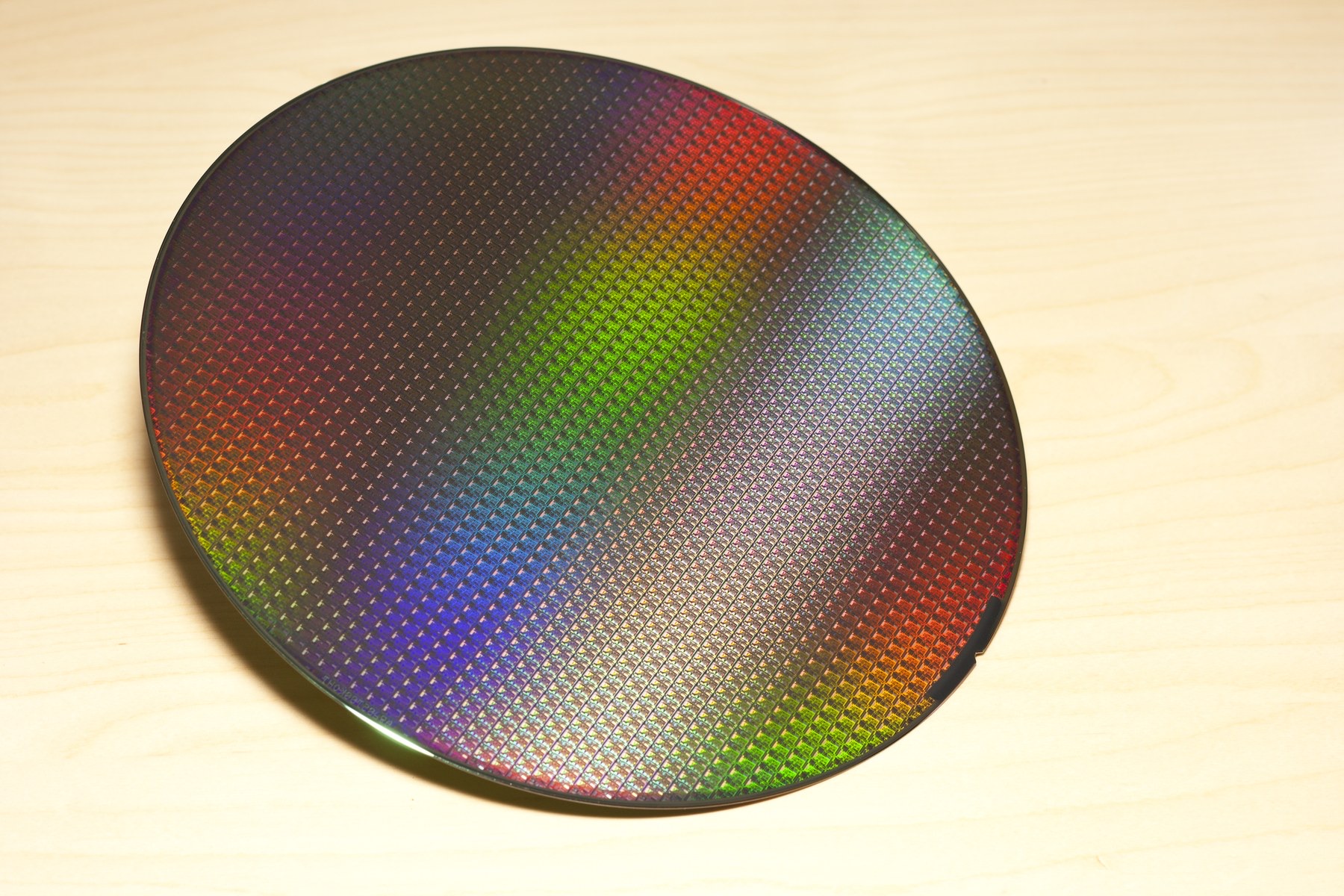
Semiconductor fabs need it most and use it most. A silicon wafer is rinsed with water between hundreds of the steps that build a chip, and the circuits on the wafer are measured in nanometres. A single dissolved metal ion left on the surface after a rinse can short a transistor; a particle a few tens of nanometres across can bridge two lines; a trace of organic carbon can spoil a layer. The water that rinses a wafer has to leave nothing behind, because there is nothing on the wafer small enough to hide it. A fab uses enormous volumes of it, and the larger fabs recycle a large share, because making it is expensive.
Pharmaceutical plants need water for injection, the water in which drugs are dissolved before they are put into a vein. It has to be free of pyrogens, the fragments of dead bacteria that cause fever, as well as of the bacteria themselves, and the pharmacopoeias that govern it prescribe how it is made and stored: traditionally by distillation, increasingly by membranes, and kept hot and circulating so that nothing can grow.
Power stations need demineralised water for their boilers and turbines, for the reason the hard water article described at kitchen scale. Steam raised from water with any dissolved solids leaves them behind in the boiler tubes and on the turbine blades, as scale and as corrosion, and a large boiler operating at hundreds of degrees and hundreds of bar cannot tolerate either. Power station water falls short of a fab's standard and far exceeds drinking water.
| Industry | Why | The critical contaminant |
|---|---|---|
| Semiconductors | Rinsing wafers between process steps | Ions, particles, organics: everything |
| Pharmaceuticals | Water for injection | Bacteria and their fragments |
| Power generation | Boiler and turbine feed | Dissolved solids that scale and corrode |
| Laboratories | Analysis at trace levels | Whatever is being measured |
How it is made
Ultrapure water is made from ordinary water, usually the municipal tap, by a chain that begins where the desalination article ended and goes a long way past it. The exact sequence varies by plant; the logic does not.
| Stage | What it removes | Purity afterwards |
|---|---|---|
| Pretreatment: filtration, softening, carbon | Particles, hardness, chlorine | Tap water, protected |
| Reverse osmosis, first pass | About 99 percent of dissolved solids | A few mg/L |
| Reverse osmosis, second pass | Most of what remains | Under 1 mg/L |
| Degasification | Dissolved carbon dioxide and oxygen | |
| Electrodeionisation | The last ions, using an electric field and resin | Above 15 megohm centimetres |
| Ultraviolet at 185 nanometres | Breaks organic molecules to carbon dioxide | Organic carbon in parts per billion |
| Mixed bed resin polishers | The final ions, including the products of the UV stage | 18.2 megohm centimetres |
| Ultrafiltration at the point of use | Particles and bacteria, down to tens of nanometres | Ready for the wafer |
Two of these stages are worth a word. Electrodeionisation is ion exchange without the salt: resin between membranes, with an electric field across them that pulls the captured ions out of the resin and away into a waste stream continuously, so the resin never fills up and never needs the brine regeneration that a softener does. And the ultraviolet stage uses a shorter wavelength than the disinfecting lamps of the earlier article, one that does not merely kill organisms but breaks organic molecules apart into carbon dioxide and water, which the polishers then remove.
Grades, and the laboratory bench
Not every use needs the fab's water, and the industry grades purity in steps. Laboratory standards define three or four types, from water fit to rinse glassware, made by a single pass of reverse osmosis or distillation, up to Type I, the near ultrapure water used for trace analysis, made by a bench top system the size of a coffee machine that runs a small version of the fab's chain: a cartridge of resin, an ultraviolet lamp, a final filter, and a resistivity meter on the outlet that reads 18.2 when the water is ready. Every analytical laboratory has one, and the water it dispenses is what the blank in every measurement on this site was made with. The pharmaceutical grades run alongside: purified water for making tablets and washing equipment, and water for injection at the top, held hot in stainless steel loops so that nothing grows.
The cost of nothing
Water with nothing in it is expensive to make, in energy and in the water thrown away. Every stage rejects a stream: reverse osmosis sends a quarter of its feed to the drain as concentrate, the resins are regenerated or replaced, the loop that circulates the product is polished continuously whether or not anything is drawn from it. A fab's water plant is among the largest energy users on the site after the clean rooms themselves, and the larger fabs recover and reprocess a large share of the rinse water they have used, because the rinse water leaving a wafer is still cleaner than the tap water coming in. Singapore's NEWater, described in its own article, sells most of its output to exactly these plants, because water that has already been through reverse osmosis is the cheapest starting point for water that has to go all the way.
Water that eats its pipes
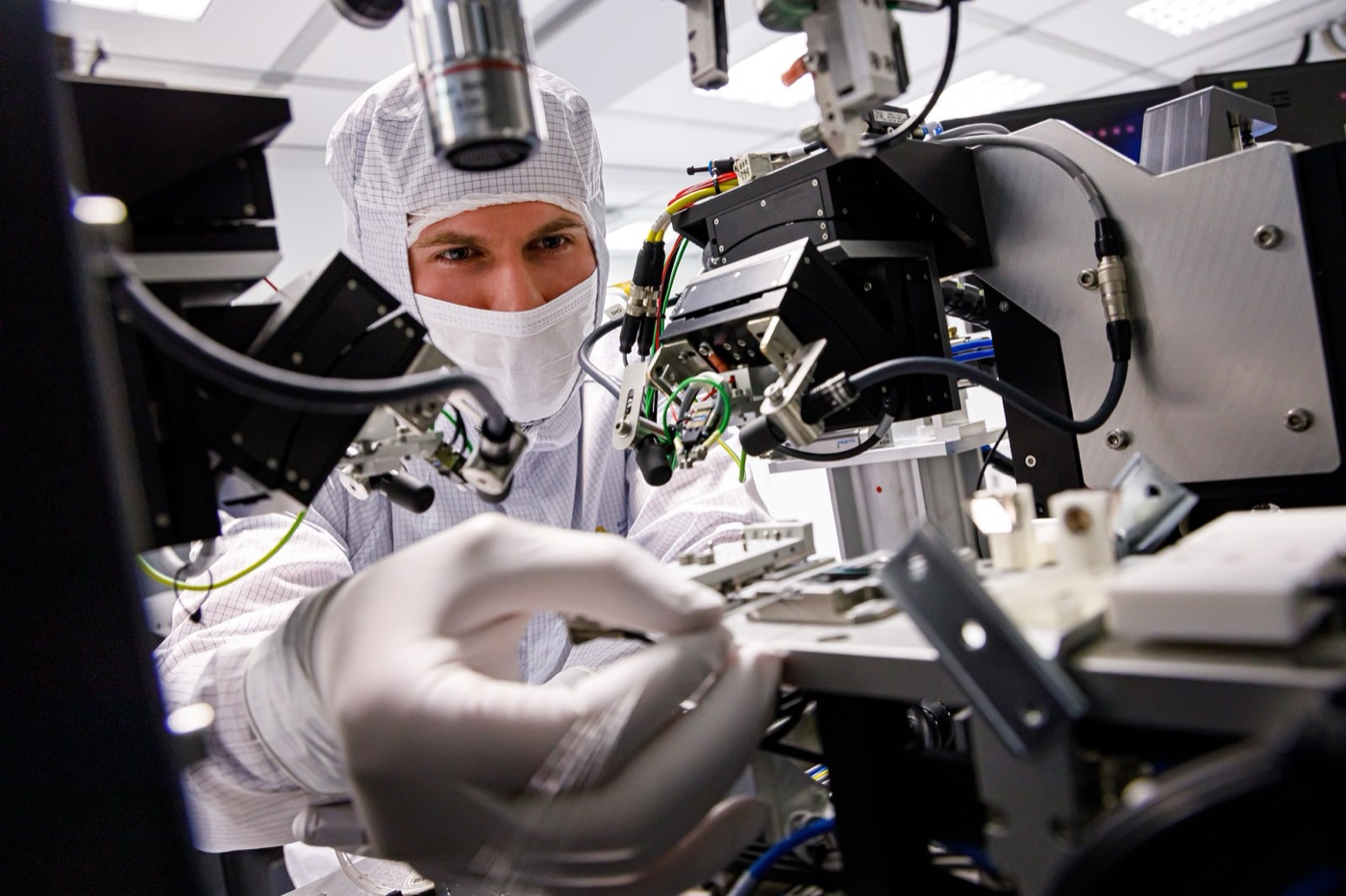
Water this pure is hungry. With nothing dissolved in it, it dissolves whatever it touches, and ordinary materials give up ions to it within seconds: steel corrodes, copper leaches, glass releases silica and sodium. Ultrapure water is therefore piped in high purity plastics, fluoropolymers above all, welded rather than glued, in loops that keep it moving at all times, because water that stands still in a pipe grows bacteria on the pipe wall within hours. A fab's water system is a circulating ring main that never stops, and the water that reaches the wafer has been made, polished, and, if it was not used, polished again on its way back round.
The same hunger is why nobody drinks it. Ultrapure water does no lasting harm in a glass, and it tastes of nothing in a way that people find unpleasant, and the minerals that give water its taste are exactly what it lacks. The industry's joke is that it is the only water that is bad for you because of what is not in it.
What leaves a fab
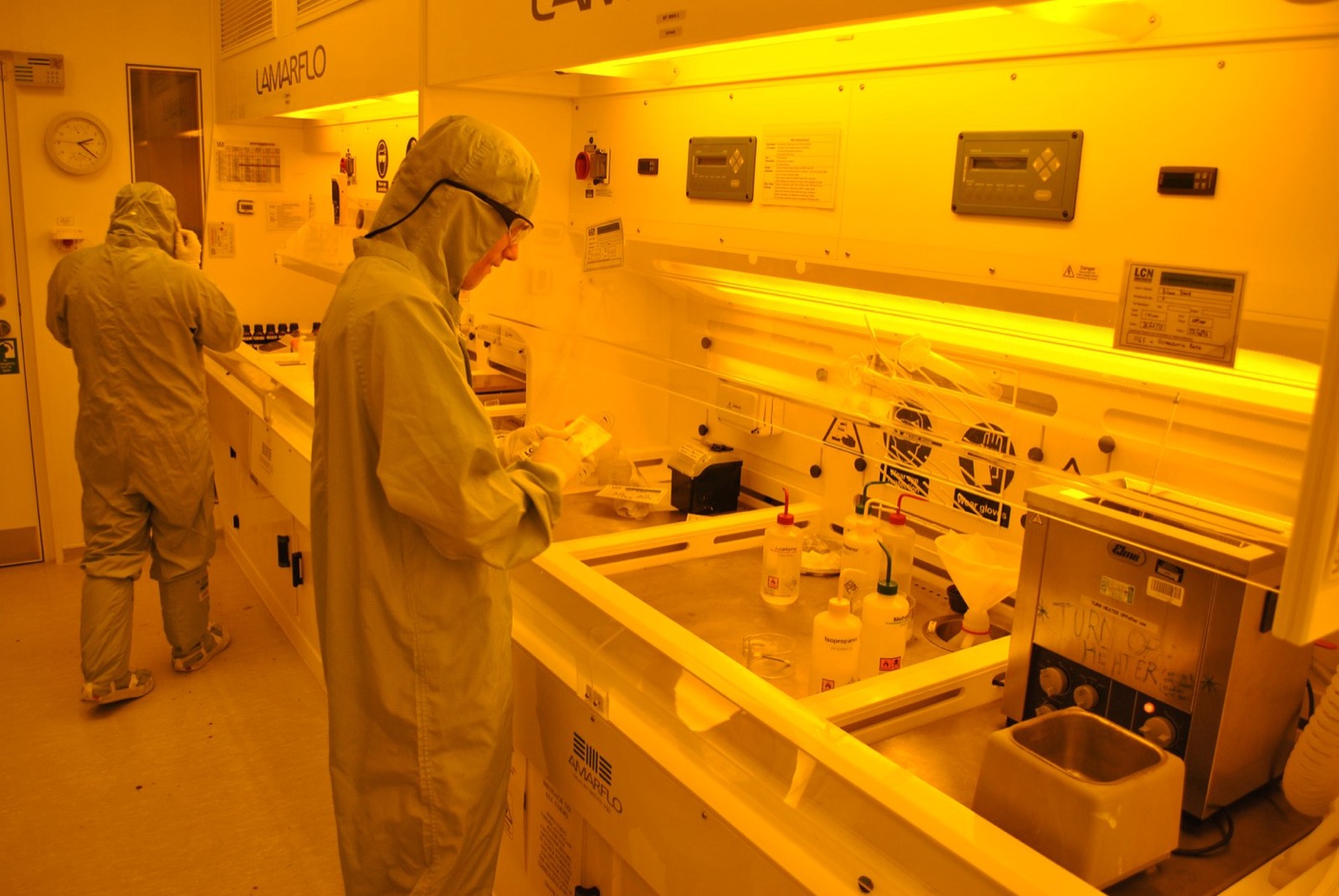
The water that has rinsed a wafer is, by the standards of this site, barely used. It carries traces of the acids and solvents of the process, a little silica, and almost nothing else, and the larger fabs treat it and send most of it round again, to the front of their own purification chain, where it enters cleaner than the municipal feed. What does leave the site is an effluent of acids, fluoride from the etching baths and dissolved metals in small quantities, treated by neutralisation and precipitation as any chemical plant's is. The paradox of the industry is that its water problem is one of purity coming in rather than pollution going out, and that a plant which uses more water per site than almost any other in this series returns most of it, treated, to the same aquifer or river it came from.
The other end of the scale
The purest water in industry is made from the same tap, by the same membranes, as the recycled water in Singapore and the desalinated water in the Gulf. That is the point worth taking from a strange corner of the water business. The scale from sewage to ultrapure water is one scale, and the same set of tools, biology, coagulation, membranes, resins, light, moves water along it in either direction, as far as anyone is willing to pay. Drinking water is a point in the middle. A chip fab wants water from the far end, and a treatment engineer, shown a fab's water plant, sees the same racks and pumps as everywhere else, run further than usual, and nothing else.
Sources
- ASTM D5127, Standard Guide for Ultra Pure Water Used in the Electronics and Semiconductor Industries; SEMI F63 specifications for ultrapure water.
- ISO 3696 and ASTM D1193, grades of reagent water for laboratory use.
- European and United States Pharmacopoeia monographs for purified water and water for injection.
- Theoretical resistivity of pure water at 25 °C, 18.18 megohm centimetres.
- Photographs: opener: IMaGe 31072R – Silicon Wafer 20120926 by Rob Bulmahn (CC BY) via Wikimedia Commons; inline: Photolithography lab in the LCN cleanroom by University College London Faculty of Mathematical & Physical Sciences (CC BY) via Wikimedia Commons; inline: FMN Lab team (2) by FMNLab (CC BY) via Wikimedia Commons.