Thirsty: Almonds
Four out of five almonds in the world grow in one valley in California, on more than a million acres of orchard, in a place that gets no summer rain. Every one of them was irrigated. What an almond's twelve litres are made of, why the orchards are where they are, and why the number became an argument.
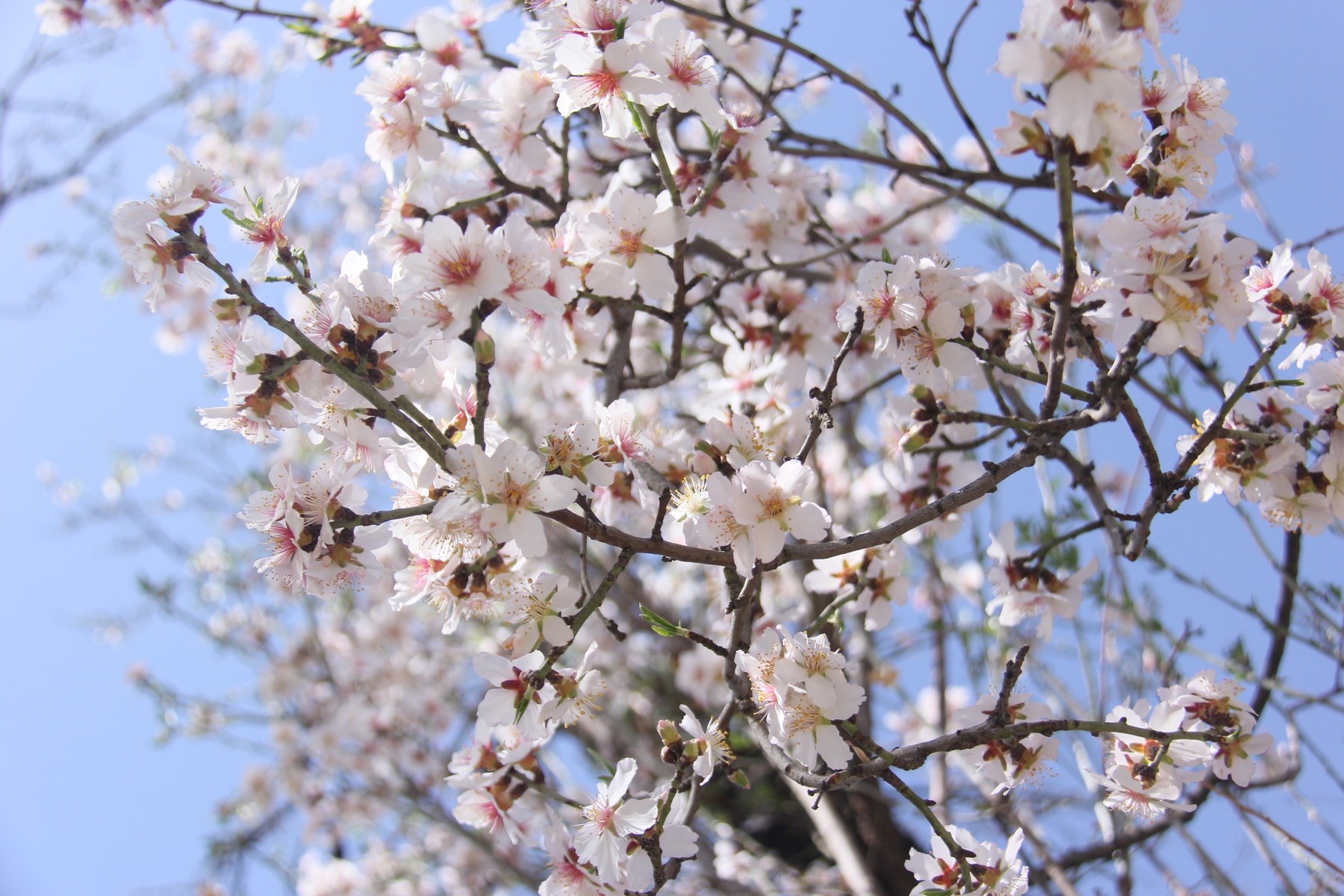
Drive north out of Bakersfield in February and, for most of an hour, the land on both sides of the road is white. It is almond blossom, on trees planted in rows so straight that they flicker past like fence posts, and it goes on for as far as the flat valley floor allows. The Central Valley of California grows about four out of every five almonds eaten in the world, on more than a million acres of orchard, and in the years that the state was in drought, that blossom became the most argued over crop in America.
The argument was about water, and it usually came down to a single figure: a gallon per almond. This article is about where that figure comes from, why it is roughly right, and why the more interesting question is where the gallon was drawn.
What an almond needs
The almond is a tree of the Mediterranean and the Middle East, related to the peach, and it wants what those places have: a cool wet winter, in which it goes dormant and gathers its chill, and a long hot summer with no rain, in which the nut ripens inside a fuzzy green hull and dries on the branch. Rain in summer rots the crop. The Central Valley has the climate almost exactly, with a winter of a few hundred millimetres of rain and a summer with, in most years, none at all.
That last fact is the whole of the water story. A tree in full leaf in the valley's summer heat pumps water out of the soil and into the air at a rate of a few millimetres a day across the whole orchard floor, and since the sky provides nothing between April and October, every millimetre has to come from irrigation. An acre of almonds needs somewhere around four acre feet of water a year, roughly five million litres, and nearly all of it is applied.
| An almond's water, roughly | |
|---|---|
| Per almond, applied irrigation water in California | About 12 litres |
| Per kilogram of shelled almonds, global average | About 16,000 litres |
| Of which pumped or diverted, blue water | Most of it, in California nearly all |
| Water per acre of orchard per year | About four acre feet, around 5 million litres |
| Share of California's farm water used by almonds | Around a tenth |
The twelve litres per nut comes from a study at the University of California that traced applied water through the orchard, the hull and the shell, and it is the figure worth carrying. The kilogram figure is higher than for most foods on this site because a kilogram of almonds is a lot of nuts, each a small, dense, oil rich seed that took a tree a whole season to fill.
Why they are where they are
Almonds were a minor crop in California for a century, and then, between about 2000 and 2020, the orchards more than doubled. The reasons were commercial and, in a way, hydrological. The nut sells for a high price, its demand grew worldwide as a snack and a milk, and it grows on land that, with irrigation, would otherwise grow cotton or alfalfa for far less money. A farmer with a well and a water right could earn several times more per acre feet of water from almonds than from most row crops, and thousands of them did the sums.
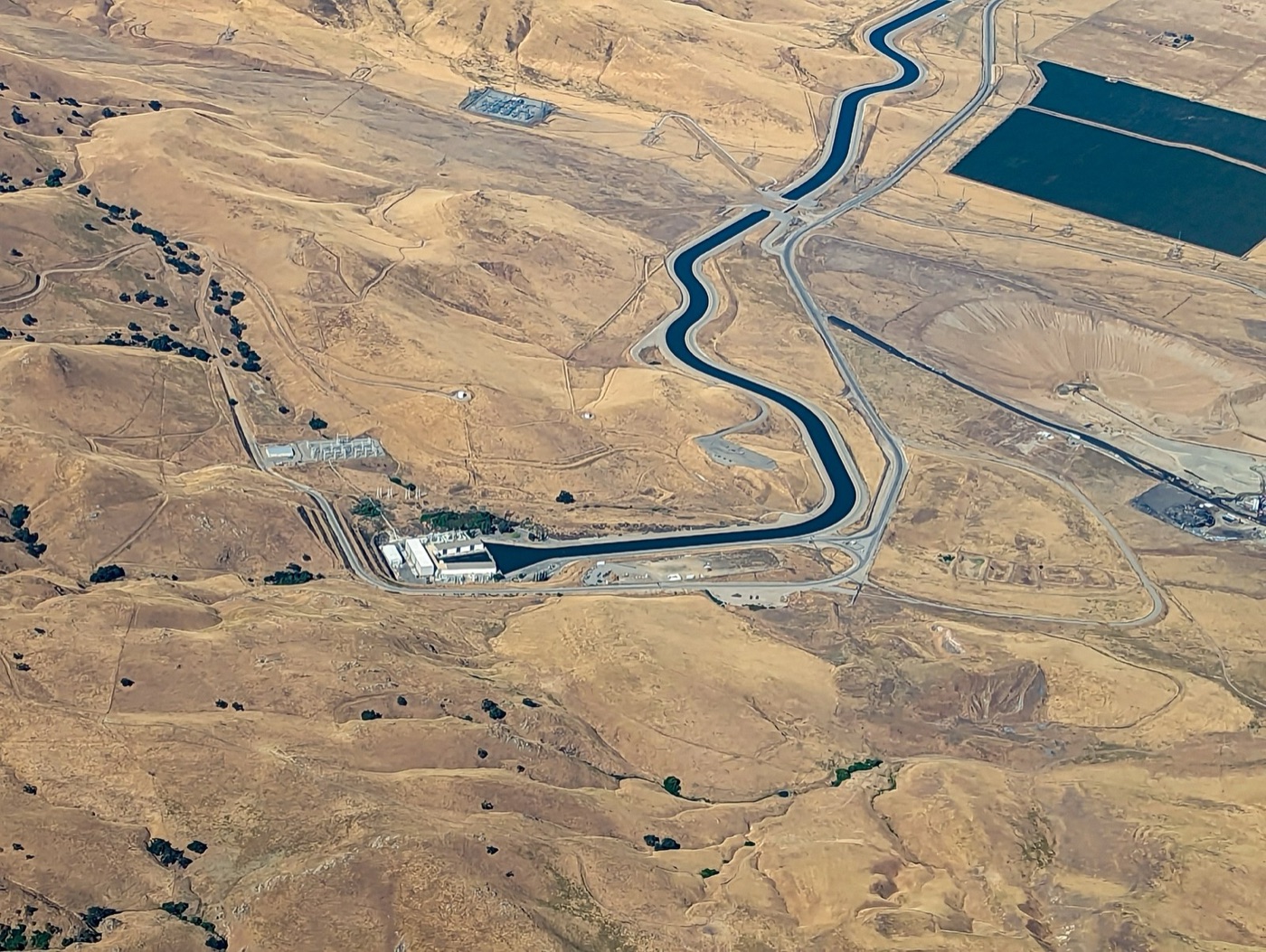
The catch is a tree's lifespan. A field of tomatoes can be left unplanted in a drought, and the water saved. An orchard is a twenty five year investment that dies in one dry summer without water, and so, when the state's rivers and canals fell short in the droughts of 2012 to 2016 and again in 2020 to 2022, the orchards kept drinking. The water came from the ground. Farmers drilled deeper wells, the aquifer under the southern valley dropped by tens of metres, and the valley floor, which sinks when the water beneath it is pumped out, sank in places by half a metre in a few years, cracking canals and bridges. California passed its first law regulating groundwater in 2014, in the middle of that drought, with almonds as the picture on the front page.
A tree's year
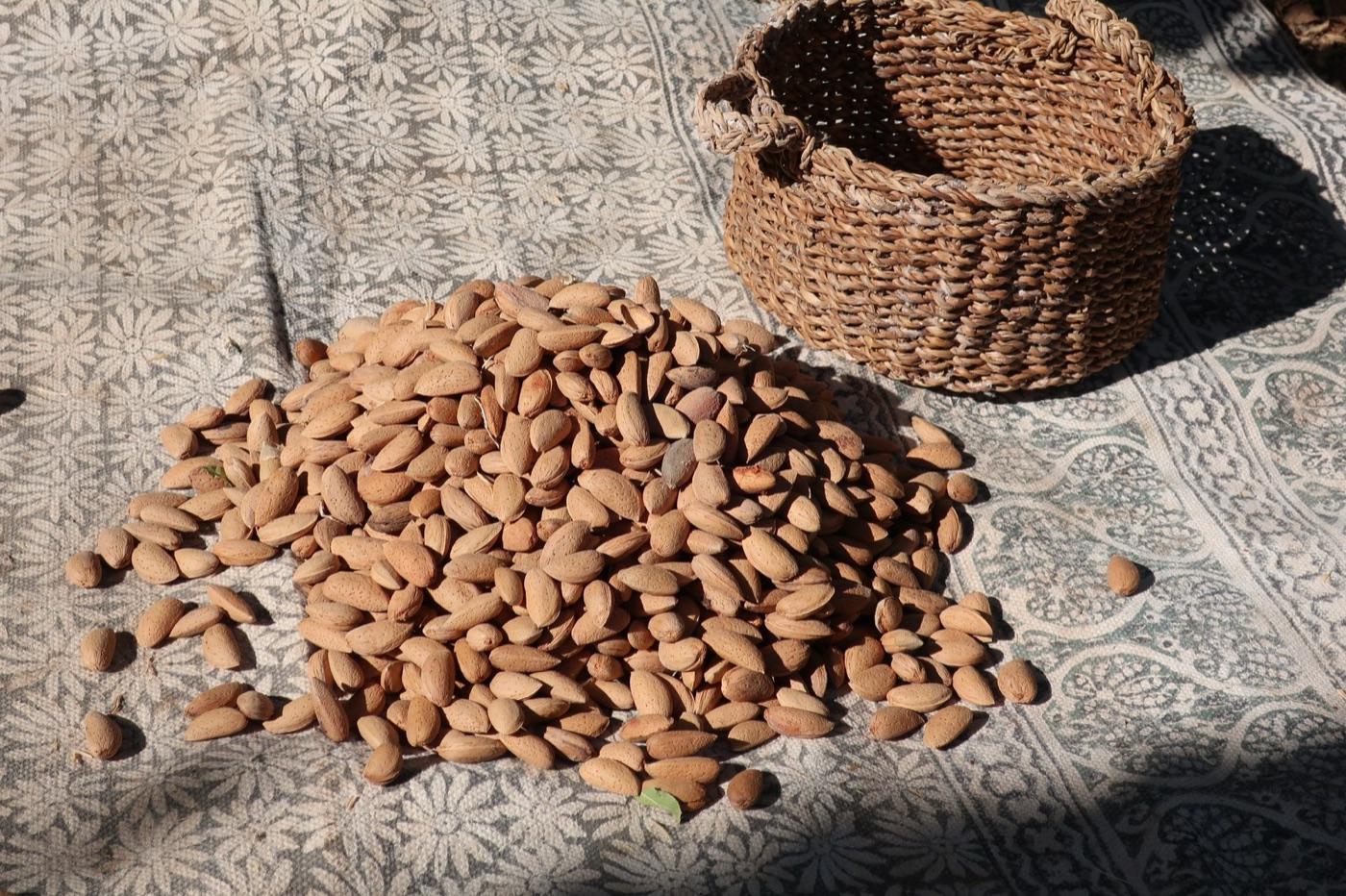
The orchard's calendar explains the shape of its water. In January the trees are bare and the winter rain, what there is of it, soaks the soil and refills the top metre or two of ground that the roots will draw on in spring. In February the trees bloom, and beekeepers truck in more than a million hives, the largest pollination event in the world, to set the crop. From March the leaves open and the trees begin to draw water, slowly at first and then, from May to August, at their full summer rate of five to seven millimetres a day across the orchard floor, in air that is dry and forty degrees. This is the irrigation season, and it runs without a break until the hulls split in August and the nuts are shaken from the trees in September and left to dry on the ground. After harvest the trees are watered lightly into the autumn, to set the buds for next year's bloom, and then the cycle rests.
Almost all of the year's applied water goes on between May and August, and that is also the period when the state's rivers, fed by the melt of the Sierra Nevada snowpack, are falling. In a wet year the reservoirs and canals carry the melt through the summer. In a dry one the snow is gone by June and the orchard's water for the rest of the season comes from the ground.
Where the water comes from
The Central Valley's farm water arrives by two great systems of canals, the federal Central Valley Project and the State Water Project, which capture the Sierra Nevada's snowmelt in reservoirs and carry it hundreds of kilometres south down the valley. In a year of normal snow the canals deliver most of what the orchards need. In a dry year the projects cut their deliveries, sometimes to zero for the farmers with the most junior rights, and the difference is made up from wells. The southern valley, where the almond boom was largest, has the most junior rights and the deepest wells, and it is where the aquifer has fallen furthest. The almond's water, in other words, is snow in a good year and fossil groundwater in a bad one, and the same nut can be a reasonable use of a surplus or an unreasonable one of a store, depending on the winter.
The argument
The gallon per almond became a slogan, and, as slogans do, it stood for more than it said. The number is a fact. What it was made to mean, that almonds are uniquely wasteful, is not quite one. Per litre of water, an almond orchard produces more money, more protein and more calories than the alfalfa and pasture that use a larger share of the state's farm water, and a kilogram of almonds carries less water than a kilogram of beef. The crop's defenders made these points, correctly, throughout the drought.
The critics' point was different, and also correct. It was that the orchards were being planted on the strength of water that did not exist in a dry year, that the trees could not be turned off, and that a crop which is mostly exported was being grown with an aquifer that belonged to the valley. The two arguments talked past each other, and they still do. A high value per drop is a reason to grow almonds. A permanent demand in a variable climate is a reason to grow fewer of them than a wet decade makes possible. Both are true, and the state's groundwater law is the attempt to hold both at once, by setting each basin a budget that the orchards, along with everyone else, will have to fit inside by 2040.
| Two ways of reading the same number | |
|---|---|
| Value per litre | Higher than most crops in the valley |
| Flexibility in a drought | Almost none; a tree cannot be fallowed |
| Where the summer water comes from | Canals when there is snow, wells when there is not |
| What it has cost | A falling aquifer, a sinking valley, and a groundwater law |
What the industry has done
Almond growers have not stood still, and the fairness of the account requires saying so. Most orchards now run on drip or micro sprinklers, of the kind described in the article on Israel, rather than flood irrigation, and the water applied per kilogram has fallen by about a third since the 1990s. Growers measure soil moisture with probes and irrigate to the tree's demand rather than to a calendar. The hulls, once waste, are fed to dairy cows, and the shells are burned for power or used as bedding, which spreads the water across more than one product. And a share of the orchards planted in the boom have already been pulled out, in the driest districts, as their water allocations shrank.
None of this changes the summer. The tree still pumps, and the sky still gives nothing, and the twelve litres will not go much lower than ten. What can change is the acreage and where it stands, and that is what the groundwater budgets are about.
The milk, briefly
Almond milk deserves a paragraph, because it is often bought as the responsible choice. A litre of almond milk contains a small handful of almonds, thirty or forty grams, and its water footprint is accordingly a few hundred litres, mostly from those nuts. That is far less than the roughly thousand litres in a litre of dairy milk, which is the comparison usually made, and it is more than oat milk, whose oats grow on rain in cool wet places. The choice among milks is a choice about which farm's water to spend, and the almond's farm is a dry one.
What it teaches
The almond is the clearest case on this site of a crop being right for a climate and wrong for a water supply. Everything about the Central Valley suits the tree except the one thing that makes the valley a farm, which is water carried in from somewhere else. When the somewhere else runs short, the tree turns to the ground beneath it, and the ground gives way.
Twelve litres per nut, and the more useful question is which twelve.
Sources
- Fulton, J., Norton, M. and Shilling, F. (2019). Water indexed benefits and impacts of California almonds. Ecological Indicators 96. About 12 litres of applied water per almond.
- Mekonnen, M.M. and Hoekstra, A.Y. (2011). The green, blue and grey water footprint of crops and derived crop products. Value Water Research Report 47. Global average for shelled almonds about 16,000 litres per kilogram.
- Almond Board of California, Almond Almanac 2023: bearing acreage, production and the share of world supply.
- California Department of Water Resources, Sustainable Groundwater Management Act (2014) and San Joaquin Valley subsidence monitoring.
- USDA National Agricultural Statistics Service, California Almond Acreage Report.
- Photographs: opener: Almond Blossom, Meymand, Iran by Chemipanda (CC BY-SA) via Wikimedia Commons; inline: Edmonston Pumping Plant by Tedder (CC BY-SA) via Wikimedia Commons; inline: Harvest of almonds by Davidbena (CC BY-SA) via Wikimedia Commons.