Thirsty: Cheese
It takes about ten litres of milk to make a kilogram of hard cheese, and a litre of milk carries a thousand litres of water. The footprint of cheese is about 3,200 litres a kilo, lower than that arithmetic suggests, because of what happens to the other nine litres, and because a cheese plant's own water has a story of its own.
Ask a cheesemaker how much milk goes into a kilogram of cheese and the answer is quick: about ten litres for a hard cheese, a little less for a soft one, more for a very dry one. Ask the same question about water and the arithmetic seems obvious. A litre of milk carries about a thousand litres of water, as the milk article on this site described, so a kilogram of cheese should carry ten thousand. The Water Footprint Network's figure is about 3,200, and the gap between those two numbers is a small lesson in how footprints are counted and what happens to the nine litres of milk that do not become cheese.
Thirty two hundred litres
By the method every footprint on this site uses, cheese comes to about 3,178 litres of water per kilogram in the global average, counting the rain the cow's feed took up, the irrigation applied to it, and the clean water it would take to dilute the pollution from the field and the farm.
| Dairy product | Litres per kilogram |
|---|---|
| Milk | About 1,020 |
| Cheese | About 3,178 |
| Butter | About 5,553 |
| Milk powder | About 4,745 |
Cheese carries about three times the water of milk, per kilogram, and butter about five times, and in each case the figure is lower than the volume of milk that went in would suggest. The reason is the same for both.
What happens to the other nine litres
Milk is made into cheese by curdling it. Rennet or acid makes the milk proteins clump, the clumps are cut and drained, and what remains is the curd, which is pressed and aged into cheese. What drains away is whey, and whey is most of the milk: nine tenths of the volume, carrying the milk sugar, some of the protein and most of the water.
For most of the history of cheesemaking, whey was a waste. It was fed to pigs, poured onto fields or, in the industrial era, into rivers, where its sugar and protein consumed the oxygen the way milk does, as the COD article described. In the last few decades it has become a product. Whey protein is dried into the powder sold in gyms and added to processed foods; lactose is extracted for the food and pharmaceutical industries; what is left is digested for biogas or still fed to animals. A modern cheese plant sells its whey, and some make more from it than from the cheese.
The footprint method takes account of this. When a process produces two products from one input, the input's footprint is divided between them in proportion to their value, and cheese, being the more valuable product per litre of milk, takes a larger share than its weight but not all of it. The water that grew the cow's feed was all used; it is attributed partly to the cheese and partly to the whey powder. That is why cheese carries three thousand litres rather than ten thousand, and it is a reminder that a footprint is an accounting convention as well as a measurement.
Cheese as stored milk
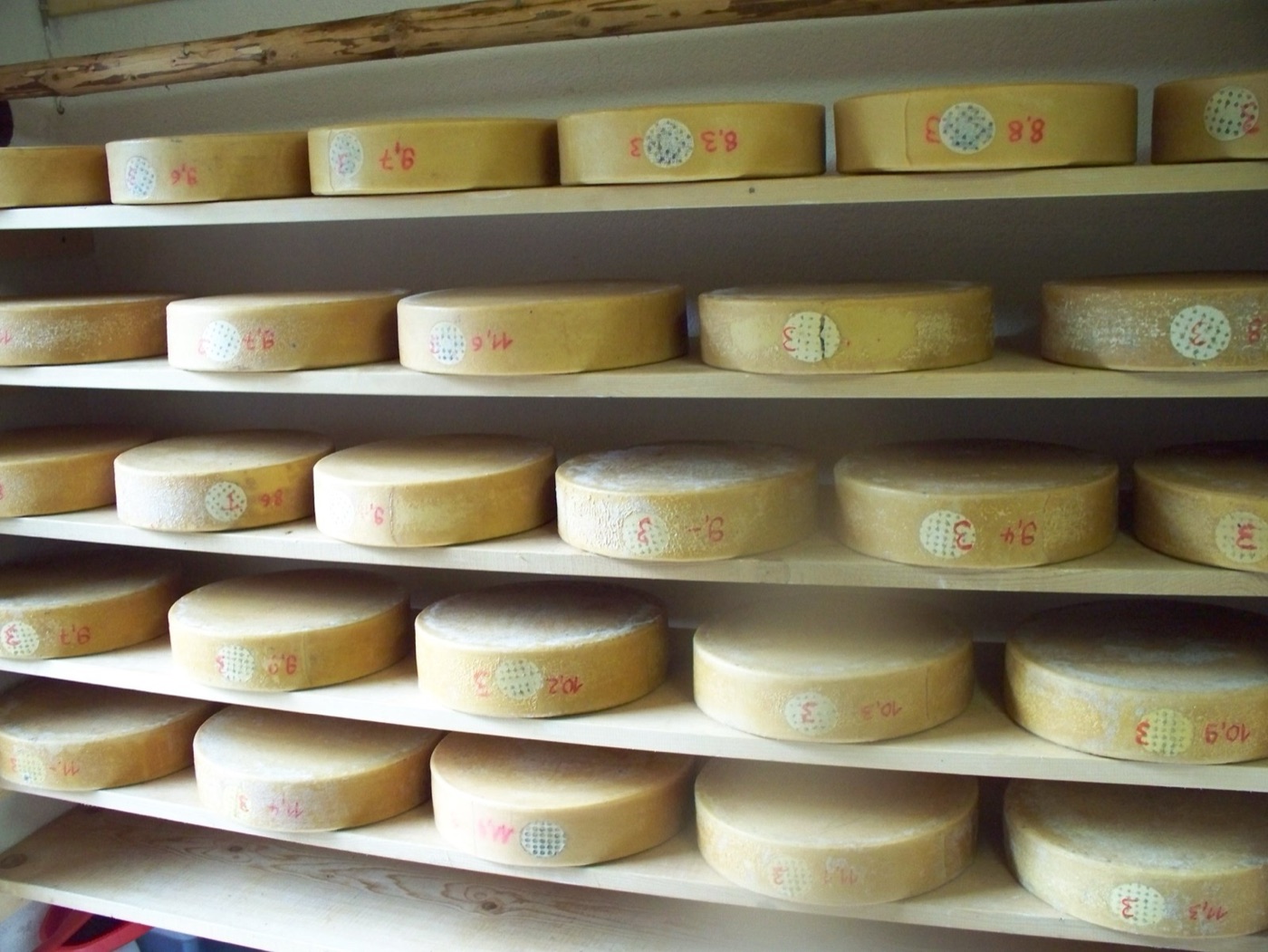
It helps to remember what cheese is for. Before refrigeration, milk lasted a day, and a dairy farm produced far more of it in a summer than a family could drink. Cheese is the technology for keeping milk: the water drained off, the solids salted and pressed, and the result a food that lasts months or years without cold. A wheel of hard cheese is a summer's milk, preserved, and the water that was in the milk has left it twice, once as whey in the vat and once, slowly, in the maturing room.
That is also why the water content of the cheese itself, the literal kind, varies so much. A fresh cheese is more than half water by weight and lasts days. A semi hard cheese is around 40 percent water and lasts months. A hard aged cheese is 30 percent or less and lasts years. The drier the cheese, the more milk it took, the longer it keeps, and the more of the footprint it carries per kilogram. The Parmesan on the shelf is, in every sense, the most concentrated milk in the shop.
The cow, again
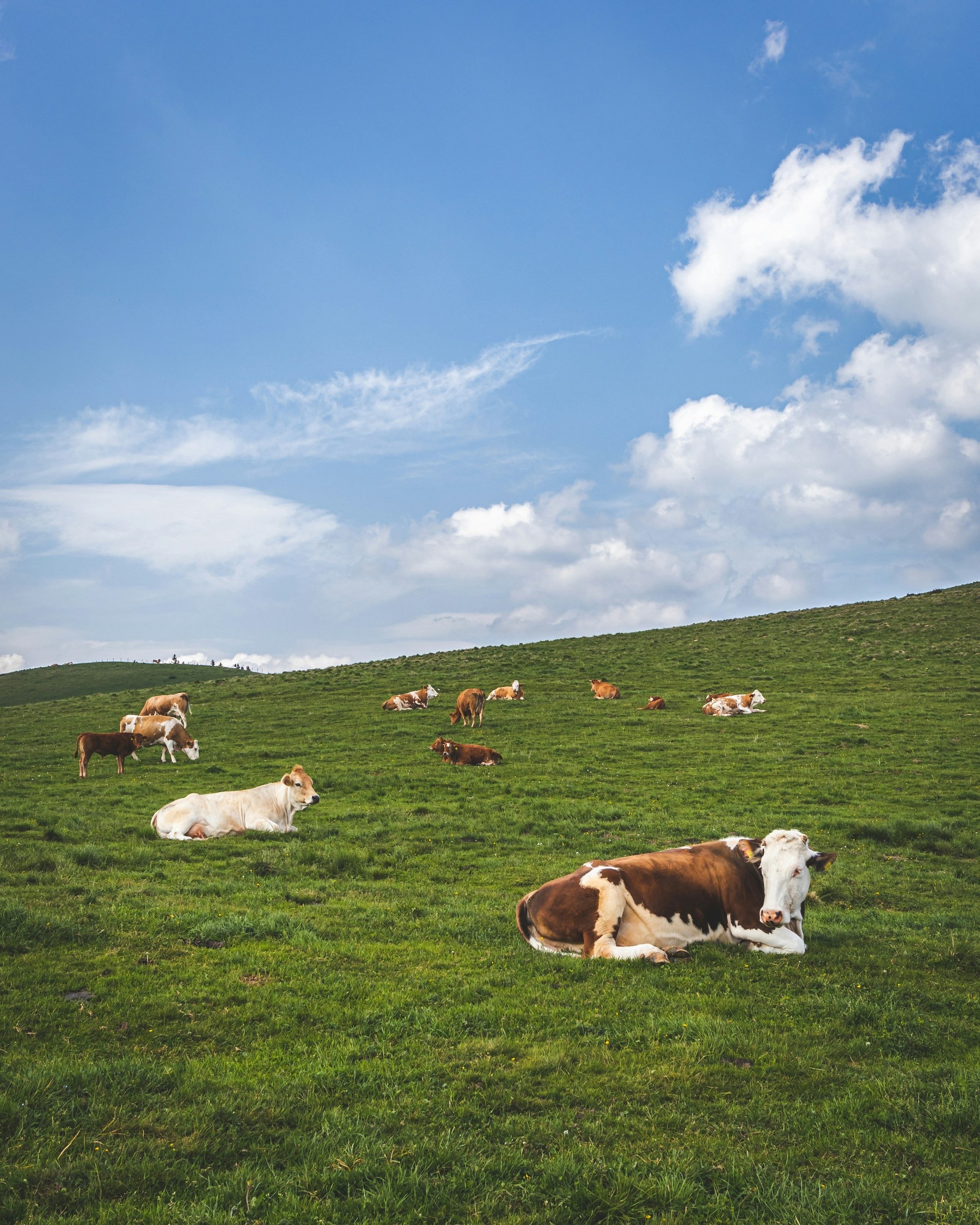
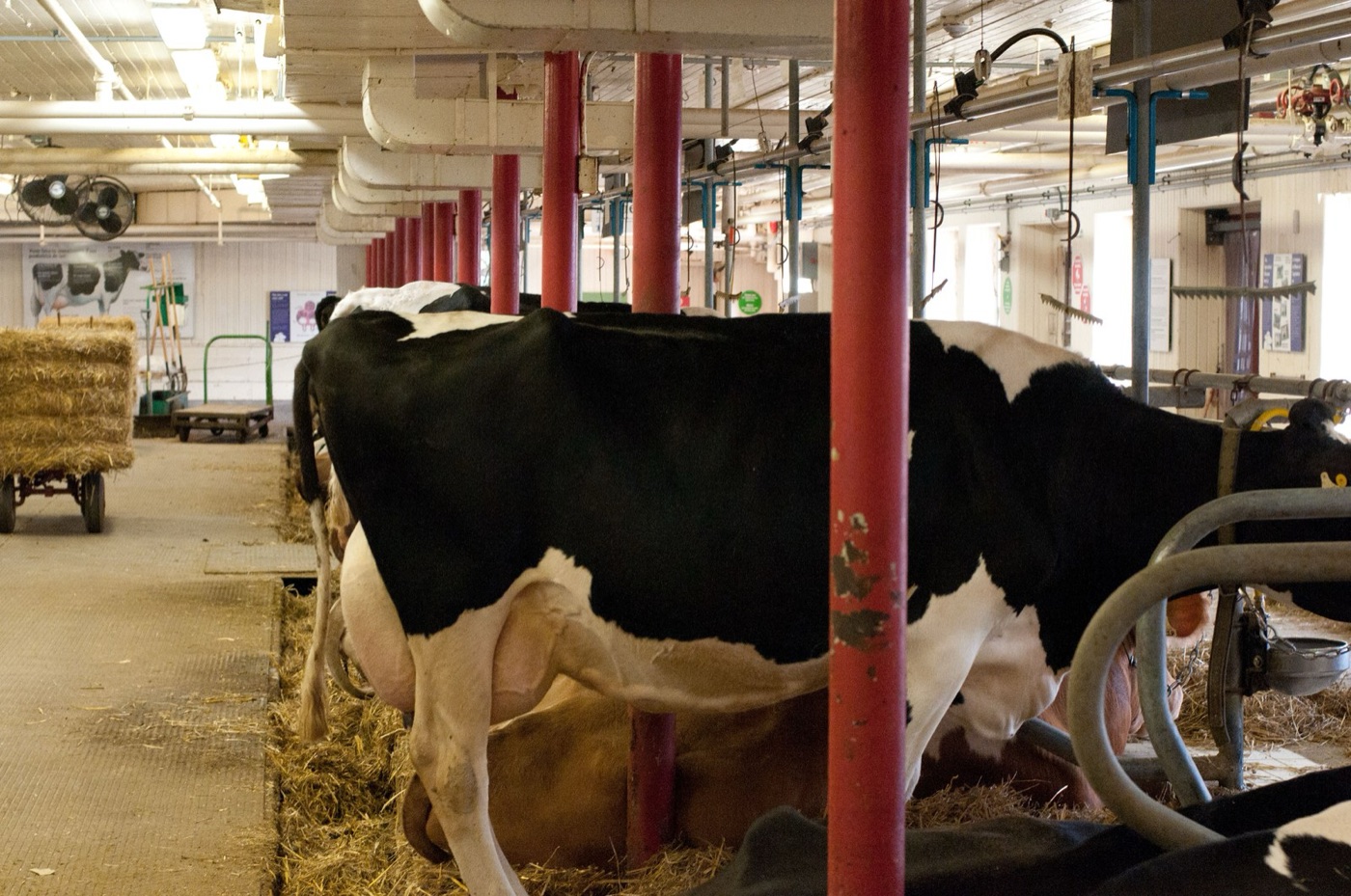
The rest of the number is the cow, and the story is the one told for milk and for beef. About 96 percent of the water in cheese grew the feed: the grass, hay, silage and grain that a dairy cow eats every day. Her own drinking water is a couple of percent. The dairy and the cheese plant are the rest.
| Where the water in cheese went | Share |
|---|---|
| Growing the feed | About 96% |
| The cow's drinking water | About 2% |
| The dairy and the cheese plant | About 2% |
And, as always, the kind of water matters more than the amount. Milk's footprint is about 85 percent green, rain on pasture and feed crops, and a cheese from cows grazing the wet grass of Normandy, Somerset or the Alps is close to all rain. A cheese from a dry region's herd, kept indoors on irrigated maize and alfalfa, draws on rivers and wells, and its blue footprint can be several times the average. The article on milk described alfalfa as the feed crop where the water in dairy becomes a political question, and cheese, being concentrated milk, concentrates that question too.
The hard cheese premium
Cheeses differ in how much milk they take, and the water follows the milk.
| Cheese | Litres of milk per kilogram, roughly |
|---|---|
| Fresh cheeses, cottage, ricotta, mozzarella | 4 to 8 |
| Semi hard cheeses, Gouda, cheddar | 9 to 11 |
| Hard, aged cheeses, Parmesan, Gruyère | 13 to 16 |
A hard aged cheese loses water as it matures, sometimes for two or three years, and what remains is concentrated milk solids, so a kilogram of Parmesan carries more milk, and more water, than a kilogram of cheddar, which carries more than a kilogram of mozzarella. The global average of 3,178 litres sits somewhere in the middle. A wheel of aged mountain cheese, in water terms, is a small herd's worth of summers.
The cheese plant's own water
Two percent is a small share, and the cheese plant is worth a paragraph anyway, because its water is unlike any other food plant's.
The first oddity is the brine bath. Most hard and semi hard cheeses are salted by floating them in a tank of concentrated brine for hours or days, and a cheese plant keeps that brine for years, topping up the salt, filtering it, sometimes pasteurising it. It is one of the few places in the food industry where a saturated salt solution is a working fluid rather than a waste, and readers of the brine article will recognise the problem it eventually poses: when the bath is finally emptied, it is one of the saltiest effluents a treatment plant ever receives.
The second is cleaning. A cheese plant is a dairy, and every pipe, vat, press and mould the milk touched is cleaned in place between batches, with hot water, caustic and acid, as the article on the food industry described. The effluent carries milk and whey residues with a chemical oxygen demand hundreds of times that of sewage, and the plant's treatment works, or the town's, is sized for a load far larger than the plant's size would suggest.
Whey, the water that used to go to the river
The whey deserves one more paragraph, because it is where cheese's water story touches the treatment engineer's world. A cheese plant that makes a tonne of cheese produces nine tonnes of whey, and until the 1970s most of it went into the nearest river, where its milk sugar fed bacteria that stripped the oxygen out of the water for kilometres. The dairy regions of Wisconsin, Normandy and Ireland had some of the most polluted small rivers in the developed world for that reason, and the first environmental rules on the industry were about whey. The drying plants and protein powders that followed turned a pollutant into a product, and the modern creamery's effluent is what is left after the whey has been sold: the rinse water, the cleaning chemicals, and the brine. It is one of the better examples in the food industry of a waste stream that regulation made valuable.
Reading the number
Cheese is one of the foods where the footprint arithmetic teaches more than the total. Three thousand litres for a kilogram is a large number and a fair one, but it is a share of the milk's water rather than the whole of it, because the whey took the rest, and it is nearly all rain, because most of the world's cheese comes from grass. The questions that matter are the ones this site keeps asking: where the herd grazed, whether the feed was rain or river, and, for cheese in particular, what the plant did with the nine litres that drained away. A cheese plant that sells its whey and treats its brine is a plant whose water has been used all the way through, which is more than can be said for most.
Sources
- Mekonnen, M.M. and Hoekstra, A.Y. (2012). A global assessment of the water footprint of farm animal products. Ecosystems 15. Cheese about 3,178 L/kg, butter about 5,553 L/kg, milk about 1,020 L/L; allocation of milk's footprint between cheese and whey by value.
- Standard cheesemaking yields: roughly 10 litres of milk per kilogram of hard cheese, less for soft cheeses.
- European Commission BREF for the food, drink and milk industries: dairy water use and cleaning in place.
- Photographs: cattle by Quaritsch Photography, Unsplash; inline: Cheese Wheels from Bernese Oberland, Switzerland by TriviaKing (CC BY-SA) via Wikimedia Commons; inline: DairyBarnOttawa by M. Rehemtulla (CC BY) via Wikimedia Commons.