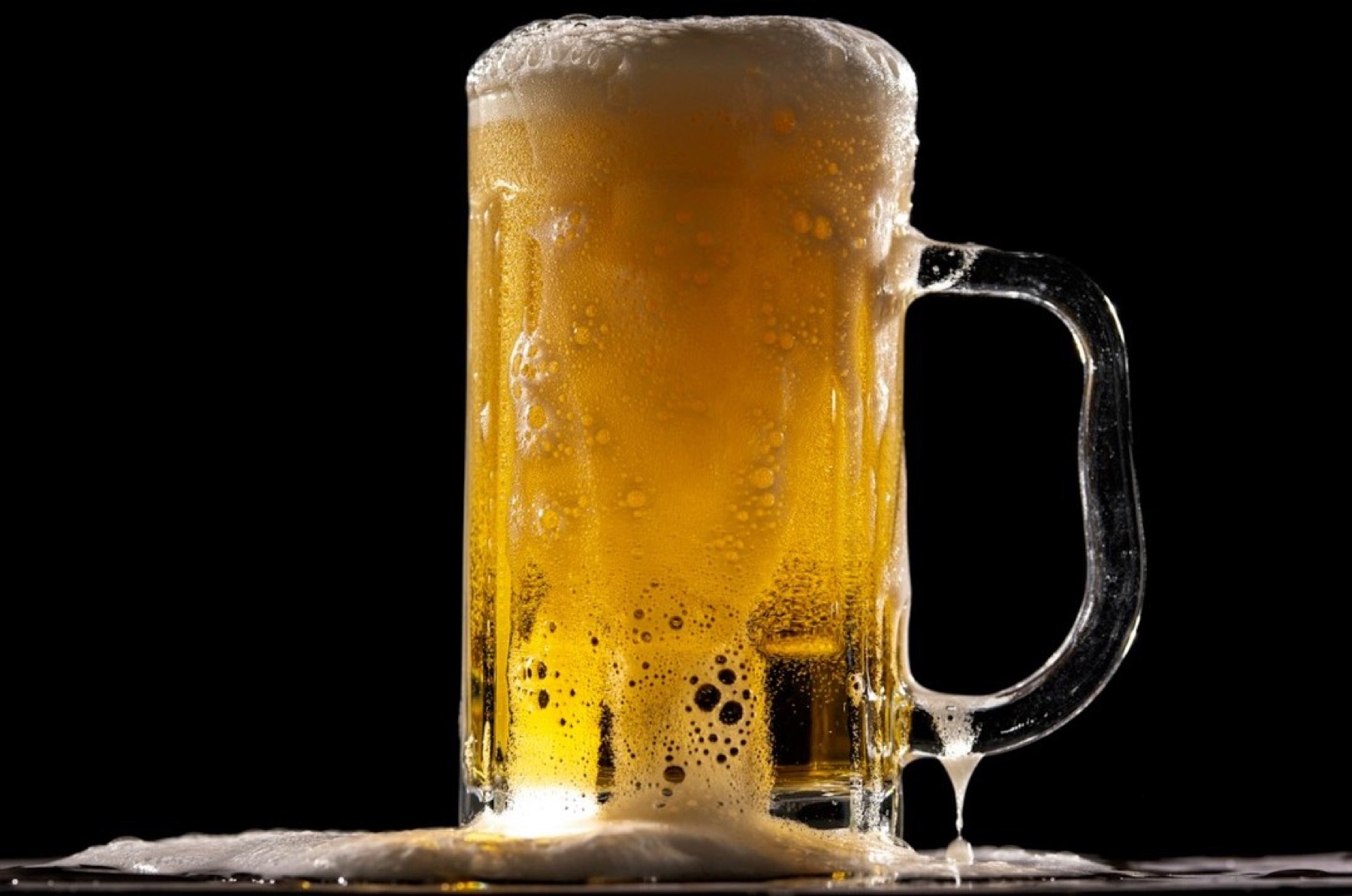
Thirsty: Beer
A 250 millilitre glass of beer carries about 74 litres of water, and almost none of it was spent at the brewery. The barley in the field is the whole story, and inside the brewery, where water mostly goes on cleaning, brewers watch their ratio more closely than any industry on this site.
A glass of beer is about 95 percent water, and that is the least interesting water in it. By the time a quarter litre of lager reaches a table, roughly 74 litres of water have gone into making it, and nearly all of them were spent months earlier in a field of barley, by a plant, before anyone had thought of brewing.
Beer is a good footprint to look at because it is one of the few products where the factory stage is worth examining on its own. Brewers measure their water more carefully than almost any industry, they publish the results, and the effluent that leaves a brewery is among the most interesting wastewaters there is.
Seventy four litres
By the Water Footprint Network's method, beer made from barley comes to about 298 litres of water per litre of beer in the global average. A 250 millilitre glass is a quarter of that, about 74 litres.
| Stage | Litres | Share |
|---|---|---|
| Growing the barley | 68 | 92% |
| Malting and brewing | 5 | 7% |
| Cleaning and packaging | 1 | 1% |
The split is approximate; the total is the citable figure. Nine litres in ten grew the grain. As with coffee and chocolate, the field drinks first, and the brewery, for all the water that visibly runs through it, is a rounding error on the whole.
Grain is the whole story
Barley is a grass, grown for its seed, and like every crop it spends a season pumping water from the soil into the air through its leaves. The grain that is harvested is a small part of what the plant built, and the water it transpired is charged to that grain. Beer needs a lot of grain: a litre of beer takes somewhere around 150 to 200 grams of malted barley, and the malting itself, in which the grain is steeped in water, allowed to sprout, and kilned, adds a little more.
Where the barley grew decides what kind of water this was. Most of the world's malting barley comes from temperate regions with reliable rain, the north of Europe, Canada, the northern United States, Australia's southern coast, and there the footprint is largely green, rain that fell on a field that was going to be farmed anyway. Barley grown on irrigated land in a dry region, as some is in Australia and the American west, carries a larger blue share, and that is the part worth worrying about.
Malting
Between the field and the brewery there is a stage most drinkers have never heard of, and it is the only one besides brewing that adds water to the footprint on purpose.
Barley cannot be brewed as it is harvested. Its starch is locked inside the grain, and the enzymes that will later turn that starch into sugar are dormant. Malting wakes them. The grain is steeped in water for about two days, drained, and allowed to sprout for four or five more, spread on a floor or turned in a drum, until the rootlets show and the enzymes have developed. Then it is kilned, dried with warm air until it is stable, and the degree of kilning decides whether the malt is pale or dark. The steeping is where the water goes: a few litres for every kilogram of grain, most of which is drained away carrying the dust and the first sugars off the barley.
The malt then travels to the brewery, where it is milled and mashed, soaked in hot water so that the enzymes convert the starch to sugar, and the sweet liquid, the wort, is boiled with hops and fermented. The water in the mash becomes the beer. Everything else in the brewery is cleaning.
Water and the town
Brewers have always been particular about water, for reasons that predate any concern about footprints. The mineral content of the local water shapes the beer, which is why the pale ales of Burton upon Trent, brewed on hard water rich in gypsum, and the pilsners of Plzeň, brewed on soft water, tasted so different that other brewers learned to adjust their own water to copy them. The practice still has a name, Burtonisation. A brewery was built where the water was right, and a brewery in a town has always known exactly what it draws from the supply, because the town knows too.
That history is part of why the industry measures its water so carefully today. A brewery cannot move, its water is its product, and its neighbours are its customers.
Inside the brewery
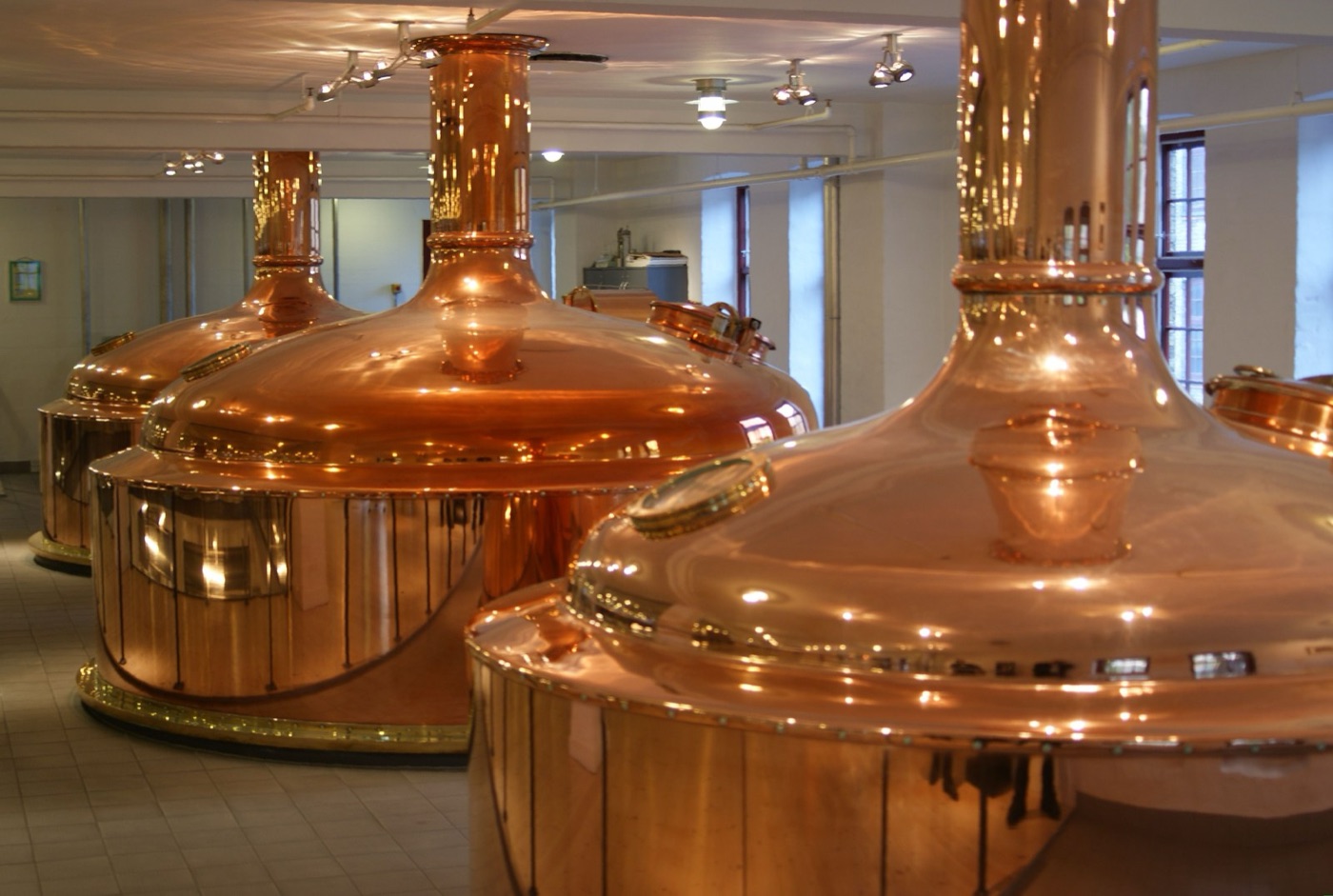
Most of the water that enters a brewery never becomes beer. It cleans. A brewery is a system of tanks, pipes, kettles and kegs through which a sugary liquid moves for weeks, and every surface it touches has to be washed between batches, because the same sugars that feed brewing yeast feed everything else. The industry's word for this is CIP, cleaning in place: an automated cycle of rinses, caustic, acid and sterilant pumped through every vessel and line in turn, several times a day in a large plant.
| Where a brewery's water goes | |
|---|---|
| Into the beer itself | About one litre per litre |
| Cleaning tanks, pipes, kegs and bottles | The largest share |
| Cooling, steam, packaging | The rest |
A conventional brewery uses somewhere between four and seven litres of water for every litre of beer it makes. The best run breweries have pushed that below three, and a few report figures close to two and a half. The difference is management: recovering the last rinse of one cycle as the first rinse of the next, counting every fill, fixing leaks, and choosing equipment that cleans with less. Brewers measure the ratio weekly and publish it in their annual reports, because water is a cost, and because a brewery is usually in a town that notices what it takes from the supply.
That number, litres of water per litre of beer, is the one to remember, and it is the part of the footprint the brewery actually controls. The field is not theirs. The cleaning is.
What leaves
Brewery effluent is a good example of the point the Plain Water series keeps returning to: that the dirtiest water, by the industry's measure, is often the most nourishing. The water that leaves a brewery carries spent grain particles, yeast, sugars, and the residue of every cleaning cycle. Its chemical oxygen demand, the measure of how much oxygen it would take from a river, is many times that of raw sewage, because it is mostly food.
For decades that made a brewery an expensive customer for the local sewage works. Increasingly it makes the effluent a fuel. The same sugars that would suffocate a river are digested, in sealed tanks without oxygen, by bacteria that give off biogas, and the biogas is burned to heat the brewhouse. Many large breweries now run their own anaerobic treatment plants for exactly this reason, and a few produce a meaningful share of their own energy from what used to go down the drain. The spent grain itself, the solid left after the sugars are extracted, goes to cattle feed almost everywhere, and has done for centuries.
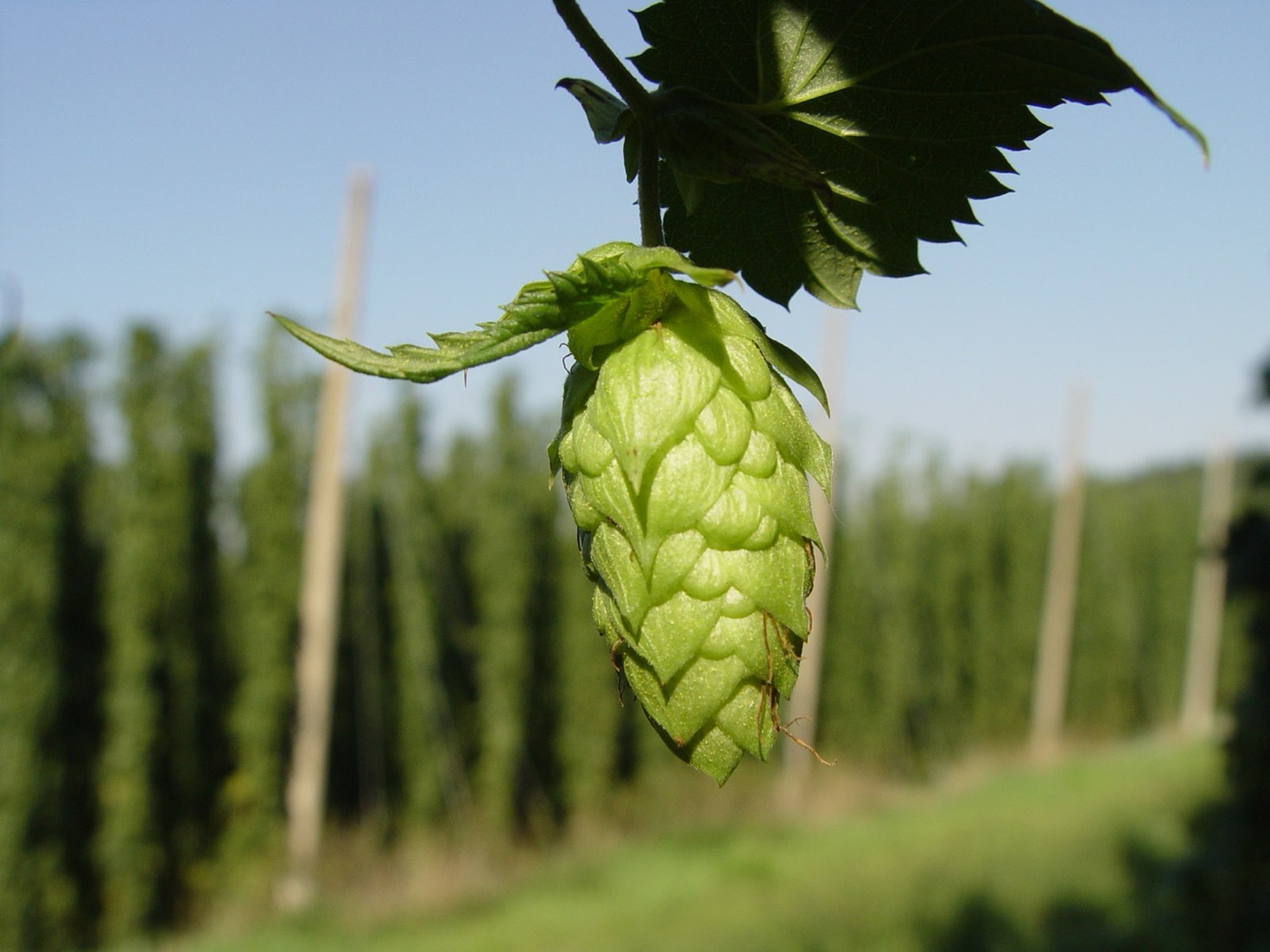
Hops, the other ingredient everyone knows, barely register. A litre of beer uses a few grams of dried hop cones, and although the hop plant is a climbing vine that grows to several metres in a season and drinks accordingly, the quantity in the glass is so small that its water is a footnote to the barley. The yeast, which is grown in the brewery and reused from batch to batch, adds nothing measurable at all. Beer is, in water terms, a barley product with flavouring.
The fine print
Three caveats keep the number honest.
Where the barley grew. The 298 litres per litre is a global average. Rain fed barley in northern Europe and irrigated barley in a dry region carry very different blue footprints, and the average conceals the difference.
Which number is meant. The 298 litres per litre is the full footprint from the field to the glass. The four to seven litres per litre is the brewery's own use, a different question, and the two are often confused in reporting. Both are real. They describe different stages of the same beer.
What the beer is. The beer itself is about 95 percent water, and that part is trivial. A litre of beer contains a litre of water; that is not the footprint, and nobody serious has ever claimed it was.
The same story as coffee
Beer is the coffee of the evening, in water terms. A cup of one and a glass of the other both carry a large number, most of it rain on a field far away, a small part of it spent in a factory that measures its water carefully. The water is real, it was simply spent somewhere else, and the useful question, as always, is whose water it was and whether that place could spare it.
What sets brewing apart is the factory end. It is the industry that watches its ratio most closely, publishes it, and has turned its dirtiest water into fuel. Among the industries on this site it is the one that has done most with the part of the footprint it can actually reach.
Sources
- Mekonnen, M.M. and Hoekstra, A.Y. (2011). The green, blue and grey water footprint of crops and derived crop products. Hydrology and Earth System Sciences 15. Beer from barley, global average, about 298 L/L.
- Stage split (barley, malting and brewing, cleaning and packaging) is approximate and illustrative; the total is the citable figure.
- Brewery water use ratios (litres of water per litre of beer) from published industry benchmarks and the sustainability reports of major brewers; conventional 4 to 7, best practice below 3.
- Photographs: from the project's own set; inline: Brewery kettles - Carlsberg - panoramio by Jens Cederskjold (CC BY) via Wikimedia Commons; inline: Humulus Lupulus Hopfendolde-mit-hopfengarten by LuckyStarr (CC BY) via Wikimedia Commons.