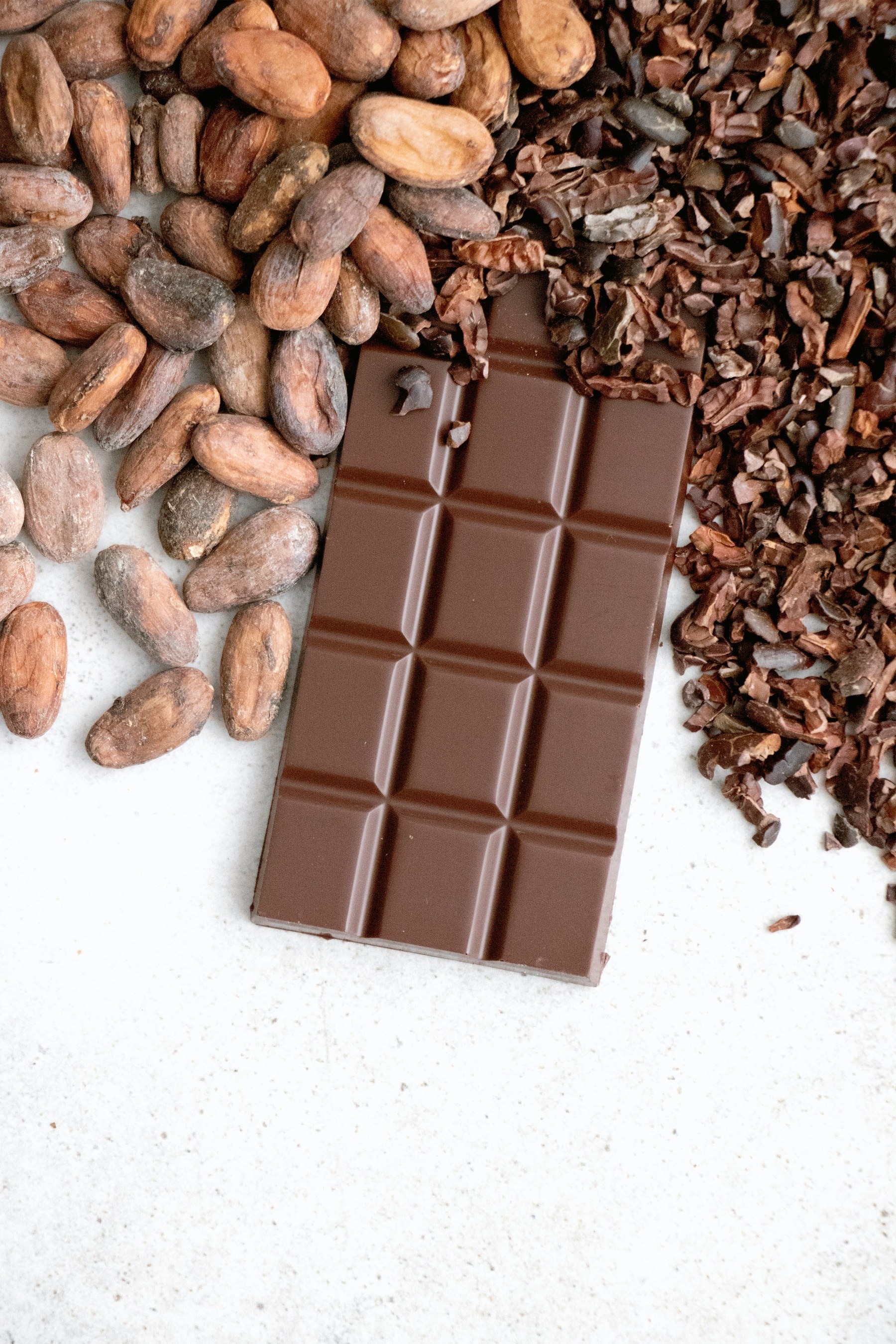
Thirsty: Chocolate
A 100 gram bar of chocolate carries about 1,700 litres of water, and per kilogram cocoa outweighs beef. Almost all of it is rain on a tropical farm, which is the reason the number is less alarming than it looks, and the reason cocoa's real worry is heat rather than water.
Of all the numbers on this site, the one for chocolate is the one people most often read twice. A 100 gram bar, the ordinary size on a supermarket shelf, carries a water footprint of about 1,700 litres. Per kilogram, chocolate outweighs beef. It is a figure that seems to demand a reaction, and the right reaction turns out to be a question: what kind of water, and where.
This article is about the tree that produces most of that number, the arithmetic that turns a wet hillside into a bar, and why the thing cocoa farmers actually worry about is not water at all.
Seventeen hundred litres
By the Water Footprint Network's method, chocolate comes to about 17,000 litres per kilogram in the global average, and a 100 gram bar is a tenth of that. The bar is not all cocoa, and the footprint follows the recipe.
| Ingredient | Litres | Share |
|---|---|---|
| The cocoa | 1,400 | 82% |
| The sugar | 200 | 12% |
| Milk powder, in milk chocolate | 80 | 5% |
The split is approximate; the total is the citable figure. Sugar is itself a thirsty crop, at around 1,800 litres per kilogram for cane sugar, and milk carries the footprint of the cow that made it, but both are minor next to the cocoa. More than four fifths of the water in a bar was used by a tree.
Why cocoa needs so much
The cocoa tree, Theobroma cacao, is a plant of the wet tropics. It grows within about ten degrees of the equator, under shade, in places with heavy rain for most of the year, and it drinks that rain continuously: there is no dry dormant season, no winter, only a tree in leaf pumping water from the soil into the air twelve months a year.
At the end of that year, a single tree produces a few kilograms of dried beans at most, and often less. The pods grow directly from the trunk, thirty or forty of them in a good year, each holding a few dozen beans in white pulp. The beans are fermented in heaps under banana leaves, dried in the sun, and shipped. Then it takes a great deal of beans to make a little chocolate, because the shell is discarded, the nib is roasted and ground, and the cocoa butter and mass are what remain.
| From tree to bar | |
|---|---|
| Growing season | All year, in heavy rain |
| Yield per tree | A few kilograms of dried beans, at most |
| Water per kilogram of cocoa beans | About 20,000 litres |
| Water per kilogram of chocolate | About 17,000 litres |
| Share of that water that is rain | About 98 percent |
Divide a year of a tree's water by a few kilograms of beans, and then charge those beans to a smaller weight of chocolate, and the litres per kilogram climb past beef. The arithmetic is the same as for coffee, another tropical tree crop with a small yield, and the answer is larger because cocoa yields even less per tree.
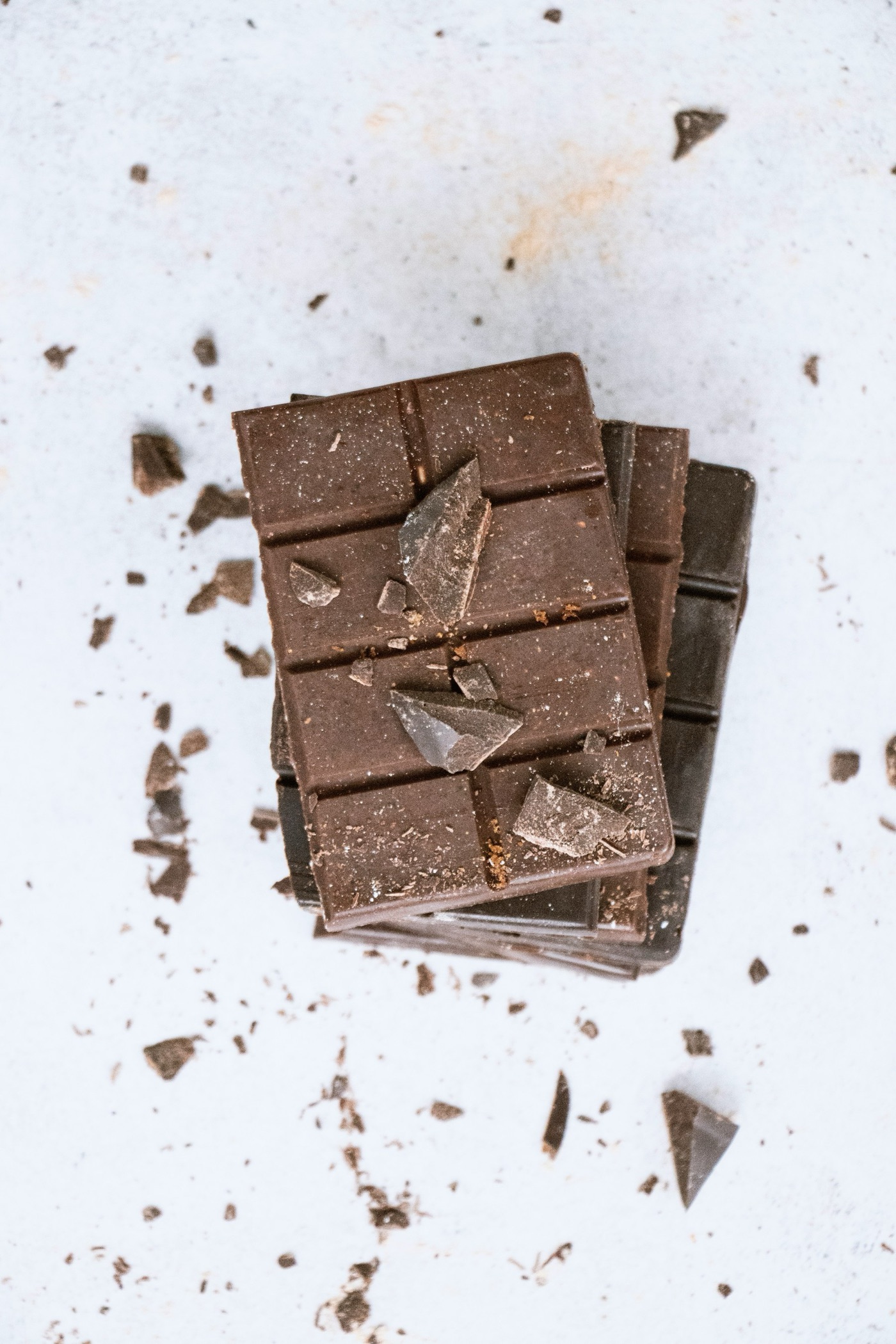
The fermenting heap
Almost none of chocolate's water is used after the harvest, and the reason is that the steps between the tree and the factory are done with sun and time rather than water.
A cocoa pod is cut from the trunk, split with a machete, and its beans, coated in sweet white pulp, are scooped into a heap on the ground or into a wooden box and covered with banana leaves. There they ferment for five to seven days. Yeasts and bacteria eat the pulp, the heap heats up, and the chemical changes that give chocolate its flavour begin inside the beans. Unfermented cocoa tastes of very little; the fermenting heap is where chocolate is made, long before any factory. Afterwards the beans are spread on mats or raised tables and dried in the sun for a week or more, turned by hand, until they are hard enough to store and ship.
No water is added at any point, and the pulp that ran off the heap is a small volume. That is why the footprint of chocolate is so nearly the footprint of the tree, and why the processing stages that matter so much for coffee, with its washing and its sugary effluent, barely register for cocoa. The factory that roasts, grinds and moulds the beans uses water mainly for cooling and cleaning, and it adds a few litres to a bar that already carries more than a thousand.
Sugar and milk
The rest of the bar has its own footprints, and they follow the same logic. Cane sugar comes to around 1,800 litres per kilogram, most of it rain on a tropical field, though sugar cane is irrigated in some regions and carries a real blue share there. Milk powder is milk with the water taken out, and since a litre of milk carries about a thousand litres of water and it takes roughly ten litres of milk to make a kilogram of powder, milk powder runs to several thousand litres per kilogram. A milk chocolate bar uses only a few grams of it, so the milk stays a minor line in the table. Dark chocolate, with no milk and less sugar, is nearly all cocoa, and nearly all rain.
Rain on a wet farm
This is the fact that changes the meaning of the number. About 98 percent of cocoa's water footprint is green water: rain that fell on a farm in the wet tropics, was taken up by the tree, and returned to the sky. Irrigation is almost unknown in cocoa farming. The trees grow where it rains, because that is the only place they can grow, and the rain that falls on a hillside in Ghana in July was never going to reach a tap or a reservoir that needed it.
Counting that rain is honest. The land and the rain could, in principle, have grown something else, and a footprint that counts it is telling the truth about how much water passed through the crop. But it is a different kind of cost from pumping a river, and a footprint that is 98 percent green describes a crop that is, in water terms, living comfortably within its means. Cocoa is not draining anything.
Compare that with cotton, whose blue water emptied a sea, or with beef from an irrigated feedlot, and the chocolate number, for all its size, is one of the least worrying on this site.
The insider number
The countries that grow cocoa are few, and two of them dominate. Côte d'Ivoire and Ghana between them supply around 60 percent of the world's beans, from millions of small farms of a few hectares each, most of them worked by families and most of them poor. Indonesia, Nigeria, Cameroon, Ecuador and Brazil supply most of the rest. The whole crop comes from a narrow belt of the tropics, and that narrowness is where cocoa's real problem lives.
The farms themselves are small, typically two to five hectares, planted decades ago and yielding less each year as the trees age. A farmer sells dried beans by the sack to a buyer at the roadside, at a price set far away, and most of the water in the bar is the rain that fell on that family's land. It is worth keeping in mind when the number is read: seventeen hundred litres of rain on a small farm in Ghana, worth a few cents to the people who grew the beans, and a great deal more to everyone between them and the shelf.
The problem is heat, not water
Cocoa grows well in a band of temperature and rainfall that is narrower than for most crops, and that band is moving. Studies of the West African cocoa belt project that, as temperatures rise over the coming decades, a substantial part of the land that grows cocoa well today will become too hot and too dry for it by mid century, with the suitable zone shifting uphill and towards the coast, into places that are already farmed or forested. The tree can be bred for heat, and farms can be moved, and the industry is already doing both, but neither is quick, and cocoa trees take years to bear.
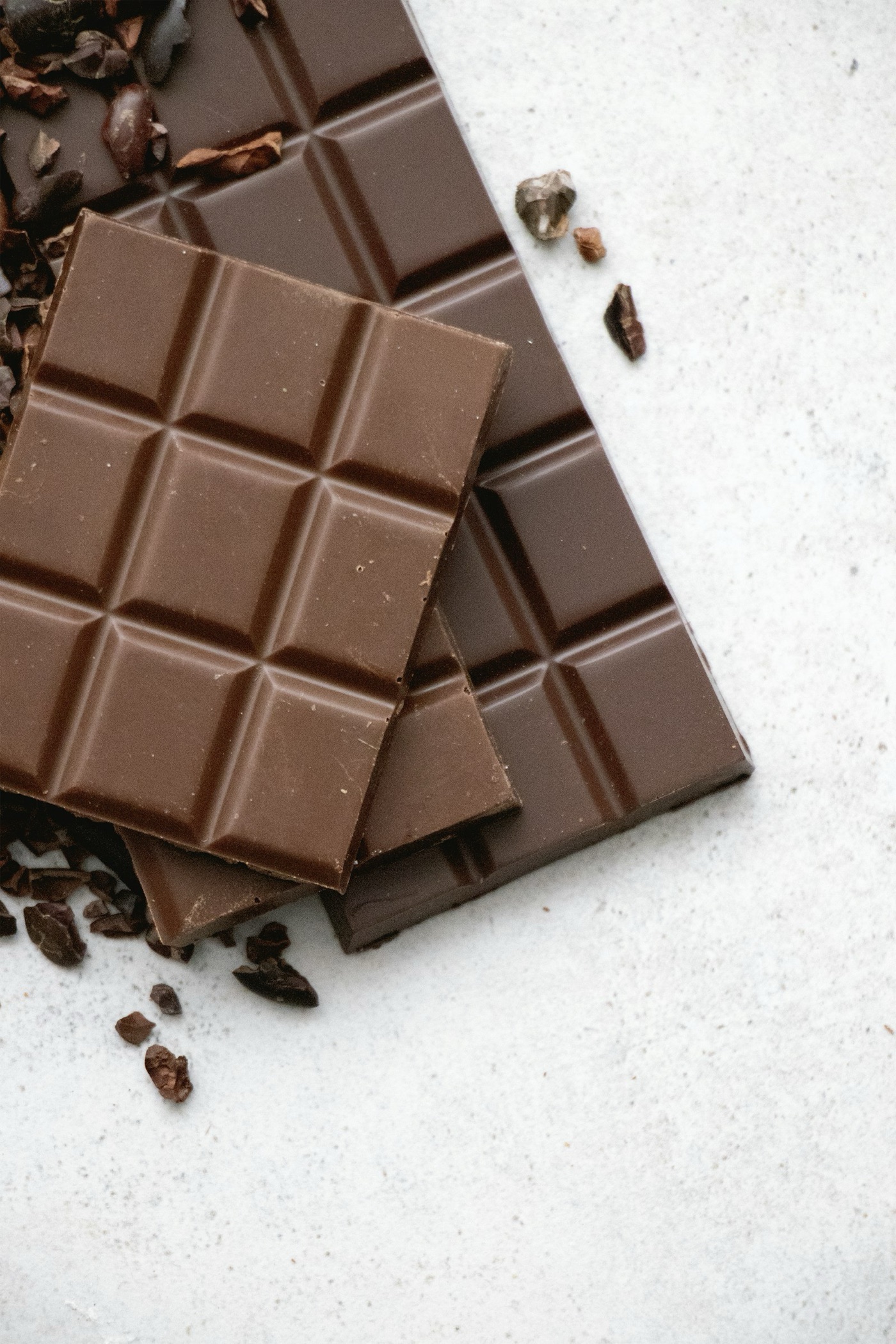
So the water in a bar of chocolate is large, mostly rain, and mostly harmless. The climate that supplies the rain is the thing at risk, and a warmer West Africa is a smaller cocoa belt, which is a problem for the millions of farmers who depend on it long before it is a problem for anyone buying a bar.
Reading the number
Nobody is being asked to give up chocolate, and giving it up would return no water to a Ghanaian hillside. What the number is for is the same thing every footprint on this site is for: making visible a quantity that is otherwise invisible, and then asking the second question. Seventeen hundred litres, of which almost all was rain, in a place with rain to spare. That is a very different fact from seventeen hundred litres pumped from a river, and the difference is the whole art of reading these numbers.
The next footprint in the series is a crop that grows in standing water, and looks as if it must be the thirstiest of all. It is not, and the reason why is one of the more surprising stories in farming.
Sources
- Mekonnen, M.M. and Hoekstra, A.Y. (2011). The green, blue and grey water footprint of crops and derived crop products. Hydrology and Earth System Sciences 15. Cocoa beans about 20,000 L/kg and chocolate about 17,000 L/kg, global averages, roughly 98 percent green.
- Mekonnen and Hoekstra (2011), as above, for cane sugar (about 1,800 L/kg) and milk powder (about 4,700 L/kg); Mekonnen and Hoekstra (2012) for milk (about 1,020 L/L).
- Stage split (cocoa, sugar, milk powder) is approximate and illustrative; the total is the citable figure.
- Läderach, P., Martinez Valle, A., Schroth, G. and Castro, N. (2013). Predicting the future climatic suitability for cocoa farming of the world's leading producer countries, Ghana and Côte d'Ivoire. Climatic Change 119. Projected loss of suitable area by 2050.
- International Cocoa Organization, Quarterly Bulletin of Cocoa Statistics. Côte d'Ivoire and Ghana supply around 60 percent of the world's cocoa.
- Photographs: chocolate and cocoa by Tetiana Bykovets, Unsplash, and from the project's own set.