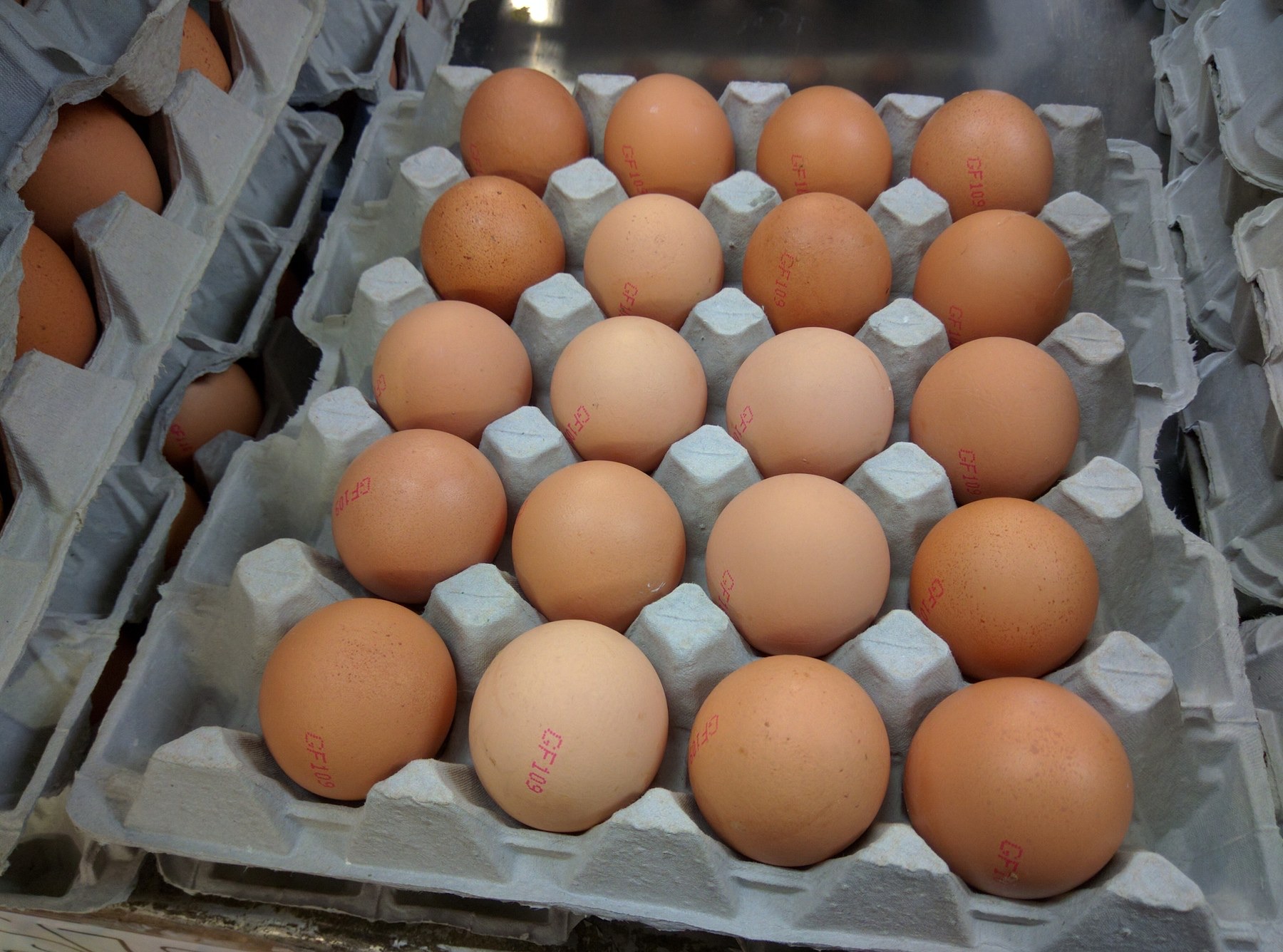
Thirsty: An egg
One egg carries about 196 litres of water, and the hen drank almost none of it. The water is in the maize and soy she ate to lay it, which is why an egg turns out to be one of the better deals in the fridge, and why where the grain grew matters more than how the hen was kept.
An egg is the smallest unit of food on this site, and it is the one that most people would guess wrong. It comes from a bird that weighs less than two kilograms, it is laid most days, and it sits in the fridge next to the milk without anyone thinking of it as agriculture. The Water Footprint Network's method gives it about 196 litres, which is more than a cup of coffee and a good deal less than most things a hen could be compared with. Where those litres went, and why an egg turns out to be one of the more efficient foods there is, is the subject of this article.
A hundred and ninety six litres
By the method every footprint on this site uses, eggs come to about 3,265 litres of water per kilogram in the global average, counting the rain the feed crops took up, the irrigation applied to them, and the clean water it would take to dilute the pollution from the field and the farm. A large egg weighs about 60 grams, and 60 grams of 3,265 litres per kilogram is 196 litres.
| Stage | Litres | Share |
|---|---|---|
| Growing the feed | 190 | 97% |
| The hen's drinking water | 4 | 2% |
| Farm, washing and packing | 2 | 1% |
The split is approximate; the total is the citable figure. As with milk and beef, the animal is a converter, and almost all of the water was used by plants before the hen ever ate them. Her own drinking water, a couple of hundred millilitres a day, is a rounding error.
The hen is a converter
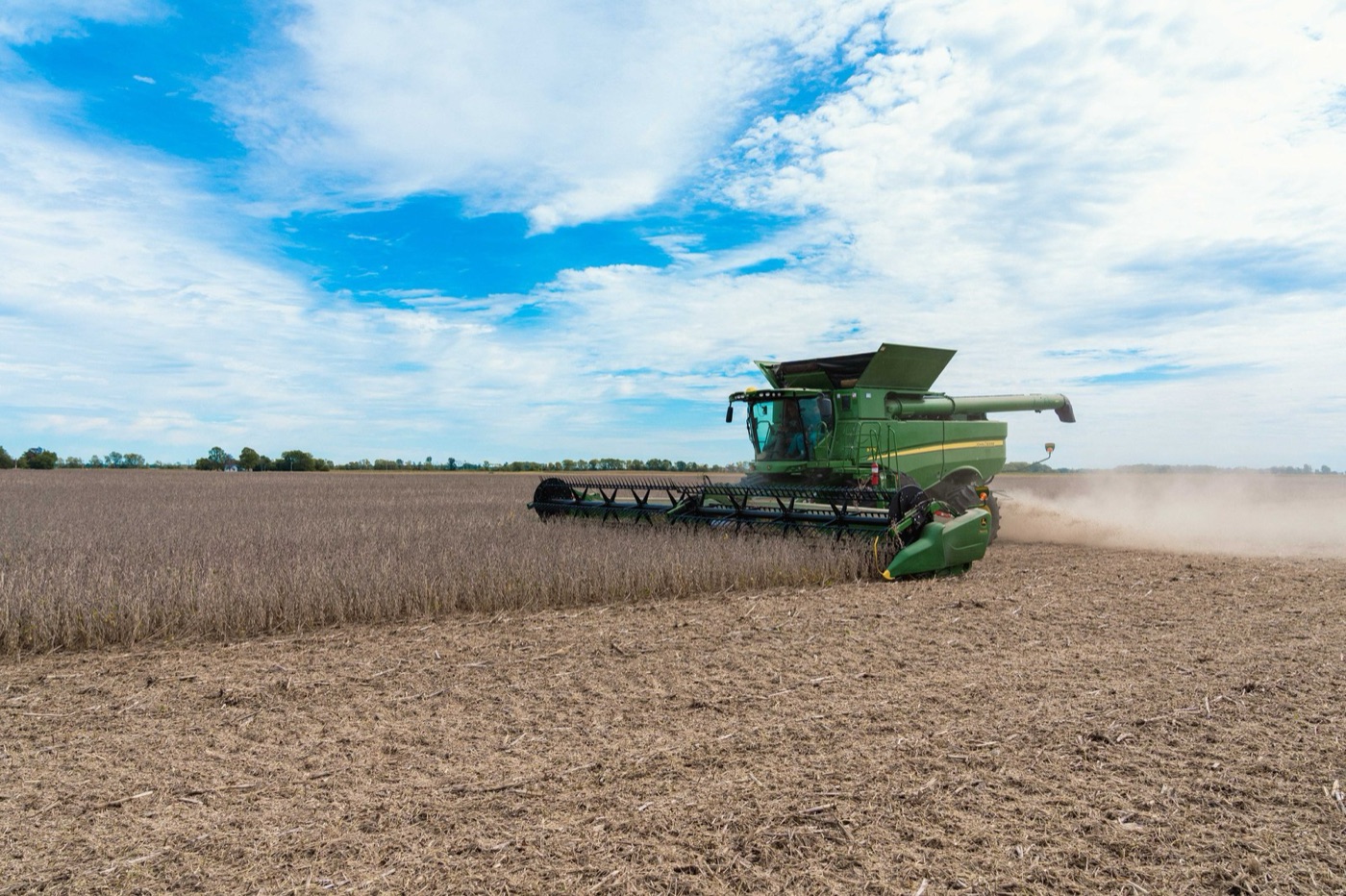
A laying hen in a commercial flock eats around 110 grams of feed a day and lays an egg on most of them, around 300 in a year of lay. The feed is a formulated ration, and most of the world's laying hens eat a version of the same one: maize or wheat for energy, soybean meal for protein, a little oil, and crushed limestone or oyster shell for the calcium that goes into the shell. Every one of those ingredients is a crop that spent a season transpiring water, and the method charges that water to the eggs.
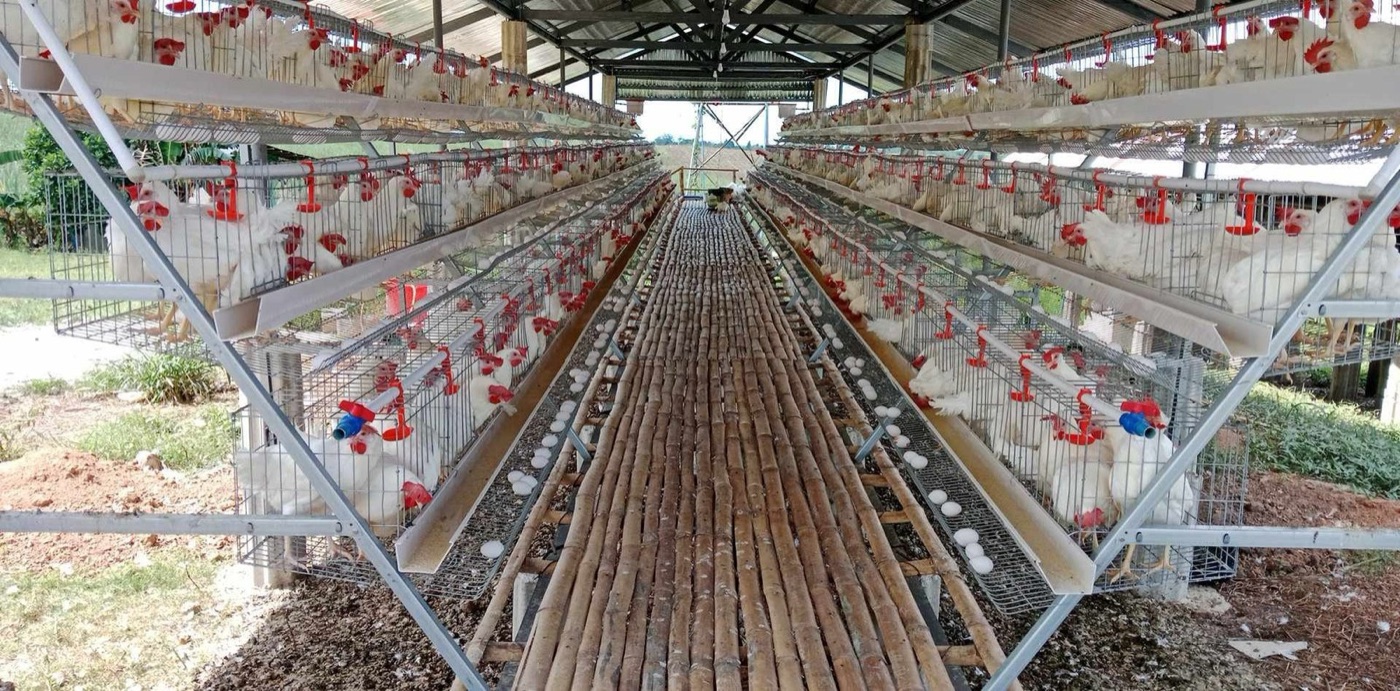
The arithmetic that follows is what makes the egg efficient. A hen turns roughly two kilograms of feed into a kilogram of eggs, which is a far better ratio than a beef animal manages, and she does it continuously, day after day, rather than being fed for years and slaughtered once. The water in the grain is spread across hundreds of eggs, and each one carries a modest share.
| Water per gram of protein, global averages | Litres |
|---|---|
| Beef | about 112 |
| Pork | about 57 |
| Chicken | about 34 |
| Milk | about 31 |
| Eggs | about 29 |
| Pulses | about 19 |
Per gram of protein, which is a fairer way to compare foods than per kilogram, eggs sit at the bottom of the animal table, level with milk, a third of pork and a quarter of beef. Only pulses, which are plants, do better. Of all the animal foods on this site, the egg is the one that comes closest to the water cost of the plants that feed it.
Where the feed grew
About four fifths of an egg's water is green, rain that fell on a field of maize or soy and was taken up by the crop. Around 7 percent is blue, water pumped for irrigation, and around 13 percent is grey, the dilution of the fertiliser and manure that reached rivers.
| Kind of water | Share of an egg's global average footprint |
|---|---|
| Green, rain | about 79% |
| Blue, irrigation | about 7% |
| Grey, pollution | about 13% |
The green share is comfortable, and it is most of the story. The blue share is where the address of the feed matters. Soybean meal, which supplies the protein in nearly every laying ration on Earth, comes largely from Brazil, Argentina and the United States, and in the first two it is grown almost entirely on rain. Maize is more varied: rain fed across the American Corn Belt and much of Europe, irrigated in the drier parts of the United States, in Spain, and in parts of China and India. A hen fed irrigated maize from a dry region carries more river in her eggs than one fed rain fed grain, and the difference is invisible on the carton.
The grey share, at 13 percent, is larger than for most crops, and the reason is manure. A laying house holds thousands of birds, and their droppings are rich in nitrogen and phosphorus, which is fertiliser when spread thinly on fields and pollution when it runs off them into a stream. The method turns that into a volume of dilution water and adds it to the egg. It is the part of the footprint that depends most on how the farm is run rather than on where the grain grew.
Cage, barn, range
The question most people ask about eggs is how the hen was kept, and the honest answer is that, for water, it makes less difference than the feed.
Caged, barn and free range hens eat much the same ration, in much the same quantity, and lay much the same number of eggs. A free range hen walks more and may eat a little more feed per egg, and an organic hen eats organic grain, which changes the grey water by removing synthetic fertiliser and can change the yield, and so the water, in either direction. The differences are real but modest. The system the hen lived in is a question about her welfare, and a fair one; the water in her eggs was decided in a field of grain she never saw.
| What decides the water in an egg | |
|---|---|
| What the hen ate | Almost everything |
| Where that grain grew, rain or irrigation | The blue share |
| How the manure was handled | The grey share |
| Cage, barn or range | A small difference |
The farm's own water
The farm and the packing station use water too, and it is a small share worth describing because it is the part that varies most by country.
A laying house is washed between flocks, the drinking lines are flushed, and in hot climates water is misted to keep the birds cool. Then the eggs are collected, graded and packed, and here the world divides. In the United States eggs are washed in warm chlorinated water and refrigerated, on the principle that the shell should be clean of anything the hen left on it. In the European Union they are not washed at all, on the principle that the shell's natural coating is the egg's own protection and washing removes it, which is why European eggs are sold unrefrigerated and American ones are not. The washing uses water and produces a mild effluent; the difference to the footprint is a litre or two per dozen, and the difference to food safety is the subject of a long argument that has nothing to do with water.
Why the numbers online differ
Anyone who looks the egg up will find figures from about 150 to well over 200 litres, and the spread comes from three things rather than from disagreement about the science.
The first is the size of the egg. The per kilogram figure is the measured one; an egg can weigh anywhere from 50 to 70 grams, and 196 litres assumes a large one of 60. The second is the method. The Water Footprint Network figure counts rain, irrigation and dilution water together; studies that count only irrigation and processing water, the kind of number used to compare dairy with plant milks, give a much smaller figure for the egg, because most of its water is rain. The third is the country. A hen in a country that feeds irrigated maize carries more blue water than one fed on rain fed grain, and national figures differ accordingly. All of the numbers are honest, and the lesson is the usual one on this site: before comparing two figures, ask what each one includes.
The scale
An egg is small, and the world eats a great many of them. Global production is around 90 million tonnes a year, roughly one and a half trillion eggs, and China alone lays about a third of them. Multiply 196 litres by that and the egg, the smallest thing in the fridge, accounts for a share of the world's grain and the water behind it that would surprise anyone who thought of it as breakfast. Poultry, eggs and meat together, is the fastest growing use of grain on Earth, and the hens' rations are one of the reasons soybean fields have spread across Brazil.
Reading the number
The egg is one of the better deals in the fridge, and it is worth saying so plainly, because most of the numbers on this site are large and this one is modest for what it delivers. A hundred and ninety six litres, four fifths of it rain, for six grams of the most complete protein in the diet, is a good exchange. The remaining questions are the usual ones: where the grain grew, and whether the field could spare the water. For an egg, more than for most foods, the answer is usually that it could.
Sources
- Mekonnen, M.M. and Hoekstra, A.Y. (2012). A global assessment of the water footprint of farm animal products. Ecosystems 15, 401 to 415. Eggs, global average, about 3,265 L/kg: green 2,592, blue 244, grey 429; water per gram of protein for eggs, milk, chicken, pork, beef and pulses.
- FAO, FAOSTAT. World egg production around 90 million tonnes a year; China around a third of it.
- Laying hen feed intake, water intake and egg output from standard poultry husbandry references (around 110 g of feed and 200 to 250 ml of water a day for a hen in lay, and around 300 eggs a year).
- Stage split (feed, drinking water, farm and packing) is approximate and illustrative; the total is the citable figure.
- Photographs: opener: Chicken eggs in tray by Maksym Kozlenko (CC BY-SA) via Wikimedia Commons; inline: Sarrosa Farm by Catherine Sarrosa (CC0) via Wikimedia Commons; inline: Mike Starkey Soybean Harvest (52490323652) by USDAgov (public domain) via Wikimedia Commons.