Thirsty Industries: Copper
Every wire, motor, pipe and circuit in the modern world is copper, the energy transition needs twice as much of it, and most of it is dug from the driest desert on Earth. A tonne of copper takes about seventy thousand litres of water to win from its ore, and in northern Chile that water was, until recently, the aquifers of the Atacama. What copper's water does, why the mines are moving to the sea, and what the salt flats and the villages have to do with it.
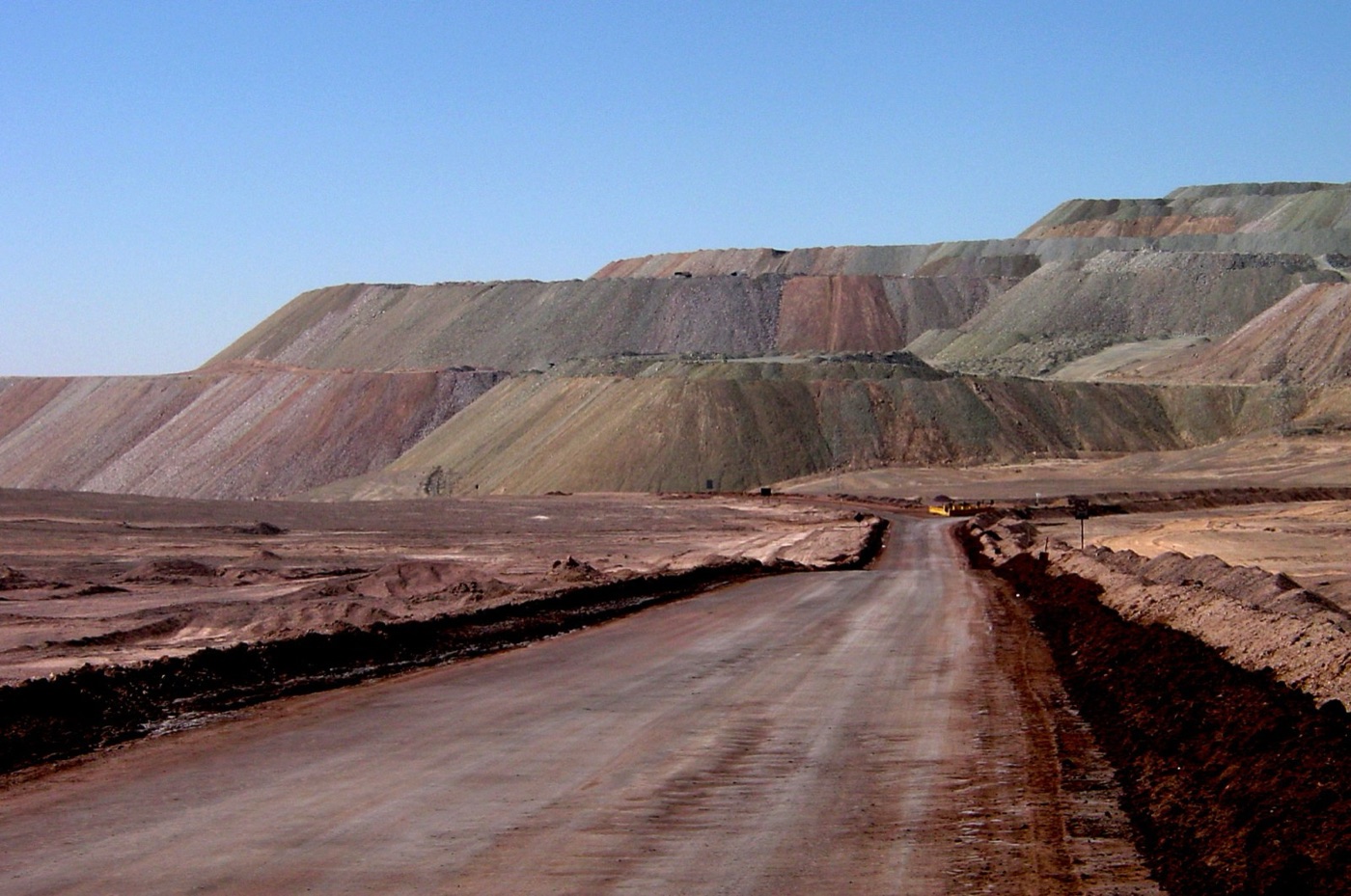
The Atacama desert in northern Chile is the driest place on Earth that is not frozen, with weather stations that have never recorded rain, and under it and beside it are the largest copper mines in the world. Escondida, the largest of all, produces more than a million tonnes of copper a year from a pair of pits in the hills at three thousand metres, and for its first thirty years it drew the water to do it from aquifers under the salt flats of the desert, at a rate of more than a thousand litres a second, from a store that the rain had not refilled since the last ice age. In 2020 it stopped, and it now pumps seawater from the Pacific, desalinated on the coast and lifted three kilometres into the mountains through a pipeline 180 kilometres long.
This article is about the water in copper, the metal the world is about to need twice as much of, and about an industry that was pushed from the aquifer to the sea by a desert that ran out.
Why copper needs water
Copper ore is poor. The great mines of Chile, Peru, the American south west, Zambia and Congo work rock that carries between half a percent and one percent copper, and the grades have been falling for a century as the rich ore is used up. A tonne of copper is therefore a hundred tonnes or more of rock, and rock is processed wet.
The rock is blasted, hauled and crushed, and then ground to powder in mills that run as a slurry. The slurry goes to flotation tanks, where air is bubbled through it with a little reagent that makes the copper minerals cling to the bubbles and rise as a froth, while the barren rock sinks. The froth is skimmed, dried and smelted; the rock, still wet, is pumped to a tailings dam. The water in the copper is the water in the mill and the tailings, and the mine's fresh water draw is what it loses to evaporation from the dam and the ponds, to the moisture locked in the tailings, and to the dust suppression that keeps a desert mine from blowing away.
| A tonne of copper, at a typical mine | |
|---|---|
| Ore processed | About 100 to 200 tonnes |
| Water used, average of reporting mines | About 70,000 litres |
| Where it goes | Grinding, flotation, and the tailings slurry |
| Where it is lost | Evaporation from the tailings dam, moisture in the tailings, dust control |
| Share recycled from the tailings pond at the best mines | Around three quarters |
There is a second route, for the oxide ores, which are dissolved in sulphuric acid on heaps, like the gold of that article, and stripped from the solution electrically. It uses less water per tonne and it is a smaller share of production. Flotation is the main event.
Where the copper is
Chile produces about a quarter of the world's copper, Peru about a tenth, and between them they hold most of the largest mines. Both mine it in the Atacama and the deserts that continue south and north of it, in the high Andes, where the ore bodies are and the rain is not. The Chilean mines alone use, by the national copper commission's accounting, several tens of cubic metres of water a second, a large share of it, until the last decade, drawn from groundwater in basins that receive almost nothing from the sky.
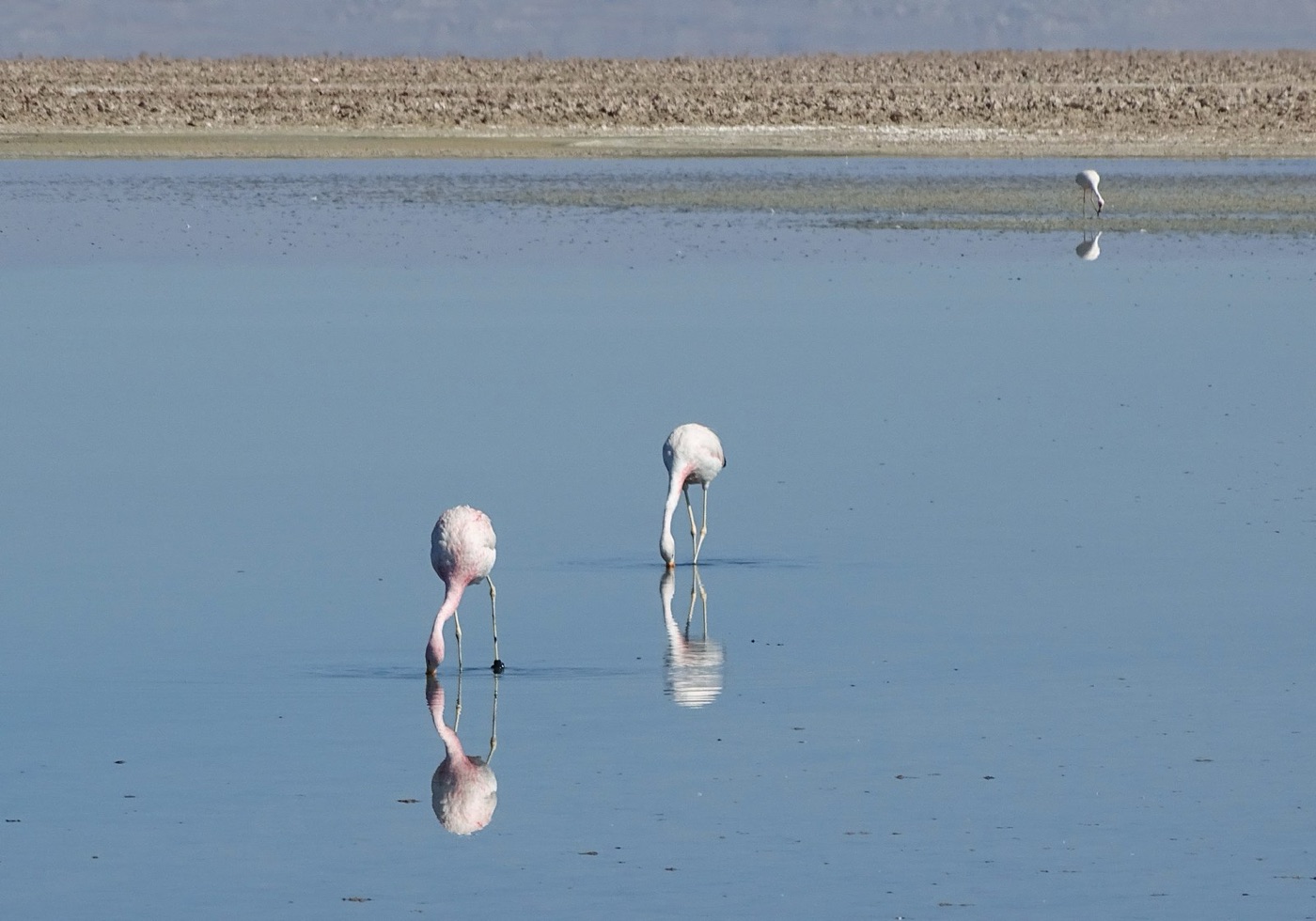
The salt flats are the consequence. The salars of the Atacama, the same ones described in the brine article for their lithium, are the low points of closed basins, and the water under them is the basin's whole store. Mines on the rim of a salar pumping its aquifer lowered the lagoons on the flat, dried the wetlands where flamingos bred, and reduced the springs and the wells of the Atacameño villages that had farmed the oases for centuries. The argument between the mines and the villages over that water has run for thirty years, in the courts and the regulator, and it is the reason the industry moved.
| Copper's geography | |
|---|---|
| Chile | About a quarter of world production, mostly in the Atacama |
| Peru | About a tenth, largely in the Andes and the coastal desert |
| Others | Congo, China, the United States, Zambia, Australia, Indonesia |
| World production | About 26 million tonnes a year |
| Demand by the 2040s, energy transition scenarios | Roughly double |
The move to the sea
The turn came in the 2010s, and it came from three directions. The aquifers were measurably falling, and the regulator began refusing new rights and cutting existing ones. The villages and the environmental courts won cases that reduced the pumping. And the mines' own plans to expand, to work lower grades at higher throughput, needed more water than any desert basin could give. The answer was the coast.
Escondida built a desalination plant at the port of Coloso, on the coast below the mine, producing 2,500 litres a second, and a pipeline that lifts the water 3,200 metres over 180 kilometres to the mine, with four pumping stations that use a large share of the mine's electricity. It began in 2017 and the mine ended its aquifer pumping in 2020. Others followed, some with desalination and some pumping raw seawater to be used untreated in flotation, which the chemistry tolerates with adjustment. By the mid 2020s seawater was around a third of the Chilean industry's water, and the national forecast has it above half by the 2030s, with the aquifer share falling every year.
The move solved the desert and created the coast. A desalination plant returns brine to the sea, as the brine article describes, and a coast with a dozen of them, in the bays where the fishing villages are, is a new argument. The pipelines and the pumping add energy, a few percent of the mine's already large consumption, and the energy in Chile is increasingly solar, which the Atacama has more of than anywhere. And the cost of the water, several dollars a cubic metre delivered to three thousand metres, is a cost that a copper price above eight thousand dollars a tonne can carry and a lower one could not. The industry's water is now a line in the same ledger as its ore grade and its electricity, which is where it should have been from the start.
The tailings
Behind every copper mine is a tailings dam, and copper's are the largest in the world, because copper's ore is the poorest. The dams hold the ground rock, the process water, and the residual reagents and metals, and they are the structures that failed at Mount Polley and, in iron, at Brumadinho, in the gold article. The Chilean industry, which sits in an earthquake zone, builds them to a standard set after a dam collapsed in 1965 and killed more than two hundred people at El Cobre, and it has begun, at the newer mines, to filter the tailings and stack them dry, which stores less water in the dam and lets more of it return to the mill. The water in a tailings dam is the mine's largest single loss and its largest single risk, and the two are, in the driest place on Earth, the same problem.
Peru, and the highlands
Peru's copper is the other large case and it has the other geography. The mines of the southern highlands, Las Bambas, Cerro Verde, Antamina, stand at three and four thousand metres in the Andes, on the headwaters of rivers that the villages and the coastal cities below depend on, and their water comes from those headwaters rather than from an ice age aquifer. The argument is therefore about rivers rather than salt flats, and it has been sharper: the Conga gold and copper project in Cajamarca was stopped in 2011 by protests over the lakes it would have drained, and the highland mines have faced blockades of their roads over water for most of the last decade. Cerro Verde, near Arequipa, answered by building a sewage treatment plant for the city and using the reclaimed water in its mill, which gave the city a plant it had not had and the mine a supply the river could not object to. It is the reuse of the Orange County and Windhoek articles, done by a mine because a city would not otherwise have done it, and it is one of the better bargains on this site.
The other end of the wire
The demand side deserves a paragraph. An electric car carries about three times the copper of a petrol one; a wind turbine several tonnes per megawatt; the grid that connects them, more. The agencies that model the energy transition put copper demand at roughly double the present by the 2040s, and the ore to supply it will be poorer than today's, in the same deserts, with the same water. Recycling covers about a third of demand now and could cover more, and copper, unlike most of the materials on this site, is recycled almost without loss. The water in a recycled tonne is a small fraction of the water in a mined one. That fact is, for the coming decades, the largest water saving available in the metal, and it depends on the wire being collected rather than the mine being dug.
What it teaches
Copper is the clearest case in mining of a thirsty industry moving its water from the ground to the sea, and it was moved by a desert that ran out and the villages that said so. The aquifers of the Atacama were spent on copper for a century, and the mines now pay for the sea, and the salars that were drained are not refilling, because nothing refills them. The lesson for the twice as much copper that the transition needs is the one the hydrogen article draws: the water can come from the sea, at a cost the metal can bear, and the coast should be asked first.
Seventy thousand litres a tonne, pumped three kilometres uphill from the Pacific, because the desert had nothing left.
Sources
- Northey, S., Haque, N. and Mudd, G. (2013). Using sustainability reporting to assess the environmental footprint of copper mining. Journal of Cleaner Production 40. Average water use around 70 cubic metres per tonne of copper.
- Chilean Copper Commission (Cochilco), Water consumption forecast in copper mining 2023 to 2034: seawater share rising to over half of the industry's use.
- BHP, Escondida water supply: the 2,500 litre per second desalination plant and the end of aquifer extraction from 2020.
- International Energy Agency (2021). The Role of Critical Minerals in Clean Energy Transitions. Copper demand to 2040.
- Babidge, S. (2016). Contested value and an ethics of resources: water, mining and indigenous people in the Atacama Desert, Chile. The Australian Journal of Anthropology 27.
- Photographs: opener: Mt. Vernon, MO - old spools with wire (7306620994) by LWYang from USA (CC BY) via Wikimedia Commons; inline: Mina La Escondida (Chile) by Bachelot Pierre J-P (CC BY-SA) via Wikimedia Commons; inline: FLAMINGOS LAGUNA CHAXA SAN PEDRO DE ATACAMA 7 by WALTER ROGER KLEIN (CC BY-SA) via Wikimedia Commons.