Thirsty Industries: Data Centres
Every search, every stored photograph and every answer from a chatbot passes through a building full of hot computers, and most of those buildings are cooled with water that leaves as vapour. What a data centre's water is for, how much the largest companies now report using, why the number is rising with artificial intelligence, and what the industry is doing about it.
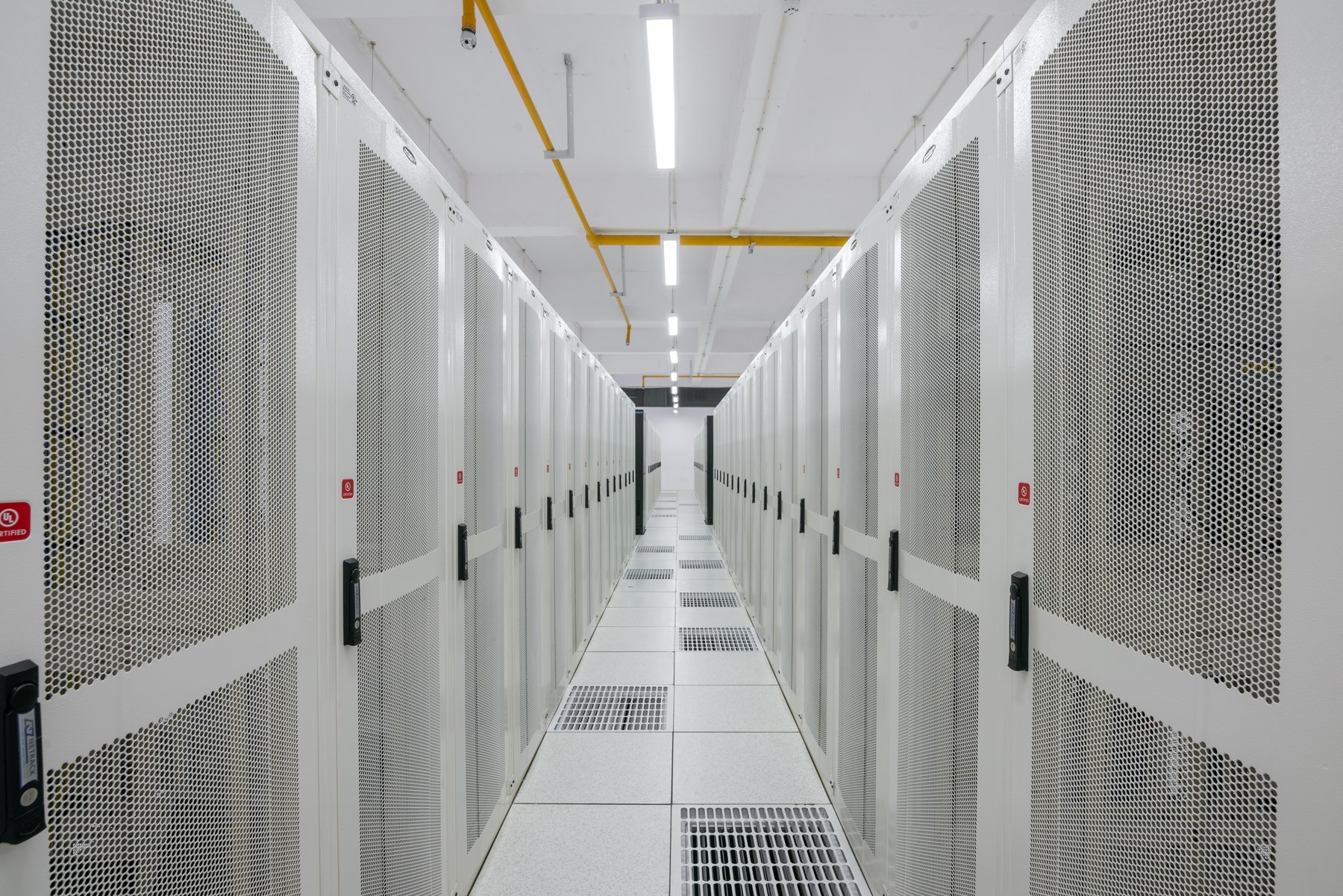
Somewhere between the person typing a question and the answer arriving on the screen there is a building. It has no windows, it is the size of several football pitches, and inside it, in rows of steel racks, are tens of thousands of computers, each turning electricity into heat as fast as it can. The building's job is to keep them cool, and for most of the buildings of this kind in the world, the way to do that is with water that leaves through the roof as vapour.
This article is about that water. The subject is new to the water industry, and it is one of the few in this series where the numbers are rising every year rather than settling, because the buildings are multiplying and what they do inside has changed.
Why a computer needs water
A server does no useful physical work. Every watt that goes into it comes out as heat, and a modern rack draws as much power as a small house. Put a few thousand racks in one hall and the heat has to be removed continuously, or the chips slow down and then fail. There are three ways to do it.
The first is air. Fans blow cool air through the racks and the warm air is dumped outside. It works in a cool climate and uses no water, and it needs a lot of electricity for the fans and, in summer, for chillers, which are large refrigerators.
The second is evaporation. Warm water from the hall is sprayed through a cooling tower, some of it evaporates, and the evaporation takes the heat with it, in exactly the way that sweat cools skin. It is cheap and it works in any climate, and it consumes water: the part that evaporates is gone, and the rest, now more concentrated in salts, has to be blown down and replaced, as the article on antiscalants described for every cooling tower. A large data centre cooled this way can consume several million litres a day.
The third is a closed loop, in which water or a refrigerant circulates through the racks, sometimes touching the chips directly, and gives its heat up to the air through radiators, with no evaporation at all. It uses more electricity than a cooling tower and far less water, and it is where the newest buildings are going.
| Cooling a data centre | Water | Electricity |
|---|---|---|
| Air, with chillers | Almost none on site | High |
| Evaporative cooling towers | High, most of it evaporated | Low |
| Closed loop, liquid to the chip | Low | Moderate |
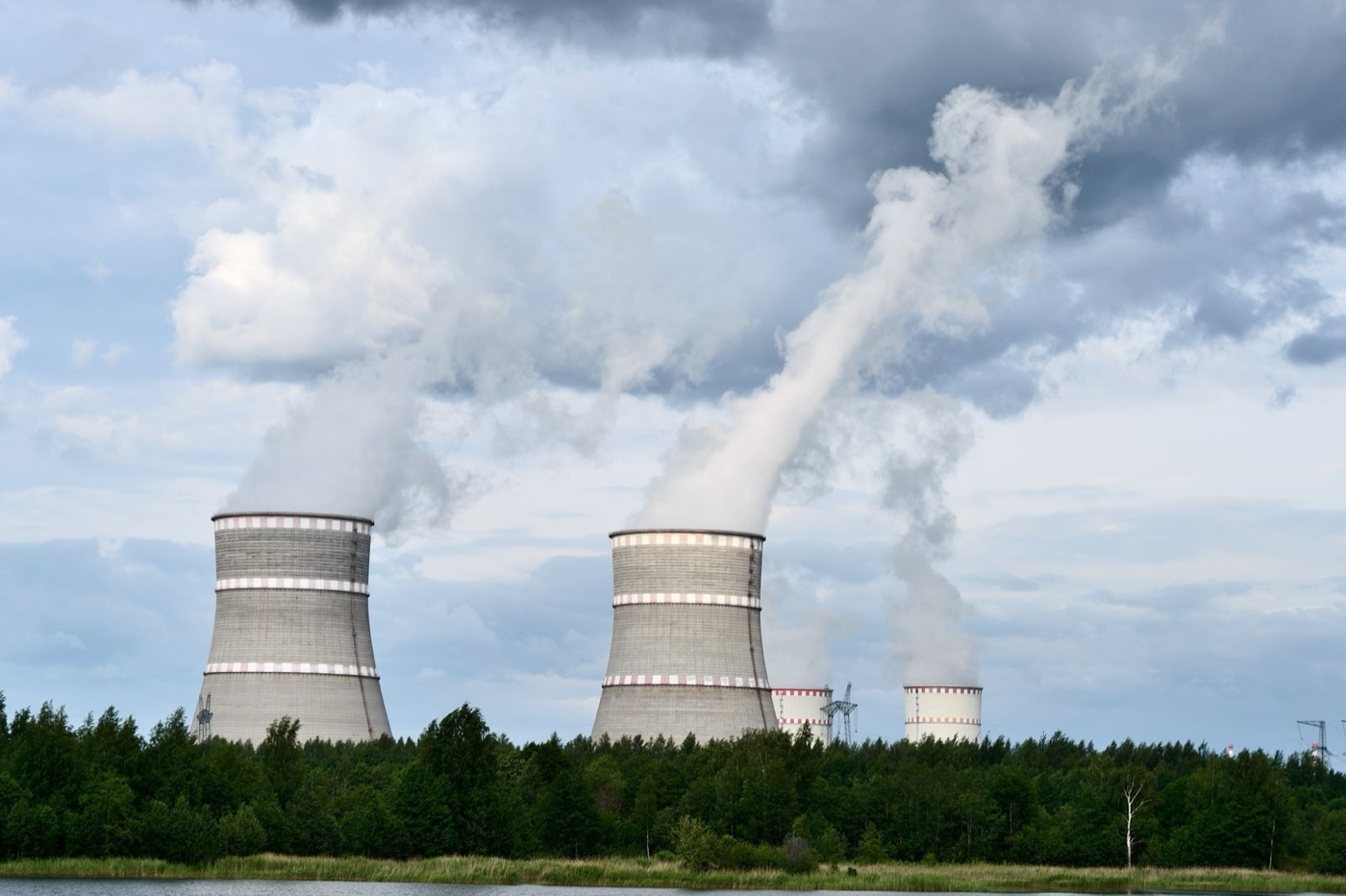
There is a fourth water use that is easy to miss, and it is often the largest. The electricity that runs the building came from a power station, and most power stations, whether they burn gas or coal or split atoms, boil water and cool the steam with more water. A data centre's indirect water, at the power station, can be two or three times its direct water at the cooling tower, depending on where the electricity comes from. Solar and wind use almost none. That is one of the reasons the companies talk about renewable power and water in the same breath.
How much
For most of the industry's history the answer was unknown, because nobody published it. That has changed, in part under pressure, and the largest operators now report water consumption in their annual environmental reports.
Google reported that its data centres consumed about 6.1 billion gallons, or roughly 23 billion litres, in 2023, up from about 5.6 billion gallons the year before, which is the water of a city of a few hundred thousand people. Microsoft reported a rise of a third in a single year, to over six million cubic metres. The numbers are for consumption, the water that evaporated and did not return, which is the right measure and a smaller one than withdrawal. The industry as a whole is harder to count, because the largest operators are a minority of the buildings and most of the rest do not report. Estimates for the United States alone run to hundreds of billions of litres a year once the power stations are included.
| Data centre water, reported | |
|---|---|
| Google, 2023, consumption | About 23 billion litres |
| Microsoft, fiscal 2022, consumption | Over 6 billion litres, up 34 percent in a year |
| A single large evaporatively cooled site | Up to several million litres a day |
| Indirect water at the power station | Often two to three times the direct use |
Measuring it
The industry has a metric for water, borrowed from the one it uses for power. Water usage effectiveness, WUE, is the litres of water consumed on site for every kilowatt hour of electricity the computers use, and it is reported by the better operators alongside their power figures. An air cooled building in a cool climate can run below 0.2 litres per kilowatt hour. An evaporatively cooled one in a hot climate can run above two. The industry average in the United States, by a national laboratory's estimate, is around 1.8, and the newest hyperscale buildings, designed with water in mind, report figures well under one. A building's WUE is set on the day it is designed, by the cooling it is given and the climate it is put in, and it is the number a local council should ask for before it approves the plans. The metric leaves out the power station, which is why the companies that report it also report where their electricity comes from.
What artificial intelligence changed
A search takes a fraction of a second on a small slice of a server. A large language model's answer takes a great deal more computing, on chips that draw more power and run hotter, and the training of such a model, before it answers anything, runs thousands of those chips for weeks. Both have made data centres hotter per square metre, and hotter means more cooling.
The most cited attempt to put a number on it came from researchers at the University of California, Riverside, who estimated in 2023 that training one large model consumed on the order of seven hundred thousand litres of water in cooling, and that a conversation of twenty to fifty questions with a chatbot accounted for about half a litre, counting the cooling tower and the power station. The figures are estimates built on assumptions about where the computing was done and how it was cooled, and they have been argued over, as such figures are. What they established is that the number is not zero, and that the answer depends almost entirely on the building. The same question answered in a closed loop data centre in a cool climate on wind power carries almost no water. Answered in an evaporatively cooled hall in a desert on gas fired electricity, it carries the half litre or more.
Where the buildings are
The water problem is a location problem. Data centres are built where land is cheap, power is cheap, and the tax rules are kind, and those places are often dry. Arizona, Texas, Nevada and Utah in the United States, Aragon in Spain, parts of Chile, India and the Gulf have all seen large sites announced in recent years, and in several of them the local argument has been about water before it was about anything else. A cooling tower in the Netherlands draws on a wet country's surplus. A cooling tower in Arizona draws on the same aquifer as the farms around it, in a state whose groundwater the almond article's neighbours are already arguing over.
The industry's answer, at its best, has been to design for the place. In cool climates the newest buildings are air cooled for most of the year. In dry ones they are moving to closed loops, and some now use treated wastewater from the local sewage works for what evaporation remains, which is the reuse the greywater and Orange County articles describe, applied to a factory that makes nothing but answers.
The pledges
Several of the largest companies have pledged to be water positive by 2030, meaning that they will replenish more water than they consume, by paying for wetland restoration, leak repair in city networks, or irrigation efficiency in the basins where their buildings stand. Google reported replenishing a rising share of its consumption in 2023 and Microsoft has made the same promise on the same timetable.
The pledges deserve two comments. The first is that replenishing water in a basin is a real thing, and the projects are, in the cases published, real projects that put water back into rivers and aquifers. The second is that water is local, and a wetland restored in one basin does not refill a cooling tower in another. A water positive company can still be a water negative building, in the valley where the building is. Anyone reading the reports should look for the basin, not the total.
What it teaches
The data centre is the newest thirsty industry on this site and the one whose footprint is most fully a matter of design. There is no crop, no animal, no rain. There is heat, and a choice about how to remove it, and the choice is made by an engineer with a spreadsheet who can, if asked, make the water almost disappear. That is unusual. A cotton field cannot be redesigned to use no water. A cooling system can. The industry's water future depends on whether it is asked to, in the places where it matters, before the buildings are built.
Twenty three billion litres, for one company, in one year, and rising. The number is large. The interesting fact is that it does not have to be.
Sources
- Google, Environmental Report 2024: data centre water consumption of about 6.1 billion gallons in 2023, and the water replenishment target.
- Microsoft, Environmental Sustainability Report 2023: water consumption and the 34 percent rise in fiscal year 2022.
- Li, P., Yang, J., Islam, M.A. and Ren, S. (2023). Making AI less thirsty: uncovering and addressing the secret water footprint of AI models. arXiv 2304.03271. GPT-3 training and per conversation estimates.
- Lawrence Berkeley National Laboratory (2024). United States Data Center Energy Usage Report, with water use effectiveness figures.
- Shehabi, A. et al. and The Green Grid, Water Usage Effectiveness (WUE) metric definition and typical values.
- Photographs: opener: Racks Amravati Data Center by PiDatacenters (CC BY-SA) via Wikimedia Commons; inline: Cooling towers of a nuclear power plant by Vsatinet (CC BY-SA) via Wikimedia Commons; inline: Rear of rack at NERSC data center - closeup by Derrick Coetzee from Berkeley, CA, USA (CC0) via Wikimedia Commons.