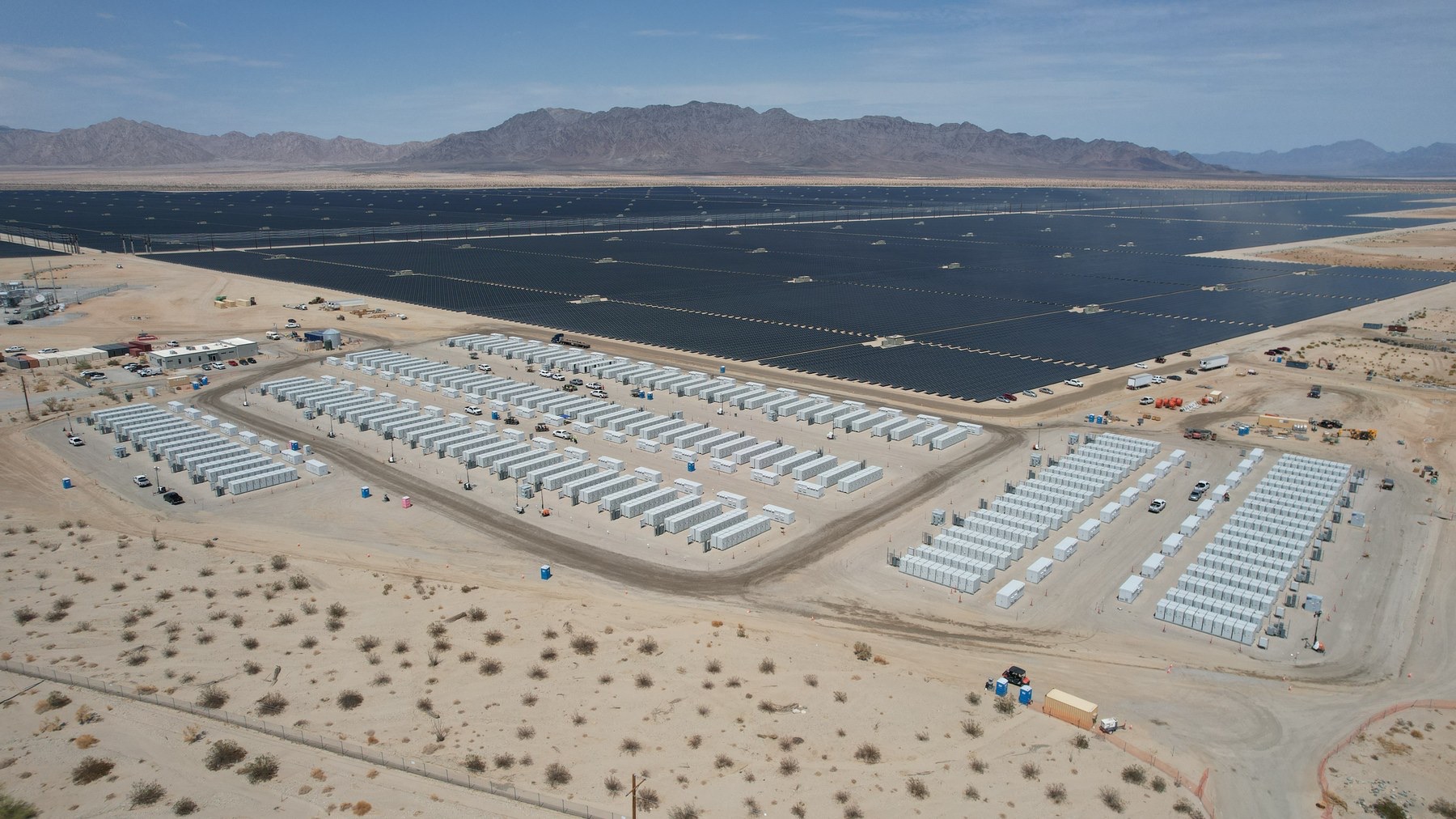
Thirsty Industries: Hydrogen
Green hydrogen is made by splitting water with electricity, and the countries planning to make most of it are deserts with a great deal of sun and very little water. Nine litres go into every kilogram, another ten or twenty go to cooling and purifying, and the plants being planned would use as much water as cities. Where the water in hydrogen comes from, why most of it will come from the sea, and what that means for the coast.
On the coast of the Red Sea, in the north west of Saudi Arabia, a plant is being built that will make hydrogen out of sunlight and seawater. Solar panels and wind turbines inland will produce about four gigawatts of electricity, the electricity will run through banks of electrolysers, and the electrolysers will split water into hydrogen and oxygen at a rate of about six hundred tonnes of hydrogen a day. The water will come from a desalination plant on the shore, because there is no other water in that part of Arabia, and the hydrogen will be turned into ammonia and shipped to Europe and Asia as a fuel.
Every green hydrogen project announced in the last five years has the same shape. This article is about the water in it: how much a kilogram of hydrogen takes, where the water comes from in the deserts where the plants are planned, and why an industry founded on sunshine will live on the coast.
The chemistry
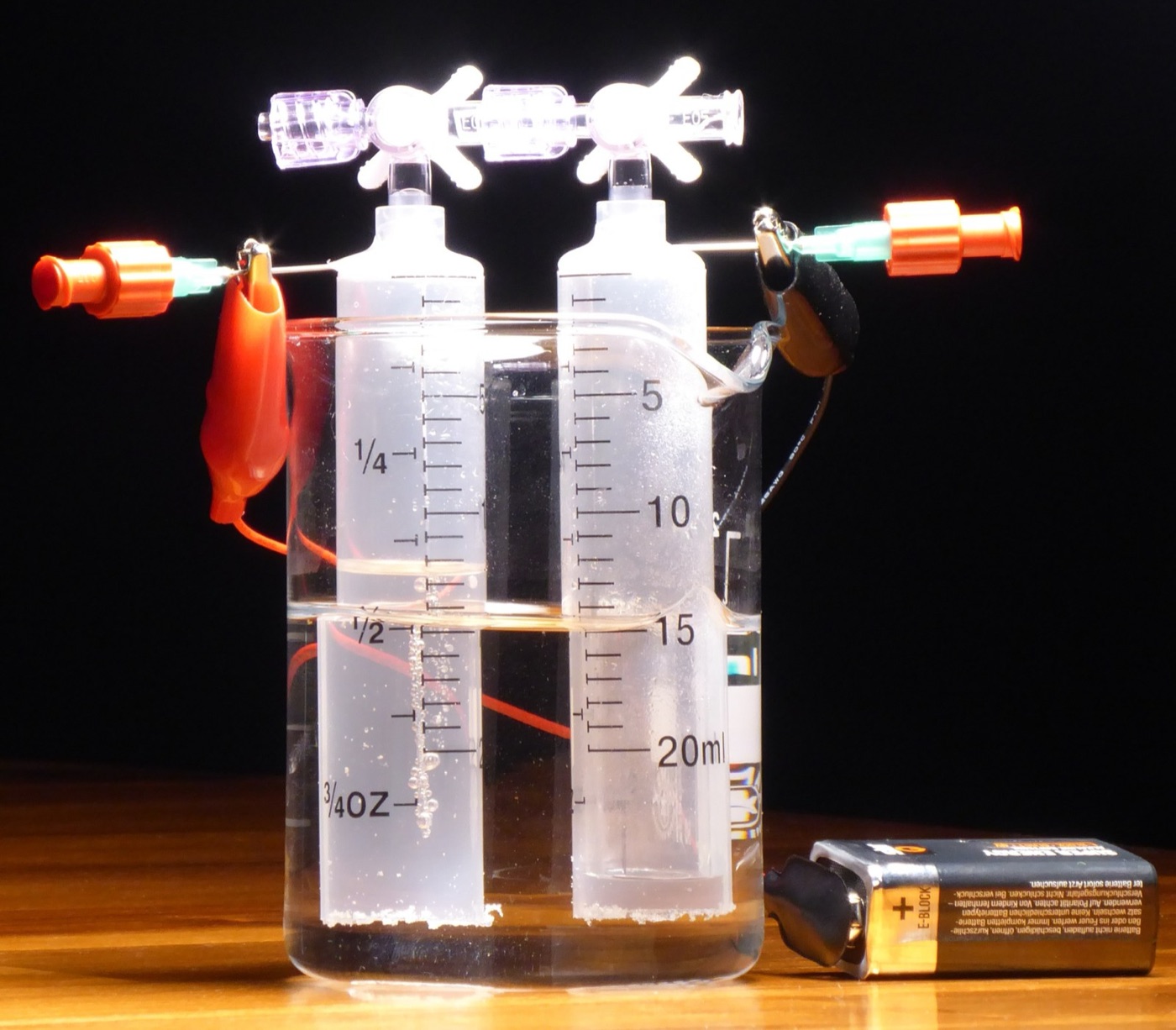
Hydrogen is the lightest element and it is in water, two atoms of it to every one of oxygen. Run a current through water with the right electrodes and it splits: hydrogen bubbles off one electrode, oxygen off the other. The arithmetic is fixed by the atoms. Nine kilograms of water, nine litres, yield one kilogram of hydrogen and eight of oxygen. There is no way to do it with less.
In practice a plant uses more. The water that goes into an electrolyser has to be very pure, of the kind the ultrapure article describes, because dissolved salts foul the membranes and the electrodes, and purifying it, by reverse osmosis and ion exchange, rejects a share of the feed as concentrate. The electrolysers produce heat, and the heat is removed by cooling water, which in a hot climate is often evaporated in a cooling tower. Counting purification and cooling, the industry's own estimates run to about twenty to thirty litres of raw water per kilogram of hydrogen for a well designed plant, and more for a careless one.
| Water per kilogram of green hydrogen | Litres |
|---|---|
| Split in the electrolyser, fixed by chemistry | 9 |
| Rejected in purifying the feed | About 2 to 5 |
| Evaporated in cooling | About 5 to 15, depending on climate and design |
| Total, a typical plant | About 20 to 30 |
For comparison, the hydrogen the world makes today, nearly all of it from natural gas by steam reforming, also uses water, both as a chemical feed and for cooling, and comes out at a similar figure once the gas extraction is counted. Hydrogen is a water product whichever way it is made. The difference with the green route is that the water is the only feedstock, and the plants are going where the sun is.
The scale
Twenty litres per kilogram is a small number, comparable to a few flushes of a toilet. What makes it a water story is the size of the plants.
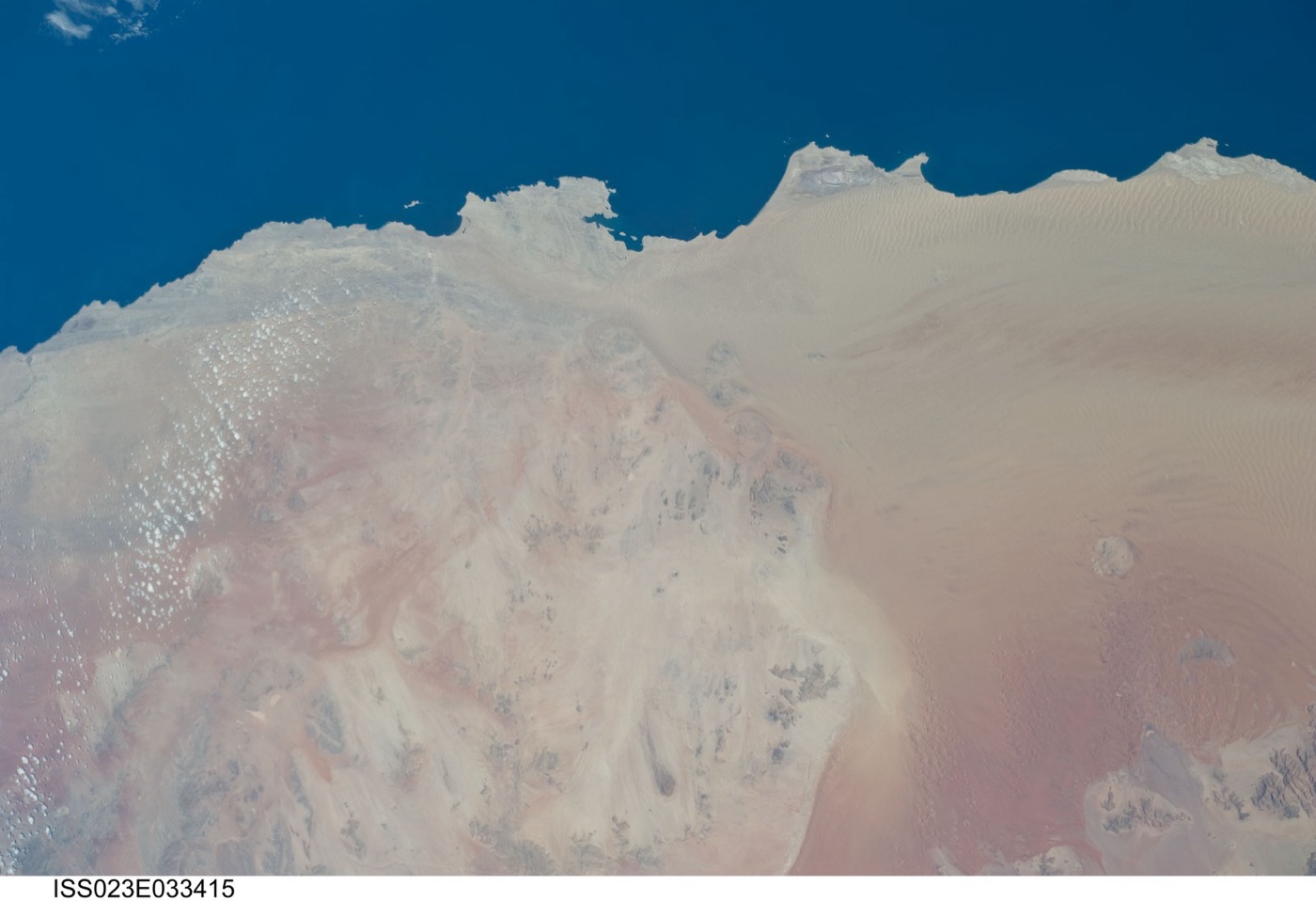
The projects announced by the mid 2020s, in Saudi Arabia, Oman, Egypt, Namibia, Mauritania, Chile, Australia and elsewhere, are sized in the hundreds of thousands to millions of tonnes of hydrogen a year. A plant making a million tonnes uses, at twenty five litres a kilogram, about twenty five million cubic metres of water a year, which is the water of a city of a few hundred thousand people. The Namibian project, which aims at two million tonnes a year by the 2030s, would use the water of a city of half a million, on a coast that receives almost no rain. The International Energy Agency's tally of announced projects, if all were built, would add up to a water demand in the low billions of cubic metres a year, which is a rounding error against agriculture and a very large new user in the particular places where it would land.
| Announced green hydrogen projects, examples | Where | Water source |
|---|---|---|
| NEOM, about 600 tonnes a day | Red Sea coast, Saudi Arabia | Desalinated seawater |
| Hyphen, up to 2 million tonnes a year | Lüderitz, Namibia | Desalinated seawater |
| Western Green Energy Hub, several million tonnes | Western Australia | Desalinated seawater |
| HIF and others, Magallanes | Southern Chile | Desalination and surface water |
| Various, Oman and Egypt | Arabian Sea and Red Sea coasts | Desalinated seawater |
The pattern in the last column is the point. Nearly every large project is on a coast, and nearly every one will make its water from the sea.
Why the sea
The places with the cheapest solar and wind power are deserts and windy coasts, and deserts have no spare water. The Atacama, the Namib, the Arabian peninsula and the Australian outback are the best places on Earth to make electricity from the sun and the worst to find twenty five million cubic metres of fresh water. So the plants desalinate, and the desalination, described in its own article, adds two things.
The first is energy. Seawater reverse osmosis uses about three to four kilowatt hours per cubic metre, which, spread over the forty kilograms of hydrogen a cubic metre of water can make, is a fraction of a percent of the fifty kilowatt hours that the electrolysis itself takes per kilogram. The water's energy cost is small, and the industry says so, correctly. The second is brine. A plant desalinating twenty five million cubic metres a year returns a similar volume of concentrated seawater to the coast, and where the coast is a shallow gulf or a fishing ground, as it is at Lüderitz and in the Red Sea, the brine outfall is the plant's largest environmental question, larger than the water it takes. The brine article on this site describes what the industry has learned about diffusing it. The hydrogen plants will be the largest test of that learning yet.
Purifying the feed
The water that enters an electrolyser has to be cleaner than drinking water by a wide margin. The membranes in a modern electrolyser are damaged by calcium, magnesium, iron, chloride and silica at concentrations that a tap would pass without notice, and the standard the makers ask for is close to the ultrapure water of the semiconductor article, with a conductivity of a microsiemens or less. A plant on desalinated seawater therefore treats its water twice: once through the seawater reverse osmosis that takes out the salt, and again through a second pass of reverse osmosis and a bed of ion exchange resin that takes out nearly everything else. Each stage rejects a share as concentrate, and the reject of the second stage, being nearly fresh, is usually sent back to the first. The engineering is well understood, because it is what every power station does for its boiler feed, and it is the reason the raw water figure is two to three times the chemical minimum rather than one. A plant that skimped on it would foul its electrolysers within months, and the electrolysers cost far more than the water plant.
The cooling
The other multiplier is heat. An electrolyser turns about seventy to eighty percent of its electricity into hydrogen and the rest into heat, and a gigawatt of electrolysis has a few hundred megawatts of heat to shed. In a temperate climate that can be done with dry coolers, radiators with fans, and no water at all. In the deserts where the plants are planned, the air in summer is forty degrees and dry cooling loses efficiency, so most designs use evaporative cooling, which is cheaper and consumes water at roughly the rate the table above gives. The choice between the two is the largest single decision in a hydrogen plant's water footprint, larger than the electrolysis itself, and it is a choice made on the day the plant is designed, in a spreadsheet that trades a few percent of efficiency against a few million cubic metres a year. Where the water is desalinated, the spreadsheet usually chooses the water. Where it is groundwater, the regulator should be reading the spreadsheet.
The inland exception
Not every project is coastal. Some are planned inland, in Chile's Atacama, in Australia's interior, in the Spanish plateau, in the American west, on groundwater or on rivers, and these are the ones where the water question is sharpest, because the water they take has other claimants. A plant in an inland desert drawing twenty five million cubic metres a year from an aquifer is doing what the almond orchards did, in a place with even less rain. The better projects have dropped inland groundwater from their plans under local pressure, and several regulators now require a water source to be named before an electrolysis project is licensed. The industry's own reports argue for coastal siting, treated wastewater, or air cooling where fresh water is short, and the argument is sound. Whether it holds when the subsidies arrive is the question the next decade will answer.
The oxygen, and the return
Two footnotes belong here. The first is the oxygen. Eight kilograms of it come off the electrolyser for every kilogram of hydrogen, and most plants vent it, which is a waste of a saleable gas and, in a few designs, is captured for the ammonia plant or sold to hospitals and steelworks. The second is the water's return. When hydrogen is burned or run through a fuel cell it recombines with oxygen and becomes water again, nine litres for every kilogram, in the city or the ship where it was used. The water cycle of a hydrogen economy moves nine litres from a desert coast to wherever the fuel is burned, which is a small, odd, one way transfer of water from dry places to wet ones. It is the reverse of the virtual water trade in grain, and it is too small to matter, and it is worth knowing.
What it teaches
Hydrogen is a young industry with the chance that older ones on this site never had, which is to design for water before the plants are built. The chemistry fixes nine litres a kilogram; the engineering decides the other fifteen; and the siting decides whether those litres come from the sea, from an aquifer that a town is drinking, or from a river that a farm is using. The industry's own numbers say it can be done from the sea at a cost it can afford. The brine on the coast is the price, and the coast should be asked.
Nine litres in every kilogram, and the plants are going where there are none.
Sources
- International Energy Agency (2023). Global Hydrogen Review: production, announced electrolysis projects and their locations.
- International Renewable Energy Agency (2023). Water for Hydrogen Production. Stoichiometric and practical water use per kilogram for electrolysis and for other routes.
- Beswick, R.R., Oliveira, A.M. and Yan, Y. (2021). Does the green hydrogen economy have a water problem? ACS Energy Letters 6.
- NEOM Green Hydrogen Company, project description: 2.2 gigawatts of electrolysis and about 600 tonnes of hydrogen a day, with desalinated feed water.
- Hyphen Hydrogen Energy, Namibia project outline: production of up to 2 million tonnes a year by the 2030s.
- Photographs: opener: Desert Sunlight (52290008686) by Bureau of Land Management California (public domain) via Wikimedia Commons; inline: Wasserzersetzer (Firma LCEM) by Rhetos (CC0) via Wikimedia Commons; inline: ISS023-E-33415 - View of Namibia by Earth Science and Remote Sensing Unit, L (public domain) via Wikimedia Commons.