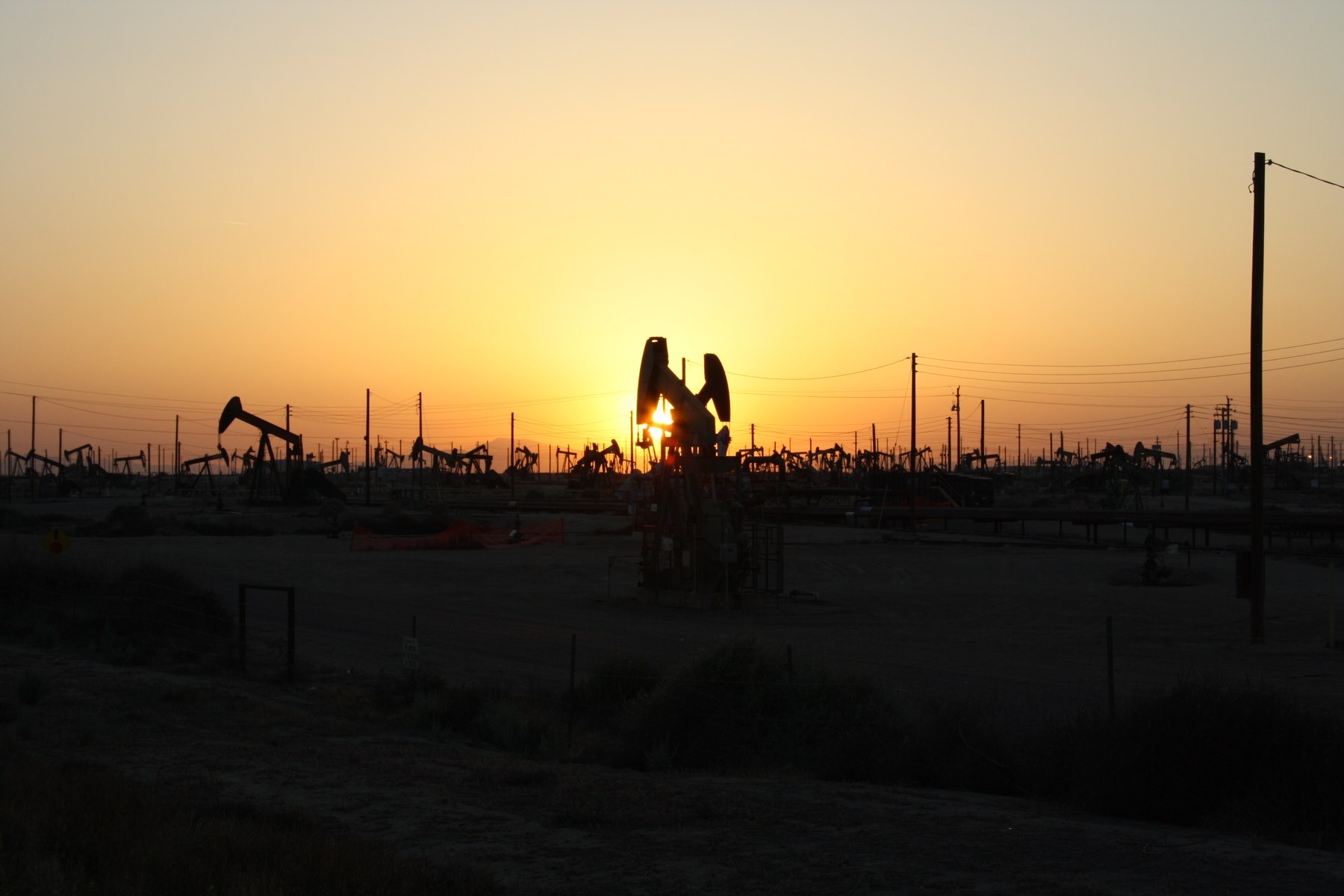
Thirsty Industries: Oil and Gas
For every barrel of oil the world pumps, it pumps about three barrels of salty water out of the same rock, and the newest wells are made by pushing millions of litres of water into the rock first. What produced water is and where it goes, how fracking uses water and why the volume has grown tenfold in a decade, what the injection wells did to Oklahoma, what a refinery does with its water, and why the industry that has the most to do with water is the one least often counted as thirsty.
An oil well is, for most of its life, a water well that also produces oil. Oil and gas sit in porous rock alongside the water that was there first, seawater trapped when the rock was laid down and made saltier since, and when the well is opened the water comes up with the oil. In a new field the oil share is high; in an old one, after decades of pumping and of water injected to push the oil toward the wells, the water share is nine tenths and more. Worldwide the industry lifts about three barrels of water for every barrel of oil, roughly 250 million barrels of water a day, and it has to do something with all of it.
This article is about the water at every stage of oil and gas: the water that comes up with it, the water pushed down to get it, the water a refinery uses to turn it into fuel, and what happened when one state disposed of its water too fast.
Produced water
The water that comes up with oil is called produced water, and it is among the worst water on this site. It is typically several times saltier than the sea, sometimes ten times, with dissolved oil, benzene and other hydrocarbons, heavy metals, the chemicals added down the well, and, in some formations, naturally occurring radium leached from the rock. It comes up hot and under pressure. It cannot be discharged to a river, cannot be used on a field, and cannot be drunk, and the industry's answer for a century has been to separate the oil from it and put it back underground.
Most of it goes back into the oil bearing rock it came from, injected through wells at the edge of the field to push the remaining oil toward the producing wells, which is called waterflooding and is the reason old fields produce so much water: what is injected comes back round. The rest goes into disposal wells drilled into deep formations that hold nothing anyone wants, where it stays. A small share, in a few places, is treated and reused. The United States alone produces about three and a half billion litres of it a day.
| Produced water | |
|---|---|
| Ratio to oil, worldwide | About 3 barrels of water per barrel of oil; 10 or more in old fields |
| Volume, worldwide | About 250 million barrels a day |
| What is in it | Salt, several times seawater; oil; metals; additives; sometimes radium |
| Where it goes | Reinjected to push oil, or into disposal wells; a little treated and reused |
| Offshore | Treated to a few tens of milligrams of oil per litre and discharged to sea |
The water that goes down first
The wells drilled in the last fifteen years in the United States, and increasingly elsewhere, are made with water. Hydraulic fracturing drills a well sideways through a layer of shale for two or three kilometres and then pumps water, sand and a small share of chemicals into it at pressures high enough to crack the rock, the sand holding the cracks open so that oil and gas can flow. The water per well was about ten million litres in 2011 and, as the wells grew longer and the fracturing more intense, rose several fold, so that a well in the Permian basin of West Texas now takes fifteen to forty million litres and the largest more. A single well pad with a dozen wells uses the annual water of a small town, in a week, in a desert.
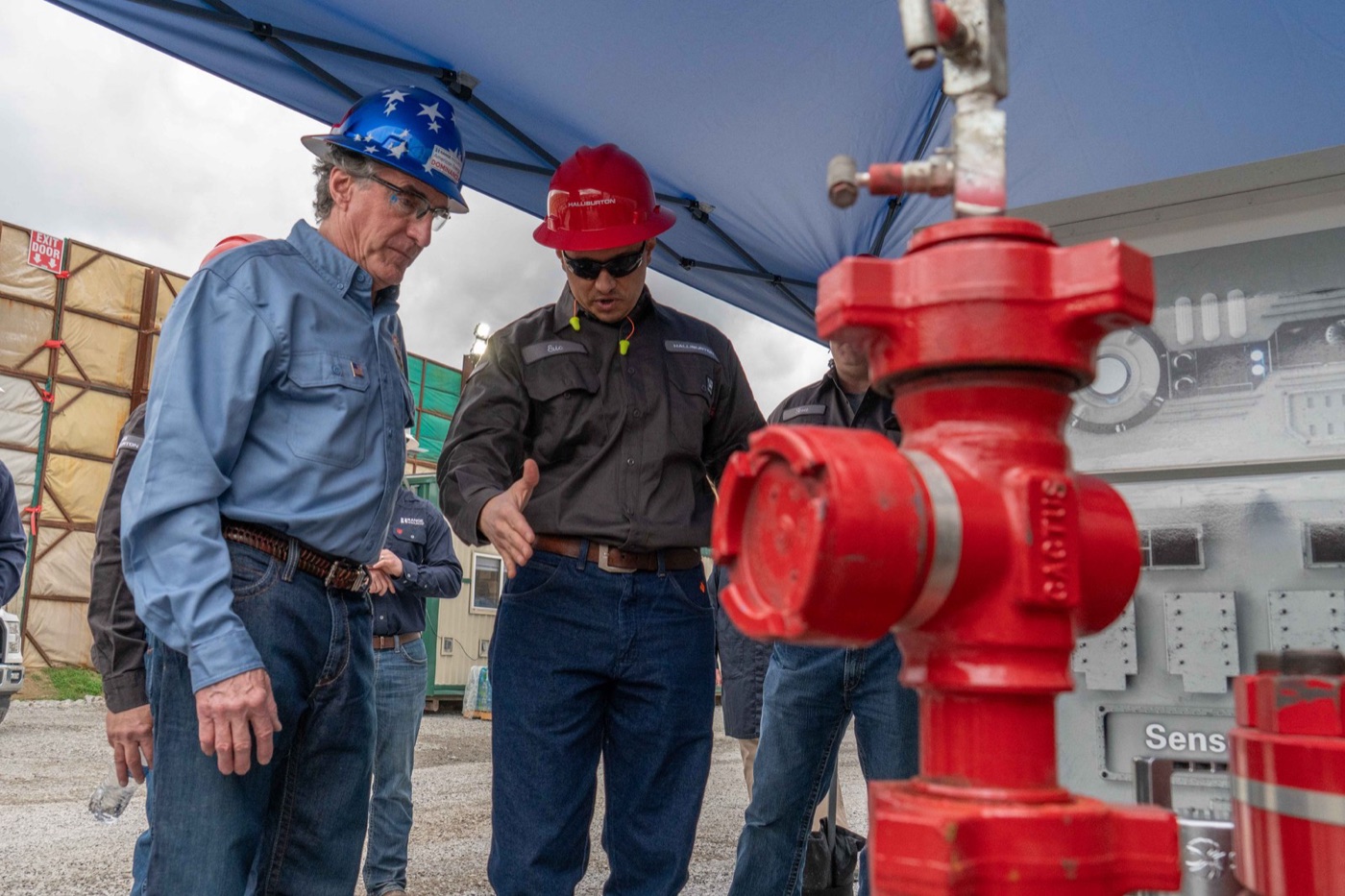
The water comes from where it can. In Texas it comes from aquifers, from farmers who sell their allocation, and from rivers when there are any; in Pennsylvania from streams and the town supply. A share of it, ten to forty percent, comes back up in the first weeks as flowback, mixed with the formation's own produced water, and the rest stays in the rock. The industry has learned to recycle the flowback for the next well, and in the Permian the reuse of produced water for fracturing has grown to a large share, because it is there and the aquifer is not.
| Water per fracked well | |
|---|---|
| 2011, typical | About 10 million litres |
| Permian basin, now | 15 to 40 million litres; some higher |
| Flowback | 10 to 40 percent returns in the first weeks |
| Source | Aquifers, purchased farm water, recycled produced water |
| Share of a basin's water use | A few percent overall; much more locally in dry counties |
Oklahoma
The water has to go somewhere, and in Oklahoma in the 2010s it went into disposal wells drilled into the Arbuckle formation, deep limestone that lies on the crystalline basement rock. The volume rose with the drilling boom, to more than a billion barrels a year, and the pressure in the formation rose with it, and the pressure reached faults in the basement that had been stable for millions of years. Oklahoma had recorded a couple of earthquakes of magnitude three or more in an average year before 2009. In 2015 it recorded about nine hundred, more than California, including several above magnitude five that damaged buildings in Cushing, where the country's oil is stored, and in Pawnee and Prague.
The cause was not disputed for long; the maps of injection volume and of earthquakes were the same map. The state ordered injection cut in the areas of highest activity, by about forty percent, and the earthquakes fell over the following years, though they have not stopped. The same has been seen, at smaller scale, in Texas, Kansas, Alberta and the Netherlands, where the gas field at Groningen was shut in 2024 because of the earthquakes its extraction caused. Water put into deep rock does what water in rock does: it lubricates.
The refinery
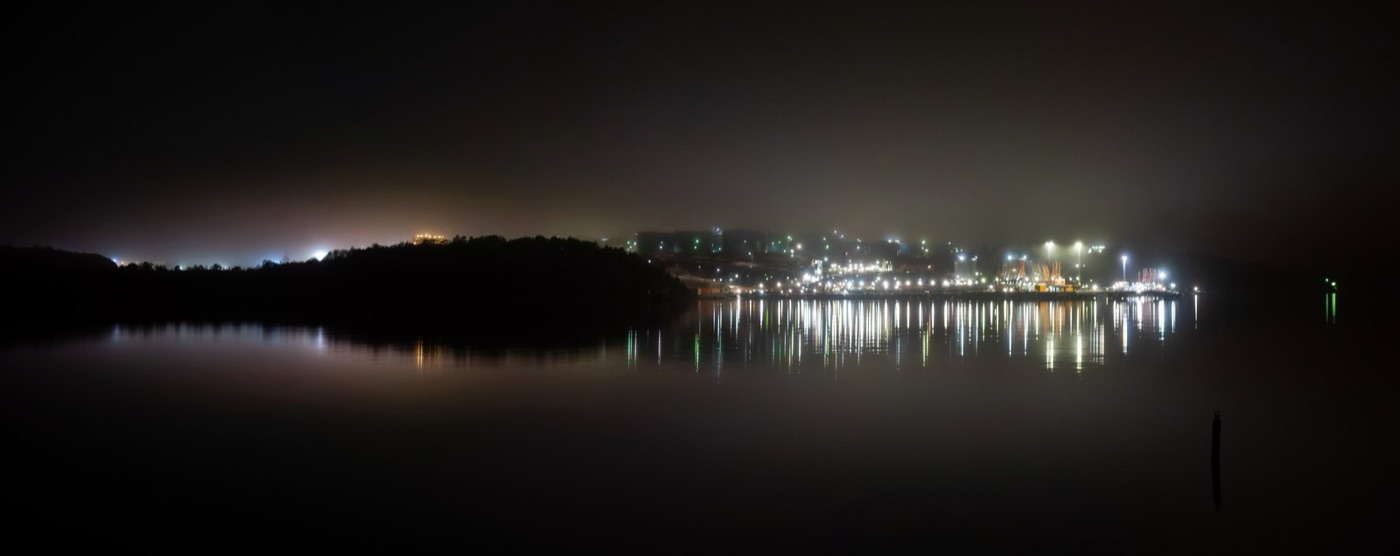
The refinery is the industry's other water user, and it uses water the way a chemical plant does: for cooling, above all, and for the steam that drives the distillation and the crackers, and for washing the salt out of the crude before it is heated. A refinery uses between one and two and a half barrels of water for every barrel of crude, most of it cooling, and its effluent carries oil, sulphide, ammonia and phenols that a treatment plant of the kind the effluent article describes takes out before discharge. Refineries sit on coasts and rivers for the same reason ammonia plants do, and the older ones, in the American Gulf and in the ports of Europe and Asia, have been the source of some of the oil in the harbours around them.
Offshore
The platforms in the North Sea, the Gulf of Mexico and off Brazil and West Africa produce water too, in the same ratio, and they have nowhere underground to put it that is cheap to reach. Offshore produced water is separated from the oil on the platform, in vessels and hydrocyclones that bring the oil content down to a few tens of milligrams per litre, and discharged to the sea, under a limit that in the North Sea is thirty milligrams of oil per litre and falling. The volume is enormous: the North Sea fields discharge hundreds of millions of tonnes of produced water a year, warm and salty and carrying a trace of oil and the additives, into a sea whose fish are caught and sold. The studies that have looked for harm have found it close to the platforms and not far away, and the regulators have pushed the limit down and the reinjection up, so that the newer fields put their water back into the reservoir even offshore. The oil in the sea from produced water, year on year, is larger than the oil from the tanker spills that make the news, and it arrives at a milligram a litre rather than a slick.
The water in a tank of fuel
Added up, from the well to the pump, a litre of petrol carries a few litres of fresh water: a fraction of a litre in the refinery, a litre or two if the crude came from a fracked well, and a little in the pipeline and the depot. It is one of the smaller numbers on this site, a hundredth of a litre of milk's, and it is the reason oil rarely appears in the tables of thirsty products. The produced water, which is many times larger, is left out of those tables because it was never fresh, and the water that a spill or an injection well spoils is left out because it was never used. Both belong in the account, which is the point of this article.
What it teaches
Oil and gas is the industry on this site that handles more water than almost any other and is rarely counted as thirsty, because most of its water was never fresh and most of it goes back underground. The three barrels with every barrel of oil are ancient seawater, returned to the rock; the fracking water is fresh, and it is the part that competes with a town or a farm; the injected water is the part that moves faults. The industry's water problem is one of disposal rather than supply, and it has been solved, for a century, by putting the water somewhere deep and hoping the rock is quiet. In Oklahoma it was not.
Three barrels of water for every barrel of oil, forty million litres down a well, and nine hundred earthquakes in a year.
Sources
- Veil, J.A. (2020). US produced water volumes and management practices in 2017. Ground Water Protection Council. About 3.8 billion litres a day in the United States; about 3 barrels of water per barrel of oil.
- Kondash, A.J., Lauer, N.E. and Vengosh, A. (2018). The intensification of the water footprint of hydraulic fracturing. Science Advances 4. Water per well up to 770 percent higher between 2011 and 2016.
- Ellsworth, W.L. (2013). Injection induced earthquakes. Science 341; Oklahoma Geological Survey, earthquake counts 2009 to 2019.
- Fakhru'l Razi, A. et al. (2009). Review of technologies for oil and gas produced water treatment. Journal of Hazardous Materials 170. Global produced water about 250 million barrels a day.
- US EPA, Effluent guidelines for petroleum refining; refinery water use about 1 to 2.5 barrels per barrel of crude.
- Photographs: opener: LostHillsPumpjacksSunset by Arne Hückelheim (CC BY-SA) via Wikimedia Commons; inline: Secretary Doug Burgum fracking site visit Pittsburg, Pennsylvania on April 3, 2025 - 4 by US Department of the Interior (Public domain) via Wikimedia Commons; inline: Preemraff Lysekil oil refinery on a foggy night by W.carter (CC0) via Wikimedia Commons.