Thirsty Industries: Semiconductors
The factories that make the world's chips use water the way a small city does, and they need it purer than anything a city drinks. What a fab does with water, why a wafer is rinsed hundreds of times, what happened when Taiwan's rain failed in 2021 and the island chose its chips over its rice, how the industry recycles most of what it takes, and why the next fabs are being built in the desert.
A semiconductor fab is a factory the size of several football pitches in which the air is filtered a thousand times cleaner than an operating theatre, and the thing it uses most of, after electricity, is water. A 300 millimetre wafer of silicon, on its way to becoming a few hundred chips, passes through several hundred steps of depositing, etching, polishing and cleaning, and between most of them it is rinsed in water of a purity that the ultrapure water article on this site describes: water with almost nothing left in it, made at the fab from the town supply at a cost of a litre and a half in for every litre out. A large fab uses thirty to fifty thousand cubic metres a day. The largest chipmaker in the world, in Taiwan, uses about 150,000 a day across its plants, which is the water of a city of half a million people.
This article is about what a fab does with that water, what happened when the rain that supplies it stopped, and why an industry that needs water this badly is building its next plants in deserts.
What a wafer does with water
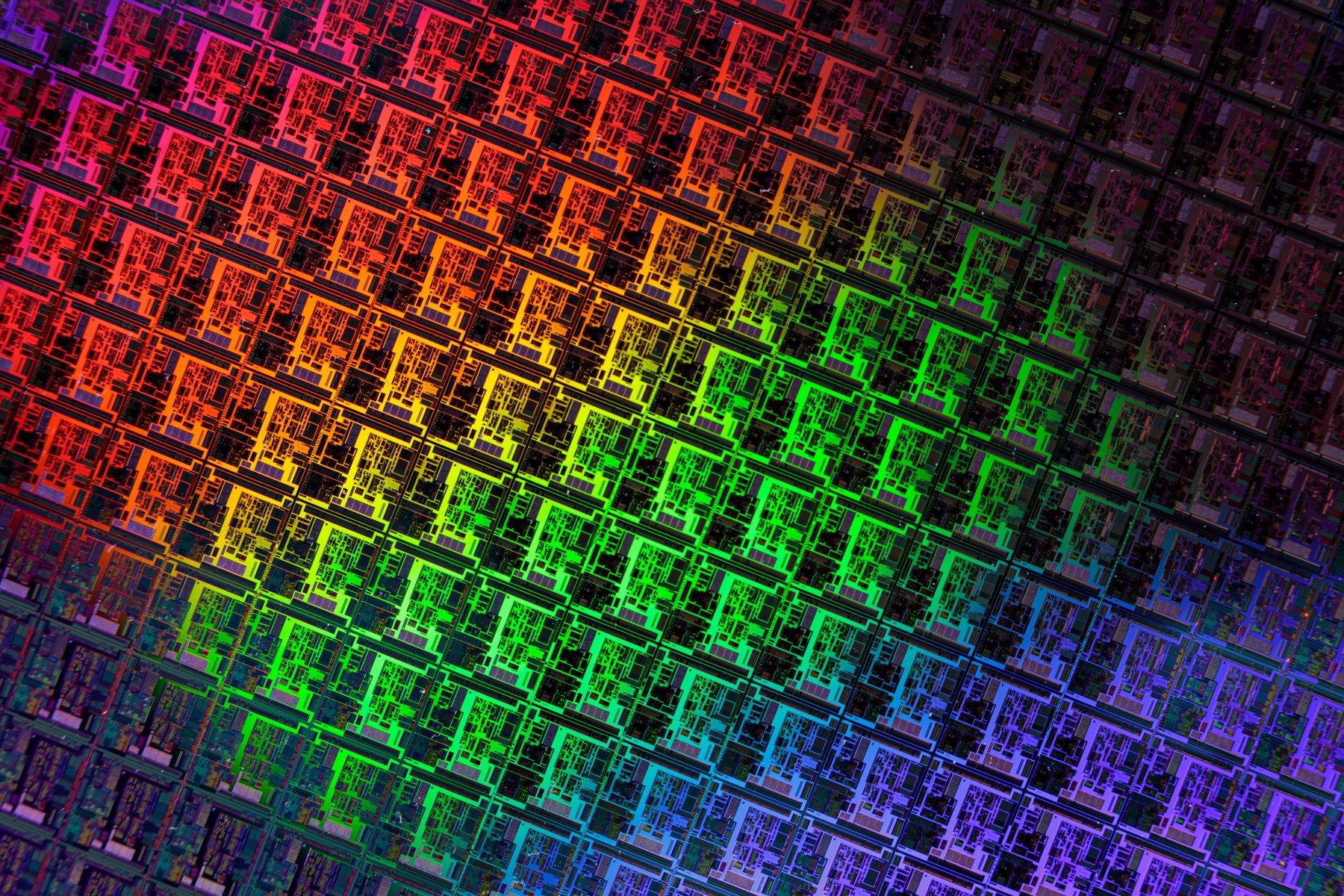
The chips in a phone are built up in layers on a disc of polished silicon, each layer patterned by light, etched, filled and polished flat, and each step leaves something on the surface that the next step cannot tolerate: a residue of etchant, a film of polishing slurry, particles a few nanometres across. Between steps the wafer is cleaned, in baths and sprays of ultrapure water and chemicals, and then rinsed in ultrapure water alone until the water coming off it is as pure as the water going on. A modern chip has sixty or more layers of patterning and each has several cleans; the count of rinses per wafer runs into the hundreds. The rinse has to be ultrapure because the chips' features are now a few nanometres across, smaller than most of what a town's water carries, and a single particle or a single ion of the wrong metal left on the surface can short a transistor. The purity is a manufacturing tolerance, and the water plant is part of the production line.
Ultrapure water is made at the fab in a plant that is a water treatment works in miniature and in reverse: reverse osmosis, degassing, ion exchange, ultraviolet light and fine filtration, taking the town's drinking water and stripping it of everything the town leaves in. The plant rejects about a third of what it takes in as concentrate, so a fab's water intake is larger than its ultrapure demand, and the rest goes to cooling towers, to the scrubbers that clean the exhaust, and to the plant itself.
| Water in a fab | |
|---|---|
| Ultrapure water per 300 mm wafer | Several cubic metres across all steps |
| Large fab, total water use | 30,000 to 50,000 cubic metres a day |
| Town water to make a litre of ultrapure | About 1.4 litres |
| Where it goes | Rinsing, about half; cooling towers; exhaust scrubbers |
| Recycled within the fab, leading plants | 85 to 90 percent |
Where the fabs are
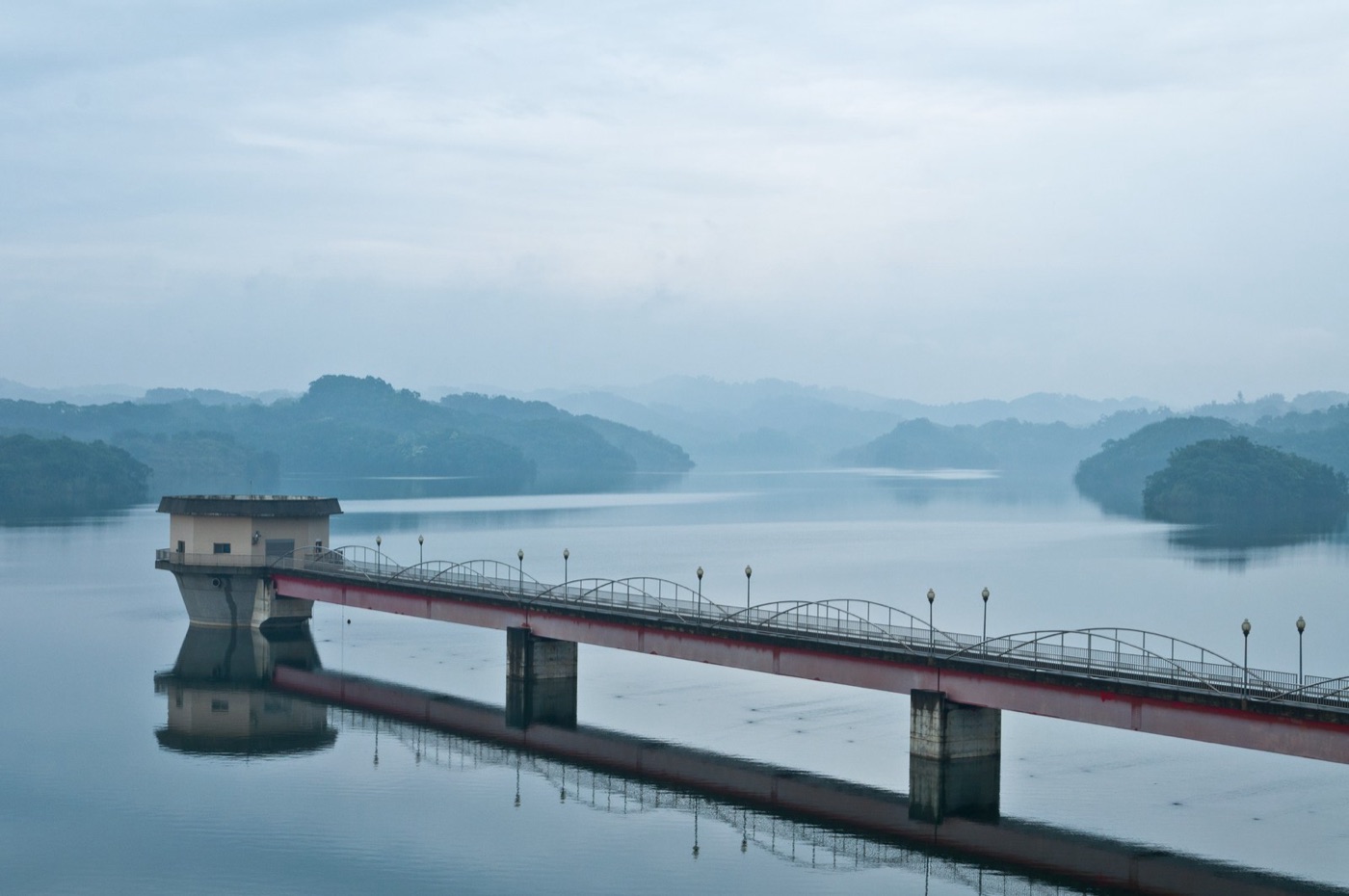
The world's leading edge chips are made in a handful of places, and the largest concentration is in Taiwan, in the science parks at Hsinchu, Taichung and Tainan, on an island whose rain falls in the typhoon season and is stored in reservoirs that silt up faster than they can be dredged. The fabs have first claim on the reservoirs in law and practice, because the chips are the island's largest export and its strategic guarantee, and in an ordinary year the reservoirs hold enough for the fabs, the cities and the rice paddies of the western plain. In 2021 there was no ordinary year.
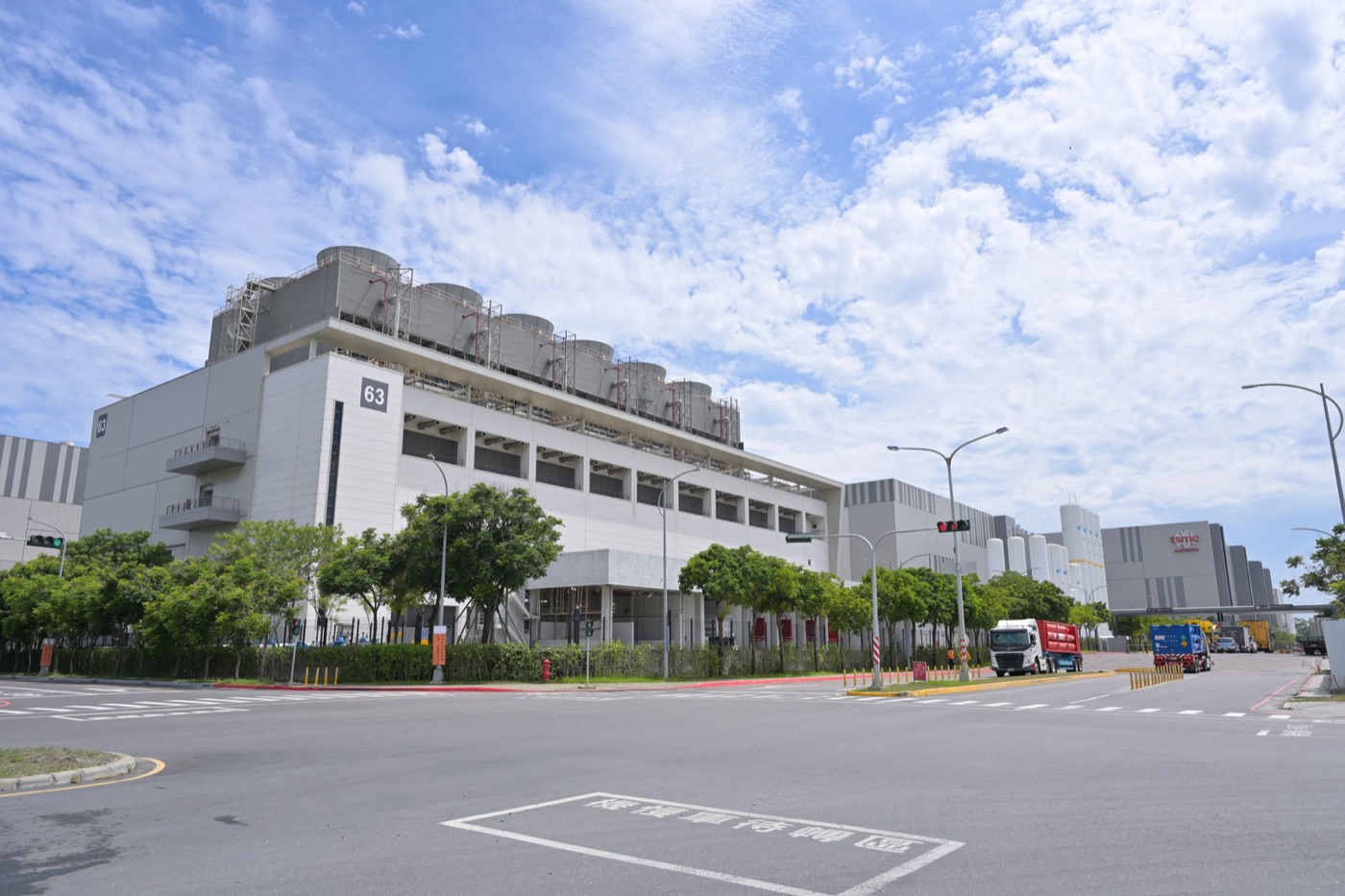
The rest are in South Korea, in Japan, in the United States, in Singapore, in Israel and in Germany, and the pattern in each is a cluster of fabs in a place that was chosen for its engineers and its politics rather than its rain. The new fabs, announced since 2020 with subsidies from every government that wants chips made at home, are in Arizona, Texas, Ohio, Kumamoto in Japan, Dresden and, in the largest new cluster of all, in the dry west of the United States, where the water is the question every plan has to answer first.
Taiwan, 2021
In 2020 no typhoon made landfall on Taiwan for the first time in fifty six years, and the reservoirs that the typhoons fill went into the dry season low. By the spring of 2021 the Baoshan reservoirs that supply Hsinchu were below ten percent and the island was in its worst drought in half a century. The government did what its water law allows: it suspended irrigation on about seventy four thousand hectares of rice paddy in the west, compensated the farmers, and kept the water for the cities and the fabs. When the mains could not keep up, the chipmakers hired fleets of tankers, dozens of trucks a day per fab, drawing from wells and construction sites, and at the height of the drought the largest company was trucking in a tenth of what it used. The fabs did not stop. The rice, for a season, was not planted.
Rain returned in June and the reservoirs refilled, and the drought became the reason for the recycling and reclaimed water plants that every fab on the island has since built or expanded. It is also the year in which the world noticed that the chips in everything it buys depend on the rain in one island's hills.
| Taiwan's drought, 2021 | |
|---|---|
| Cause | No typhoon landfall in 2020, then a dry winter and spring |
| Reservoirs at Hsinchu | Below 10 percent by spring |
| Irrigation suspended | About 74,000 hectares of paddy; farmers compensated |
| Fabs | Kept running; water trucked in, up to a tenth of use |
| After | Recycling expanded; reclaimed water plants built at the science parks |
What recycling means in a fab
The rinse water that comes off a wafer is, by any ordinary measure, still very clean, and the industry has learned to sort it. Lightly used rinse water is collected and sent back through the ultrapure plant, which takes it more easily than town water; the concentrate from reverse osmosis goes to cooling towers and scrubbers, which do not need purity; and the truly dirty streams, the acids, the slurries and the solvents, are treated separately and, at the best plants, largely recovered. The leading fabs in Taiwan now reuse between eighty five and ninety percent of the water they take in, by their own accounting, and the science parks have built plants that take the city's treated sewage and polish it to the fab's intake standard, the NEWater route that Singapore's fabs have drunk from for twenty years.
The limit is the same as for any recycled water. Every pass concentrates what is left, and the last stream, the brine from the last membrane, has to go somewhere. At a coastal fab it goes to the sea. At an inland one it is evaporated to a solid and landfilled, at the cost the zero liquid discharge article on this site describes, which the chip price can bear and few other products could.
The fabs in the desert
The new American fabs are in Arizona, Texas and Ohio, and the largest are in the Phoenix suburbs, which the Phoenix article on this site describes as a city living on a river already spoken for and an aquifer being drawn down. A fab there is a water user the size of a suburb in a place where the suburbs are told to stop growing, and the companies building them have made the same promise: near total recycling, a reclaimed water plant of their own, and a net return of water to the aquifer through the purchase and restoration of water rights elsewhere in the basin. Whether the promise holds will be known in the first dry decade. The reason the fabs are there anyway is that the water was never the first question; the engineers, the subsidies and the politics were, and the water was engineered to fit. The same is true of the fabs planned for the Gulf and for India, where the water will be desalinated or drawn from rivers already shared with farms, and where the choice Taiwan made in 2021 has been written into the permits before the first wafer is cut. A fab's water is the one industrial demand that a government will meet before every other, and the industry knows it.
What it teaches
The semiconductor fab is the industry on this site that uses water most intensely and has done the most to use it again, because it has both the need and the money. Its water is a city's, made pure at a cost most industries could not pay and recycled at a rate most could not reach, and it is still, on an island in a dry year, water that a rice farmer did not get. Taiwan's choice in 2021 was made in public and it will be made again, there and in Arizona, and the answer will be the chips, because that is what the water was allocated for.
150,000 cubic metres a day, ninety percent of it used twice, and a rice crop that was not planted so that it could be.
Sources
- TSMC, Sustainability Report 2022 and 2023: total water withdrawal, process water recycling rate above 85 percent, water use per wafer layer, and the 2021 drought response.
- Taiwan Water Resources Agency, reservoir levels 2021: Baoshan and Baoshan Second below 10 percent; irrigation suspended on about 74,000 hectares.
- Frost, K. and Hua, I. (2019). Quantifying spatiotemporal impacts of the interaction of water scarcity and water use by the global semiconductor manufacturing industry. Water Resources and Industry 22.
- Semiconductor Industry Association and SEMI, water use benchmarks per wafer and ultrapure water specifications (SEMI F63).
- Intel and Micron water stewardship reports: reclaimed water at Arizona and Idaho sites.
- Photographs: opener: 5C2A5953R - 49913961083 – Silicon Wafer 20200519 by Rob Bulmahn (CC BY) via Wikimedia Commons; inline: TSMC Fab 18 May 2025 by 4300streetcar (CC BY) via Wikimedia Commons; inline: Hsinchu paoshan 2nd reservoir by Liaon98 (CC BY-SA) via Wikimedia Commons.