Thirsty Industries: Power Stations
A power station that burns coal or gas, or splits atoms, is a machine for boiling water, and the steam it makes has to be cooled by more water. In the United States the electricity industry withdraws more fresh water than farming, and in a European heatwave reactors are turned down because the rivers are too warm to cool them. What a kilowatt hour's water is, where it goes, and why the answer is changing.
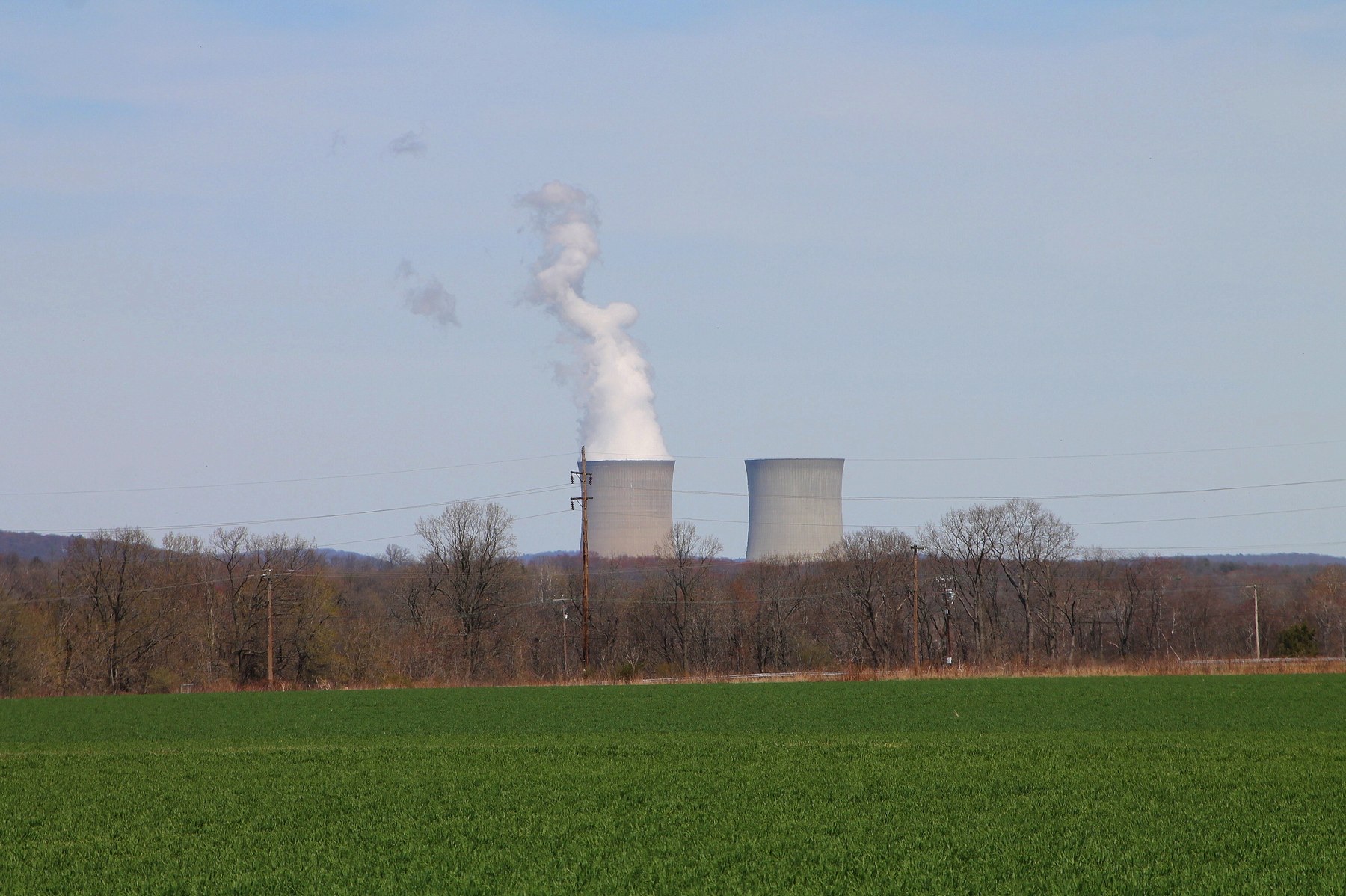
The plume above a power station is water. Most people take it for smoke, and the chimney that carries the actual smoke is usually thinner, taller and less dramatic than the wide concrete towers beside it. The towers are cooling towers, the white cloud pouring out of them is water evaporating, and in a large plant it evaporates at a rate of tens of thousands of cubic metres a day. That water was drawn from a river or a lake or an aquifer, and it is gone into the sky.
This article is about the water in electricity. It is the largest use of fresh water in the United States, larger than farming by the measure the national survey uses, and it is the one that changes the fastest, because the machines that use it are being replaced.
Why electricity needs water
Most of the world's electricity has, for a century, been made the same way. Something hot, a coal fire, a gas flame, a nuclear reaction, boils water into steam; the steam spins a turbine; the turbine spins a generator. The steam that has passed through the turbine is at low pressure and still hot, and it has to be turned back into water so that it can be pumped back to the boiler and used again. That is done in a condenser, a box of tubes with the steam on one side and cold water on the other, and the cold water is the power station's water.
Two thirds of the energy in the fuel leaves through that condenser as heat. A gigawatt plant, one that lights a city of a million people, has to get rid of about two gigawatts of heat continuously, and the only practical way to move that much heat is with water. How the water is used decides how much is taken and how much is lost.
| Cooling a thermal power station | Water withdrawn | Water consumed |
|---|---|---|
| Once through, river or sea water | Very large, up to 100,000 litres per megawatt hour or more | Small, about 1 percent, lost to evaporation from the warm river |
| Cooling towers, recirculating | Small, a few thousand litres per megawatt hour | Most of it, about 2,000 to 3,000 litres per megawatt hour evaporated |
| Dry cooling, air radiators | Almost none | Almost none, at a cost in efficiency and in a hot climate |
| Wind and solar photovoltaic | Almost none | Almost none, beyond panel washing |
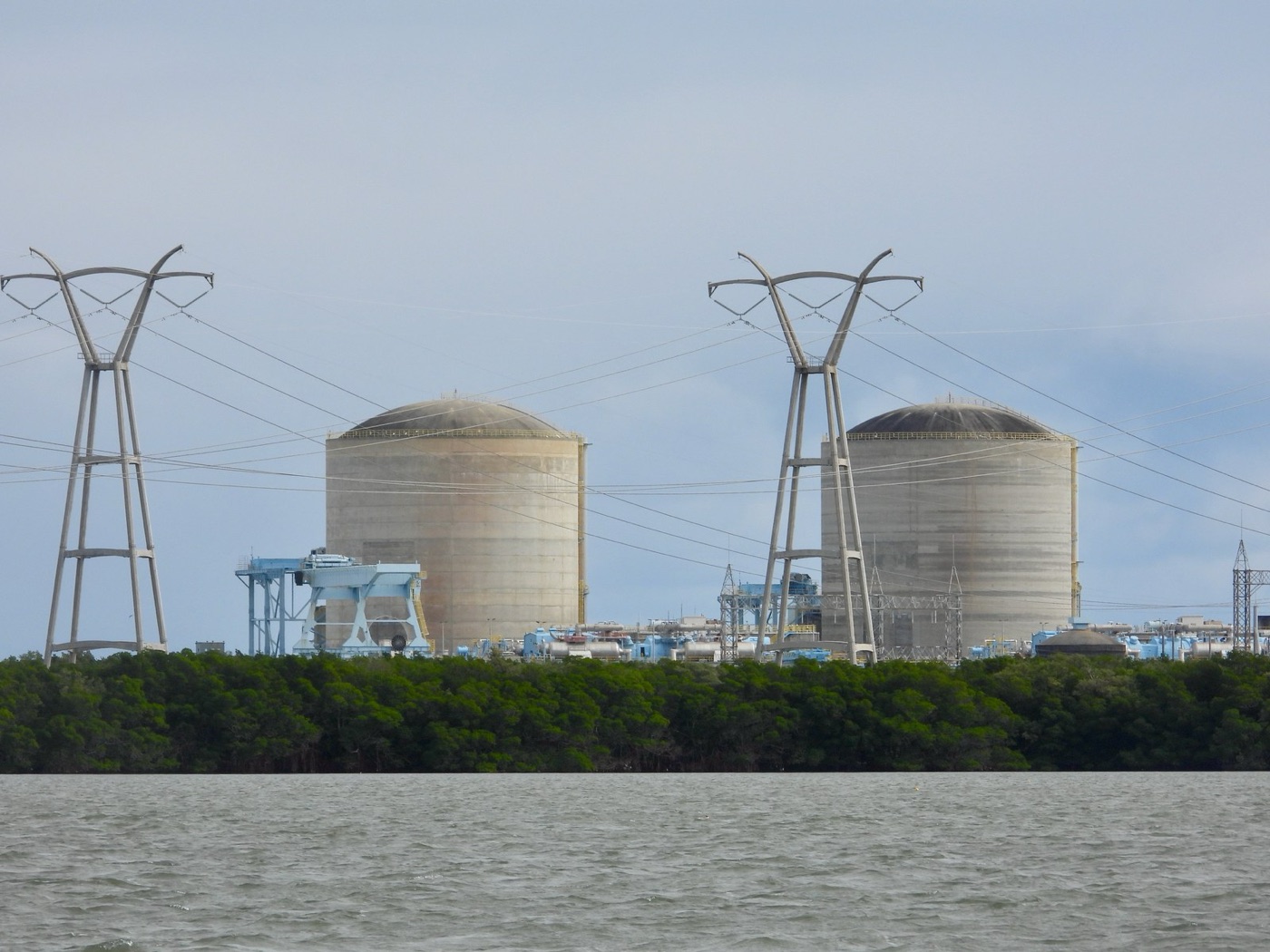
A once through plant sits on a river or a coast, pumps water through the condenser and returns it a few degrees warmer. It takes an enormous flow and consumes almost none, and it warms the river. A plant with cooling towers takes a fraction of the flow, runs it round and round, and cools it by evaporating a share in the tower, which is where the plume comes from. It consumes far more, because evaporation is consumption. The choice between the two is the difference between withdrawal and consumption that runs through the whole of this site, and it is why the headline number, 41 percent of withdrawals, is at once true and misleading.
The number, and what it means
The United States Geological Survey counts the country's water use every five years, and in its 2015 survey thermoelectric power took about 41 percent of freshwater withdrawals, ahead of irrigation at about 37 percent. That is the number at the top of this article. Nearly all of it, though, was once through cooling, and nearly all of that was returned to the river. Counted as consumption, water that did not come back, power stations took about three percent of the national total and farming took most of the rest.
Both numbers are right, and both matter. The withdrawal matters because a river that is being pumped through a condenser is a river that is being warmed, that cannot be used by anyone else in the reach where the plant sits, and that has to be there, at full flow, in August. The consumption matters because the cooling tower plants, which are the newer ones, do use up their water, at about two and a half thousand litres a megawatt hour, and a household's electricity, over a year, evaporates about as much water as the household drinks.
| Water in a megawatt hour, by source, consumption | Litres, roughly |
|---|---|
| Nuclear, cooling towers | About 2,500 |
| Coal, cooling towers | About 2,000 to 3,000 |
| Gas combined cycle, cooling towers | About 700 to 1,000 |
| Hydroelectric, reservoir evaporation | Highly variable, often the largest of all |
| Solar photovoltaic | Under 100 |
| Wind | Under 10 |
The hydroelectric line deserves its note. A dam makes electricity with no boiler and no condenser, and it consumes water anyway, by evaporation from the reservoir behind it, and in a hot climate a large shallow reservoir can lose more water per megawatt hour than any thermal plant. Lake Mead, described in the Las Vegas article, evaporates several hundred million cubic metres a year, a large share of it charged, in effect, to the Hoover Dam's turbines.
The summer of 2022
The clearest picture of the dependence came in Europe in the summer of 2022. France makes most of its electricity from nuclear reactors, and a large share of them are cooled by rivers, the Rhône, the Garonne and the Loire. Their permits limit how warm they may leave the water, to protect the fish, and in the heatwave of July and August, with the rivers low and already warm, several plants could not take their heat without breaching the limit. The grid operator relaxed the limits for a period, and the reactors ran at reduced output through the hottest weeks, at the moment the country and its neighbours most needed the power. The same summer, low water on the Rhine cut the coal barges to German plants, and drought in Norway and Spain emptied hydroelectric reservoirs. Europe's power system, in a hot dry summer, ran short of water before it ran short of fuel.
It was not a new problem. Texas, India and China have all curtailed thermal plants in droughts, and the World Energy Outlook has warned for a decade that a warming climate would make the summers worse for cooling. What 2022 did was to make it visible to the public, in the country most dependent on the plants that need water most.
The warm river
What a once through plant does to its river deserves its own paragraph, because it is the part that the withdrawal number describes and the consumption number hides. A gigawatt plant on a river pumps tens of cubic metres a second through its condensers and returns it eight to twelve degrees warmer, and downstream of the outfall the river runs a few degrees above what it would have been, for kilometres. Warm water holds less oxygen, which the BOD article explains is the currency of a river's life, and it favours algae and the fish that tolerate heat over the trout and salmon that do not. The intake, meanwhile, draws in whatever is in the river, and the screens that keep the fish out of the condensers kill a share of the fish and most of the larvae that reach them. Regulators in Europe and North America have, since the 1970s, limited both the temperature rise and the intake velocity, and the limits are why French reactors were turned down in 2022 and why new once through plants are rarely permitted. The river is a cooling tower with fish in it, and the fish have a temperature limit of their own.
The thirstiest fuel
Behind the power station is the fuel, and the fuel has water of its own. Coal mining and washing use water at the mine, and the fly ash from burning it is stored wet in ponds. Natural gas from fracking uses millions of litres per well, in the dry basins of Texas and the American west. Uranium mining and milling use water in the desert. Biomass, when it is grown for power, is a crop with a crop's footprint. And the plant itself uses water beyond cooling, for the boiler feed, which must be nearly as pure as the ultrapure article's, and for scrubbing the sulphur from the flue gas, which is a wet process in most plants. Cooling is most of the number. It is not all of it.
What is changing
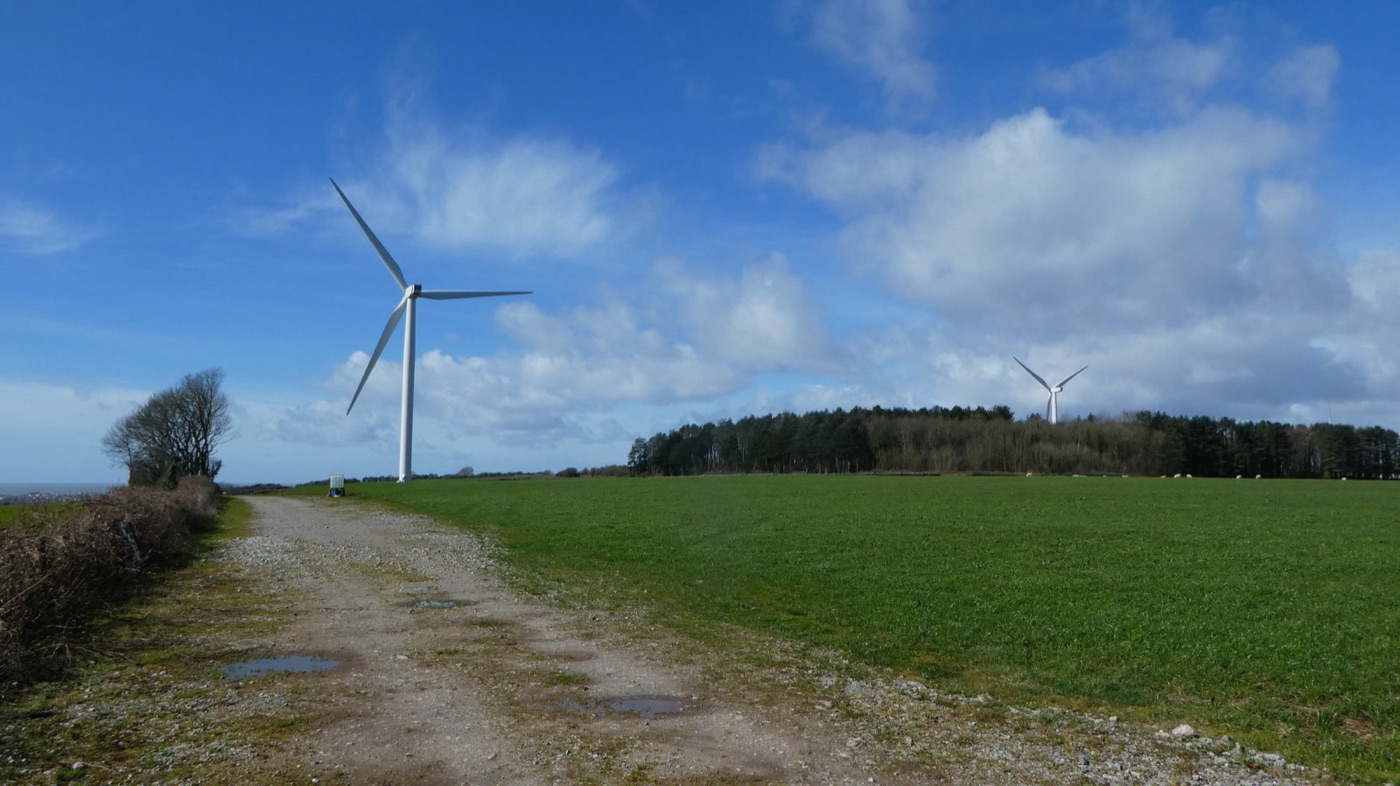
The water in electricity is falling, in most rich countries, faster than any policy intended, for a reason that has nothing to do with water. The plants that use most of it are closing. Coal plants, the thirstiest, are being retired across Europe and North America, and the once through plants among them, built on rivers in the 1960s and 1970s, are the oldest. Gas plants that replace them use a third of the water. Wind and solar, which now supply the largest share of new capacity nearly everywhere, use almost none. The United States' thermoelectric withdrawals fell by about a fifth between 2010 and 2015 and have kept falling, and the country's largest water use is, without anyone deciding it, shrinking.
Two things could reverse it. Nuclear, which uses as much cooling water as coal, is being extended and, in some countries, expanded, and the new plants will need rivers or coasts or towers like the old ones. And data centres, described in their own article, are adding both direct water use and a demand for electricity that will be met, in the short term, by whatever plants are available. The grid's water future is being decided by the same choices as its carbon future, and in most places those choices point the same way.
What it teaches
A power station is the clearest example on this site of the difference between taking water and using it up. A plant on a river takes a river and gives it back warm; a plant with towers takes a stream and gives back a cloud; and the number that matters depends on which question is being asked, the fish's or the farmer's. Both are answered by the same fact, which is that the machines that boil water to make electricity are being replaced by machines that do not, and that the water will follow.
41 percent of the country's fresh water, drawn through a condenser and given back, and a cloud over the towers that is not.
Sources
- Dieter, C.A. et al. (2018). Estimated use of water in the United States in 2015. US Geological Survey Circular 1441. Thermoelectric power at 41 percent of total freshwater withdrawals.
- Macknick, J. et al. (2012). Operational water consumption and withdrawal factors for electricity generating technologies. Environmental Research Letters 7. Withdrawal and consumption by technology and cooling type.
- International Energy Agency (2016). Water Energy Nexus, excerpt from the World Energy Outlook.
- Réseau de Transport d'Électricité and EDF, summer 2022: output restrictions at Bugey, Saint Alban, Golfech and Blayais due to river temperature limits.
- Union of Concerned Scientists (2011). Freshwater Use by US Power Plants.
- Photographs: opener: Susquehanna Steam Electric Station cooling towers from Nescopeck by Jakec (CC BY-SA) via Wikimedia Commons; inline: St. Lucie Nuclear Power Plant - view from Indian River by Pburka (CC BY-SA) via Wikimedia Commons; inline: Tythegston Wind Turbines (geograph 6183484) by Steve Barnes (CC BY-SA) via Wikimedia Commons.